

Emergency management course at UAM
About our
Emergency Management Course at UAM
This course offers comprehensive training in disaster planning, response, and recovery, focusing on the effective management of crisis situations. It delves into areas such as risk assessment, coordination of response teams, and emergency communication, using simulations and case studies to develop practical skills. The course aims to prepare participants to lead and manage effectively in diverse emergency scenarios, including natural disasters, industrial incidents, and civil security situations, following international standards and civil protection regulations.
The course provides tools for developing emergency plans, using crisis management technologies, and understanding security protocols. It includes practical experience in emergency operations centers (EOCs) and analysis of previous experiences for continuous improvement. It is designed for professionals in roles such as risk managers, civil protection officers, firefighters, security personnel, and response team leaders, enhancing their decision-making and resource management skills in critical situations.
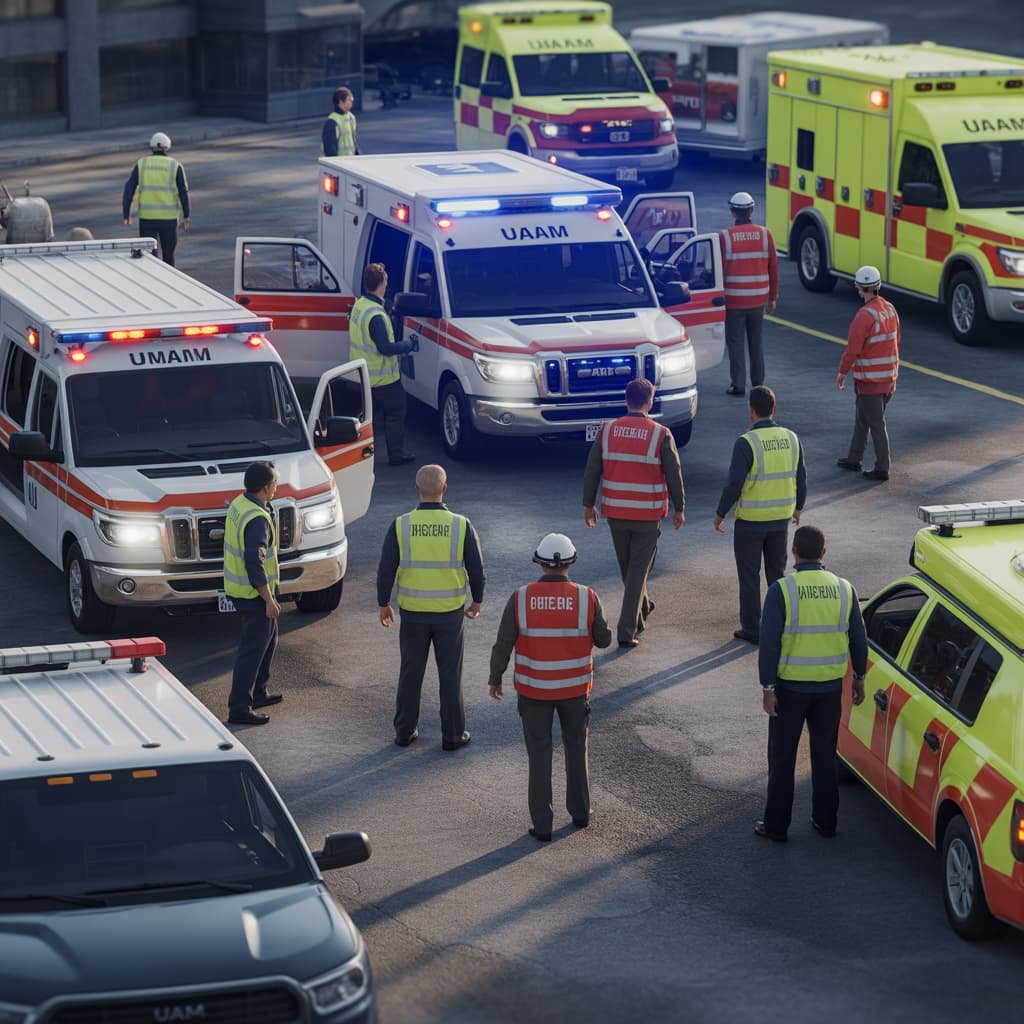
Emergency management course at UAM
- Format: Hybrid
- Duration: 3 months
- Hours: 300 H
- Language: English / Spanish
- Registration date: 23-10-2026
- Start date: 12-12-2026
- Available places: 3
399 $
Competencies and results
What you will learn
1. UAM Emergency Management: Comprehensive Learning
- Planning and response to emergencies in maritime environments.
- Risk assessment and vulnerability analysis of ships and platforms.
- Advanced first aid and life support in emergency situations.
- Maritime rescue techniques and vessel evacuation.
- Communication management and coordination in critical situations.
- Fire control and explosion prevention on board.
- Emergency navigation and maneuvering in adverse conditions.
- Survival at sea and use of lifesaving equipment.
- Maritime accident investigation and root cause analysis.
- Maritime legislation and international safety regulations.
2. UAM Emergency Management: Strategic Domain
- Development of a deep understanding of emergency management strategies, including risk assessment and response planning.
- Acquisition of skills to lead and coordinate multidisciplinary teams during crisis situations.
- Learning of effective communication techniques in emergencies, both internally and externally.
- Analysis of regulations and standards relevant to emergency management, including legal and ethical aspects.
- Implementation of information and knowledge management systems to improve decision-making in critical situations.
- Development of skills for evaluating and analyzing the effectiveness of emergency management plans.
3. Comprehensive user-oriented design and validation (from modeling to manufacturing)
You will learn to integrate the entire product development process, from initial model conception to final validation, applying user-centered methodologies. You will develop skills in parametric design, ergonomics, simulation, sustainable materials, 3D visualization, and manufacturing management, ensuring efficient, safe solutions that meet current industry standards.
4. Emergency Management UAM: Master's Degree in Response
- Planning and directing large-scale emergency response operations.
- Risk and vulnerability assessment for disaster prevention.
- Design and implementation of Incident Command and Control (ICS) systems.
- Management of human and material resources in crisis situations.
- Coordination with government agencies, non-governmental organizations, and the private sector in emergencies.
- Application of advanced technologies for emergency management, including Geographic Information Systems (GIS) and communications.
- Development of crisis communication strategies and public information management.
- Legal and regulatory framework in emergency and disaster management.
- Analysis of case studies and lessons learned from past disasters.
- Application of resilience and sustainability principles in the management of emergencies.
5. UAM Emergency Management: A Transformative Experience
- Identify and apply emergency response protocols, including risk assessment, decision-making, and team coordination.
- Develop leadership and effective management skills in high-pressure environments, such as clear communication, crisis management, and conflict resolution.
- Understand and apply the principles of emergency resource management, including logistics, supply, and the administration of personnel and equipment.
- Analyze different types of emergencies, such as natural disasters, industrial incidents, and public health crises, to anticipate and plan appropriate responses.
- Utilize emergency management tools and technologies, such as geographic information systems (GIS), simulations, and risk analysis software.
- Evaluate relevant legislation and regulations on emergency management, including legal, ethical, and liability aspects.
- Participate in drills and practical exercises to improve emergency response capabilities and gain experience in real-life situations.
- Develop a proactive approach to emergency prevention, including risk identification, implementation of safety measures, and promotion of community resilience.
6. UAM Emergency Management: Advanced Competency
6. UAM Emergency Management: Advanced Competency
Proficiency in risk assessment and emergency response planning in complex naval environments.
Implementation of safety protocols and procedures for responding to critical situations on board.
Effective resource management and team coordination in emergency scenarios, including crisis communication.
Application of advanced failure analysis techniques and diagnosis of imminent danger.
Development of leadership and decision-making skills under pressure, with an emphasis on professional ethics.
In-depth knowledge of international and national maritime regulations related to safety and crisis management.
Who this program is for:
Emergency management course at UAM
- Graduates in Aerospace Engineering, Mechanical Engineering, Industrial Engineering, Automation Engineering, or related fields.
- Professionals from OEM rotorcraft/eVTOL, MRO, consulting, technology centers.
- Flight Testing, certification, avionics, control, and dynamics seeking specialization.
- Regulators/authorities and UAM/eVTOL professionals requiring compliance skills.
Recommended qualifications: foundation in aerodynamics, control, and structures; ES/EN B2+/C1. We offer bridging tracks if you need them.
- Standards-driven curriculum: you will work with CS-27/CS-29, DO-160, DO-178C/DO-254, ARP4754A/ARP4761, ADS-33E-PRF from the first module.
- Accreditable laboratories (EN ISO/IEC 17025) with rotor bench, EMC/Lightning pre-compliance, HIL/SIL, vibrations/acoustics.
- Evidence-oriented TFM: safety case, test plan, compliance dossierand operational limits.
- Mentored by industry: teachers with experience in rotorcraft, tiltrotor, eVTOL/UAM and flight test.
- Flexible modality (hybrid/online), international cohorts and support from SEIUM Career Services.
- Ethics and security: safety-by-design approach, cyber-OT, DIH and compliance as pillars.
Module 1 — Introduction to Emergency Management UAM
1.1 Fundamentals of Emergency Management: Definitions and Scope
1.2 The Emergency Management Cycle: Prevention, Preparedness, Response, and Recovery
1.3 Legal and Regulatory Framework: Applicable Legislation in Emergency Management
1.4 Roles and Responsibilities: Key Actors in Emergency Management
1.5 Risk Analysis: Identification and Assessment of Threats
1.6 Types of Emergencies: Natural, Technological, and Man-Made
1.7 Emergency Communication: Effective Strategies and Tools
1.8 First Aid and Basic Life Support: Fundamentals and Procedures
1.9 Security Protocols: Design and Application in Various Scenarios
1.10 Introduction to Emergency Planning: Basic Concepts
2.2 Conceptual Framework for Emergency Management
2.2 Principles of Risk Assessment
2.3 Identification of Threats and Hazards
2.4 Vulnerability Analysis
2.5 Estimation of Probability and Impact
2.6 Response Planning Methodologies
2.7 Development of Emergency Plans
2.8 Resources and Logistics in Emergency Management
2.9 Testing and Drills of Emergency Plans
2.20 Evaluation and Continuous Improvement of the Plan
3.3 Fundamentals of Emergency Management: Principles and Philosophy
3.2 Legal and Regulatory Framework in Emergency Management
3.3 Risk and Vulnerability Assessment
3.4 Emergency Response Planning
3.5 Incident Command Systems (ICS)
3.6 Communication and Coordination in Emergencies
3.7 First Aid and Basic Life Support
3.8 Civil Protection and Natural Disaster Management
3.9 Resource Management and Logistics in Emergencies
3.30 Emergency Drills and Exercises
4.4 Fundamentals of Emergency Management (UAM)
4.2 Legal and Regulatory Framework for Emergency Management
4.3 Risk Identification and Assessment
4.4 Emergency Management Planning
4.5 Communication and Coordination in Crisis Situations
4.6 First Aid and Basic Life Support
4.7 Security and Civil Protection
4.8 Introduction to Emergency Logistics
4.9 Resource and Equipment Management
4.40 Ethics and Responsibility in Emergency Management
5.5 Introduction to Emergency Management
5.5 Risk Identification and Assessment
5.3 Legal and Regulatory Framework for Emergencies
5.4 Development of Emergency Plans
5.5 Vulnerability and Capacity Analysis
5.6 Design of Drills and Exercises
5.7 Risk Communication and Awareness
5.8 Resource Management and Logistics in Emergencies
5.9 Monitoring and Evaluation of Plans
5.50 Case Studies: Analysis of Real Emergencies
6.6 Risk Assessment: Identification and Analysis
6.2 Response Planning: Protocol Design
6.3 Team Coordination: Communication and Leadership
6.4 Resource Management: Optimization and Allocation
6.5 First Aid: Techniques and Procedures
6.6 Evacuation and Rescue: Strategies and Tactics
6.7 Damage Control: Containment and Mitigation
6.8 Incident Investigation: Analysis and Learning
6.9 Legal Aspects: Regulations and Responsibilities
6.60 Drills and Exercises: Training and Evaluation
- Hands-on methodology: test-before-you-trust, design reviews, failure analysis, compliance evidence.
- Software (depending on licenses/partners): MATLAB/Simulink, Python (NumPy/SciPy), OpenVSP, SU2/OpenFOAM, Nastran/Abaqus, AMESim/Modelica, acoustics tools, planning toolchains DO-178C.
- SEIUM Laboratories: scale rotor bench, vibrations/acoustics, EMC/Lightning pre-compliance, HIL/SIL for AFCS, data acquisition with strain gauging.
- Standards and compliance: EN 9100, 17025, ISO 27001, GDPR.
Capstone-type projects
- Strategic Response Planning: Risk and Vulnerability Analysis.
- Emergency Drills: Design and Execution to Optimize Response.
- Crisis Communications: Effective Strategies and Information Management.
- Leadership and Decision Making: Emergency Scenario Simulation.
- Maritime Risk Analysis: Comprehensive assessment of hazards and vulnerabilities in naval environments.
- Sea Rescue Simulation: Development of scenarios and optimized strategies for rescue operations.
- Naval Disaster Response Planning: Creation of detailed plans to mitigate and respond to maritime emergencies.
- Naval Crisis Leadership: Simulation and practice of decision-making under pressure in emergency scenarios.
- Strategic Planning: Risk Analysis, Protocols, Drills.
- Crisis Communications: Writing, Media Relations, Protocols.
- Interinstitutional Coordination: Liaisons, Networks, Collaboration Agreements.
- Post-Incident Evaluation: Analysis, Improvements, Continuous Learning.
- Risk and Vulnerability Analysis: Identification and assessment of threats in naval scenarios.
- Emergency Response Planning: Design of protocols and action strategies.
- Crisis Simulation and Training Exercises: Testing and optimization of plans.
- Crisis Communication and Information Management: Strategies for effective communication.
Admissions, fees, and scholarships
- Profile: Background in Computer Engineering, Mathematics, Statistics, or related fields; practical experience in NLP and valued information retrieval systems.
- Documentation: Updated CV, academic transcript, SOP/statement of purpose, project examples or code (optional).
- Process: Application → Technical evaluation of profile and experience → Technical interview → Review of case studies → Final decision → Enrollment.
- Fees:
- Single payment: 10% discount.
- Payment in 3 installments: No fees; 30% upon registration + 2 equal monthly payments of the remaining 35%.
Monthly payment: available with a 7% commission on the total; annual review.
Scholarships: based on academic merit, financial need, and promoting inclusion; agreements with companies in the sector for partial or full scholarships.
See “Calendar & Calls for Applications,” “Scholarships & Grants,” and “Fees & Financing” in the SEIUM mega-menu.
Do you have any questions?
Our team is ready to help you. Contact us, and we will respond as soon as possible.
F. A. Q
Frequently asked questions
Yes, we have international certification
Yes: experimental models, real data, applied simulations, professional environments, real case studies.
It is not mandatory. We offer leveling tracks and tutoring.
Completely. It covers e-propulsion, integration, and emerging regulations (SC-VTOL).
Recommended. There are also internal challenges and consortiums.
Yes. Online/hybrid modality with planned labs and visa support (see “Visa & Residence”).