

Course on collecting and restoring historic motorcycles
About our
The Historic Motorcycle Collecting and Restoration Course offers an immersive experience in the world of classic motorcycles, combining historical knowledge with practical mechanical and restoration skills. Participants will learn about the identification and valuation of iconic models, techniques for disassembly, repairing, and assembly of components, as well as methods of conservation and presentation. Aspects such as design history, engine mechanics, basic electronics, and painting and detailing techniques are explored, all crucial for preserving the value and authenticity of vintage motorcycles.
[The course also explores] design history, engine mechanics, basic electronics, and painting and detailing techniques.
The course provides access to specialized tools and period materials, fostering the development of skills in parts sourcing, restoration project management, and knowledge of historic vehicle regulations. Students will acquire the necessary skills to transform a vintage motorcycle into a collector’s item, understanding the dynamics of the classic motorcycle market and how to maintain the value of their investment. This training qualifies individuals for roles such as restorers, appraisers, collectors, and vintage motorcycle experts.
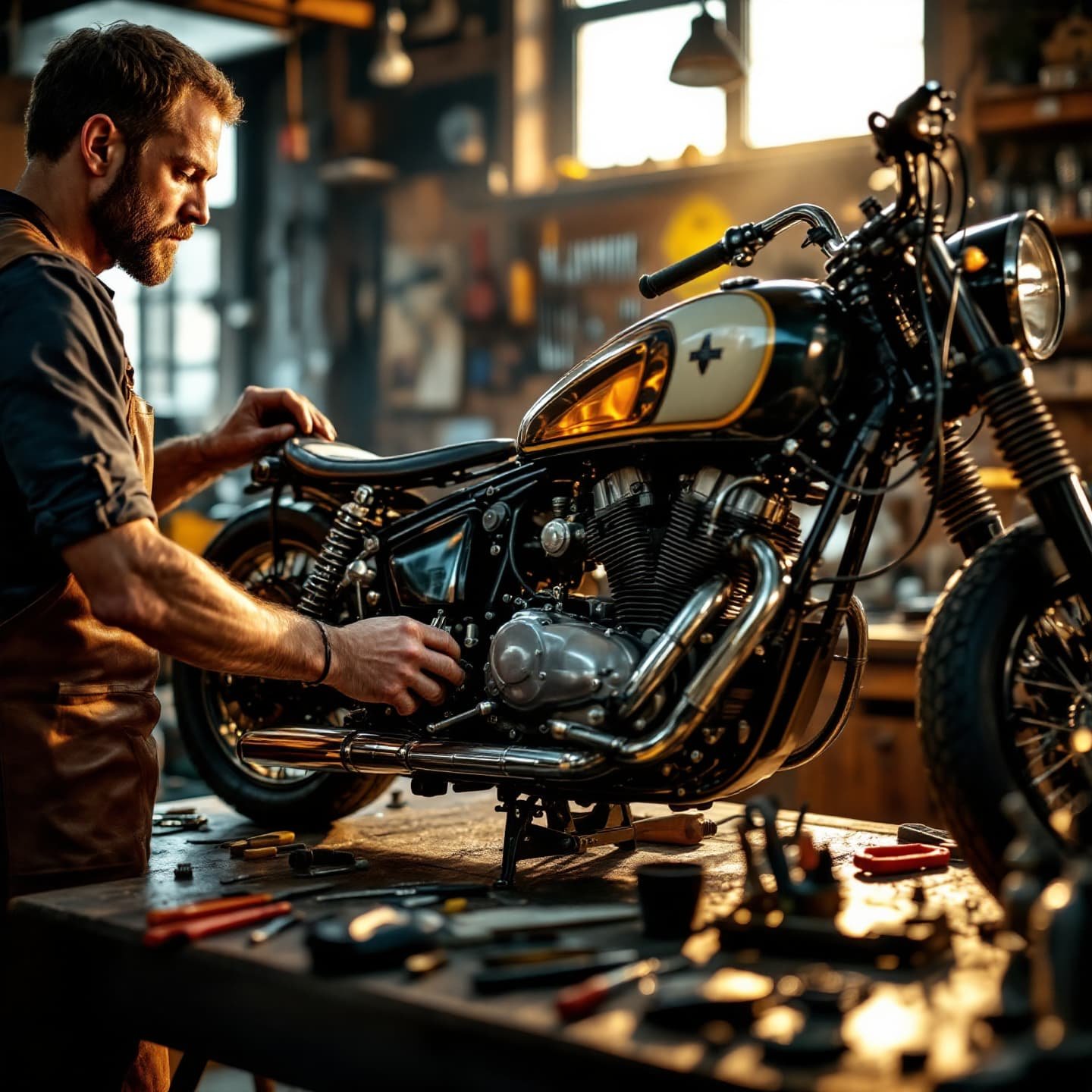
Course on collecting and restoring historic motorcycles
- Format: Hybrid
- Duration: 3 months
- Hours: 300 H
- Language: English / Spanish
- Registration date: 23-10-2026
- Start date: 12-12-2026
- Available places: 2
649 $
Competencies and results
What you will learn
1. Complete Mastery of Collecting, Restoring and Valuing Historic Motorcycles
- Comprehensive identification and classification of historic motorcycles, from rare models to those with rising market value.
- In-depth research into motorcycle history, including makes, manufacturers, models, and their cultural and technological contexts.
- Advanced documentation and archiving techniques to preserve the historical information of each motorcycle.
- Evaluation of motorcycles’ condition, detecting damage, wear, and modifications.
- Mastery of restoration tools and techniques, including disassembly, cleaning, repair, and rebuilding of components.
- Restoration of bodywork, frames, engines, electrical systems, and other key components.
- Selection and use of original materials or faithful replicas for restoration.
- Painting and finishing techniques to restore the original aesthetics of motorcycles.
- Valuation of historic motorcycles, considering factors such as rarity, condition, Originality, documentation, and market demand.
Analysis of the classic motorcycle market, including trends, prices, auctions, and collecting.
Investment strategies and management of historic motorcycle collections.
Knowledge of legislation and regulations related to the import, export, and circulation of historic motorcycles.
2. Master's Degree in Restoration, Collecting and Revaluation of Antique Motorcycles
Here is the content you will learn in the Master’s Program in Restoration, Collecting, and Revaluation of Vintage Motorcycles, following your strict guidelines:
1.
Understand the history and evolution of vintage motorcycles, from their beginnings to different eras and styles.
2.
Identify and classify vintage motorcycle models, recognizing their distinctive characteristics and historical value.
3.
Master research and documentation techniques to authenticate and trace the origin of vintage motorcycles.
4.
Learn about the legislation and regulations related to the preservation and circulation of vintage motorcycles.
5.
Analyze the original materials and components of vintage motorcycles, including engines, frames, bodywork, and transmission systems.
6. Develop skills in engine restoration, including disassembly, cleaning, repair, and adjustment of components.
7.
Master bodywork restoration techniques, such as rust repair, welding, painting, and finishing.
8.
Apply knowledge in the restoration of electrical systems, including wiring, lighting, and ignition.
9.
Study the conservation and restoration of upholstery and interior elements of vintage motorcycles.
10.
Acquire knowledge in the evaluation and management of the value of vintage motorcycles, including appraisal and collecting.
11.
Explore the vintage motorcycle market, including auctions, fairs, and specialized events.
12.
Learn about preventive conservation. and the maintenance of vintage motorcycles to ensure their longevity.
13.
Develop skills in photographic and video documentation for the restoration and exhibition of vintage motorcycles.
14.
Implement marketing and promotional strategies for the sale and exhibition of vintage motorcycles.
15.
Establish networks with collectors, restorers, and experts in vintage motorcycles.
3. Comprehensive user-oriented design and validation (from modeling to manufacturing)
You will learn to integrate the entire product development process, from initial model conception to final validation, applying user-centered methodologies. You will develop skills in parametric design, ergonomics, simulation, sustainable materials, 3D visualization, and manufacturing management, ensuring efficient, safe solutions that meet current industry standards.
4. Revitalizing Legends: Comprehensive Course on Collecting and Restoring Historic Motorcycles
4. Revitalizing Legends: Comprehensive Course in Collecting and Restoring Historic Motorcycles
- Identify and classify iconic models of historic motorcycles, understanding their value and rarity.
- Master the research and documentation techniques necessary for collecting, including verifying authenticity and provenance.
- Learn the fundamentals of classic motorcycle mechanics, including two-stroke and four-stroke engines, transmission systems, and suspension.
- Develop skills in assessing the condition of a motorcycle, identifying damage, wear, and missing parts.
- Apply restoration techniques to different components: chassis, bodywork, engine, transmission, electrical and braking systems.
- Use specialized restoration tools and equipment, including welding, painting, polishing, and chrome plating.
- Understand the principles of preventive conservation, protecting restored motorcycles from environmental factors and the elements.
- Gain knowledge about the history of motorcycles and their cultural impact, including iconic brands, models, and riders.
- Establish contacts with collectors, restorers, and spare parts suppliers, building a support network.
- Learn to document the restoration process, creating detailed records, before-and-after photos, and videos.
deterioration.
5. Unraveling Art: Collecting, Restoring and Enhancing the Value of Motorcycles with History
5. Unraveling the Art: Collecting, Restoring, and Valuing Motorcycles with History
Explore the history and evolution of classic motorcycles, identifying iconic models and their distinctive characteristics.
Understand the principles of motorcycle collecting, including the valuation, authentication, and documentation of historic vehicles.
Master motorcycle restoration techniques, from mechanics and bodywork to paint and original finishes.
Learn to identify and troubleshoot common problems in vintage motorcycles, including engine, transmission, and electrical system failures.
Gain knowledge about researching and accessing original spare parts and components for restoration.
Develop skills for valuing restored motorcycles, including preparing them for exhibitions and events.
Understand the classic motorcycle market, including trends, pricing, and investment opportunities.
Apply techniques for Preventive conservation to protect and preserve historic motorcycles in the long term.
Establish networks with collectors, restorers, and experts in the world of classic motorcycles.
Learn to document and communicate the history of each motorcycle, highlighting its legacy and contributing to its preservation.
6. Passion on Wheels: Collecting, Restoring and the Legacy of Vintage Motorcycles
6. Passion on Wheels: Collecting, Restoring, and the Legacy of Vintage Motorcycles
Explore the history of classic motorcycling, from its beginnings to the present day.
Identify different vintage motorcycle models and their distinctive characteristics.
Understand the historical, cultural, and economic value of collectible motorcycles.
Learn techniques for appraising and valuing vintage motorcycles.
Master the fundamentals of classic motorcycle restoration: mechanics, bodywork, and aesthetics.
Learn about the essential tools and equipment for restoration.
Study period materials and manufacturing techniques.
Apply methods for disassembling, cleaning, and assembling components.
Restore engines, transmission systems, brakes, and suspensions.
Repair and rebuild bodywork. tanks and other components.
Apply painting, chrome plating, and polishing techniques to restore the original appearance.
Research and acquire original or reproduction spare parts.
Participate in classic motorcycle events and clubs.
Connect with other collectors and enthusiasts.
Share knowledge and experiences.
Preserve the legacy of vintage motorcycles for future generations.
Who this program is for:
Course on collecting and restoring historic motorcycles
- Motor enthusiasts and classic motorcycle collectors.
- Enthusiasts of mechanics and vehicle restoration, no prior experience necessary.
- People interested in acquiring technical knowledge about the history, mechanics, and restoration of vintage motorcycles.
- Automotive professionals who wish to specialize in motorcycle collecting and restoration.
- Owners of classic motorcycles looking to maintain and preserve their vehicles.
- People who wish to turn their passion for vintage motorcycles into a professional activity or a rewarding hobby.
- Standards-driven curriculum: you will work with CS-27/CS-29, DO-160, DO-178C/DO-254, ARP4754A/ARP4761, ADS-33E-PRF from the first module.
- Accreditable laboratories (EN ISO/IEC 17025) with rotor bench, EMC/Lightning pre-compliance, HIL/SIL, vibrations/acoustics.
- Evidence-oriented TFM: safety case, test plan, compliance dossierand operational limits.
- Mentored by industry: teachers with experience in rotorcraft, tiltrotor, eVTOL/UAM and flight test.
- Flexible modality (hybrid/online), international cohorts and support from SEIUM Career Services.
- Ethics and security: safety-by-design approach, cyber-OT, DIH and compliance as pillars.
Module 1 — Introduction to Classic Motorcycle Collecting
1.1 History and evolution of motorcycles: a journey from their beginnings to the golden age.
1.2 Definition and classification of classic and collectible motorcycles.
1.3 Key criteria for identifying a collectible motorcycle: rarity, originality, and condition.
1.4 Getting started in collecting: how to begin, what to look for, and where to find it.
1.5 The classic motorcycle market: trends, prices, and investment potential.
1.6 Essential tools for collectors: documentation, records, and information sources.
1.7 Collector communities and clubs: networking and resources.
1.8 Ethics of collecting: heritage preservation and authenticity.
1.9 Legislation and regulations related to classic motorcycles.
1.10 Case studies: iconic examples of classic motorcycles and their stories.
2.2 Early Motorcycle Models and Forerunners
2.2 The Bicycle Era and the Transition to Motorization
2.3 Internal Combustion Engines and Their Initial Impact
2.4 Pioneering Brands and Their Innovations
2.5 The Evolution of Design: From Utility to Aesthetics
2.6 The Influence of Wars on Motorcycle Development
2.7 The Golden Age and the Rise of Racing
2.8 The Impact of Technology: Brakes, Suspensions, and Transmissions
2.9 Market Diversification: Models for Work, Leisure, and Competition
2.20 Iconic and Emblematic Models of Each Era
3.3 Iconic Brands and Their Historical Moments
3.2 Identifying Key Models and Their Characteristics
3.3 Evolution of Design and Engineering in Classic Motorcycles
3.4 Socioeconomic Context and Its Impact on Motorcycle Production
3.5 Models That Defined an Era: Detailed Analysis
3.6 Collector’s Icons: Most Valued Motorcycles and Why
3.7 Research and Documentation of Specific Models
3.8 Historical Value and Its Influence on the Current Market
3.9 Study of the Most Influential Manufacturers
3.30 Case Study: Analysis of Specific Models and Their Legacy
4.4 Selection and Classification of Historic Motorcycles
4.2 Historical Research and Documentation of Models
4.3 Identification of Original Components and Authenticity
4.4 Design and Iconic Styles of the Era
4.5 Analysis of Design Trends and Evolution
4.6 Restoration Design: Planning and Strategies
4.7 Documentation of the Restoration Process: Recording and Filing
4.8 Study of Key Makes and Models in History
4.9 Custom Design: Customization and Adaptation
4.40 Market Valuation of Design: Impact on the Collection
5.5 History and evolution of motorcycles: from their origins to their golden age.
5.5 Types of historic motorcycles: classification by era, manufacturer, and style.
5.3 The classic motorcycle market: trends, demand, and valuation.
5.4 Documentation and registration: identification and research of historical information.
5.5 Essential tools and equipment for collecting and restoration.
5.6 First steps in evaluating a historic motorcycle: initial inspection.
5.7 Identifying rare and limited-edition models.
5.8 Information sources and resources for collectors and restorers.
5.9 Collector networks and communities: sharing knowledge and experiences.
5.50 Legal and regulatory considerations in buying and selling vintage motorcycles.
6.6 Introduction to Collecting Historic Motorcycles: History and evolution of collecting.
6.2 Identifying and Evaluating Vintage Motorcycles: Authentication and valuation techniques.
6.3 Documentation and Research: Searching for relevant information and sources.
6.4 Disassembly and Diagnosis: Thorough analysis of the motorcycle’s condition.
6.5 Mechanical Restoration: Engines, transmissions, and operating systems.
6.6 Bodywork Restoration: Chassis, bodywork, and structural components.
6.7 Finishing and Aesthetics: Paint, chrome plating, and original details.
6.8 Parts and Supplier Research: Locating spare parts and components.
6.9 Assembly and Tuning: Final assembly and functional testing.
6.60 Valuation and Marketing: Sales and optimization strategies.
- Hands-on methodology: test-before-you-trust, design reviews, failure analysis, compliance evidence.
- Software (depending on licenses/partners): MATLAB/Simulink, Python (NumPy/SciPy), OpenVSP, SU2/OpenFOAM, Nastran/Abaqus, AMESim/Modelica, acoustics tools, planning toolchains DO-178C.
- SEIUM Laboratories: scale rotor bench, vibrations/acoustics, EMC/Lightning pre-compliance, HIL/SIL for AFCS, data acquisition with strain gauging.
- Standards and compliance: EN 9100, 17025, ISO 27001, GDPR.
Capstone-type projects
- Capstone Project 1: Complete Restoration of a Classic Motorcycle (Specific Make and Model).
- Capstone Project 2: Development of a Virtual Exhibition of Historic Motorcycles, Including Research, Curation, and Digital Presentation.
- Capstone Project 3: Creation of a Detailed Restoration Manual for a Specific Motorcycle Model, Including Technical Guides and Collecting Tips.
- Capstone Project 4: Market Research and Valuation Analysis of Vintage Motorcycles, Focusing on a Specific Niche (Make, Era, etc.).
- Capstone Project 5: Design and Execution of a Restoration Project with an Emphasis on Sustainability, Incorporating Materials and Techniques Eco-Friendly.
“`html
- Restoration of “1928 Indian Scout”: Disassembly, parts analysis, restoration techniques, painting, and commissioning.
- Harley-Davidson Knucklehead Collection”: Historical research, documentation, authentication, and appraisal for acquisition.
- Vintage Motorcycles Exhibition”: Curation, exhibit design, marketing, and event management.
- Moto Guzzi V7 Restoration Guide Manual”: Detailed process, photographic documentation, and online publication.
“`
- Capstone Project 1: Restoration and Appraisal of a Specific Classic Motorcycle (e.g., Harley-Davidson Knucklehead).
- Capstone Project 2: Creation of a Digital Catalog of Vintage Motorcycles, with Professional Appraisal and Market Analysis.
- Capstone Project 3: Design and Execution of a Historic Motorcycle Exhibition, Including Restoration and Curation.
- Capstone Project 4: Development of a Business Plan for a Workshop Specializing in Classic Motorcycle Restoration.
- Capstone Project 5: Research and Analysis of the History and Evolution of a Specific Motorcycle Brand (e.g., Brough Superior).
- Capstone Project 6: Restoration Complete restoration of a vintage motorcycle, from acquisition to its presentation at an event.
- Capstone Project 7: Design and implementation of a motorcycle collection management system, with a focus on maintenance and valuation.
- Capstone Project 8: Development of a book or documentary on the history and art of restoring vintage motorcycles.
- Comprehensive Restoration: Documentation, dismantling, cleaning, and reconstruction of a specific historic motorcycle.
- Private Collection: Creation and management of a virtual collection, including market research and valuation.
- Expert Valuation: Preparation of a detailed appraisal report, including historical research and comparative analysis.
Admissions, fees, and scholarships
- Profile: Background in Computer Engineering, Mathematics, Statistics, or related fields; practical experience in NLP and valued information retrieval systems.
- Documentation: Updated CV, academic transcript, SOP/statement of purpose, project examples or code (optional).
- Process: Application → Technical evaluation of profile and experience → Technical interview → Review of case studies → Final decision → Enrollment.
- Fees:
- Single payment: 10% discount.
- Payment in 3 installments: No fees; 30% upon registration + 2 equal monthly payments of the remaining 35%.
Monthly payment: available with a 7% commission on the total; annual review.
Scholarships: based on academic merit, financial need, and promoting inclusion; agreements with companies in the sector for partial or full scholarships.
See “Calendar & Calls for Applications,” “Scholarships & Grants,” and “Fees & Financing” in the SEIUM mega-menu.
Do you have any questions?
Our team is ready to help you. Contact us, and we will respond as soon as possible.
F. A. Q
Frequently asked questions
Yes, we have international certification
Yes: experimental models, real data, applied simulations, professional environments, real case studies.
It is not mandatory. We offer leveling tracks and tutoring.
Completely. It covers e-propulsion, integration, and emerging regulations (SC-VTOL).
Recommended. There are also internal challenges and consortiums.
Yes. Online/hybrid modality with planned labs and visa support (see “Visa & Residence”).