

Motorcycle racing safety protocols course
About our
The Motorcycle Racing Safety Protocols Course provides comprehensive training on the essential regulations and procedures for ensuring safety at motorcycle events. It covers key aspects such as risk management, emergency preparedness and response, and equipment and circuit inspection. It focuses on compliance with the safety regulations established by the relevant federations and governing bodies, addressing topics such as signage, access control, and medical assistance. The course prepares participants to act as safety officers, track marshals, or support staff, improving the safety and performance of motorcycle competitions.
The program includes hands-on training in the use of safety equipment, rescue and evacuation procedures, and first aid techniques adapted to common motorcycle injuries. It focuses on accident prevention and risk minimization, using tools such as incident analysis and track study. The training is designed to accommodate different experience levels, providing a solid foundation for those who wish to become involved in the organization and supervision of safe and professional motorcycle events.
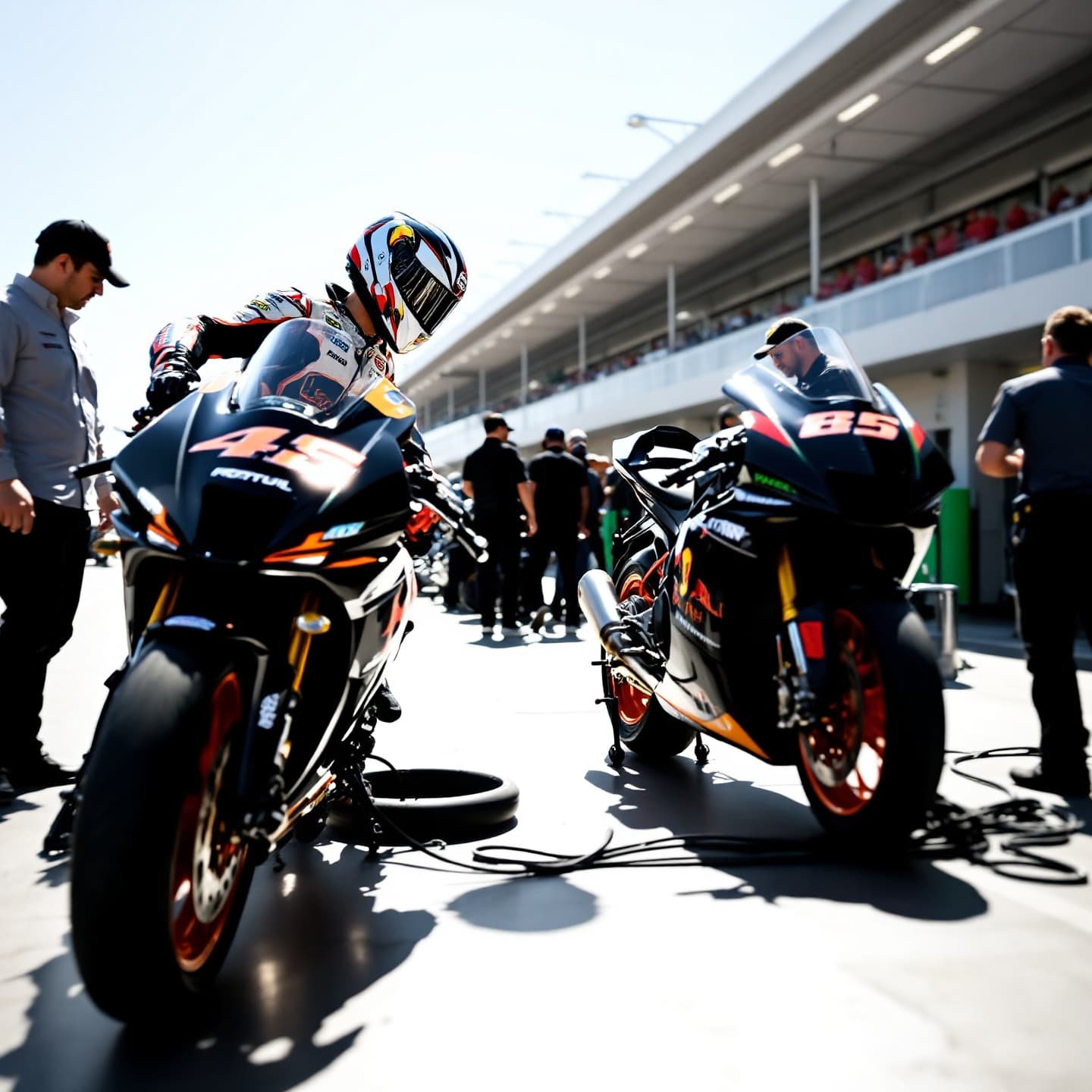
Motorcycle racing safety protocols course
- Format: Hybrid
- Duration: 3 months
- Hours: 300 H
- Language: English / Spanish
- Registration date: 23-10-2026
- Start date: 12-12-2026
- Available places: 2
275 $
Competencies and results
What you will learn
1. Comprehensive Mastery of Safety Protocols in Motorcycle Competitions
- Identify and evaluate critical safety components on motorcycle racing circuits.
- Apply international safety standards and regulations to motorcycle events.
- Implement protocols for responding to incidents and medical emergencies.
- Manage and coordinate trackside safety and rescue teams.
- Analyze risks and design contingency plans for different scenarios.
- Control access, restricted areas, and the flow of people during competitions.
- Apply effective communication techniques for safety management.
- Use technological tools for event monitoring and control.
- Continuously evaluate and improve safety protocols based on experience and feedback.
2. In-depth Analysis of Safety Protocols in Motorcycle Racing
## What will you learn in the In-Depth Analysis of Motorcycle Racing Safety Protocols course?
This course will provide you with a comprehensive understanding of the crucial aspects of ensuring safety in motorcycle racing. Through an analytical and practical approach, you will acquire essential knowledge to evaluate and improve existing safety protocols.
The key topics you will master are detailed below:
1. **Risk Identification and Assessment:**
* Thorough analysis of the specific risks associated with motorcycle racing, including factors such as speed, track conditions, and rider behavior.
* Implementation of methodologies for the early identification of potential hazards and the assessment of their impact on safety.
2. **Circuit Design and Optimization:**
* Principles of safe circuit design, considering aspects such as visibility, run-off areas, safety barriers, and the layout of service areas.
* * Analysis of circuit infrastructure, including track layout, pavement, curves, and critical points.
* Simulation of race scenarios to identify areas for safety improvement.
3. **Regulations and Standards:**
* Study of international and national regulations and standards related to motorcycle racing safety.
* Analysis of the responsibilities of organizers, riders, and teams in applying safety protocols.
* Evaluation of regulatory compliance and identification of potential areas of non-compliance.
4. **Rider Equipment and Protection:**
* Analysis of personal protective equipment (PPE) used by riders, including helmets, suits, gloves, and boots.
* Evaluation of the effectiveness of PPE in mitigating injuries in the event of an accident.
* Study of motorcycle protection systems, such as the braking system, traction control, and suspension.
5. **Race Safety Procedures:**
* Analysis of the safety procedures implemented during races, including signage, flag control, and the intervention of track marshals.
* Evaluation of the response of rescue and medical assistance teams in the event of an accident.
* Implementation of improvements to procedures to optimize safety and efficiency in incident management.
6. **Technology and Advancements in Safety:**
* Study of the latest technologies applied to safety in motorcycle racing, including telemetry systems, high-speed cameras, and data analysis.
* Analysis of the impact of technological advances on improving safety in racing.
* Exploration of future trends in motorcycle racing safety.
3. Comprehensive user-oriented design and validation (from modeling to manufacturing)
You will learn to integrate the entire product development process, from initial model conception to final validation, applying user-centered methodologies. You will develop skills in parametric design, ergonomics, simulation, sustainable materials, 3D visualization, and manufacturing management, ensuring efficient, safe solutions that meet current industry standards.
4. Master's Degree in Safety: Key Protocols for Motorcycle Competitions
Here is the requested content:
4. Master’s Degree in Safety: Key Protocols for Motorcycle Competitions
- Identify and assess specific risks in motorcycle competitions, including human, technical, and environmental factors.
- Understand and apply the safety protocols of the International Motorcycling Federation (FIM) and other relevant organizations.
- Analyze safety management at motorcycle circuits and events, including the design and implementation of preventative measures.
- Master motorcycle accident investigation techniques, including data collection and analysis to determine causes and contributing factors.
- Learn about the design and homologation of safety equipment for riders and vehicles, including helmets, suits, protective gear, and motorcycle safety systems.
- Develop skills in planning and conducting safety drills and exercises at motorcycle events.
- Understand the regulations and legal norms related to safety in motorcycle competitions, including civil and criminal liability.
- Implement communication and awareness strategies on safety for riders, teams, organizers, and spectators.
- Analyze the impact of new technologies on motorcycle safety, including rider assistance systems and tracking devices.
- Evaluate and manage the risks associated with the participation of minors in motorcycle competitions, complying with current regulations.
5. Motorcycle Safety Protocols: Practical and Strategic Mastery
5. Motorcycle Safety Protocols: Practical and Strategic Mastery
- Identify and apply advanced defensive driving techniques, including anticipating hazards and managing space.
- Master essential evasive maneuvers for emergency situations: panic braking, obstacle avoidance, and control on slippery surfaces.
- Understand and practice strategic positioning on the road, optimizing visibility and minimizing blind spots.
- Analyze and apply safety protocols for the use of equipment: helmets, jackets, gloves, and boots, ensuring compliance with regulations and proper maintenance.
- Develop skills in pre-trip motorcycle inspection, including checking tires, brakes, lights, and Fluids.
Learn about basic motorcycle mechanics and how to troubleshoot common problems on the road.
Study current road safety legislation and motorcyclist rights, including responsibilities and obligations.
Implement strategies for accident prevention and reducing risks associated with motorcycle riding.
Evaluate and improve riding skills through supervised practice and error analysis.
Understand and apply motorcyclist-specific first aid protocols, including treating common injuries and calling emergency services.
6. Motorcycle Safety Protocols: Analysis, Implementation and Mastery
- Identify and assess the specific risks of motorcycling: accidents, injuries, and adverse environmental conditions.
- Understand road safety regulations and their application to motorcycling, including the traffic code and local regulations.
- Analyze essential personal protective equipment (PPE): helmets, jackets, gloves, pants, and boots, evaluating their technical characteristics and levels of protection.
- Master defensive and predictive driving techniques: anticipating hazards, speed control, road positioning, and effective communication.
- Implement strategies for managing emergency situations: first aid, fall management, and motorcycle recovery techniques.
- Apply safety protocols in different scenarios: city riding, highway riding, adverse weather conditions, and group riding.
- Develop skills for motorcycle inspection and preventive maintenance, including tires, brakes, lights, and Fluid levels.
Analyze and apply the motorcycle’s active and passive safety systems: ABS, traction control, airbags, and other rider assistance devices.
Understand the importance of continuous training and updating knowledge on motorcycle safety.
Evaluate and manage human factors that influence safety: fatigue, distraction, alcohol and drug use, and the rider’s emotional state.
Who this program is for:
Motorcycle racing safety protocols course
- Motorcycle racing riders and their technical teams (mechanics, track engineers, etc.).
- Motorcycle event organizers, including race directors and safety personnel.
- Safety officers and race stewards responsible for enforcing protocols in motorcycle competitions.
- Rescue team personnel and medical staff involved in motorcycle events.
- Motorcycle manufacturers and equipment suppliers who wish to understand and improve their products in relation to safety in competition.
- Standards-driven curriculum: you will work with CS-27/CS-29, DO-160, DO-178C/DO-254, ARP4754A/ARP4761, ADS-33E-PRF from the first module.
- Accreditable laboratories (EN ISO/IEC 17025) with rotor bench, EMC/Lightning pre-compliance, HIL/SIL, vibrations/acoustics.
- Evidence-oriented TFM: safety case, test plan, compliance dossierand operational limits.
- Mentored by industry: teachers with experience in rotorcraft, tiltrotor, eVTOL/UAM and flight test.
- Flexible modality (hybrid/online), international cohorts and support from SEIUM Career Services.
- Ethics and security: safety-by-design approach, cyber-OT, DIH and compliance as pillars.
1.1 Fundamentals of Safety in Motorcycle Events
1.2 Regulatory Framework and Safety Standards
1.3 Risk Analysis and Threat Assessment
1.4 Design and Planning of Safe Circuits
1.5 Safety Equipment for Riders and Personnel
1.6 Communication and Incident Management
1.7 First Aid and Medical Care in Competitions
1.8 Signage and Access Control
1.9 The Role of Safety Officers and Stewards
1.10 Introduction to International Best Practices
2.2 Hazard and Threat Identification on Circuits
2.2 Risk Assessment: Methodologies and Tools
2.3 Analysis of Previous Accidents and Lessons Learned
2.4 Circuit Design: Safety Factors and Risks
2.5 Track Inspection and Maintenance Protocols
2.6 Specific Risk Analysis by Motorcycle Category
2.7 Risk Management: Contingency and Response Plans
2.8 Drills and Tests: Protocol Validation
2.9 Human Factors: Influence on Safety
2.20 Preparation of Risk Assessment Reports
3.3 Design and planning of safety at motorcycle events
3.2 Risk assessment and hazard analysis at circuits and event areas
3.3 Implementation of barriers and containment systems
3.4 Access control and crowd management
3.5 Planning of rescue and medical response teams
3.6 Communication and coordination of safety at events
3.7 Safety protocols for riders and track personnel
3.8 Implementation of safety regulations and policies
3.9 Incident management and post-event analysis
3.30 Safety optimization: Best practices and case studies
4.4 Risk Assessment: Identification and Analysis in Competitions
4.2 Design and Planning of Safe Circuits
4.3 Implementation of Safety and Escape Zones
4.4 Access Control and Crowd Management
4.5 First Aid and Medical Assistance on the Track
4.6 Personal Protective Equipment and Its Correct Use
4.7 Communication and Coordination at Events
4.8 Inspection and Maintenance of Motorcycles and Equipment
4.9 Incident and Accident Management: Procedures
4.40 Regulations and Legislation Applicable to Competitions
5.5 International Legislation and Regulations in Motorcycle Racing
5.5 Fundamental Safety Principles in Motorcycle Events
5.3 Roles and Responsibilities of Safety Personnel
5.4 Circuit Design Standards and Safety Zones
5.5 Regulatory Framework of the International Motorcycling Federation (FIM) and other relevant organizations
5.6 Codes of Conduct and Ethics in Motorcycle Safety
5.7 Incident Documentation and Management: General Protocols
5.5 Hazard Identification and Analysis on Racetracks
5.5 Risk Assessment Methodologies (e.g., risk matrix)
5.3 Accident Analysis: Root Causes and Contributing Factors
5.4 Safety Assessment in Different Types of Competitions (circuit, speed, etc.)
5.5 Specific Risk Analysis by Motorcycle Category and Rider
5.6 Data Collection and Analysis Techniques Security
5.7 Implementation of Risk Mitigation Measures
3.5 Event Security Planning: Design and Layout
3.5 Design of Protective Barriers and Security Zones
3.3 Design of Signage and Effective Communication
3.4 Implementation of Surveillance and Control Systems
3.5 Design of Evacuation and Emergency Response Plans
3.6 Implementation of Medical and Rescue Protocols
3.7 Implementation of a Security Management System (SMS)
4.5 Development and Implementation of a Security Management Plan
4.5 Communication and Coordination Strategies with Stakeholders
4.3 Management of Staff and Volunteer Security
4.4 Crisis Management and Emergency Communication
4.5 Management of Suppliers and Contractors at Events
4.6 Evaluation of Security Performance: KPIs and Metrics
4.7 Continuous Improvement: Feedback and Protocol Updates
5.5 Implementation 5.5 First Aid and Medical Care Protocols on the Track
5.3 Rescue and Extraction Protocols for Injured Riders
5.4 Implementation of Crowd Control and Access Protocols
5.5 Implementation of Motorcycle Technical Inspection Protocols
5.6 Implementation of Communication and Alert Protocols
5.7 Scenario Simulation and Practical Safety Exercises
5.8 Application of Advanced Safety Technologies
6.9 Root Cause Analysis of Accidents
6.10 Implementation of Prevention Measures
6.11 Emergency Planning and Response
6.22 Safety Data and Trend Analysis
6.33 Integration of Technologies for Safety
6.44 Adaptation of Protocols to Different Events
6.55 Development of a Safety Culture
7.65 Identification of Areas for Improvement in Existing Protocols
7.76 Application of Lessons Learned from Previous Incidents
7.87 Implementation of Technologies Advanced Security Measures
7.4 Cost-Benefit Analysis of Security Measures
7.5 Implementation of a Security Audit Program
7.6 Development of a Feedback and Continuous Improvement System
7.7 Optimization of Emergency Response
8.5 Design of a Comprehensive Security Plan
8.5 Selection and Management of Security Equipment
8.3 Application of Security Regulations and Standards
8.4 Risk Management and Security Assessment
8.5 Development of a Contingency Plan
8.6 Implementation of an Effective Communication System
8.7 Documentation and Maintenance of Protocols
6.6 Legal Framework and International Regulations
6.2 National and Local Regulations in Competitions
6.3 Legal Responsibilities of Organizers and Participants
6.4 Safety Standards of the International Motorcycling Federation (FIM)
6.5 Codes of Conduct and Professional Ethics
6.6 Legal Documentation Required for Events
6.7 Legislation on Civil Protection and Emergencies
6.8 Regulatory Compliance and Audits
6.9 Updating and Adapting to Legislative Changes
6.60 Comparative Analysis of Legislation
2.6 Identification of Track and Surrounding Hazards
2.2 Risk Assessment in Different Types of Competitions
2.3 Human Factors Analysis in Incidents
2.4 Risk Assessment Methods (HAZOP, FMEA, etc.)
2.5 Design of Risk and Probability Matrices
2.6 Identification of Critical Points and High-Risk Areas Priority
2.7 Analysis of Previous Accidents and Lessons Learned
2.8 Risk Assessment in Adverse Weather Conditions
2.9 Risk Monitoring and Tracking
2.60 Implementation of Preventive Measures
3.6 Design of Safe Circuits and Track Layouts
3.2 Crowd Control and Access Strategies
3.3 Planning of Safety Zones and Evacuation Routes
3.4 Design of Communication and Alert Systems
3.5 Development of Emergency and Rescue Plans
3.6 Crisis Management and Communication Strategies
3.7 Design of Signage and Marking
3.8 Security Logistics Planning
3.9 Development of Standard Operating Procedures (SOPs)
3.60 Integration of Security Technologies
4.6 Implementation of First Aid and Medical Care Protocols
4.2 Intervention Protocols in Case of Track Accidents
4.3 Implementation of Access Control and Accreditation Protocols
4.4 Communication and Coordination Protocols with Rescue Teams
4.5 Implementation of Motorcycle Technical Inspection Protocols
4.6 Safety Protocols for Event Personnel
4.7 Implementation of Prohibited Substances Control Protocols
4.8 Safety Protocols in Paddock and Work Areas
4.9 Implementation of Civil Protection Protocols
4.60 Evacuation and Rescue Protocols in Case of Fire
5.6 Flag and Signaling Techniques on the Track
5.2 Track Official Positioning Techniques
5.3 Track Intervention Techniques in Case of Accident
5.4 Speed Control Techniques in Hazardous Areas
5.5 Radio Communication and Visual Signaling Techniques
5.6 Techniques for the Use of Personal Protective Equipment (PPE)
5.7 Rider Mobilization and Transfer Techniques Injuries
5.8 Incident Containment Techniques
5.9 Telemetry Data Analysis Techniques for Security
5.60 Training and Simulation Techniques
6.6 Human Resource Management for Events
6.2 Event Personnel Safety Management
6.3 Security Budget and Cost Control
6.4 Supplier and Contractor Management
6.5 Work Shift Planning and Organization
6.6 Incident Management and Reporting
6.7 Quality Control and Internal Audits
6.8 Public and Media Communication Management
6.9 Social Media and Online Security Management
6.60 Relationship Management with Authorities and Organizations
7.6 Methodologies for Evaluating the Effectiveness of Protocols
7.2 Security Data and Statistics Analysis
7.3 Identifying Areas for Continuous Improvement
7.4 Implementing Corrective and Preventive Actions
7.5 Updating Protocols and Procedures
7.6 Ongoing Training of Security Personnel
7.7 Adaptation to New Technologies and Equipment
7.8 Feedback and Suggestion Analysis
7.9 Benchmarking and Best Practices
7.60 Implementation of a Security Management System
8.6 Design of Comprehensive Security Protocols for Different Types of Events
8.2 Integration of Security Protocols with Other Departments
8.3 Development of Security and Procedure Manuals
8.4 Emergency Response Protocols for Medical Incidents and Fires
8.5 Security Protocols for Adverse Weather Conditions
8.6 Security Protocols for the Public and the Media
8.7 Security Protocols for Vehicle Mobilization
8.8 Security Protocols for Pilot Transport
8.9 Security Protocols for Waste Management
8.60 Security Protocols for Special Events
- Hands-on methodology: test-before-you-trust, design reviews, failure analysis, compliance evidence.
- Software (depending on licenses/partners): MATLAB/Simulink, Python (NumPy/SciPy), OpenVSP, SU2/OpenFOAM, Nastran/Abaqus, AMESim/Modelica, acoustics tools, planning toolchains DO-178C.
- SEIUM Laboratories: scale rotor bench, vibrations/acoustics, EMC/Lightning pre-compliance, HIL/SIL for AFCS, data acquisition with strain gauging.
- Standards and compliance: EN 9100, 17025, ISO 27001, GDPR.
Capstone-type projects
- Design and Evaluation of Safety Barriers: Analysis of materials, impact, and energy absorption.
- Risk Analysis and Planning: Hazard identification, response protocols, and evacuation.
- Simulation and Event Testing: Implementation of drills and post-event analysis.
- Incident Management and First Aid: Training in medical care and team coordination.
- Risk Analysis: Comprehensive identification and evaluation of hazards at events.
- Protocol Design: Creation of customized security procedures.
- Event Management: Planning and oversight of comprehensive security.
- Regulatory Compliance: Ensuring compliance with regulations and standards.
- Risk Analysis: Identification and assessment of hazards on racetracks.
- Planning: Design of comprehensive safety protocols, including signage and control points.
- Event Management: Implementation and monitoring of safety measures during races.
- Emergency Response: Development of plans and drills to optimize reaction times and ensure safety.
- Risk Analysis: Comprehensive identification of risks in event circuits and areas.
- Barrier Implementation: Design and deployment of effective containment systems.
- Emergency Management: Rapid response protocols and team coordination.
- Post-Event Analysis: Evaluation and continuous improvement of protocols.
Admissions, fees, and scholarships
- Profile: Background in Computer Engineering, Mathematics, Statistics, or related fields; practical experience in NLP and valued information retrieval systems.
- Documentation: Updated CV, academic transcript, SOP/statement of purpose, project examples or code (optional).
- Process: Application → Technical evaluation of profile and experience → Technical interview → Review of case studies → Final decision → Enrollment.
- Fees:
- Single payment: 10% discount.
- Payment in 3 installments: No fees; 30% upon registration + 2 equal monthly payments of the remaining 35%.
Monthly payment: available with a 7% commission on the total; annual review.
Scholarships: based on academic merit, financial need, and promoting inclusion; agreements with companies in the sector for partial or full scholarships.
See “Calendar & Calls for Applications,” “Scholarships & Grants,” and “Fees & Financing” in the SEIUM mega-menu.
Do you have any questions?
Our team is ready to help you. Contact us, and we will respond as soon as possible.
F. A. Q
Frequently asked questions
Yes, we have international certification
Yes: experimental models, real data, applied simulations, professional environments, real case studies.
It is not mandatory. We offer leveling tracks and tutoring.
Completely. It covers e-propulsion, integration, and emerging regulations (SC-VTOL).
Recommended. There are also internal challenges and consortiums.
Yes. Online/hybrid modality with planned labs and visa support (see “Visa & Residence”).