

Road safety course for urban scooters
About our
The Road Safety Course for Urban Scooters provides essential knowledge on traffic regulations, road signs, and safe riding techniques for electric scooter users. It focuses on accident prevention, defensive driving, and the importance of personal protective equipment (PPE). It includes practice in safe maneuvers and understanding the specific risks associated with using scooters in urban environments, promoting road coexistence and respect for other road users.
The course aims to develop road awareness and individual responsibility, empowering participants to anticipate hazards and make safe decisions. Topics covered include visibility, safe following distance, and the importance of scooter maintenance, as well as tips for safe parking. This training is vital for improving urban safety, reducing the number of incidents, and promoting more sustainable mobility.
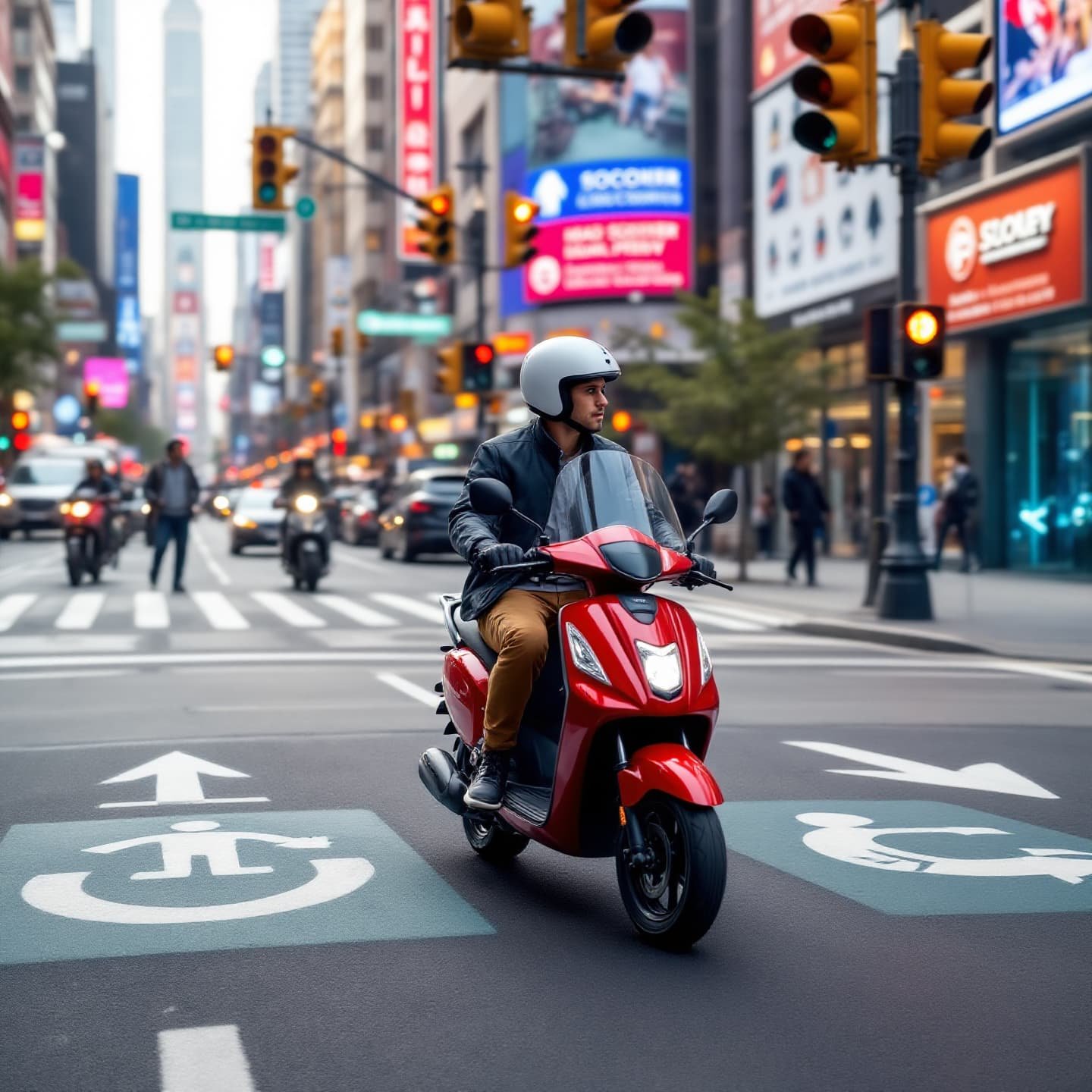
Road safety course for urban scooters
- Format: Hybrid
- Duration: 3 months
- Hours: 300 H
- Language: English / Spanish
- Registration date: 23-10-2026
- Start date: 12-12-2026
- Available places: 3
349 $
Competencies and results
What you will learn
1. **Master Urban Scooter Road Safety: A Practical and Effective Course**
- Understand traffic rules and current legislation applicable to scooters in urban environments.
- Develop practical skills for the safe and efficient riding of scooters in various urban traffic situations.
- Identify and anticipate potential risks, learning to react appropriately to prevent accidents.
- Learn defensive riding techniques, including proper positioning on the road, signaling, and communication with other road users.
- Master scooter control in different weather and road conditions, such as rain, uneven pavement, or low visibility.
- Become familiar with basic scooter maintenance, including checking brakes, tires, lights, and other essential components.
- Apply strategies for accident prevention and managing emergency situations, such as falls or collisions.
- Know and practice the use of appropriate personal protective equipment (PPE), such as helmets, gloves, and clothing Reflective.
- Continuously evaluate and improve driving skills through practice and feedback.
- Promote a road safety culture, fostering respect for other road users and individual responsibility.
2. **Optimize your Urban Mobility: Learn the Keys to Road Safety for Scooters**
- Understand the specific road safety regulations for scooters.
- Identify the most common risks and hazards in urban scooter mobility.
- Master defensive driving techniques to anticipate and avoid accidents.
- Learn to assess and improve visibility and be seen while riding a scooter.
- Know the mandatory and recommended safety equipment for scooters.
- Understand how a scooter works: brakes, lights, tires, and other critical components.
- Acquire basic first aid knowledge and what to do in case of an accident.
- Develop skills to ride safely in different weather and traffic conditions.
- Become familiar with traffic signs and their application to scooter riding.
- Learn to interact safely with other road users: pedestrians, cyclists, and vehicles.
3. Comprehensive user-oriented design and validation (from modeling to manufacturing)
You will learn to integrate the entire product development process, from initial model conception to final validation, applying user-centered methodologies. You will develop skills in parametric design, ergonomics, simulation, sustainable materials, 3D visualization, and manufacturing management, ensuring efficient, safe solutions that meet current industry standards.
4. **Navigate the City Safely: Master Scooter Road Safety**
4. **Navigate the City Safely: Master Scooter Road Safety**
- Identify and understand traffic signs and road regulations applicable to scooters.
- Assess the specific risks associated with scooter use in urban environments.
- Learn defensive driving techniques to anticipate and avoid accidents.
- Master scooter maneuvering and control skills in various situations.
- Know the mandatory and recommended personal safety equipment.
- Become familiar with basic scooter maintenance to ensure your safety.
- Develop the ability to react to emergency situations and provide first aid.
- Understand the importance of visibility and how to improve it while riding a scooter.
- Acquire knowledge about safe behavior at intersections, bike lanes, and pedestrian areas.
- Analyze the factors that influence on scooter accidents and how to minimize them.
5. **Safe Scooter Riding: An Essential Urban Road Safety Course**
5. **Safe Scooter Riding: An Essential Urban Road Safety Course**
- Understand the fundamentals of road safety as applied to scooters.
- Identify and anticipate common risks in urban environments.
- Master defensive and evasive driving techniques.
- Learn about basic scooter maintenance and pre-ride checks.
- Practice safe maneuvers in different traffic and weather conditions.
- Become familiar with traffic regulations and relevant road signs.
- Develop skills to react to emergency situations.
- Understand the importance of personal protective equipment (PPE).
- Evaluate and improve your own risk perception and decision-making.
- Acquire knowledge of basic first aid for scooter accidents.
6. **Smart Scooter Riding: Road Safety Course for the City**
6. **Smart Scooter Riding: Road Safety Course for the City**
- Identify and understand the specific traffic regulations for scooters in urban environments.
- Master defensive riding techniques to anticipate and avoid risky situations.
- Learn to assess and manage environmental hazards: pedestrians, cyclists, vehicles, and obstacles.
- Improve scooter control in various conditions: rain, wind, uneven surfaces.
- Develop skills for proper road signaling and communication.
- Learn and apply emergency braking and control techniques in critical situations.
- Become familiar with basic scooter maintenance and the importance of regular servicing.
- Understand the effects of fatigue, alcohol, and distractions on scooter riding.
- Learn to safely use personal protective equipment (helmet, Reflective clothing).
- Promote a responsible and respectful attitude towards road safety and other road users.
Who this program is for:
Road safety course for urban scooters
- Urban scooter riders, both beginners and experienced.
- People who use scooters for daily commuting in urban environments.
- Scooter users who want to improve their road safety knowledge and reduce risks.
- Anyone interested in learning specific traffic rules for scooters and safe riding techniques.
- Standards-driven curriculum: you will work with CS-27/CS-29, DO-160, DO-178C/DO-254, ARP4754A/ARP4761, ADS-33E-PRF from the first module.
- Accreditable laboratories (EN ISO/IEC 17025) with rotor bench, EMC/Lightning pre-compliance, HIL/SIL, vibrations/acoustics.
- Evidence-oriented TFM: safety case, test plan, compliance dossierand operational limits.
- Mentored by industry: teachers with experience in rotorcraft, tiltrotor, eVTOL/UAM and flight test.
- Flexible modality (hybrid/online), international cohorts and support from SEIUM Career Services.
- Ethics and security: safety-by-design approach, cyber-OT, DIH and compliance as pillars.
1.1 Importance of road safety when using urban scooters
1.2 Traffic laws and regulations applicable to scooters
1.3 Personal safety equipment: helmet, protective gear, clothing
1.4 The scooter: types, characteristics, and basic maintenance
1.5 Getting started: familiarizing yourself with the scooter and its controls
1.6 Correct riding position and balance
1.7 Traffic signs and their interpretation
1.8 Situational awareness: anticipating and preventing risks
1.9 Legal framework and local regulations for scooter use
1.10 Benefits of safe scooter riding
2.2 Introduction to the Urban Scooter: Types and Characteristics
2.2 Current Legislation: Rules and Regulations for Scooters
2.3 Traffic Signs: Interpretation and Application in the City
2.4 Mandatory and Recommended Equipment: Helmets, Protective Gear
2.5 Passive Safety: Visibility and Reflective Elements
2.6 The Scooter as a Sustainable Means of Transport
2.7 First Aid and What to Do in Case of an Accident
2.8 Civil Liability and Insurance for Scooters
2.9 Getting to Know Your Scooter: Components and Basic Maintenance
2.20 The Impact of the Scooter on Urban Mobility
3.3 Traffic Legislation: Key regulations for scooters in your city.
3.2 Required Documentation: Permits, insurance, and legal requirements.
3.3 Mandatory Safety Equipment: Helmets, lights, and reflectors.
3.4 The Scooter: Main components and their basic operation.
3.5 Pre-Trip Inspection: Checking brakes, tires, and lights.
3.6 Correct Riding Position: Proper posture and grip for safe riding.
3.7 Starting and Stopping: Safe techniques for starting and stopping.
3.8 Basic Maneuverability: Turns, curves, and initial changes of direction.
3.9 Risk Prevention: Identifying common hazards in the urban environment.
3.30 First Aid: Basic knowledge in case of an accident.
4. Introduction to Scooters: Types and Components
2. Familiarization with the Controls
3. Traffic Laws and Regulations for Scooters
4. Visibility: Equipment and Positioning in Traffic
5. Riding Zones: Urban Roads and Restrictions
6. Route Planning: Anticipation and Route Selection
7. Identifying Critical Points in the City
8. Road Safety Elements in the Urban Environment
9. Traffic Signs: Interpretation and Reaction
40. Basic Scooter Maintenance: Inspection and Care
5.5 Types of Scooters: Models and Characteristics
5.5 Key Scooter Components: Familiarization
5.3 Traffic Regulations: Legislation Applicable to Scooters
5.4 Traffic Signs: Interpretation and Application
5.5 Mandatory Safety Equipment
5.6 Basic Scooter Maintenance: Inspections and Care
5.7 Getting Started: Starting, Accelerating, and Braking
5.8 Correct Posture and Balance
5.9 Visibility: How to Be Seen in the City
5.50 Road Responsibility and Awareness
6.6 Position and Posture: Fundamentals for Safe Driving
6.2 Starting and Stopping: Safe and Efficient Techniques
6.3 Accelerator and Brake Control: Mastery and Anticipation
6.4 Visibility and Perception: Recognizing the Urban Environment
6.5 Turns and Maneuvers: Techniques for Curves and Changes of Direction
6.6 Traffic Lights and Signs: Interpretation and Appropriate Response
6.7 Intersections and Crossings: Priorities and Precautions
6.8 Safe Following Distance: Maintaining and Anticipating
6.9 Defensive Driving: Anticipating Risks and Reacting
6.60 Safety in Adverse Conditions: Rain, Night, etc.
- Hands-on methodology: test-before-you-trust, design reviews, failure analysis, compliance evidence.
- Software (depending on licenses/partners): MATLAB/Simulink, Python (NumPy/SciPy), OpenVSP, SU2/OpenFOAM, Nastran/Abaqus, AMESim/Modelica, acoustics tools, planning toolchains DO-178C.
- SEIUM Laboratories: scale rotor bench, vibrations/acoustics, EMC/Lightning pre-compliance, HIL/SIL for AFCS, data acquisition with strain gauging.
- Standards and compliance: EN 9100, 17025, ISO 27001, GDPR.
Capstone-type projects
- Risk Analysis and Safe Route Design: Evaluation of critical points in the city, design of optimized and safe routes for scooters, considering factors such as traffic, infrastructure, and visibility.
- Scooter Riding Simulator Development: Creation of an interactive simulator that allows users to practice and improve their riding skills in different urban scenarios, including risky situations and adverse weather conditions.
- Real-Time Feedback System Implementation: Design of a system that provides real-time feedback to scooter riders, alerting them to potential hazards, such as nearby vehicles, pedestrians, or road conditions.
- Safe Route Design: Analysis of critical points and optimization of urban routes.
- Road Scenario Simulation: Creation of simulations to predict risks and evaluate safety.
- Safety Protocol Development: Creation of guidelines and procedures for safe scooter riding.
- Mobile Safety Application: Design of an app to monitor and improve riding.
- Safe Route Planning: Interactive map design with critical points and safety recommendations.
- Scenario Simulation: Creation of virtual scooter riding simulations to practice reacting to different risk situations.
- Interactive Guide Development: Creation of a multimedia guide with road safety tips, demonstration videos, and knowledge tests.
- Accident Data Analysis: Investigation and analysis of scooter accident data to identify patterns and propose preventative measures.
- Safe Route Design: Analysis of urban hazards and design of optimal scooter routes.
- Scenario Simulation: Development of simulations for practicing safe maneuvers.
- Educational Platform Development: Creation of an online platform with interactive lessons and assessments.
- Risk Map Design: Creation of an interactive map of urban road risks for scooters.
Admissions, fees, and scholarships
- Profile: Background in Computer Engineering, Mathematics, Statistics, or related fields; practical experience in NLP and valued information retrieval systems.
- Documentation: Updated CV, academic transcript, SOP/statement of purpose, project examples or code (optional).
- Process: Application → Technical evaluation of profile and experience → Technical interview → Review of case studies → Final decision → Enrollment.
- Fees:
- Single payment: 10% discount.
- Payment in 3 installments: No fees; 30% upon registration + 2 equal monthly payments of the remaining 35%.
Monthly payment: available with a 7% commission on the total; annual review.
Scholarships: based on academic merit, financial need, and promoting inclusion; agreements with companies in the sector for partial or full scholarships.
See “Calendar & Calls for Applications,” “Scholarships & Grants,” and “Fees & Financing” in the SEIUM mega-menu.
Do you have any questions?
Our team is ready to help you. Contact us, and we will respond as soon as possible.
F. A. Q
Frequently asked questions
Yes, we have international certification
Yes: experimental models, real data, applied simulations, professional environments, real case studies.
It is not mandatory. We offer leveling tracks and tutoring.
Completely. It covers e-propulsion, integration, and emerging regulations (SC-VTOL).
Recommended. There are also internal challenges and consortiums.
Yes. Online/hybrid modality with planned labs and visa support (see “Visa & Residence”).