

Motorcycle airbag course
About our
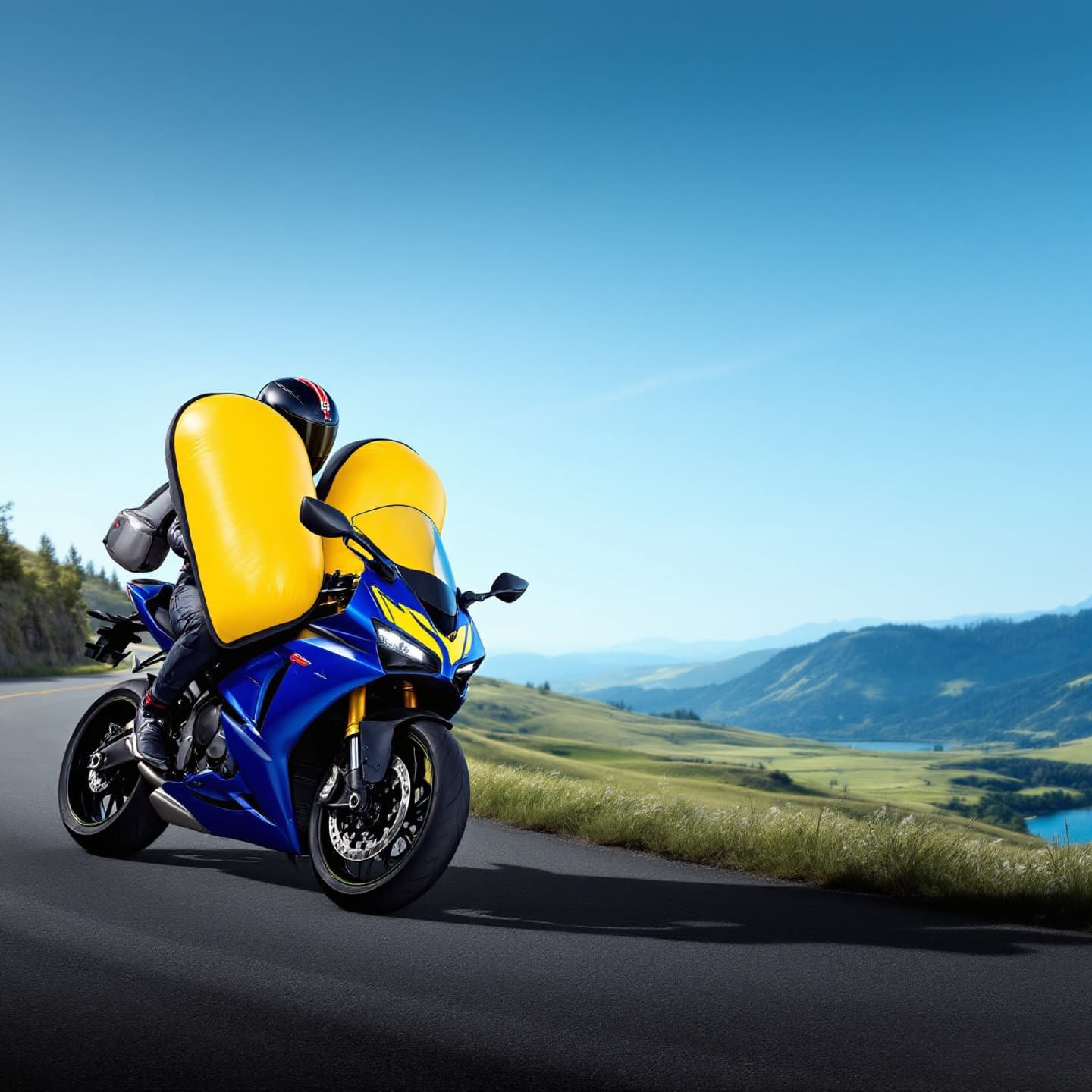
The Motorcycle Airbag Course explores active safety technology, focusing on the design, operation, and maintenance of motorcycle airbag systems. It centers on impact detection, rapid inflation, and rider protection. It addresses the integration of components such as acceleration sensors, electronic control units, and deployment systems, linking them to road safety and automotive engineering. It delves into the application of resistant materials and optimized designs for energy absorption in the event of a collision, crucial for the motorcyclist’s survival.
The program includes hands-on experience in systems assessment, fault diagnosis, and regulatory compliance. This training prepares participants for roles such as specialized technicians, safety engineers, and motorcycle industry professionals, strengthening their employability in workshops, manufacturers, and research and development centers.
Motorcycle airbag course
- Format: Hybrid
- Duration: 3 months
- Hours: 300 H
- Language: English / Spanish
- Registration date: 23-10-2026
- Start date: 12-12-2026
- Available places: 2
425 $
Competencies and results
What you will learn
1. Comprehensive Mastery of Motorcycle Airbags: Design, Operation, and Maintenance
- Understand the fundamental principles of motorcycle airbag design, including safety and performance considerations.
- Explore the evolution of motorcycle airbag systems, from early prototypes to the most advanced technologies.
- Analyze the key components of a motorcycle airbag system: sensors, control unit, inflator, and airbag.
- Understand the operation of impact detection sensors and the algorithms used to determine when to deploy the airbag.
- Study the different types of inflators and their activation mechanisms, including cold gas and hot gas inflators.
- Gain in-depth knowledge of airbag design and manufacturing, including materials, shapes, and folding techniques.
- Learn about the testing and certification of motorcycle airbag systems, and how their performance is evaluated.
- Acquire knowledge about the preventive and corrective maintenance of
- Identify and diagnose common problems in airbag systems, including the inspection and replacement of components.
- Understand the importance of road safety and how motorcycle airbag systems contribute to reducing injuries and fatalities.
2. Optimization of Airbag Systems for Motorcycles: Analysis and Practical Application
2. Optimization of Motorcycle Airbag Systems: Analysis and Practical Application
Understand the anatomy and operation of motorcycle airbag systems.
Study the key components: sensors, control units, inflators, and airbags.
Analyze the specific challenges of integrating airbags into motorcycles: space, weight, and design.
Explore the relevant safety regulations and standards for motorcycle airbag systems.
Evaluate different types of sensors (accelerometers, gyroscopes) and their applications.
Learn about collision detection algorithms and their implementation in the control unit.
Study the airbag inflation processes: types of inflators and response times.
Analyze the materials used in airbag manufacturing and their abrasion resistance.
3. Comprehensive user-oriented design and validation (from modeling to manufacturing)
You will learn to integrate the entire product development process, from initial model conception to final validation, applying user-centered methodologies. You will develop skills in parametric design, ergonomics, simulation, sustainable materials, 3D visualization, and manufacturing management, ensuring efficient, safe solutions that meet current industry standards.
4. Specialization in Motorcycle Airbags: Technical Study and Risk Prevention
4. **Specialization in Motorcycle Airbags: Technical Study and Risk Prevention**
- Fundamentals of road safety and legislation applicable to motorcycle protection systems.
- Operating principles and key components of motorcycle airbags: sensors, control units, inflators, and airbags.
- Design and optimization of airbag systems: location, volume, shape, and materials of the airbag.
- Study of different types of impacts and accident scenarios in motorcycles, and their relationship to airbag activation.
- Analysis of the motorcyclist’s kinematics at the moment of impact and the forces acting on the body.
- Simulation and modeling of airbag systems using specialized software to evaluate their performance and effectiveness.
- Testing and trials of motorcycle airbags: impact tests, resistance tests, and aging tests.
- Regulations and safety standards for motorcycle airbags: homologation and certification.
- Maintenance and repair of motorcycle airbag systems: inspection, diagnosis, and component replacement.
- Risk prevention and safety measures for the correct use and handling of motorcycle airbags.
5. Airbags in Motorcycles: Technical Mastery and Implementation and Repair Strategies
5. Airbags in Motorcycles: Technical Mastery and Implementation and Repair Strategies
Understand the operation of airbag systems in motorcycles, including sensors, control units, and airbag deployment.
Diagnosticate faults in airbag systems using advanced diagnostic tools.
Perform repairs and replacements of defective airbag system components, complying with safety standards.
Know the different airbag technologies used in motorcycles, such as seat, jacket, and frame airbags.
Implement strategies for implementing airbag systems in motorcycles, considering integration with other vehicle systems.
Evaluate the performance and effectiveness of airbag systems by conducting tests and simulations.
Apply the acquired knowledge to develop innovative solutions in the field of motorcycle safety.
Understand the Regulations and standards related to airbag systems in motorcycles.
Learn about the preventive maintenance of airbag systems to ensure their proper long-term operation.
Acquire practical skills in handling specialized tools and equipment used in airbag repair.
6. Airbags in Motorcycles: Analysis, Design and Optimization for Road Safety
6. Airbags in Motorcycles: Analysis, Design, and Optimization for Road Safety
Understand the function and necessity of airbags in motorcycles.
Study airbag detection and activation systems, including sensors and algorithms.
Analyze the different types of motorcycle airbags and their strategic locations.
Evaluate the materials used in airbag manufacturing and their properties.
Design and optimize the shape and size of airbags for effective protection.
Investigate airbag inflation and deflation processes and their response speed.
Analyze the integration of airbags with the overall motorcycle design.
Consider road safety factors and their impact on airbag design.
Perform simulations and impact tests for Evaluate the performance of airbags.
Understand the regulations and standards related to airbags in motorcycles.
Identify areas for improvement and future trends in airbag development.
Study success and failure cases in the implementation of airbags in motorcycles.
Who this program is for:
Motorcycle airbag course
- Technicians and professionals in the motorcycle industry, including manufacturers (OEMs), repair shops, and maintenance facilities.
- Engineers and designers interested in active and passive safety systems for motorcycles.
- Individuals wishing to specialize in the installation, diagnosis, repair, and maintenance of motorcycle airbags.
- Road safety professionals and insurance adjusters who wish to understand the operation and evaluation of motorcycle airbag systems.
Recommended qualifications: Basic knowledge of motorcycle mechanics and electronics. Experience with safety systems is a plus.
- Standards-driven curriculum: you will work with CS-27/CS-29, DO-160, DO-178C/DO-254, ARP4754A/ARP4761, ADS-33E-PRF from the first module.
- Accreditable laboratories (EN ISO/IEC 17025) with rotor bench, EMC/Lightning pre-compliance, HIL/SIL, vibrations/acoustics.
- Evidence-oriented TFM: safety case, test plan, compliance dossierand operational limits.
- Mentored by industry: teachers with experience in rotorcraft, tiltrotor, eVTOL/UAM and flight test.
- Flexible modality (hybrid/online), international cohorts and support from SEIUM Career Services.
- Ethics and security: safety-by-design approach, cyber-OT, DIH and compliance as pillars.
1.1 Introduction to motorcycle safety and the evolution of protection systems.
1.2 Fundamental principles of airbags: operation and key components.
1.3 Comparison between airbags for cars and motorcycles: challenges and adaptations.
1.4 Types of airbags for motorcycles: vests, jackets, and integrated systems.
1.5 Regulations and safety standards related to motorcycle airbags.
1.6 Airbag design: materials, sensors, and activation algorithms.
1.7 Advantages and limitations of airbags in motorcycles.
1.8 The future of airbags in motorcycles: trends and technological developments.
2.2 Fundamentals of Motorcycle Airbag Optimization
2.2 Analysis of Existing Airbag Systems
2.3 Design of Airbag Deployment Algorithms
2.4 Sensors and Control Units: Selection and Calibration
2.5 Integration of Airbags into the Motorcycle Structure
2.6 Impact Testing and System Validation
2.7 Practical Applications: Case Studies and Real-World Scenarios
2.8 Troubleshooting and Diagnosing Problems in Optimized Systems
2.9 Airbag System Maintenance and Upgrades
2.20 Strategies for Effective Implementation and Road Safety
3.3 Introduction to Road Safety and Airbags in Motorcycles
3.2 Operation of Motorcycle Airbag Systems: Components and Dynamics
3.3 Advanced Airbag Technologies: Sensors, Actuators, and Controllers
3.4 Impact of Airbags on Reducing Injuries and Fatalities
3.5 Safety Regulations and Standards for Motorcycle Airbags
3.6 Design and Optimization of Airbags for Different Types of Motorcycles
3.7 Preventive and Corrective Maintenance of Airbag Systems
3.8 Troubleshooting and Solutions for Airbag Systems
3.9 Airbag Implementation: Strategies and Considerations
3.30 The Future of Airbags: Innovation and Technological Development
4.4 Introduction to Motorcycle Airbag Systems: Components and Basic Operation
4.2 Airbag Design and Architecture: Types and Locations on Motorcycles
4.3 Sensors and Actuators: Impact Detection Principles
4.4 Control Electronics: Electronic Control Units (ECUs) and Their Programming
4.5 Materials and Manufacturing: Selection and Characteristics of Airbag Components
4.6 Diagnosis and Maintenance: Essential Tools and Procedures
4.7 Regulations and Standards: Compliance with Road Safety Regulations
4.8 Failure Analysis and Risk Prevention: Problem Identification and Mitigation
4.9 Implementation and Adaptation: Integrating Airbags into Different Motorcycle Models
4.40 Case Studies: Analysis of Specific Airbag Systems and Their Performance
5.5 Key components and systems of motorcycle airbags: types, sensors, and actuators.
5.5 Operating principles and design of airbag systems.
5.3 Troubleshooting and repair of airbag systems.
5.4 Preventive and corrective maintenance of motorcycle airbags.
5.5 Specialized tools and equipment for airbag repair.
5.6 Airbag implementation strategies in different motorcycle models.
5.7 Safety protocols and precautions when working with airbags.
5.8 Failure analysis and repair solutions.
5.9 Design of airbag control circuits and systems.
5.50 Case studies: Implementation and repair of airbags in specific motorcycles.
6.6 Design Principles for Motorcycle Airbag Systems
6.2 Airbag Component Analysis and Functioning
6.3 Design Optimization for Specific Impacts
6.4 Selection of Airbag Materials and Components
6.5 Airbag Integration into the Motorcycle Structure
6.6 Airbag System Testing and Validation
6.7 Failure Analysis and Failure Modes in Airbags
6.8 Optimization Strategies for Different Motorcycle Models
6.9 Cost and Efficiency Considerations in Design
6.60 Safety Regulations and Standards for Motorcycle Airbags
- Hands-on methodology: test-before-you-trust, design reviews, failure analysis, compliance evidence.
- Software (depending on licenses/partners): MATLAB/Simulink, Python (NumPy/SciPy), OpenVSP, SU2/OpenFOAM, Nastran/Abaqus, AMESim/Modelica, acoustics tools, planning toolchains DO-178C.
- SEIUM Laboratories: scale rotor bench, vibrations/acoustics, EMC/Lightning pre-compliance, HIL/SIL for AFCS, data acquisition with strain gauging.
- Standards and compliance: EN 9100, 17025, ISO 27001, GDPR.
Capstone-type projects
- Motorcycle Airbag: Deployment design and simulation; impact and energy absorption analysis; sensor and algorithm optimization.
- Diagnostics and Repair: Repair tools and techniques; safety protocols; failure analysis and solutions.
- Implementation and Testing: Integration into motorcycles; impact testing; performance and road safety evaluation.
- Motorcycle Airbag: Design, analysis, and simulation.
- Activation Systems: Sensors and algorithms.
- Integration and Testing: Implementation and validation.
- Maintenance and Repair: Protocols and safety.
- Motorcycle Airbag: Design and Maintenance: CFD simulation; impact analysis; materials and seams.
- Airbag System: Optimization: Activation algorithms; sensors; crash testing.
- Road Safety and Airbags: Accident studies; regulations; user-centered design.
- Motorcycle Airbags: Prevention and Risks: Diagnosis; repair; fault evaluation.
- Implementation and Repair: Tools; protocols; ECU programming.
- Motorcycle Airbags: Analysis and Design: 3D modeling; physical testing; virtual simulation.
- Engineering and Safety: Standardization; certification; destructive testing.
- Motorcycle Airbags: Fundamentals and Solutions: Sensors; inflated; integration.
- Motorcycle Airbag: Design, analysis, and simulation of systems.
- Implementation and Maintenance: Strategies, protocols, and risk prevention.
- Optimization: Technical analysis, road safety, and cutting-edge solutions.
Admissions, fees, and scholarships
- Profile: Background in Computer Engineering, Mathematics, Statistics, or related fields; practical experience in NLP and valued information retrieval systems.
- Documentation: Updated CV, academic transcript, SOP/statement of purpose, project examples or code (optional).
- Process: Application → Technical evaluation of profile and experience → Technical interview → Review of case studies → Final decision → Enrollment.
- Fees:
- Single payment: 10% discount.
- Payment in 3 installments: No fees; 30% upon registration + 2 equal monthly payments of the remaining 35%.
Monthly payment: available with a 7% commission on the total; annual review.
Scholarships: based on academic merit, financial need, and promoting inclusion; agreements with companies in the sector for partial or full scholarships.
See “Calendar & Calls for Applications,” “Scholarships & Grants,” and “Fees & Financing” in the SEIUM mega-menu.
Do you have any questions?
Our team is ready to help you. Contact us, and we will respond as soon as possible.
F. A. Q
Frequently asked questions
Yes, we have international certification
Yes: experimental models, real data, applied simulations, professional environments, real case studies.
It is not mandatory. We offer leveling tracks and tutoring.
Completely. It covers e-propulsion, integration, and emerging regulations (SC-VTOL).
Recommended. There are also internal challenges and consortiums.
Yes. Online/hybrid modality with planned labs and visa support (see “Visa & Residence”).