

Course on lead-acid vs. lithium batteries in motorcycles
About our
Lead-acid vs. Lithium-ion Battery Course for Motorcycles
Compare both technologies in terms of performance, lifespan, and safety. Analyze the advantages and disadvantages of each battery type, including weight, size, and cost. Focus on installation, maintenance, and charging of batteries, with special attention to Battery Management Systems (BMS) in lithium-ion batteries. Explore practical applications and considerations for choosing the right battery based on the type of motorcycle and its intended use.
The course offers a technical perspective on the reliability and environmental impact of each technology, including information on recycling. It focuses on identifying problems, diagnosing failures, and understanding safety-related regulations. It includes practical examples and case studies to facilitate understanding and application of the knowledge.
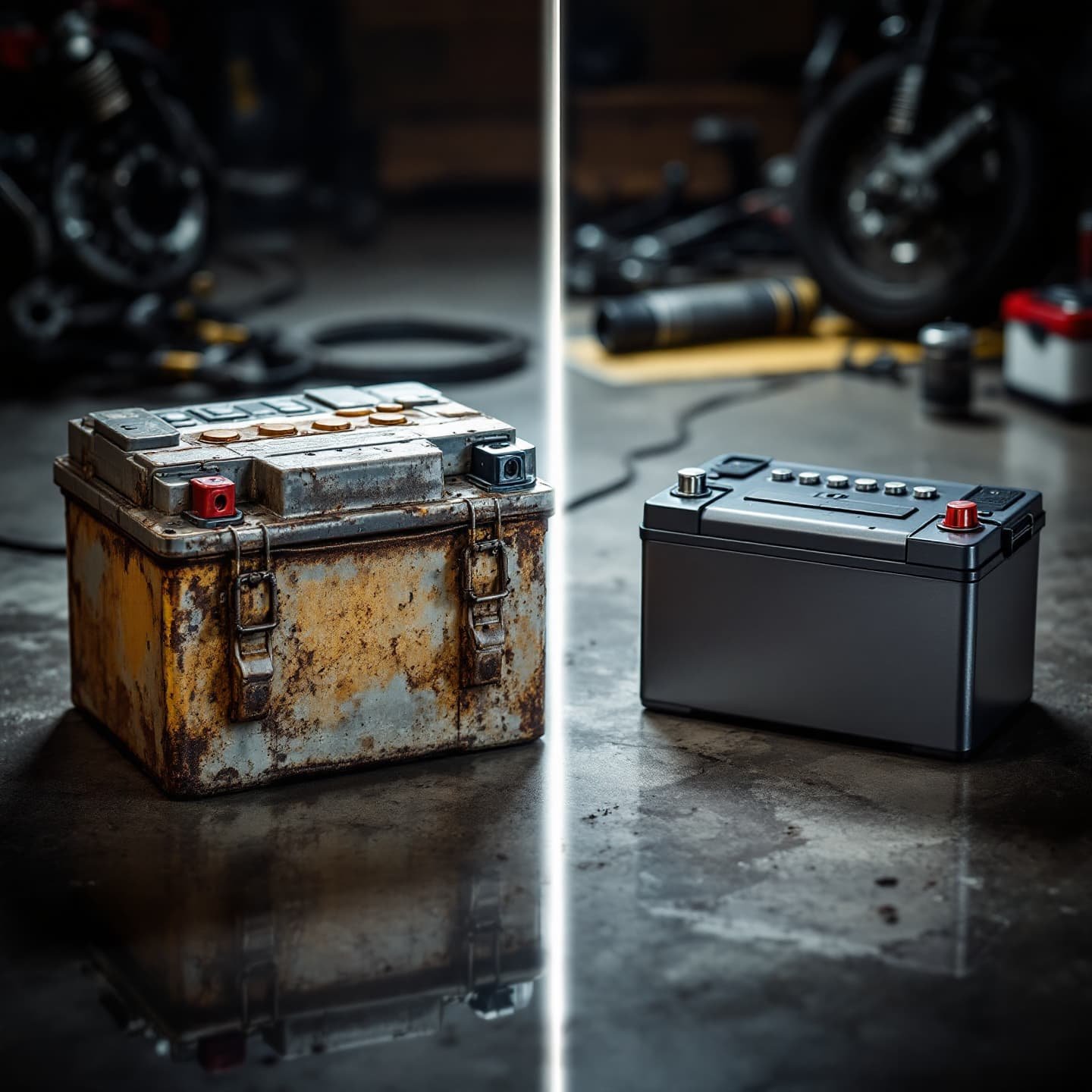
Course on lead-acid vs. lithium batteries in motorcycles
- Format: Hybrid
- Duration: 3 months
- Hours: 300 H
- Language: English / Spanish
- Registration date: 23-10-2026
- Start date: 12-12-2026
- Available places: 3
575 $
Competencies and results
What you will learn
1. Lead-Acid vs. Lithium Batteries for Motorcycles: Learn the Switch
-
- 1.
- Understand the evolution of motorcycle batteries: from lead-acid to lithium.
2.
-
- Compare the key characteristics of lead-acid and lithium batteries: weight, lifespan, performance, and safety.
3.
-
- Identify the advantages and disadvantages of each type of motorcycle battery.
4.
-
- Learn about lithium battery technology: types (LiFePO4, Li-ion), components, and operation.
5.
-
- Understand Battery Management Systems (BMS) and their importance in lithium batteries.
6.
-
- Evaluate the compatibility of lithium batteries with different motorcycle models.
7.
-
- Learn how to safely install and maintain lithium batteries.
8.
-
- Understand the safety considerations when handling lithium batteries Lithium: charging, discharging, storage, and transport.
9.
-
- Analyze the environmental impact of lead-acid and lithium batteries: recycling and sustainability.
10.
- Explore future trends in motorcycle batteries: new technologies and developments.
2. Motorcycle Battery Comparison: Lead-Acid vs. Lithium-Ion, Key Criteria
- Identify the fundamental differences between lead-acid and lithium batteries used in motorcycles.
- Evaluate the key criteria for selecting the most suitable battery for a motorcycle, including:
- Cold Cranking Amps (CCA).
- Rated Capacity (Ah).
- Weight and Dimensions.
- Cycle Life.
- Initial and Long-Term Costs.
- Safety and Maintenance.
- Analyze the specific advantages and disadvantages of each battery type (lead vs. lithium) in the context of motorcycle use, considering performance, reliability, and durability.
- Compare the impact of lead-acid and lithium batteries on overall motorcycle performance, such as acceleration, fuel efficiency, and electrical system stability.
- Evaluate the environmental and sustainability factors associated with the production, use, and end-of-life disposal of each type of battery.
3. Comprehensive user-oriented design and validation (from modeling to manufacturing)
You will learn to integrate the entire product development process, from initial model conception to final validation, applying user-centered methodologies. You will develop skills in parametric design, ergonomics, simulation, sustainable materials, 3D visualization, and manufacturing management, ensuring efficient, safe solutions that meet current industry standards.
4. Motorcycle Batteries: Breaking Down Lead vs. Lithium, Impact and Choice
4. Motorcycle Batteries: Breaking Down Lead vs. Lithium, Impact, and Choice
- Comprehensive comparison between lead-acid and lithium-ion batteries: Advantages, disadvantages, and performance in motorcycles.
- Understanding the internal chemistry: Electrochemical processes that define energy generation in both types of batteries.
- Discharge curve analysis: Interpreting battery behavior under different loads and temperatures.
- Environmental impact: Life cycle assessment, recycling, and disposal of each battery type, including regulations.
- Needs-based selection: Key factors for choosing the right battery, including motorcycle type, riding style, and budget.
- Safety considerations: Safe handling, charging, and storage of lead-acid and lithium-ion batteries.
- Maintenance and care: Practices to extend battery life and optimize performance.
- Latest technologies: Exploring innovations in motorcycle batteries, such as solid-state batteries.
5. Motorcycle Batteries: Mastering Lead-Lithium, Expert Guide
- Identify the key differences between lead-acid and lithium batteries in motorcycles.
- Understand the composition, operation, and characteristics of lead-acid batteries, including their maintenance and troubleshooting of common problems.
- Analyze lithium battery technology, including its different types (LiFePO4, Li-ion), advantages, and disadvantages in the context of motorcycles.
- Evaluate the compatibility of lithium batteries with motorcycle electrical systems, including charge and discharge management.
- Diagnosticate and troubleshoot problems related to motorcycle batteries, both lead-acid and lithium.
- Learn how to perform battery performance and lifespan tests using appropriate tools and techniques.
- Implement safety measures for the handling, installation, and storage of lead-acid and lithium batteries, including the use of personal protective equipment (PPE).
- Master The principles of battery charging and discharging, including the use of appropriate chargers and damage prevention.
Selecting the correct battery for different types of motorcycles and needs, considering factors such as size, performance, and durability.
Applying technical knowledge for the preventive and corrective maintenance of motorcycle batteries, optimizing their lifespan and performance.
6. Motorcycle Batteries: Lead vs. Lithium, Analysis and Energy Optimization
- Understand lead-acid and lithium battery technology for motorcycles.
- Compare the technical characteristics of both technologies: voltage, capacity, cold cranking current (CCA), cycle life, weight, and dimensions.
- Analyze the advantages and disadvantages of each battery type based on performance and durability.
- Evaluate the environmental impact of lead-acid and lithium batteries, including recycling and waste management.
- Learn about motorcycle battery charging and discharging systems, including regulators and rectifiers.
- Optimize battery energy performance, considering factors such as motorcycle power consumption and usage conditions.
- Identify and troubleshoot common problems related to motorcycle batteries.
- Understand the operation of battery management systems (BMS) in lithium batteries.
- Explore battery customization and upgrade options.
such as using higher capacity cells.
Maintaining and extending the lifespan of motorcycle batteries, including proper charging and storage practices.
Who this program is for:
Course on lead-acid vs. lithium batteries in motorcycles
- Engineers with degrees in Aerospace Engineering, Mechanical Engineering, Industrial Engineering, Electrical Engineering, or related fields.
- Motorcycle industry professionals, including technicians, mechanics, designers, and engineers, interested in the transition to electric propulsion systems.
- Motorcycle technicians and mechanics who wish to expand their knowledge of battery systems and their maintenance.
- Electric motorcycle enthusiasts and hobbyists seeking a thorough understanding of battery technology and its impact on performance and efficiency.
- Standards-driven curriculum: you will work with CS-27/CS-29, DO-160, DO-178C/DO-254, ARP4754A/ARP4761, ADS-33E-PRF from the first module.
- Accreditable laboratories (EN ISO/IEC 17025) with rotor bench, EMC/Lightning pre-compliance, HIL/SIL, vibrations/acoustics.
- Evidence-oriented TFM: safety case, test plan, compliance dossierand operational limits.
- Mentored by industry: teachers with experience in rotorcraft, tiltrotor, eVTOL/UAM and flight test.
- Flexible modality (hybrid/online), international cohorts and support from SEIUM Career Services.
- Ethics and security: safety-by-design approach, cyber-OT, DIH and compliance as pillars.
1.1 Types of Motorcycle Batteries: Introduction to Lead-Acid and Lithium
1.2 Operating Principles: Basic Comparison of Lead vs. Lithium
1.3 General Advantages and Disadvantages: A First Look
1.4 Key Components: Motorcycle Battery Structure
1.5 Technological Evolution: A Brief Overview
1.6 Importance of Choosing the Right Battery: Performance and Safety
1.7 Concepts of Voltage, Amperage, and Capacity: Fundamentals
1.8 Environmental Impact: Initial Considerations
1.9 Initial Cost and Life Cycle: Initial Assessments
1.10 Course Introduction: Methodology and Objectives
2.2 Introduction to Motorcycle Batteries: Types and Functions
2.2 Lead-Acid Batteries: Operation and Characteristics
2.3 Lithium Batteries: Types, Technology, and Advantages
2.4 Detailed Comparison: Lead-Acid vs. Lithium
2.5 Performance and Lifespan: Comparative Analysis
2.6 Weight and Size: Impact on Motorcycle Design
2.7 Cost and Profitability: Economic Considerations
2.8 Safety and Maintenance: Care and Precautions
2.9 Specific Applications: Sport, Urban, and Electric Motorcycles
2.20 Selection Guide: Which Battery is Best for You?
3.3 Fundamentals of Lead-Acid Motorcycle Batteries
3.2 Introduction to Lithium Motorcycle Batteries
3.3 Comparison: Advantages and Disadvantages of Lead-Acid vs. Lithium
3.4 Key Criteria: Considerations for Battery Selection
3.5 Technical Analysis: Performance and Energy Efficiency
3.6 Environmental Impact and Sustainability of Batteries
3.7 Maintenance and Lifespan of Motorcycle Batteries
3.8 Installation and Safety Guide: Lead-Acid and Lithium
3.9 Case Studies: Real-World Applications and Experiences
3.30 Energy Optimization: Tips and Strategies
4.4 Introduction to Motorcycle Battery Technology: Lead-Acid vs. Lithium
4.2 Components and Operation of Lead-Acid Batteries
4.3 Components and Operation of Lithium-Ion Batteries
4.4 Performance Comparison: Starting Power, Running Power, and Lifespan
4.5 Environmental Impact: Sustainability and Battery Recycling
4.6 Safety: Considerations and Risks Associated with Each Battery Type
4.7 Cost and Value: Economic Analysis and Price-Quality Ratio
4.8 Installation and Compatibility: Guide to Battery Selection
4.9 Maintenance and Care: Extending Your Battery’s Lifespan
4.40 Conclusion: Choosing the Best Battery for Your Motorcycle
5.5 Battery Types: Lead-Acid and Lithium, An Introduction
5.5 Fundamentals of Motorcycle Battery Technology
5.3 Key Advantages and Disadvantages: Lead vs. Lithium
5.4 Essential Components of a Motorcycle Battery
5.5 The Impact of the Switch: Why Consider Lithium?
5.6 Safety and Durability: An Initial Comparison
5.7 Cost and Value: A Preliminary Analysis
5.8 Market Trends: The Future of Motorcycle Batteries
5.9 Essential Terminology: A Glossary of Key Terms
5.50 Introduction to Subsequent Modules: Delving Deeper into the Topic
6.6 Introduction to Motorcycle Batteries: Energy Evolution
6.2 Lead-Acid: Operation, Advantages, and Disadvantages
6.3 Lithium: Technology, Types, and Applications in Motorcycles
6.4 Detailed Comparison: Performance and Durability
6.5 Cost Analysis: Lead vs. Lithium in the Long Term
6.6 Environmental Impact: Sustainability and Recycling
6.7 Maintenance and Care: Optimizing Battery Lifespan
6.8 Battery Selection: A User’s Guide
6.9 Innovations and the Future: Trends in Motorcycle Batteries
6.60 Conclusions and Recommendations: Informed Choice
- Hands-on methodology: test-before-you-trust, design reviews, failure analysis, compliance evidence.
- Software (depending on licenses/partners): MATLAB/Simulink, Python (NumPy/SciPy), OpenVSP, SU2/OpenFOAM, Nastran/Abaqus, AMESim/Modelica, acoustics tools, planning toolchains DO-178C.
- SEIUM Laboratories: scale rotor bench, vibrations/acoustics, EMC/Lightning pre-compliance, HIL/SIL for AFCS, data acquisition with strain gauging.
- Standards and compliance: EN 9100, 17025, ISO 27001, GDPR.
Capstone-type projects
- Motorcycle Batteries: Lead-Acid vs. Lithium-Ion Comparison; performance, durability, safety.
- Cost-Benefit Analysis: Detailed study of both technologies.
- Energy Optimization: Selection and management for efficiency.
- Selection Guide: Key factors for the consumer.
- Motorcycle Batteries: Lead-Acid vs. Lithium-Ion, Detailed Comparison
- Design: Optimal Selection, Key Criteria, and In-Depth Analysis
- Analysis: Impact, Energy Optimization, and Expert Guide
- Evaluation: Complete Choice, Advantages, and Disadvantages
- Motorcycle Batteries: Lead-Lithium Comparative Analysis; Key Criteria (Lifespan, Weight, Cost); Impact and Choice.
- In-Depth Analysis: Design, Performance, Energy Optimization, Complete Guide.
- Technical Expertise: Expert Technical Breakdown, Analysis, and Optimization.
- Motorcycle Batteries: Lead-Acid vs. Lithium-Ion: Comparative design, life cycle, and performance.
- Market Analysis: Costs, trends, and environmental impact.
- Energy Optimization: Simulation and recommendations for users.
Admissions, fees, and scholarships
- Profile: Background in Computer Engineering, Mathematics, Statistics, or related fields; practical experience in NLP and valued information retrieval systems.
- Documentation: Updated CV, academic transcript, SOP/statement of purpose, project examples or code (optional).
- Process: Application → Technical evaluation of profile and experience → Technical interview → Review of case studies → Final decision → Enrollment.
- Fees:
- Single payment: 10% discount.
- Payment in 3 installments: No fees; 30% upon registration + 2 equal monthly payments of the remaining 35%.
Monthly payment: available with a 7% commission on the total; annual review.
Scholarships: based on academic merit, financial need, and promoting inclusion; agreements with companies in the sector for partial or full scholarships.
See “Calendar & Calls for Applications,” “Scholarships & Grants,” and “Fees & Financing” in the SEIUM mega-menu.
Do you have any questions?
Our team is ready to help you. Contact us, and we will respond as soon as possible.
F. A. Q
Frequently asked questions
Yes, we have international certification
Yes: experimental models, real data, applied simulations, professional environments, real case studies.
It is not mandatory. We offer leveling tracks and tutoring.
Completely. It covers e-propulsion, integration, and emerging regulations (SC-VTOL).
Recommended. There are also internal challenges and consortiums.
Yes. Online/hybrid modality with planned labs and visa support (see “Visa & Residence”).