

Course on adjustment and maintenance of competition brakes
About our
Competition Brake Adjustment and Maintenance Course
The Competition Brake Adjustment and Maintenance Course focuses on acquiring specific skills and knowledge for the maintenance and tuning of high-performance braking systems in competition vehicles. It covers aspects such as fault diagnosis, fine adjustments, component selection, and bleeding techniques, aiming to maximize efficiency and safety during braking. It includes both theory and practice, using specialized tools and simulating competition situations to achieve a high level of technical preparation.
This course delves into the knowledge of different types of brake discs, pads, and brake fluids, as well as the hydraulics and operation of ABS and other electronic assistance systems. The course equips participants to identify and troubleshoot common problems, optimize performance, and ensure brake reliability under extreme conditions. It is designed for professionals and enthusiasts seeking specialization in this crucial aspect of motorsport.
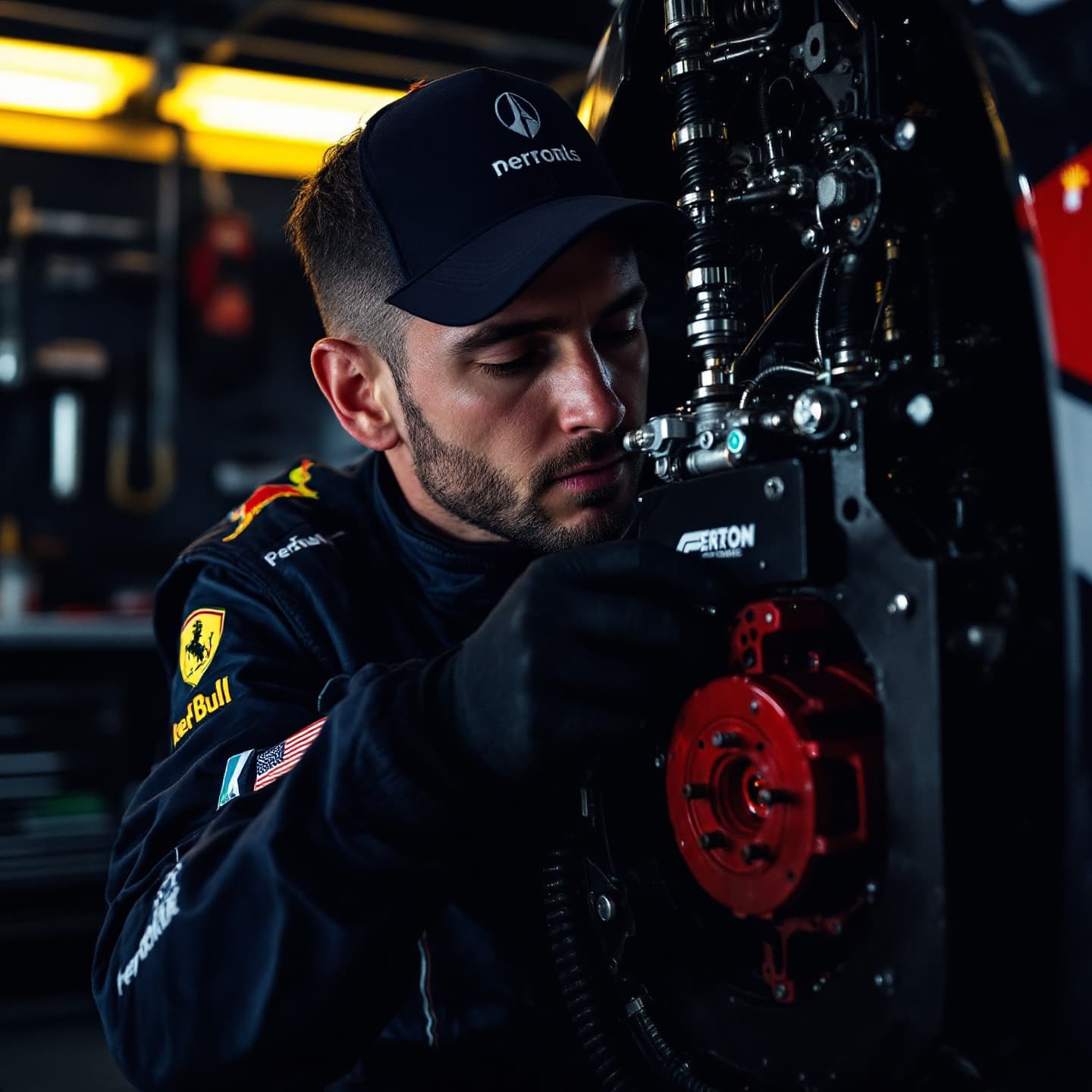
Course on adjustment and maintenance of competition brakes
- Format: Hybrid
- Duration: 3 months
- Hours: 300 H
- Language: English / Spanish
- Registration date: 23-10-2026
- Start date: 12-12-2026
- Available places: 3
699 $
Competencies and results
What you will learn
1. Optimization and Diagnosis of Competition Brake Systems
- Understand the fundamental principles of racing brake systems, including their design, components, and operation.
- Identify and diagnose common faults in racing brake systems, such as overheating, fading, and premature wear.
- Analyze the different types of brake components used in racing, such as discs, pads, calipers, and master cylinders.
- Optimize the performance of brake systems by selecting appropriate components and configuring settings.
- Use advanced diagnostic tools to assess the condition of brake systems, such as data analyzers and dynamometers.
- Apply preventative maintenance techniques to ensure the reliability and durability of brake systems.
- Interpret telemetry data to identify areas for improvement in brake performance.
- Learn about the latest technologies and trends in racing brake systems, such as ceramic brakes and Braking control systems.
Perform simulations and calculations to predict the performance of braking systems under different racing conditions.
Develop practical skills for the repair and maintenance of racing braking systems.
2. Design and Tuning of Competition Brakes: Performance and Reliability
- Design and operating principles of high-performance braking systems.
- Component selection: discs, calipers, pads, and brake fluid, considering materials and technical specifications.
- Calculating braking forces and distribution to optimize efficiency and stability.
- Adjusting brake settings for different types of competition and track conditions.
- Diagnosing and troubleshooting common problems in racing braking systems.
- Optimizing performance through data analysis and telemetry.
- Preventive maintenance and inspection procedures to ensure reliability.
- Advanced cooling and thermal management techniques for brakes.
- Safety considerations and regulations in competitions.
- Studying the influence of aerodynamics on brake design and performance.
3. Comprehensive user-oriented design and validation (from modeling to manufacturing)
You will learn to integrate the entire product development process, from initial model conception to final validation, applying user-centered methodologies. You will develop skills in parametric design, ergonomics, simulation, sustainable materials, 3D visualization, and manufacturing management, ensuring efficient, safe solutions that meet current industry standards.
4. Expert Analysis and Tuning of Competition Braking: Design and Improvement
4. Expert Analysis and Tuning of Competition Braking Systems: Design and Improvement
Identification and evaluation of brake system faults, including analysis of Bode and Nichols diagrams.
Design and optimization of key components: brake discs, pads, calipers, and master cylinders.
Optimization of performance under various conditions: temperature, pressure, and friction.
5. Advanced Techniques in Maintenance and Adjustment of Competition Brakes
5. Advanced Techniques in Maintenance and Adjustment of Racing Brakes
- In-depth component diagnostics: Identification of wear and failures in high-performance braking systems.
- Material selection and analysis: Evaluation of compounds and alloys used in racing brakes.
- Disc geometry optimization: Calculations and simulations to improve cooling and performance.
- ABS and EBD system calibration: Precise adjustment of braking assistance systems for different racing conditions.
- Predictive maintenance: Use of tools and techniques to anticipate failures and maximize component lifespan.
- Brake caliper repair and rebuilding: Advanced techniques for repairing and rebuilding racing calipers.
- Brake fluids: Selection, handling, and maintenance of high-performance fluids.
- Testing and validation: Track and laboratory testing methodology for evaluating brake performance.
Data analysis: Interpretation of telemetry data to optimize brake performance.
Regulations and standards: Compliance with the technical regulations applicable to racing braking systems.
6. Adjustment and Optimization Strategies for Racing Brakes
6. Adjustment and Optimization Strategies for Racing Brakes
- Identify and understand the influence of key parameters on the performance of racing brakes.
- Evaluate and optimize brake response based on track conditions and driving style.
- Master fine-tuning techniques to maximize braking power, stability, and control.
- Analyze the dynamics of braking system components, including discs, pads, and calipers.
- Apply methodologies for weight reduction and improved thermal efficiency of brakes.
- Use simulation and analysis tools to predict and optimize brake behavior in various situations.
- Develop strategies for wear management and extending component life.
- Implement inspection and maintenance protocols to ensure the reliability and safety of the braking system. Braking.
Study the latest innovations in braking technology and their application in competition.
Understand the relevant regulations and standards for braking systems in different competitive disciplines.
Who this program is for:
Course on adjustment and maintenance of competition brakes
- Mechanics and technicians from racing teams (motorsports, motorcycling, karting).
- Racing and vehicle design engineers.
- Automotive professionals interested in specializing in high-performance braking systems.
- Engineering students (mechanical, automotive, etc.) with an interest in racing.
- Standards-driven curriculum: you will work with CS-27/CS-29, DO-160, DO-178C/DO-254, ARP4754A/ARP4761, ADS-33E-PRF from the first module.
- Accreditable laboratories (EN ISO/IEC 17025) with rotor bench, EMC/Lightning pre-compliance, HIL/SIL, vibrations/acoustics.
- Evidence-oriented TFM: safety case, test plan, compliance dossierand operational limits.
- Mentored by industry: teachers with experience in rotorcraft, tiltrotor, eVTOL/UAM and flight test.
- Flexible modality (hybrid/online), international cohorts and support from SEIUM Career Services.
- Ethics and security: safety-by-design approach, cyber-OT, DIH and compliance as pillars.
1.1 Introduction to Racing Brake Systems: Components and Operation.
1.2 Diagnosing Common Brake System Faults.
1.3 Advanced Diagnostic Tools and Techniques.
1.4 Optimizing Brake Force Distribution (Balance).
1.5 Selecting and Evaluating Friction Materials.
1.6 Braking Data Analysis: Telemetry and Logs.
1.7 Improving Braking Performance Through Adjustments.
1.8 Preventive and Corrective Maintenance of Brake Systems.
1.9 Identifying and Solving Specific Racing Problems.
1.10 Case Studies: Diagnosis and Optimization in Different Racing Disciplines.
2.2 Fundamentals of Racing Brake Design: Components and Materials
2.2 Brake Disc Selection and Sizing
2.3 Brake Pad Selection and Characterization
2.4 Brake Caliper Design and Configuration
2.5 Hydraulic System Design: Pumps, Lines, and Fluids
2.6 Brake Bias Design and Adjustment
2.7 Brake Temperature and Ventilation Analysis
2.8 Braking Performance Calculation and Simulation
2.9 Strategies for Brake Reliability and Durability
2.20 Validation and Track Testing: Adjustments and Improvements
3.3 Types of High-Performance Braking Systems: Analysis and Comparison
3.2 Instrumentation and Sensors for Braking Evaluation
3.3 Evaluation Methodology: Track and Bench Tests
3.4 Data Interpretation: Braking Curve Analysis
3.5 Calibration of Advanced ABS and EBD Systems
3.6 Adjustments to Braking Force Distribution
3.7 Optimization of Pedal Response and Sensitivity
3.8 Evaluation of Durability and Thermal Resistance
3.9 Simulation and Modeling of Braking Systems
3.30 Practical Cases: Analysis and Adjustment of Different Configurations
4.4 Braking Fundamentals: Components and Operation
4.2 Initial Diagnosis: Fault Identification and Data Analysis
4.3 Braking System Optimization: Materials and Techniques
4.4 Brake Tuning: Configuration and Calibration
4.5 Performance Analysis: Track Evaluation
4.6 ABS and Stability Control Systems: Applications
4.7 Diagnostic Tools and Equipment
4.8 Case Studies: Troubleshooting Common Problems
2.4 Braking System Design: Component Selection
2.2 Braking Calculations: Forces and Distances
2.3 Brake Performance: Key Factors
2.4 Brake Reliability: Design Strategies
2.5 Stress and Durability Analysis
2.6 Advanced Brake Materials
2.7 Computer-Aided Design (CAD)
2.8 Design Validation and Testing
3.4 Braking System Calibration: Procedures
3.2 Performance Evaluation: Track Testing
3.3 Data Acquisition: Sensors and Analysis
3.4 Telemetry Systems and Analysis Data
3.5 Ceramic Brakes: Characteristics and Advantages
3.6 Fine Tuning: Optimization for Performance
3.7 Testing and Evaluation Protocols
3.8 Reporting and Results Analysis
4.4 Failure Analysis: Causes and Solutions
4.2 Brake Upgrades: Component Optimization
4.3 Designing Custom Braking Systems
4.4 Fine Tuning: Advanced Strategies
4.5 Data Analysis: Interpretation and Conclusions
4.6 Thermal Management Systems
4.7 Braking Simulation and Modeling
4.8 Setup Strategies for Competition
5.4 Preventive Maintenance: Routines and Procedures
5.2 Corrective Maintenance: Repair and Replacement
5.3 Advanced Tuning: Specialized Techniques
5.4 Maintenance Tools and Equipment
5.5 Hydraulic Braking Systems: Maintenance
5.6 Electronic Braking Systems: Maintenance
5.7 Workshop Safety and Material Handling
5.8 Maintenance and Safety Protocols
6.4 Braking Strategies: Optimization for Racing
6.2 Brake Tuning: Specific Conditions Trackside Analysis
6.3 Real-Time Data Analysis
6.4 Wear Management Systems
6.5 Cooling Strategies
6.6 Teamwork: Communication and Coordination
6.7 Race Simulation and Strategies
6.8 Adapting Strategy to Changing Conditions
7.4 Braking System Development: Future Trends
7.2 Emerging Technologies: Materials and Components
7.3 Predictive Maintenance: Cutting-Edge Technologies
7.4 Integrated Systems Design
7.5 Intelligent Braking Systems
7.6 Testing and Validation of Advanced Systems
7.7 Braking Innovation: Research and Development
7.8 Braking Sustainability and Efficiency
8.4 Brake Setup: Performance Strategies
8.2 Fine-Tuning: Optimization for the Driver
8.3 Telemetry and Advanced Data Analysis
8.4 Performance Simulation and Modeling
8.5 Heat and Cooling Management Systems
8.6 Setup Strategies for Different Circuits
8.7 Working with Teams and Drivers
8.8 Mastering Techniques for Maximum Performance performance
5.5 Inspection and Diagnosis of Critical Components
5.5 Advanced Disassembly and Assembly of Braking Systems
5.3 Specialized Bleeding and Purging Techniques
5.4 Evaluation of Brake Pad and Disc Wear and Service Life
5.5 Troubleshooting Common Problems and Failures in Competition
5.6 Preventive Maintenance for Maximum Performance
5.7 Use of Advanced Diagnostic Tools and Equipment
5.8 Optimization of Brake System Cooling
5.9 Implementation of Durability and Reliability Strategies
5.50 Safety Protocols and Best Practices
6.6 Braking System Fundamentals: Components and Operation
6.2 Troubleshooting: Identifying Common Problems
6.3 Braking Data Analysis: Telemetry and Recording
6.4 Performance Optimization: Component and Material Selection
6.5 Tuning Techniques: Brake Balance and Response
6.6 Cooling Improvement: Heat Dissipation and Ducting
6.7 Testing and Validation: Simulation and Track Testing
6.8 ABS and Stability Control Systems: Diagnosis and Configuration
2.6 Design Principles: Braking Forces and Distribution
2.2 Component Selection: Discs, Calipers, and Pads
2.3 Hydraulic Circuit Design: Balance and Control
2.4 Dimensional Calculations: Performance and Reliability
2.5 Cooling System Design: Airflow and Efficiency
2.6 Computer-Aided Design (CAD): Simulation and Analysis
2.7 Performance Factors: Braking Performance and Fade Resistance
2.8 Design for Reliability: Durability and Strength
3.6 Evaluation Methodology: Track and Dynamometer
3.2 Data Collection: Sensors and Telemetry
3.3 Performance Analysis: Braking Time, Distance, and Stability
3.4 System Calibration: Fine-tuning and Configuration
3.5 Component Evaluation: Wear and Performance
3.6 Endurance Testing: Durability and Fading
3.7 Advanced Data Analysis: Correlation and Optimization
3.8 System Fine-tuning: Adapting to Conditions
4.6 Telemetry Analysis: Data Interpretation
4.2 Video Analysis: Track Behavior
4.3 Braking Strategy Design: Track Adaptation
4.4 System Tuning: Optimizing Response
4.5 Component Design and Manufacturing: Modification
4.6 Improving Braking Power: Material Selection
4.7 Scenario Simulation: Predictive Analysis
4.8 Performance Optimization: Maximizing Results
5.6 Preventive Maintenance: Inspections and Routines
5.2 Bleeding Techniques: Air and Contamination Removal
5.3 Component Replacement: Discs, Pads, and 5.4 Brake Fitting: Balance and Response
5.5 Troubleshooting: Problem Solving
5.6 System Diagnostics: Leak and Problem Detection
5.7 Cooling System Maintenance: Cleaning and Verification
5.8 Tools and Equipment: Use and Maintenance
6.6 Tuning Strategies: Adapting to Conditions
6.2 Braking Optimization: Balance and Effectiveness
6.3 Component Selection: Track Suitability
6.4 Brake Distribution Adjustment: Front/Rear Balance
6.5 Cooling System Optimization: Airflow and Materials
6.6 Data Analysis: Interpretation and Fine-Tuning
6.7 Temperature Control: Heat Management
6.8 Simulations and Analysis: Performance Optimization
7.6 Development of Advanced Braking Systems
7.2 Design and Manufacturing of Custom Components
7.3 Integration of Technologies: ABS, Traction Control
7.4 Predictive Maintenance: Monitoring and Diagnostics
7.5 Failure Analysis: Troubleshooting Complex Problems
7.6 Corrective Maintenance: Repairing Faults 7.7 Development of test protocols: validation
7.8 Adaptation to different vehicles and disciplines
8.6 System configuration: tuning for performance
8.2 Component selection: braking optimization
8.3 Brake distribution tuning: balance
8.4 Pedal response optimization: feel and control
8.5 Data analysis: correlation and optimization
8.6 Tuning for different track conditions
8.7 System fine-tuning: performance maximization
8.8 Strategies for maximum performance: optimization
- Hands-on methodology: test-before-you-trust, design reviews, failure analysis, compliance evidence.
- Software (depending on licenses/partners): MATLAB/Simulink, Python (NumPy/SciPy), OpenVSP, SU2/OpenFOAM, Nastran/Abaqus, AMESim/Modelica, acoustics tools, planning toolchains DO-178C.
- SEIUM Laboratories: scale rotor bench, vibrations/acoustics, EMC/Lightning pre-compliance, HIL/SIL for AFCS, data acquisition with strain gauging.
- Standards and compliance: EN 9100, 17025, ISO 27001, GDPR.
Capstone-type projects
- Diagnosis and Optimization: Component analysis, performance evaluation, troubleshooting.
- Design and Tuning: Material selection, sizing, simulation, and fine-tuning.
- Calibration and Evaluation: Bench testing, data analysis, response and stability improvement.
- Expert Tuning: Circuit design, braking force optimization, and advanced strategy development.
- Brake Diagnostics: Failure analysis, simulation, and bench testing.
- Brake Design: Calculations, component selection, and performance analysis.
- Calibration and Adjustment: Track testing, telemetry, optimization, and fine-tuning.
- Advanced Maintenance: Protocols, tools, and preventative strategies.
“`html
- Diagnostics: Component analysis, performance evaluation, and scenario simulation.
- Design: Component selection, system design, and performance optimization.
- Calibration: Fine-tuning, track testing, and telemetry data analysis.
- Maintenance: Advanced techniques, fault identification, and prevention strategies.
- Optimization: Data analysis, simulation, and development of strategies to improve performance.
“`
- Brake Diagnostics and Optimization: Data analysis, track testing, simulation.
- Component Design and Tuning: Material selection, calibration, performance evaluation.
- Calibration and Performance Testing: Test bench, fine-tuning, wear analysis.
- Expert Analysis and Improvement: Braking strategies, brake distribution optimization.
- Advanced Maintenance: Techniques, inspection, troubleshooting.
Admissions, fees, and scholarships
- Profile: Background in Computer Engineering, Mathematics, Statistics, or related fields; practical experience in NLP and valued information retrieval systems.
- Documentation: Updated CV, academic transcript, SOP/statement of purpose, project examples or code (optional).
- Process: Application → Technical evaluation of profile and experience → Technical interview → Review of case studies → Final decision → Enrollment.
- Fees:
- Single payment: 10% discount.
- Payment in 3 installments: No fees; 30% upon registration + 2 equal monthly payments of the remaining 35%.
Monthly payment: available with a 7% commission on the total; annual review.
Scholarships: based on academic merit, financial need, and promoting inclusion; agreements with companies in the sector for partial or full scholarships.
See “Calendar & Calls for Applications,” “Scholarships & Grants,” and “Fees & Financing” in the SEIUM mega-menu.
Do you have any questions?
Our team is ready to help you. Contact us, and we will respond as soon as possible.
F. A. Q
Frequently asked questions
Yes, we have international certification
Yes: experimental models, real data, applied simulations, professional environments, real case studies.
It is not mandatory. We offer leveling tracks and tutoring.
Completely. It covers e-propulsion, integration, and emerging regulations (SC-VTOL).
Recommended. There are also internal challenges and consortiums.
Yes. Online/hybrid modality with planned labs and visa support (see “Visa & Residence”).