
Tilting truck course: design, rigidity and materials
About our
Tilting System Course: Design, Stiffness, and Materials
This course delves into the design and analysis of tilting systems, focusing on the selection of appropriate materials, the calculation of stiffness, and the optimization of the structural design. Considerations for strength, fatigue, and durability are explored, using simulation and calculation tools to ensure efficiency and safety. The impact of different loads is analyzed, and the mechanisms and joints essential for the operation of tilting systems are studied.
This course provides comprehensive knowledge of the relevant regulations and standards for tilting mechanism design, including failure analysis and design optimization techniques to improve performance and service life. Applications in various industries, such as automotive and heavy machinery, are examined. This course is intended for engineers, designers, and technicians interested in the design of tilting systems.
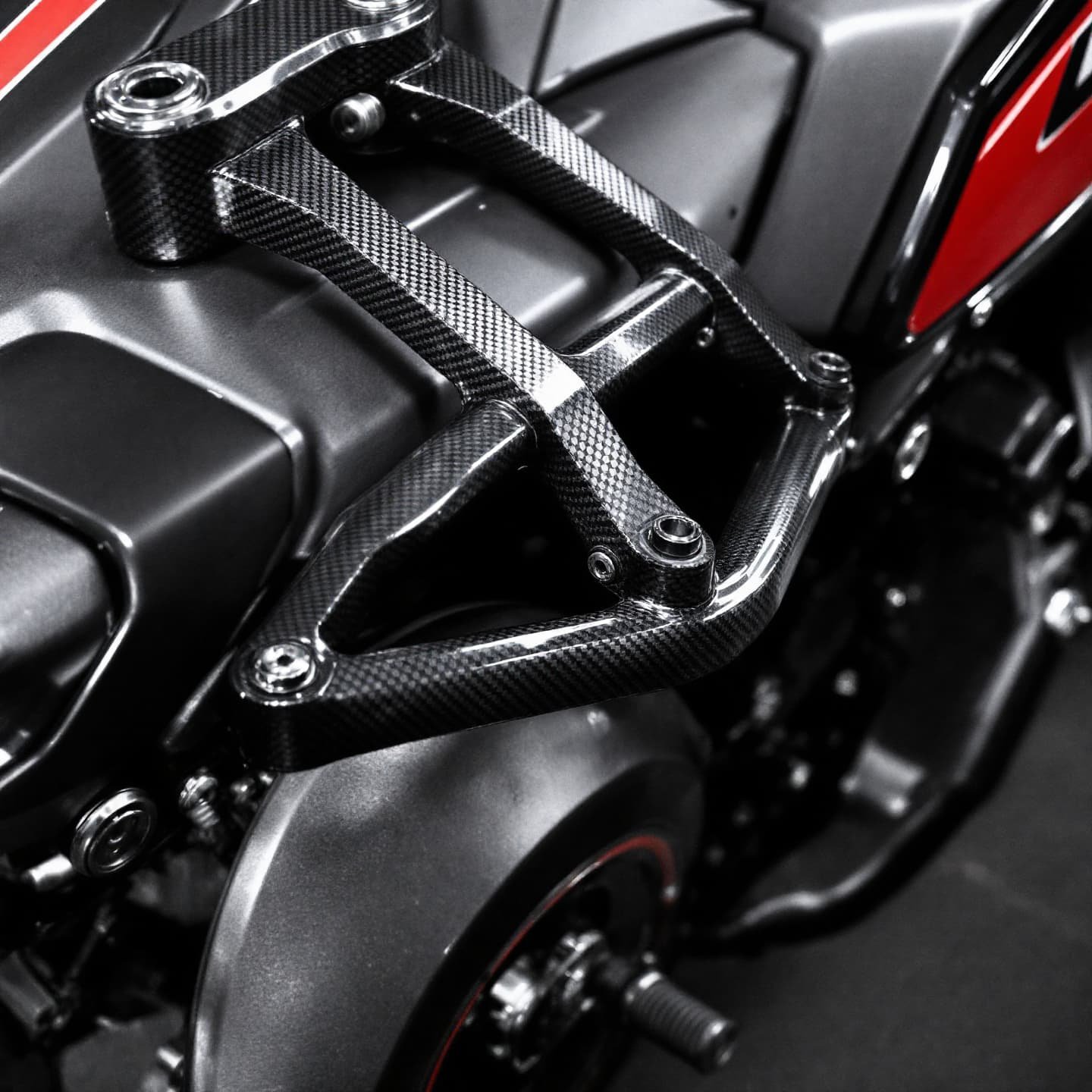
Tilting truck course: design, rigidity and materials
- Format: Hybrid
- Duration: 3 months
- Hours: 300 H
- Language: English / Spanish
- Registration date: 23-10-2026
- Start date: 12-12-2026
- Available places: 2
750 $
Competencies and results
What you will learn
1. Design, Rigidity and Materials in Tippers: Comprehensive Technical Mastery
- To delve into the analysis of critical phenomena such as flap-lag-torsion, crucial for structural stability, as well as the detailed study of whirl flutter and the accurate assessment of fatigue in tilting components.
- To acquire the ability to efficiently dimension laminated structures using composites, including the design of joints and bonded joints, by applying Finite Element Analysis (FE) techniques to ensure the optimization and strength of the components.
- To develop skills in implementing damage tolerance strategies and using non-destructive testing (NDT) methods such as Ultrasonic Testing (UT), Radiography (RT), and Thermography to ensure the integrity and reliability of tilting systems throughout their life cycle.
2. Rotor Modeling and Performance: Optimization and Advanced Simulation
- Master rotor modeling and performance analysis under complex conditions.
- Understand and simulate rotor behavior in advanced aerodynamic scenarios.
- Apply optimization techniques to improve efficiency and reduce vibration.
- Study the structural and dynamic behavior of rotors, including flutter effects.
- Analyze flap-lag-torsion couplings, whirl flutter, and fatigue.
- Dimension laminates in composites, joints, and bonded joints with FE.
- Implement damage tolerance and NDT (UT/RT/thermography).
- Use specialized software for rotor simulation and analysis.
- Evaluate and mitigate the risks associated with rotor fatigue and damage.
- Learn to design and analyze rotors for different applications, including helicopters and wind turbines.
3. Comprehensive user-oriented design and validation (from modeling to manufacturing)
You will learn to integrate the entire product development process, from initial model conception to final validation, applying user-centered methodologies. You will develop skills in parametric design, ergonomics, simulation, sustainable materials, 3D visualization, and manufacturing management, ensuring efficient, safe solutions that meet current industry standards.
4. Design, Rigidity and Materials of Tilting Mechanisms: Fundamentals and Practical Applications
- Identification and evaluation of failure modes in tilting structures, including flap-lag-torsion coupling analysis to understand stability and dynamic behavior.
- Advanced analysis of aeroelastic phenomena such as whirl flutter, and their impact on component design.
- Study of fatigue resistance, including the application of analysis techniques to predict component lifespan.
- Dimensioning of laminates in composites, using finite element analysis (FEA) methods to optimize strength and weight.
- Design and analysis of structural joints, including the study of bonded joints and mechanical joining methods.
- Application of FEA in the simulation of load and deformation scenarios to validate the Design.
- Implementation of damage tolerance strategies, including crack propagation assessment and failure-resistant design.
- Application of non-destructive testing (NDT) techniques, such as ultrasonic testing (UT), radiography (RT), and thermography, for the inspection and evaluation of structural integrity.
- Interpretation of NDT results for defect detection and component life assessment.
5. Design, Rigidity and Materials in Tipper Trucks: Fundamentals and Advanced Analysis
- Understand the fundamental design principles of tipper trucks.
- Study structural stiffness and its impact on performance.
- Analyze the materials used in tipper truck construction.
- Master the calculation and analysis of stresses and strains.
- Analyze flap-lag-torsion, whirl flutter, and fatigue couplings.
- Dimension laminates in composites, joints, and bonded joints with FE.
- Implement damage tolerance and NDT (UT/RT/thermography).
6. Design, Stiffness and Materials of Tilting Mechanisms: Design Engineering and Structural Analysis
- Understand and apply the principles of structural design in tilting mechanisms, including the selection of materials and manufacturing processes.
- Evaluate the structural stiffness of tilting mechanisms, considering factors such as bending, torsion, and shear, to ensure stability and optimal performance.
- Analyze flap-lag-torsion, whirl flutter, and fatigue couplings.
- Dimension laminates in composites, joints, and bonded joints using FE.
- Implement damage tolerance and NDT (UT/RT/thermography).
- Apply finite element analysis (FEA) techniques to simulate the structural behavior of tilting mechanisms under different loads and conditions.
- Select and evaluate
- Appropriate materials for the construction of tipper bodies, considering their mechanical properties, corrosion resistance, and durability.
- Design and optimize the geometry of the tipper bodies to minimize weight and maximize efficiency, meeting performance and safety requirements.
- Integrate relevant regulations and standards for the design and manufacture of tipper bodies, ensuring compliance and quality.
Who this program is for:
Tilting truck course: design, rigidity and materials
- Engineers with degrees in Mechanical Engineering, Industrial Design, or related fields.
- Professionals in the tipper industry, including manufacturers, maintenance companies, and consultants.
- Technicians and engineers involved in the design, manufacturing, and operation of tipper systems.
- Experts seeking to enhance their knowledge of stiffness, materials, and optimization of tipper components.
Recommended qualifications: Basic knowledge of mechanics of materials and design; Spanish/English (comprehension and communication).
- Standards-driven curriculum: you will work with CS-27/CS-29, DO-160, DO-178C/DO-254, ARP4754A/ARP4761, ADS-33E-PRF from the first module.
- Accreditable laboratories (EN ISO/IEC 17025) with rotor bench, EMC/Lightning pre-compliance, HIL/SIL, vibrations/acoustics.
- Evidence-oriented TFM: safety case, test plan, compliance dossierand operational limits.
- Mentored by industry: teachers with experience in rotorcraft, tiltrotor, eVTOL/UAM and flight test.
- Flexible modality (hybrid/online), international cohorts and support from SEIUM Career Services.
- Ethics and security: safety-by-design approach, cyber-OT, DIH and compliance as pillars.
1.1 Introduction to Tilting Mechanisms: Key Concepts and Applications
1.2 Materials in Tilting Mechanisms: Selection and Fundamental Properties
1.3 Loads and Stresses in Tilting Mechanisms: Basic Analysis
1.4 Preliminary Design of Tilting Mechanisms: Initial Considerations
1.5 Stiffness in Tilting Mechanisms: Principles and Elementary Calculations
1.6 Common Failures in Tilting Mechanisms: Identification and Prevention
1.7 Welding and Joining in Tilting Mechanisms: Basic Techniques
1.8 Design for Manufacturing: Process Optimization
1.9 Applicable Regulations and Standards for Tilting Mechanisms
1.10 Case Studies: Design and Failure Analysis of Real-World Tilting Mechanisms
2.2 Fundamentals of Rotor Aerodynamics
2.2 Blade Element Theory
2.3 Rotor Geometry Modeling and Meshing
2.4 Computational Fluid Dynamics (CFD) Simulation of Rotors
2.5 Performance Analysis: Thrust, Power, Efficiency
2.6 Wake Flow Modeling and Interaction Effects
2.7 Rotor Design Optimization Using Software
2.8 Introduction to Wind Effects and Environmental Conditions
2.9 Validation and Verification of Simulation Models
2.20 Case Studies: Practical Applications in Rotor Design
4.3 Introduction to the Structural Design of Tipper Trucks
4.2 Material Selection for Tipper Trucks
4.3 Load and Stress Analysis in Tipper Trucks
4.4 Design of Joints and Connections in Tipper Trucks
4.5 Stiffness and Deformation Analysis in Tipper Trucks
4.6 Optimization of the Structural Design of Tipper Trucks
4.7 Manufacturing and Assembly of Tipper Trucks
4.8 Structural Testing and Validation of Tipper Trucks
4.9 Structural Failures and Safety Measures in Tipper Trucks
4.30 Case Studies: Tipper Truck Design in Practice
4.4 Introduction to Tipper Trucks: Definition and Types
4.2 Materials in Tipper Trucks: Selection and Properties
4.3 Basic Design: Load and Structural Principles
4.4 Stiffness: Fundamental Concepts and Key Factors
4.5 Practical Applications: Design and Construction Examples
4.6 Preliminary Analysis: Stress and Strain Calculations
4.7 Material Selection: Criteria and Considerations
4.8 Manufacturing Processes: Techniques and Technologies
4.9 Regulations and Standards: Compliance and Regulation
4.40 Case Study: Analysis of a Specific Tipper Truck
5.5 Introduction to Tipper Structures
5.5 Material Selection for Tippers
5.3 Preliminary Design and Stiffness Considerations
5.4 Loads and Basic Static Analysis
5.5 Design Standards and Regulations
5.5 Introduction to Rotor Modeling
5.5 Computational Flow Dynamics (CFD) Simulation Methods
5.3 Aerodynamic Performance Analysis
5.4 Airfoil Optimization
5.5 Advanced Rotor Modeling Techniques
3.5 Detailed Structural Design of Tippers
3.5 Finite Element Analysis (FEA)
3.3 Results Validation and Design Correction
3.4 Fatigue and Durability Considerations
3.5 Design for Manufacturing and Assembly
4.5 Practical Applications of Tipper Design
4.5 Component and Subsystem Selection
4.3 Joint and Connection Design
4.4 Systems Integration and Components
4.5 Case Studies: Design of Real Tippers
5.5 Dynamic Analysis of Tippers
5.5 Analysis of Complex Loads and Stresses
5.3 Fatigue Strength Assessment
5.4 Vibration Analysis and Dynamic Response
5.5 Advanced Structural Optimization
6.5 Principles of Design Engineering
6.5 Structural Analysis Methodologies
6.3 Design with CAD/CAE Software
6.4 Design Management and Change Control
6.5 Technical Documentation and Reports
7.5 Fundamentals of Tipper Design
7.5 Materials and Manufacturing Processes
7.3 Applications in the Shipbuilding Industry
7.4 Design for Safety and Reliability
7.5 Case Studies: Design and Construction of Tippers
8.5 Introduction to Rotor Flow Analysis
8.5 Advanced CFD Modeling for Rotors
8.3 Aerodynamic Optimization of Blades
8.4 Stability Analysis and Performance
8.5 Design for Energy Efficiency
6.6 Fundamentals of Structural Engineering in Tilt Bridges
6.2 Material Selection and Stress Analysis in Tilt Bridges
6.3 Design and Stiffness of Key Components in Tilt Bridges
6.4 Structural Analysis Methods Applied to Tilt Bridges
6.5 Design of Connections and Joints in Tilt Bridge Structures
6.6 Introduction to Loads and Load Conditions in Tilt Bridges
6.7 Failure Analysis and Durability in Tilt Bridge Structures
6.8 Design Standards and Regulations for Tilt Bridges
6.9 Structural Design and Simulation Software
6.60 Case Studies: Real-World Applications in Tilt Bridges
- Hands-on methodology: test-before-you-trust, design reviews, failure analysis, compliance evidence.
- Software (depending on licenses/partners): MATLAB/Simulink, Python (NumPy/SciPy), OpenVSP, SU2/OpenFOAM, Nastran/Abaqus, AMESim/Modelica, acoustics tools, planning toolchains DO-178C.
- SEIUM Laboratories: scale rotor bench, vibrations/acoustics, EMC/Lightning pre-compliance, HIL/SIL for AFCS, data acquisition with strain gauging.
- Standards and compliance: EN 9100, 17025, ISO 27001, GDPR.
Capstone-type projects
- Tiltover Optimization: Design, materials, structural analysis, and CFD.
- Flight Control: Stability, control, and HIL simulation.
- Conversion Design: Conversion analysis and margin optimization.
- Aeroelasticity: Modal and flutter analysis; structural mitigations.
DO-160: Environmental testing and mitigation plan.
- Tipping Wheel Optimization: FEA analysis, material selection, robust design.
- Rotor Performance: CFD modeling, aerodynamic optimization, structural analysis.
- Tipping Wheel Structural Analysis: Design, simulation, validation, regulatory compliance.
- Simulation & Control: Algorithm development, HIL simulation, performance optimization.
- Optimized Tilt Arm Design: Material selection, FEA analysis, fatigue simulation.
- Rotor Modeling: CFD for performance, vibration and noise analysis.
- Tilt Arm Structural Engineering: Design for loads, stiffness, and durability.
- Rotor and Tilt Arm Optimization: Performance analysis and validation.
- Structural Analysis of Tippers: Design, FEA simulation, material selection, stiffness and strength optimization.
- Rotor Modeling and Simulation: CFD, flow analysis, aerodynamic optimization, and performance.
- Structural Engineering of Tippers: Load analysis, component design, and regulatory compliance.
Admissions, fees, and scholarships
- Profile: Background in Computer Engineering, Mathematics, Statistics, or related fields; practical experience in NLP and valued information retrieval systems.
- Documentation: Updated CV, academic transcript, SOP/statement of purpose, project examples or code (optional).
- Process: Application → Technical evaluation of profile and experience → Technical interview → Review of case studies → Final decision → Enrollment.
- Fees:
- Single payment: 10% discount.
- Payment in 3 installments: No fees; 30% upon registration + 2 equal monthly payments of the remaining 35%.
Monthly payment: available with a 7% commission on the total; annual review.
Scholarships: based on academic merit, financial need, and promoting inclusion; agreements with companies in the sector for partial or full scholarships.
See “Calendar & Calls for Applications,” “Scholarships & Grants,” and “Fees & Financing” in the SEIUM mega-menu.
Do you have any questions?
Our team is ready to help you. Contact us, and we will respond as soon as possible.
F. A. Q
Frequently asked questions
Yes, we have international certification
Yes: experimental models, real data, applied simulations, professional environments, real case studies.
It is not mandatory. We offer leveling tracks and tutoring.
Completely. It covers e-propulsion, integration, and emerging regulations (SC-VTOL).
Recommended. There are also internal challenges and consortiums.
Yes. Online/hybrid modality with planned labs and visa support (see “Visa & Residence”).