

Telemetry course in rallies
About our
Rally Telemetry Course
This course teaches the application of real-time data acquisition systems to analyze the performance of vehicles and drivers in competition. It covers the installation and configuration of sensors, wireless data transmission, and the use of specialized software for data analysis. It focuses on interpreting crucial information such as speed, acceleration, pressure, suspension, and temperature to optimize race strategy and vehicle setup. It provides practical skills for race decision-making and continuous performance improvement.
The course includes hands-on experience with real systems and simulators, covering aspects of racing engineering, automotive electronics, and communications. It focuses on the use of data visualization and video analysis tools to identify areas for improvement in driving and car setup. The training prepares students for roles such as telemetry technicians, data engineers, and performance analysts, increasing their career prospects in the world of motorsport.
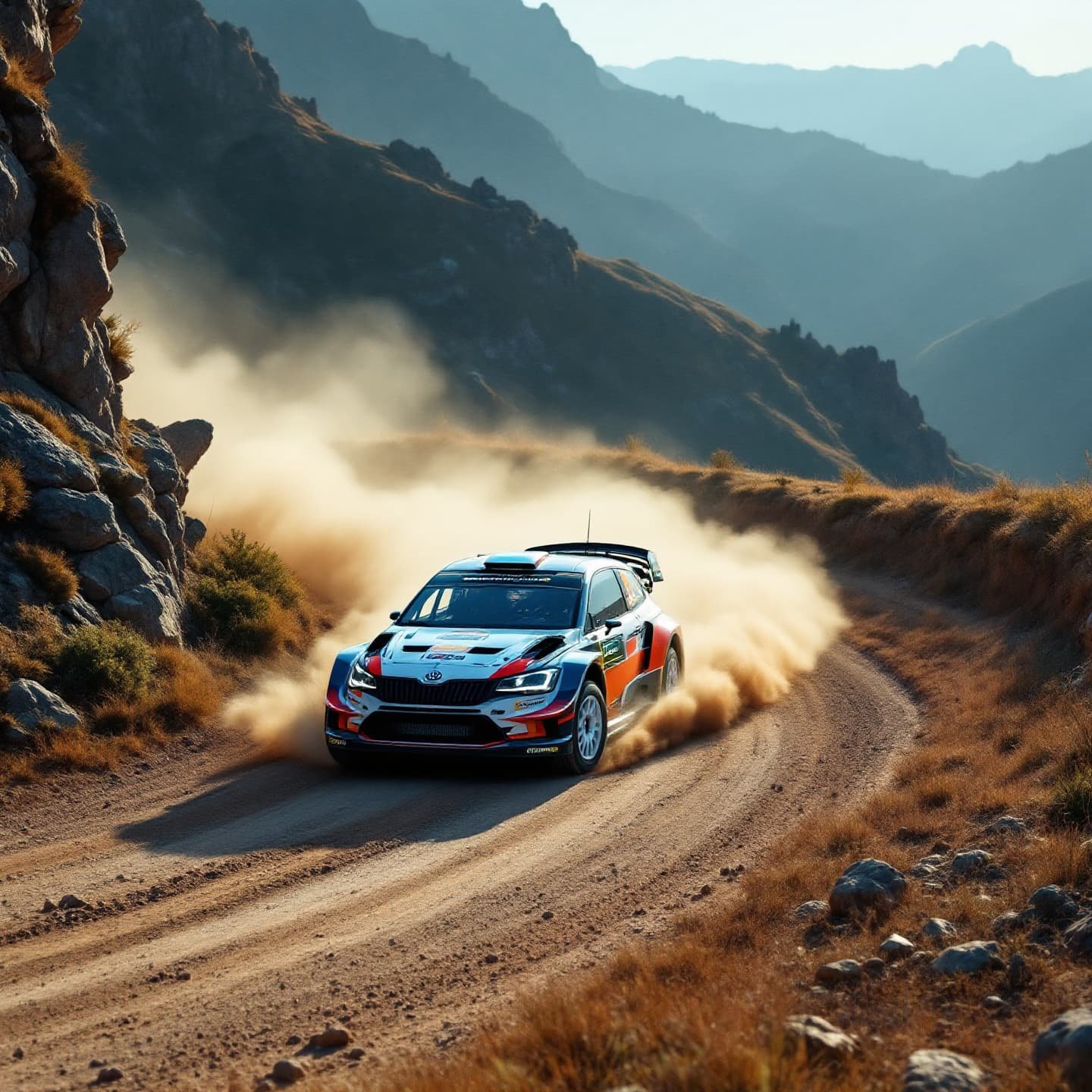
Telemetry course in rallies
- Format: Hybrid
- Duration: 3 months
- Hours: 300 H
- Language: English / Spanish
- Registration date: 23-10-2026
- Start date: 12-12-2026
- Available places: 3
480 $
Competencies and results
What you will learn
1. Telemetry Data Analysis in Rallying: Mastery and Optimization
## What Will You Learn?
- In-depth analysis of telemetry to understand and optimize rally performance.
- Identification and evaluation of critical data for continuous improvement.
- Mastery of advanced data analysis techniques and their practical application in demanding environments.
2. Unraveling Telemetry in Rallying: Comprehensive Learning and Success Strategies
2. Unraveling Telemetry in Rallying: Comprehensive Learning and Success Strategies
Understand telemetry as a fundamental tool in performance analysis and race strategy in rallying.
Interpret and analyze key telemetry data: speed, acceleration, braking, GPS position, steering angles, and G-forces.
Identify patterns and correlations in telemetry data to diagnose mechanical problems and improve vehicle performance.
Use specialized telemetry software for visualizing, analyzing, and comparing data from different stages and drivers.
Design and implement race strategies based on telemetry analysis: tire management, power optimization, and line selection.
Evaluate and optimize vehicle setup (suspension, brakes, engine) by analyzing telemetry data.
Develop skills for effective communication between the
3. Comprehensive user-oriented design and validation (from modeling to manufacturing)
You will learn to integrate the entire product development process, from initial model conception to final validation, applying user-centered methodologies. You will develop skills in parametric design, ergonomics, simulation, sustainable materials, 3D visualization, and manufacturing management, ensuring efficient, safe solutions that meet current industry standards.
4. Rally Telemetry: Unlocking Data for Victory and Precision
4. Rally Telemetry: Unlocking Data for Victory and Precision
- Identifying and analyzing key rally performance parameters: speed, acceleration, G-forces, steering angles, and GPS position.
- Understanding how telemetry systems work: sensors, data acquisition, transmission, and storage.
- Interpreting telemetry data to optimize race strategy: tire selection, suspension tuning, and engine management.
- Using telemetry analysis software: data visualization, lap comparison, identifying areas for improvement, and simulation.
- Analyzing data to improve driving: optimizing racing lines, braking points, and acceleration.
- Applying telemetry to vehicle preparation: diagnosing problems, evaluating upgrades, and conducting durability tests.
- Developing data-driven analysis and decision-making skills to achieve victory in rally racing. rally.
5. Master's Degree in Rally Telemetry: Interpretation, Strategy and Competitive Advantage
5. **Mastery in Rally Telemetry: Interpretation, Strategy, and Competitive Advantage**
- Master the collection and analysis of rally telemetry data, including key sensors and acquisition systems.
- Interpret vehicle performance data: acceleration, braking, speed, G-forces, and steering angles.
- Develop race strategies based on telemetry analysis, optimizing racing line and performance.
- Identify and understand the variables that affect vehicle behavior under different track and weather conditions.
- Use specialized software for the visualization and analysis of telemetry data, such as Race Studio 2 or similar.
- Apply telemetry data to improve vehicle setup (suspension, differentials, tires) and optimize performance.
- Create detailed reports and presentations that communicate key findings and recommendations to the race team.
- Understand and Apply automotive engineering principles relevant to rallying, such as aerodynamics, vehicle dynamics, and engine management.
Analyze and evaluate driver performance based on telemetry data, identifying areas for improvement and optimization.
Gain a competitive advantage through expert interpretation of telemetry, development of effective strategies, and optimization of vehicle performance.
6. Unveiling Rally Success: Analysis and Strategy with Advanced Telemetry
- Master the interpretation and application of telemetry data in rallying.
- Identify and understand the key variables that influence vehicle performance.
- Analyze the relationship between race strategy and telemetry data.
- Learn to use specialized software tools for data analysis.
- Develop skills for making real-time, data-driven decisions.
- Optimize vehicle setup for different race conditions.
- Predict vehicle behavior and anticipate potential problems.
- Create effective race strategies to maximize performance and safety.
Who this program is for:
Telemetry course in rallies
- Engineers with experience in the automotive sector, particularly those with degrees in Mechanical Engineering, Electronics, Computer Science, or related fields.
- Rally competition team professionals, including race engineers, telemetry technicians, and data analysts, who wish to deepen their knowledge.
- Rally enthusiasts and fans with technical knowledge who wish to understand and apply advanced telemetry techniques.
- Engineering students and students in related disciplines seeking practical and applicable specialization in the field of automotive telemetry.
- Standards-driven curriculum: you will work with CS-27/CS-29, DO-160, DO-178C/DO-254, ARP4754A/ARP4761, ADS-33E-PRF from the first module.
- Accreditable laboratories (EN ISO/IEC 17025) with rotor bench, EMC/Lightning pre-compliance, HIL/SIL, vibrations/acoustics.
- Evidence-oriented TFM: safety case, test plan, compliance dossierand operational limits.
- Mentored by industry: teachers with experience in rotorcraft, tiltrotor, eVTOL/UAM and flight test.
- Flexible modality (hybrid/online), international cohorts and support from SEIUM Career Services.
- Ethics and security: safety-by-design approach, cyber-OT, DIH and compliance as pillars.
Module 1 — Introduction to Rally Telemetry
1. 1.1 What is Rally Telemetry? Definition and Scope.
2. 1.2 Key Components of a Rally Telemetry System.
3. 1.3 Types of Data Collected: Engines, Suspension, and More.
4. 1.4 Essential Hardware and Software for Telemetry.
5. 1.5 Benefits of Telemetry: Performance and Safety Improvements.
6. 1.6 Getting Started: System Setup and Calibration.
7. 1.7 Basic Data Interpretation: Speed, RPM, G-Forces.
8. 1.8 Initial Visualization and Analysis Tools.
9. 1.9 Practical Examples: How Telemetry Changes Strategy.
10. 1.10 Introduction to Case Studies: Rally Success Through Telemetry.
8.2 Fundamentals of Rally Telemetry: Data Collection and Types
8.2 Sensors and Data Acquisition Systems (DAQ) in Rally Vehicles
8.3 Analysis of Acceleration, Braking, and Speed Data
8.4 Interpretation of Suspension and Damping Data
8.5 Analysis of Engine Data: RPM, Temperature, Pressure
8.6 Track Analysis and Geopositioning (GPS)
8.7 Identification of Critical Points and Track Optimization
8.8 Analysis Strategies for Different Terrain and Weather Conditions
8.9 Use of Telemetry Analysis Software and Tools
8.20 Practical Application: Development of Data-Based Strategies
3.3 Rally Telemetry Fundamentals: What is it and why does it matter?
3.2 Key Components of a Rally Telemetry System
3.3 Types of Telemetry Data Collected
3.4 The Importance of Data Analysis in Rally
3.5 Principles of Rally Strategy: How telemetry influences decision-making
3.6 Introduction to Telemetry Analysis Tools
3.7 The Data Collection and Transmission Process
3.8 Introduction to Data Visualization: Graphs and Tables
3.9 Practical Examples: How telemetry changed rally strategy
3.30 Preparing for the Next Module: Mastery and Optimization
4.4 Introduction to telemetry in rallying: key concepts and data collection
4.2 Telemetry sensors and systems: types, functions, and applications in rallying
4.3 Basic data analysis: speed, acceleration, G-forces, and their interpretation
4.4 Track analysis and heat maps: route planning and optimization
4.5 Interpreting engine data: RPM, temperature, pressure, and their impact on performance
4.6 Suspension analysis: understanding compression, rebound, and optimal setup
4.7 Data-driven race strategies: pit stop planning and tire management
4.8 Troubleshooting and fault resolution: diagnostics using telemetry
4.9 Telemetry tools and software: platforms and applications for analysis
4.40 Case studies: examples of success and performance optimization using telemetry
5.5 Fundamentals of Rally Telemetry: Data Collection and Types
5.5 Telemetry Data Analysis: Tools and Methods
5.3 Interpretation Strategies: Speed, Acceleration, and Braking
5.4 Performance Optimization: Cornering and Tire Selection
5.5 Trajectory Analysis and Optimal Racing Lines
5.6 Telemetry and the Driver: Feedback and Effective Communication
5.7 Case Studies: Analysis of Specific Rallies and Results
5.8 Race Strategy: Data-Driven Decision Making
5.9 Data Management: Storage, Organization, and Sharing
5.50 Competitive Advantage: Applying Telemetry for Victory
6.6 Introduction to Rally Telemetry: Fundamental Concepts
6.2 Telemetry Data Collection and Structure
6.3 Data Analysis: Speed, Acceleration, and G-Forces
6.4 Interpretation of Suspension and Damping Data
6.5 Engine Data Analysis: RPM, Temperature, and Pressure
6.6 Track Analysis Strategies and Rally Design
6.7 Performance Optimization: Braking, Acceleration, and Cornering
6.8 Using Telemetry for Failure Prevention and Maintenance
6.9 Data Analysis and Strategic Decision Making in Races
6.60 Practical Application: Telemetry Case Studies and Exercises
- Hands-on methodology: test-before-you-trust, design reviews, failure analysis, compliance evidence.
- Software (depending on licenses/partners): MATLAB/Simulink, Python (NumPy/SciPy), OpenVSP, SU2/OpenFOAM, Nastran/Abaqus, AMESim/Modelica, acoustics tools, planning toolchains DO-178C.
- SEIUM Laboratories: scale rotor bench, vibrations/acoustics, EMC/Lightning pre-compliance, HIL/SIL for AFCS, data acquisition with strain gauging.
- Standards and compliance: EN 9100, 17025, ISO 27001, GDPR.
Capstone-type projects
“`html
- Rally Data Mastery: Telemetry data analysis and optimization.
- Rally Strategy: Data-driven strategy development.
- Performance Enhancement: Performance enhancement through analytics.
- Telemetry Insights: Discovering competitive advantages.
- Data-Driven Victory: Using data for accuracy and success.
“`
- Rally Analysis: Identification of key variables (speed, acceleration, trajectory).
- Strategy: Predictive performance modeling and track optimization.
- Optimization: Data visualization, error detection, and overtaking strategies.
- Rally Telemetry Analysis: Pattern identification, time optimization, sensor data analysis.
- Race Strategy: Scenario simulation, pit stop decisions, tire management, weather analysis.
- Driver/Car Optimization: Real-time feedback, driving improvement, setup adjustments.
- Post-Race Analysis: Data review, identification of areas for improvement, future preparation.
“`html
- Rally Data Analysis: Data collection and visualization.
- Race Strategy: Implementation of predictive algorithms.
- Performance Optimization: Identification of data-driven areas for improvement.
“`
Admissions, fees, and scholarships
- Profile: Background in Computer Engineering, Mathematics, Statistics, or related fields; practical experience in NLP and valued information retrieval systems.
- Documentation: Updated CV, academic transcript, SOP/statement of purpose, project examples or code (optional).
- Process: Application → Technical evaluation of profile and experience → Technical interview → Review of case studies → Final decision → Enrollment.
- Fees:
- Single payment: 10% discount.
- Payment in 3 installments: No fees; 30% upon registration + 2 equal monthly payments of the remaining 35%.
Monthly payment: available with a 7% commission on the total; annual review.
Scholarships: based on academic merit, financial need, and promoting inclusion; agreements with companies in the sector for partial or full scholarships.
See “Calendar & Calls for Applications,” “Scholarships & Grants,” and “Fees & Financing” in the SEIUM mega-menu.
Do you have any questions?
Our team is ready to help you. Contact us, and we will respond as soon as possible.
F. A. Q
Frequently asked questions
Yes, we have international certification
Yes: experimental models, real data, applied simulations, professional environments, real case studies.
It is not mandatory. We offer leveling tracks and tutoring.
Completely. It covers e-propulsion, integration, and emerging regulations (SC-VTOL).
Recommended. There are also internal challenges and consortiums.
Yes. Online/hybrid modality with planned labs and visa support (see “Visa & Residence”).