
Diploma in 4D/5D Planning and Digital Construction Control
Sobre nuestro Diploma in 4D/5D Planning and Digital Construction Control
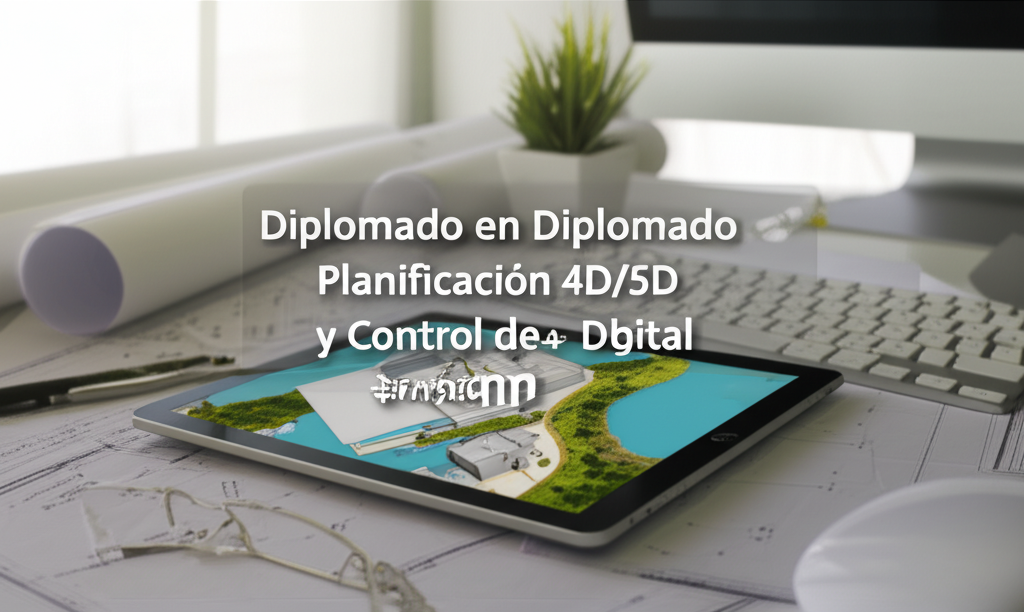
The Diploma in 4D/5D Planning and Digital Construction Control focuses on the application of advanced technologies for managing construction projects, integrating the time (4D) and cost (5D) dimensions into the workflow. It uses BIM modeling tools to create detailed digital models, enabling the simulation and precise planning of construction phases, optimizing resources and minimizing risks.
The program covers the use of specialized software for construction scheduling, cost analysis, and real-time progress monitoring. It explores the use of technologies such as virtual reality (VR) and augmented reality (AR) for project visualization and early conflict detection. The importance of collaboration between the different project stakeholders and data-driven decision-making is emphasized.
Target keywords (natural occurrences in the text): 4D/5D planning, digital construction control, BIM modeling, construction scheduling, cost analysis, project management, virtual reality, augmented reality, construction management.
Diploma in 4D/5D Planning and Digital Construction Control
- Modalidad: Online
- Duración: 8 meses
- Horas: 900 H
- Idioma: ES / EN
- Créditos: 60 ECTS
- Fecha de matrÃcula: 30-04-2026
- Fecha de inicio: 10-06-2026
- Plazas disponibles: 13
1.499 $
Competencias y resultados
Qué aprenderás
1. Mastery of 4D/5D Digital Construction Planning and Control
- Comprehensive planning of shipbuilding projects, from the conceptual phase to execution and delivery.
- Detailed control and monitoring of each stage of the work, using advanced digital tools.
- 4D (time) modeling to simulate the construction sequence and optimize task scheduling.
- Integration of 3D models with cost information (5D) for accurate financial management.
- Resource management (materials, labor, equipment) and its optimization within the project.
- Risk analysis and mitigation of potential problems in shipbuilding.
- Use of specialized software for the planning, scheduling, and control of shipbuilding projects.
- Generation of reports and dashboards for progress monitoring and decision-making.
- Optimization of construction processes to improve efficiency and reduce costs.
- Effective collaboration and communication between the different teams involved in the project.
2. Expert Implementation of 4D/5D Planning and Digital Construction Management
- Mastery of 4D/5D Planning: You will learn to create detailed schedules that incorporate the time dimension (4D) and costs (5D).
- BIM Modeling and Integration: You will understand how to use Building Information Modeling (BIM) for project planning and monitoring.
- Optimization of Construction Processes: You will discover techniques to optimize workflow and efficiency in construction projects.
- Digital Project Control: You will be trained in the use of digital tools for cost control, scheduling, and resource management.
- Risk Management in Construction: You will learn to identify, assess, and mitigate the risks associated with construction projects.
- Data Analysis and Decision Making: You will develop skills to analyze project data and make informed decisions based on that information.
- Implementation of Digital Technologies: You will become familiar with specialized software for planning, scheduling, and controlling construction projects.
Collaboration and Communication in Projects: You will improve your communication and collaboration skills to work efficiently with multidisciplinary teams.
3. Comprehensive user-oriented design and validation (from modeling to manufacturing)
You will learn to integrate the entire product development process, from initial model conception to final validation, applying user-centered methodologies. You will develop skills in parametric design, ergonomics, simulation, sustainable materials, 3D visualization, and manufacturing management, ensuring efficient, safe solutions that meet current industry standards.
4. Advanced Strategies in Project Management with 4D/5D Modeling
- Master project planning and scheduling using 4D (time) and 5D (cost) modeling.
- Implement simulation and visualization techniques to optimize time and resource management.
- Apply agile and traditional project management methodologies in 4D/5D modeling environments.
- Use specialized software for creating and analyzing 4D/5D models.
- Integrate 4D/5D modeling with other project management tools, such as Building Information Modeling (BIM).
- Manage the complete project lifecycle, from initial planning to final delivery, using 4D/5D models.
- Analyze and mitigate project risks using 4D/5D simulations.
- Monitor and control project progress in real time using 4D/5D models.
- Generate effective reports and presentations to communicate project status to stakeholders.
- Optimize decision-making and improve overall project efficiency through the use of 4D/5D modeling.
5. Simulation and Optimization of Projects in 4D/5D Digital Environments
- Modeling and simulation of projects in 4D (time) and 5D (cost) environments.
- Optimization of project planning and execution using specialized software.
- Risk analysis and uncertainty management throughout the project lifecycle.
- Visualization and effective communication of complex projects using digital tools.
- Application of Building Information Modeling (BIM) methodologies for simulation and optimization.
- Integration of data from different sources for information-based decision-making.
- Real-time project performance evaluation and quality control.
- Use of emerging technologies such as virtual and augmented reality for simulation.
- Resource optimization and cost reduction through digital simulation.
- Development of skills for strategic decision-making in projects.
6. Rotor modeling and performance in 4D/5D digital planning and control
You will learn to integrate the entire product development process, from initial model conception to final validation, applying user-centered methodologies. You will develop skills in parametric design, ergonomics, simulation, sustainable materials, 3D visualization, and manufacturing management, ensuring efficient, safe solutions that meet current industry standards.
Para quien va dirigido nuestro:
Diploma in 4D/5D Planning and Digital Construction Control
- Construction professionals, civil engineers, and related fields.
- Architects and design engineers seeking to optimize project planning.
- Project managers and construction managers interested in implementing advanced methodologies.
- Individuals seeking to specialize in the use of BIM technologies and 4D/5D planning tools.
Recommended requirements: Basic knowledge of project management and BIM software. Experience in the construction sector is a plus.
- Standards-driven curriculum: you will work with CS-27/CS-29, DO-160, DO-178C/DO-254, ARP4754A/ARP4761, ADS-33E-PRF from the first module.
- Accreditable laboratories (EN ISO/IEC 17025) with rotor bench, EMC/Lightning pre-compliance, HIL/SIL, vibrations/acoustics.
- Evidence-oriented TFM: safety case, test plan, compliance dossierand operational limits.
- Mentored by industry: teachers with experience in rotorcraft, tiltrotor, eVTOL/UAM and flight test.
- Flexible modality (hybrid/online), international cohorts and support from SEIUM Career Services.
- Ethics and security: safety-by-design approach, cyber-OT, DIH and compliance as pillars.
Module 1 — Introduction to 4D/5D Digital Construction Planning and Control
1.1 Fundamentals of 4D/5D Planning: Definition and Scope
1.2 Integration of BIM Models in 4D/5D Planning
1.3 Key Software and Tools for 4D/5D Planning
1.4 4D/5D Planning and Scheduling Methodologies
1.5 Cost Estimation and Budgeting in 5D Projects
1.6 Creation and Management of 4D Schedules: Construction Sequences
1.7 Linking Tasks, Resources, and Costs in the 4D/5D Model
1.8 Risk Analysis and Mitigation in 4D/5D Planning
1.9 Generating 4D Reports and Visualizations for Communication
1.10 Introduction to Digital Construction Control and Project Monitoring
2. Mastery of 4D/5D Digital Construction Planning and Control
3. Introduction to BIM Methodology and its Integration with 4D/5D
4. Creation and Management of 3D Models for 4D Simulation
5. Scheduling Activities and Tasks in the 4D Model
6. Cost and Resource Estimation in the 5D Model
7. Linking Cost and Schedule Data in the 4D/5D Model
8. Risk and Scenario Analysis in 4D/5D Planning
9. Report Generation and Visualization of Construction Progress
20. Optimization of Construction Planning and Control
22. Case Studies and Practical Applications in Real-World Projects
3.3 Introduction to 4D/5D Project Workflow
3.2 Tools and Software for 4D/5D Planning
3.3 Integration of BIM Models into 4D/5D Planning
3.4 Creation and Management of the 4D/5D Project Baseline
3.5 Analysis of the Schedule and Construction Sequence
3.6 Progress Monitoring and Control
3.7 Generation of Reports and Visualization of 4D/5D Progress
3.8 Change Management and 4D/5D Model Updates
3.9 Workflow Optimization for Decision Making
3.30 Integration with Project Management Systems (PPM)
3.4
4.4 Workflow Modeling in 4D/5D Environments
4.2 Implementation of BIM Software for 4D/5D Planning
4.3 Scenario Simulation and Risk Analysis
4.4 Integration of 5D Data and Models for Cost Control
4.5 Resource Optimization and Task Scheduling
4.6 S-Curve Analysis and Progress Tracking
4.7 Change Management and Model Updates
4.8 Collaboration Strategies in 4D/5D Projects
4.9 Generation of Reports and Digital Documentation
4.40 Case Study: Practical Application of 4D/5D Strategies
5.5 eVTOL and UAM: Electric Propulsion, Multiple Rotors
5.5 Emerging Certification Requirements (SC-VTOL, Special Conditions)
5.3 Energy and Thermal in E-Propulsion (Batteries/Inverters)
5.4 Design for Maintainability and Modular Swaps
5.5 LCA/LCC in Rotorcraft and eVTOL (Footprint and Cost)
5.6 Operations & Vertiports: Airspace Integration
5.7 Data & Digital Thread: MBSE/PLM for Change Control
5.8 Tech Risk and Readiness: TRL/CRL/SRL
5.9 IP, Certifications, and Time-to-Market
5.50 Case Clinic: Go/No-Go with Risk Matrix
6.6 eVTOL and UAM: Electric Propulsion, Multiple Rotors
6.2 Emerging Certification Requirements (SC-VTOL, Special Conditions)
6.3 Energy and Thermal in E-Propulsion (Batteries/Inverters)
6.4 Design for Maintainability and Modular Swaps
6.5 LCA/LCC in Rotorcraft and eVTOL (Footprint and Cost)
6.6 Operations & Vertiports: Airspace Integration
6.7 Data & Digital Thread: MBSE/PLM for Change Control
6.8 Tech Risk and Readiness: TRL/CRL/SRL
6.9 IP, Certifications, and Time-to-Market
6.60 Case Clinic: Go/No-Go with Risk Matrix
7.7 eVTOL and UAM: Electric Propulsion, Multiple Rotors
7.2 Emerging Certification Requirements (SC-VTOL, Special Conditions)
7.3 Energy and Thermal in E-Propulsion (Batteries/Inverters)
7.4 Design for Maintainability and Modular Swaps
7.7 LCA/LCC in Rotorcraft and eVTOL (Footprint and Cost)
7.6 Operations & Vertiports: Airspace Integration
7.7 Data & Digital Thread: MBSE/PLM for Change Control
7.8 Tech Risk and Readiness: TRL/CRL/SRL
7.9 IP, Certifications, and Time-to-Market
7.70 Case Clinic: Go/No-Go with Risk Matrix
8.8 Introduction to 4D/5D Planning
8.8 Fundamentals of BIM and 3D Modeling
8.3 Integrating the Time Dimension (4D)
8.4 Integrating the Cost Dimension (5D)
8.5 Software and Tools for 4D/5D Planning
8.6 Workflow in 4D/5D Planning
8.7 Case Studies of Success Stories
8.8 Regulations and Standards in Digital Planning
8.8 Challenges and Solutions in Implementation
8.80 Future Trends in 4D/5D Planning
8.8 BIM Implementation in Projects
8.8 4D/5D Data Integration
8.3 Creating and Managing Digital Schedules
8.4 Cost Estimation and Budget Control
8.5 Developing Detailed 4D/5D Models
8.6 Integration with Specialized Software
8.7 Monitoring and Progress Control
8.8 Report Generation and Deviation Analysis
8.8 Risk Mitigation Strategies
8.80 Best Practices in 4D/5D Implementation
3.8 Workflow Analysis in Projects
3.8 Process Mapping and Bottleneck Identification
3.3 Tools and Methodologies for Flow Analysis
3.4 Workflow Optimization in 4D/5D Environments
3.5 Information Management and Collaboration in Projects
3.6 Using Data for Decision Making
3.7 Scenario Analysis and Change Simulation
3.8 Continuous Improvement and Workflow Adaptation
3.8 Key Performance Indicators (KPIs)
3.80 Case Studies and Practical Applications
4.8 Development of Advanced Modeling Strategies
4.8 Optimization of 4D/5D Models for Different Phases of the Project
4.3 Integration of Field Data into the Model
4.4 Use of Parametric Models and Generative Design
4.5 Risk Analysis and Mitigation in 4D/5D Modeling
4.6 Simulation of Complex Scenarios
4.7 Collaboration and Communication Strategies in 4D/5D Projects
4.8 Change Management and Version Control
4.9 Integration with Emerging Technologies (Augmented Reality, etc.)
4.0 Case Studies of Projects with Advanced Modeling
5.8 Introduction to Simulation in 4D/5D Projects
5.9 Types of Simulation and Applications
5.3 Simulation of Construction Sequences
5.4 Interference and Collision Analysis
5.5 Resource Optimization and Scheduling
5.6 Cost Simulation and Earned Value Analysis
5.7 Design and Construction Optimization
5.8 Use of Artificial Intelligence in the Simulation
5.8 Sensitivity Analysis and Contingency Planning
5.80 Case Studies of Success in 4D/5D Simulation
6.8 Fundamentals of Rotor Modeling
6.8 Rotor Design and Analysis
6.3 3D Modeling of Rotor Components
6.4 Integration of Performance Data into the Model
6.5 Airflow Simulation and Performance Analysis
6.6 Rotor Design Optimization
6.7 4D/5D Modeling in Rotor Planning
6.8 Quality Control and Verification of Modeling
6.8 Rotor Modeling Case Studies
6.80 Use of Specialized Software for Rotor Modeling
7.8 Rotor Design Optimization
7.8 Computational Flow Analysis (CFD) in Rotors
7.3 Aerodynamic Performance Optimization
7.4 Noise and Vibration Reduction
7.5 Weight and Efficiency Optimization Energy
7.6 Design for Manufacturing and Maintenance
7.7 Sensor Data Integration and Monitoring
7.8 Use of Artificial Intelligence in Optimization
7.8 Rotor Optimization Case Studies
7.80 Tools and Software for Optimization
8.8 eVTOL and UAM: Electric Propulsion, Multiple Rotors
8.8 Emerging Certification Requirements (SC-VTOL, Special Conditions)
8.3 Energy and Thermal in E-Propulsion (Batteries/Inverters)
8.4 Design for Maintainability and Modular Swaps
8.5 LCA/LCC in Rotorcraft and eVTOL (Footprint and Cost)
8.6 Operations & Vertiports: Airspace Integration
8.7 Data & Digital thread: MBSE/PLM for change control
8.8 Tech risk and readiness: TRL/CRL/SRL
8.8 IP, certifications and time-to-market
8.80 Case clinic: go/no-go with risk matrix
9. Introduction to 4D/5D Planning: Key Concepts
9. Benefits of 4D/5D Planning in Naval Projects
3. Essential Software and Tools for Digital Planning
4. Creating and Managing 3D Models for 4D/5D Planning
5. Integrating Schedules and 3D Models: The 4D Dimension
6. Incorporating Costs and Resources: The 5D Dimension
7. Practical Examples and Case Studies of 4D/5D Planning in Naval Works
8. Best Practices and Tips for Effective 4D/5D Planning
9. Integrating Advanced BIM Models into 4D/5D Planning
9. Advanced Techniques for Conflict Management and Project Coordination
3. Implementing Construction Simulation in 4D/5D
4. Using Real-Time Data for Project Monitoring and Control
5. Integrating Virtual and Augmented Reality for 4D/5D Visualization
6. Risk Analysis and Mitigation in Planning 4D/5D
7. Change and Update Management in 4D/5D Models
8. Case Studies and Examples of Successful Implementation in Naval Projects
9. Defining and Analyzing the Workflow in 4D/5D Projects
9. Identifying Key Stages and Activities in the Workflow
3. Tools and Techniques for Workflow Optimization
4. Information and Communication Management in 4D/5D Projects
5. Collaboration and Coordination Between Teams in Digital Environments
6. Quality Control and Assurance in the 4D/5D Workflow
7. Automating Tasks and Processes in the Workflow
8. Measuring and Evaluating Workflow Performance in Naval Projects
9. Modeling Strategies to Optimize 4D/5D Planning
9. Advanced Project Management Techniques with 4D/5D Models
3. Scenario Analysis and Project Change Simulation
4. Applying Agile Methodologies in 4D/5D Project Management
5. Information and Documentation in 4D/5D projects
6. Integration of field data and real-time feedback
7. Tools and techniques for data-driven decision-making
8. Strategies for managing complex and large-scale projects
9. Construction simulation and analysis of construction sequences
9. Resource and cost optimization in 4D/5D projects
3. Analysis of project time efficiency and scheduling
4. Risk identification and mitigation through simulation
5. Optimization of logistics and supply chain management
6. Scenario simulation and sensitivity analysis
7. Tools and techniques for project performance optimization
8. Case studies and examples of optimization in naval projects
9. Fundamentals of rotor modeling in 4D/5D environments
9. Types of rotors and their characteristics in digital planning
3. 3D rotor modeling and its integration into 4D/5D models
4. Integration of performance data and technical specifications
5. Visualization and simulation of rotor operation Rotors
6. Interference Analysis and Design Optimization
7. Safety and Regulatory Compliance Considerations
8. Practical Examples of Rotor Modeling in Naval Projects
9. Rotor Design Optimization for Improved Energy Efficiency
9. Analysis of the Influence of Rotors on the Project Schedule
3. Optimization of the Construction Sequence and Resource Management
4. Simulation of Different Operation and Maintenance Scenarios
5. Optimization of Logistics and Supply Chain Management
6. Analysis of Rotor Durability and Performance
7. Integration of Performance Data and Real-Time Feedback
8. Case Studies and Examples of Rotor Optimization in Naval Projects
9. Rotor Design and Performance Optimization
9. Analysis of Rotor Energy Efficiency and Performance
3. Optimization of the Construction Sequence and Resource Management
4. Simulation of Different Operation and Maintenance Scenarios
5. Optimization of Logistics and Supply Chain Management
6. Analysis of Rotor Durability and Performance Rotors
7. Integration of performance data and real-time feedback
8. Advanced 3D modeling and visualization of rotors
9.1 Conceptual Design of Rotor Aircraft
9.2 4D/5D Flight Dynamics Simulation
9.3 Rotor Modeling and Simulation
9.4 Virtual Construction Planning and Management
9.5 Risk Analysis and Mitigation in the Project
9.6 Optimization of the Construction Sequence
9.7 Cost Control and Scheduling in the 4D/5D Environment
9.8 Data Integration and Workflow on the Digital Platform
9.9 Presentation and Communication of Project Results
9.10 Final Project Evaluation and Lessons Learned
- Hands-on methodology: test-before-you-trust, design reviews, failure analysis, compliance evidence.
- Software (depending on licenses/partners): MATLAB/Simulink, Python (NumPy/SciPy), OpenVSP, SU2/OpenFOAM, Nastran/Abaqus, AMESim/Modelica, acoustics tools, planning toolchains DO-178C.
- SEIUM Laboratories: scale rotor bench, vibrations/acoustics, EMC/Lightning pre-compliance, HIL/SIL for AFCS, data acquisition with strain gauging.
- Standards and compliance: EN 9100, 17025, ISO 27001, GDPR.
Proyectos tipo capstones
- Rotor Optimization: BEMT/CFD, wind tunnel, BVI acoustics.
- AFCS/SCAS: hold, protection, SIL/HIL validation.
- Tiltrotor Conversion: conversion corridor and margins.
- Aeroelasticity: modal analysis, flutter; mitigation.
DO-160: testing (vibration, EMI, lightning/HIRF) and mitigation.
- Rotor Optimization: BEMT/CFD, wind tunnel, BVI acoustics.
- AFCS/SCAS: hold, protection, SIL/HIL validation.
- Tiltrotor Conversion: conversion corridor and margins.
- Aeroelasticity: modal analysis, flutter; mitigation.
DO-160: testing (vibration, EMI, lightning/HIRF) and mitigation.
- Blade Optimization: BEMT + CFD; bank/wind tunnel correlation; BVI acoustics.
- AFCS/SCAS: hover/attitude hold, envelope protection, SIL/HIL validation.
- Tiltrotor Conversion Control: conversion corridor and margin evaluation.
- Aeroelasticity: modal analysis and whirl flutter; flutter clearance; structural mitigations.
DO-160: environmental testing plan (vibration, temperature, EMI, lightning/HIRF) and mitigation.
- 4D/5D Naval Project Modeling: Simulation and optimization of vessel construction and assembly, integrating planning, resources, and costs.
- Rotor Optimization: BEMT, CFD, correlation, and acoustic analysis.
- Flight Control: AFCS/SCAS design, SIL/HIL validation.
- 4D/5D Planning: Workflow implementation and management.
- Digital Modeling: Rotor performance and optimization.
Admisiones, tasas y becas
- Profile: Background in Computer Engineering, Mathematics, Statistics, or related fields; practical experience in NLP and valued information retrieval systems.
- Documentation: Updated CV, academic transcript, SOP/statement of purpose, project examples or code (optional).
- Process: Application → Technical evaluation of profile and experience → Technical interview → Review of case studies → Final decision → Enrollment.
- Fees:
- Single payment: 10% discount.
- Payment in 3 installments: No fees; 30% upon registration + 2 equal monthly payments of the remaining 35%.
Monthly payment: available with a 7% commission on the total; annual review.
Scholarships: based on academic merit, financial need, and promoting inclusion; agreements with companies in the sector for partial or full scholarships.
See “Calendar & Calls for Applications,” “Scholarships & Grants,” and “Fees & Financing” in the SEIUM mega-menu.
¿Tienes dudas?
Nuestro equipo está listo para ayudarte. Contáctanos y te responderemos lo antes posible.