Diploma in Vibrations/Thermal and Health Index
About us Diploma in Vibrations/Thermal and Health Index
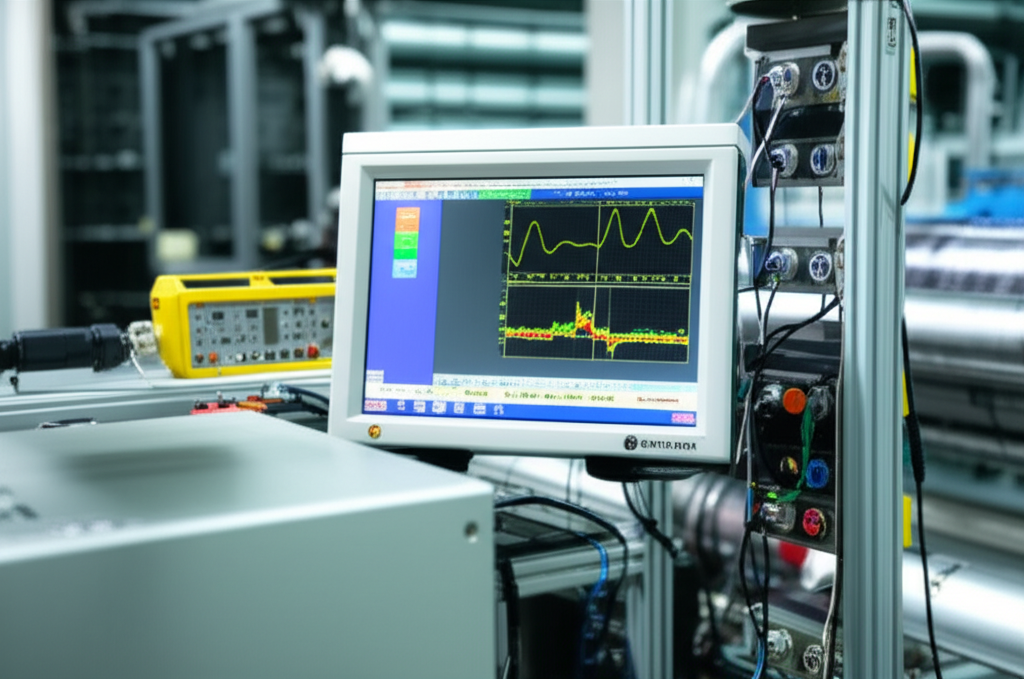
The Diploma in Vibration/Thermal and Health Index focuses on the study of mechanical vibrations, heat transfer, and the development of Health Indexes for equipment and systems. It explores vibration analysis and thermography methodologies, using numerical simulation and systems modeling tools. It focuses on fault identification, condition diagnosis, and performance optimization in various industries.
The program includes practical knowledge in sensors and data acquisition, signal analysis, and the application of artificial intelligence for fault monitoring and prediction. This program prepares professionals for roles such as predictive maintenance engineers, asset integrity specialists, and vibration analysts, strengthening their data-driven decision-making capabilities and optimizing operational efficiency.
Target keywords (natural occurrences in the text): mechanical vibrations, heat transfer, Health Index, vibration analysis, thermography, numerical simulation, condition monitoring, predictive maintenance.
Diploma in Vibrations/Thermal and Health Index
- Format:
- Duration:
- Hours: 900 H
- Language:
- Credits:
- Registration date: 08-10-2026
- Strat date: 18-11-2026
- Available places: 2
1,295 $
Competencies and results
What you will learn
Who this program is for:
Diploma in Vibrations/Thermal and Health Index
9.9 Introduction to Vibrations in Marine Machinery: Basic Concepts and Types of Vibrations
9.9 Fundamental Principles of Thermodynamics: Laws and Applications in Marine Systems
9.3 Introduction to the Health Index: Definition, Importance, and Relationship to Performance
9.4 Instrumentation and Data Acquisition: Sensors and Tools
9.5 Fundamentals of Data Analysis: Processing and Visualization
9.6 Case Study: Practical Application in a Specific Marine System
9.9 Sources of Vibrations in Ships: Engines, Propellers, and Other Equipment
9.9 Vibration Measurement and Analysis Techniques: Spectra and Diagrams
9.3 Troubleshooting Using Vibration Analysis: Problem Identification
9.4 Interpretation of Vibration Data: Norms and Standards
9.5 Vibrations and Their Impact on the Ship’s Structure: Modal Analysis
9.6 Case Study: Practical Application in Solving Vibration Problems on a Ship
3.9 Thermodynamic principles applied to ships: propulsion and power generation systems.
3.9 Energy efficiency analysis: optimization of thermodynamic systems.
3.3 Design and operation of refrigeration systems: air conditioning and preservation.
3.4 Heat exchange systems: applications in naval environments.
3.5 Thermodynamic simulation and modeling: tools and scenario analysis.
3.6 Case study: Fuel consumption optimization using thermodynamic strategies.
4.9 Definition and calculation of the Health Index: key metrics and parameters.
4.9 Data collection and analysis for the Health Index: sources and methods.
4.3 Relationship between the Health Index and ship performance: impact on operability.
4.4 Health Index monitoring and management systems: tools and software.
4.5 Interpretation and application of the Health Index in decision-making: corrective actions. 4.6 Case Study: Implementation of a Health Index System on a Specific Vessel
5.9 Non-Destructive Testing Techniques: Ultrasound, Radiography, and Other Methods
5.9 Structural Integrity Assessment: Crack and Corrosion Detection
5.3 Corrosion Monitoring and Cathodic Protection: Prevention Strategies
5.4 Stress and Strain Analysis: Structural Health Assessment
5.5 Component Lifecycle Management: Predictive Maintenance
5.6 Case Study: Application of Techniques to Preserve the Structural Health of a Vessel
6.9 Large-Scale Vibration and Thermodynamic Data Analysis: Naval Fleets
6.9 Implementation of Real-Time Monitoring Systems: Proactive Management
6.3 Failure Prediction and Predictive Maintenance: Resource Optimization
6.4 Performance Optimization Strategies: Historical Data Analysis 6.5 Data-driven decision-making: maximizing efficiency and safety.
6.6 Case study: Naval fleet analysis and recommendations for performance improvement.
7.9 Advanced strategies for optimizing operational readiness: vibrations, thermodynamics, and the Health Index.
7.9 Implementing maintenance management systems: planning and scheduling.
7.3 Reducing operating costs: resource optimization and energy efficiency.
7.4 Increasing equipment availability and reliability: preventive strategies.
7.5 Improving asset safety and lifespan: a proactive approach.
7.6 Case study: Implementing an operational readiness optimization program on a specific vessel.
8.9 Risk assessment and management: failure analysis and contingency plans.
8.9 Ensuring structural integrity: inspections and preventive maintenance.
8.3 Optimizing long-term performance: asset management strategies. 8.4 Compliance with regulations and standards: safety and sustainability.
8.5 Development of a comprehensive integrity and performance management program.
8.6 Case study: implementation of a performance and integrity assurance program.
9.9 Introduction to the Health Index: definition, importance in naval assets.
9.9 Data collection and analysis: information sources and tools.
9.3 Interpretation of results: diagnosis and decision-making.
9.4 Predictive and proactive maintenance: strategies for extending service life.
9.5 Integration with asset management systems: resource optimization.
9.6 Health Index and operational efficiency: impact on vessel availability.
9.7 Case study: practical application on a specific vessel.
Capstone-type projects
“`html
- Propulsion Systems Analysis: CFD modeling and simulation of propellers and propulsion systems to optimize efficiency and reduce vibrations.
- Machinery Health Management: Implementation of Health Index algorithms to predict failures and optimize preventive maintenance.
- Thermodynamic Analysis of Naval Systems: Optimization of thermodynamic cycles to improve energy efficiency and reduce emissions.
“`
` …
Admissions, fees and scholarships
Do you have any questions?
Our team is ready to help you. Contact us and we’ll get back to you as soon as possible.