

Diploma in PLL/Synthesis and Low Noise
About us Diploma in PLL/Synthesis and Low Noise
The Diploma in PLL/Synthesis and Low Noise focuses on the in-depth exploration of PLL (Phase-Locked Loop) circuits and noise minimization in high-frequency electronic systems. Participants will acquire advanced skills in the design, simulation, and analysis of PLL circuits, understanding their application in areas such as wireless communications, radio frequency (RF), and high-speed digital systems. It focuses on understanding frequency synthesis and techniques for reducing phase noise, including the design of loop filters and the analysis of system stability. The program includes the study of key electronic components, such as voltage-controlled oscillators (VCOs), frequency dividers, and phase detectors, with an emphasis on simulation using tools like SPICE and the use of high-precision measuring instrumentation. The latest trends in low noise and their impact on system performance are addressed, preparing professionals for roles such as RF design engineers, communications specialists, and embedded systems designers, relevant in sectors such as consumer electronics, telecommunications, and scientific instrumentation.
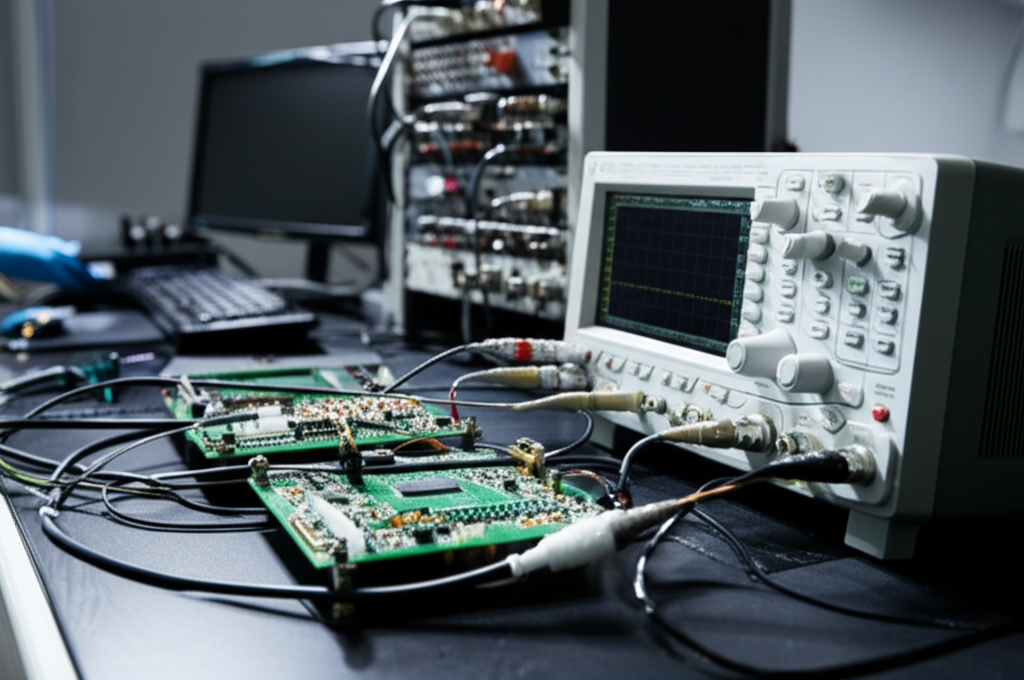
Diploma in PLL/Synthesis and Low Noise
- Format: Hybrid
- Duration: 6–8 months
- Hours: 800 H
- Language: English / Spanish
- Registration date: 23-10-2026
- Strat date: 03-12-2026
- Available places: 2
1,750 $
Competencies and results
What you will learn
1. PLL Domain, Frequency Synthesis, and Low-Noise Design for Naval Systems
-
Gain a thorough understanding of the architecture and operation of PLLs (Phase-Locked Loops), a crucial component in signal synchronization in naval systems.
Learn advanced Frequency Synthesis techniques, including the design of efficient and accurate frequency synthesizers for specific applications in maritime environments.
Master methods for designing Low Noise circuits, minimizing interference and maximizing the sensitivity of communication and navigation systems at sea.
Study the application of PLLs and frequency synthesis in radar, communication, and navigation systems, adapted to the demands of naval environments.
Analyze signal modulation and demodulation techniques to optimize data transmission in naval communication systems.
Learn to select and use specific electronic components for the design of PLL and frequency synthesis systems, considering the technical specifications and environmental conditions of naval operations.
Develop skills in using simulation and analysis software for the design, simulation, and optimization of PLL circuits and frequency synthesizers.
Explore relevant international regulations and standards for communication and navigation systems in the naval field, including performance, safety, and electromagnetic compatibility requirements.
Understand the specific challenges of designing electronic systems in marine environments, such as humidity, salinity, vibrations, and extreme temperatures.
Apply the acquired knowledge in practical projects and case studies related to communication, radar, and navigation systems in the naval field.
2. Analysis and Optimization of PLL Circuits, Frequency Synthesis, and Noise Reduction for Marine Applications [The text abruptly shifts to a seemingly unrelated topic: "]
2. **PLL Circuit Analysis and Optimization, Frequency Synthesis, and Noise Reduction for Maritime Applications**
- Understand the fundamental principles of PLL (Phase-Locked Loop) circuits.
- Analyze the architecture and operation of key PLL components: phase detector, loop filter, and VCO (Voltage-Controlled Oscillator).
- Study different PLL topologies and their applications in maritime communication systems.
- Design and simulate PLL circuits using electronic simulation tools (e.g., SPICE).
- Analyze and optimize PLL performance in terms of stability, settling time, and capture range.
- Explore frequency synthesis techniques to generate high-precision signals for maritime applications (radiocommunications, radar, navigation systems).
- Understand noise sources in circuits PLLs and their effects on system performance.
Apply noise reduction techniques, including the design of low-noise filters and the appropriate selection of components.
Analyze the impact of noise on radio frequency signals and the accuracy of navigation systems.
Study the specific considerations for implementing PLL circuits in marine environments (temperature, humidity, vibration).
Learn about the relevant standards and regulations for maritime communication and navigation systems.
Use signal measurement and analysis instruments to evaluate the performance of PLL circuits (e.g., spectrum analyzer, oscilloscope).
Design and build prototype PLL circuits for specific maritime applications.
Analyze and evaluate commercial frequency synthesis solutions for use in marine applications.
Apply the acquired knowledge to solve practical problems related to… PLL circuits and frequency synthesis in the maritime context.
3. Comprehensive user-oriented design and validation (from modeling to manufacturing)
You will learn to integrate the entire product development process, from initial model conception to final validation, applying user-centered methodologies. You will develop skills in parametric design, ergonomics, simulation, sustainable materials, 3D visualization, and manufacturing management, ensuring efficient, safe solutions that meet current industry standards.
4. Rotor Modeling and Performance
4. Modeling and performance of rotors
- Analyze flap–lag–torsion couplings, whirl flutter and fatigue.
- Size laminates in composites, unions and bonded joints with FE.
- Implement damage tolerance and NDT (UT/RT/thermography).
5. Rotor Analysis: Modeling and Performance Evaluation in Naval Systems
5. Rotor Analysis: Modeling and Performance Evaluation in Naval Systems
- Understand the structural dynamics of rotors, including the analysis of flap-lag-torsion couplings, crucial for stability and performance.
- Identify and evaluate whirl flutter phenomena, a critical mode of vibrational instability in naval rotating systems.
- Estimate the service life of components through fatigue analysis, considering the cyclic loads to which they are subjected.
- Master the dimensioning of laminated structures in composites, including thickness calculations and material selection.
- Analyze the integrity of joints and bonded joints using finite element (FE) methods, ensuring strength and durability.
- Apply damage tolerance principles for damage management and the prevention of catastrophic rotor failures.
- Utilize non-destructive testing (NDT) techniques, such as UT/RT/thermography, for the inspection and evaluation of structural integrity.
6. Advanced Modeling and Simulation of Rotors in Marine Environments
- Understand and apply modeling and simulation techniques for the analysis of rotor dynamics in marine environments.
- Identify and analyze critical aeroelastic phenomena, including flap-lag-torsion couplings, whirl flutter, and fatigue assessment in rotors.
- Master the dimensioning of composite structures, specifically laminates in composites, as well as the analysis of joints and bonded joints using Finite Element (FE) techniques.
- Implement damage tolerance methodologies for structural integrity assessment and apply Non-Destructive Testing (NDT) techniques such as UT (Ultrasound), RT (Radiography), and thermography.
Who this program is for:
Diploma in PLL/Synthesis and Low Noise
-
Engineers with degrees in Aerospace Engineering, Mechanical Engineering, Industrial Engineering, Automation, or similar disciplines.
-
Professionals who work in: Original Equipment Manufacturers (OEMs) of rotorcraft/eVTOLs, Maintenance, Repair, and Overhaul (MROs), specialized consulting firms, and technology centers focused on the aerospace sector.
- Experts in areas such as flight testing, aeronautical certification processes, avionics, control systems, and flight dynamics who wish to deepen their knowledge and skills.
- Personnel from regulatory bodies/aeronautical authorities and professionals involved in the development of urban air mobility (UAM)/eVTOL who need to acquire competencies in regulatory compliance and specific regulations.
**Suggested Requirements:** Familiarity with aerodynamics, control systems, and airframes. Proficiency in English or Spanish at a B2+/C1 level. Bridging tracks are available to facilitate the acquisition of prior knowledge.
- Standards-driven curriculum: you will work with CS-27/CS-29, DO-160, DO-178C/DO-254, ARP4754A/ARP4761, ADS-33E-PRF from the first module.
- Accreditable laboratories (EN ISO/IEC 17025) with rotor bench, EMC/Lightning pre-compliance, HIL/SIL, vibrations/acoustics.
- Evidence-oriented TFM: safety case, test plan, compliance dossierand operational limits.
- Mentored by industry: teachers with experience in rotorcraft, tiltrotor, eVTOL/UAM and flight test.
- Flexible modality (hybrid/online), international cohorts and support from SEIUM Career Services.
- Ethics and security: safety-by-design approach, cyber-OT, DIH and compliance as pillars.
Module 1 — Fundamentals of PLLs and Frequency Synthesis
1. Introduction to PLL systems and their relevance in marine electronics.
2. Basic principles of frequency synthesis and its application in marine communication equipment.
3. Key components of a PLL: phase detector, loop filter, VCO.
4. Analysis of the stability and performance of PLL loops.
5. Design of loop filters to optimize performance in marine applications.
6. Noise concepts in PLLs and basic mitigation techniques.
7. Basic PLL modeling and simulation using electronic design tools.
8. Selection of appropriate components for building a low-noise PLL.
9. Practical implementation of PLL circuits in prototypes.
10. Common applications of PLLs and frequency synthesis in naval navigation and communication systems.
2.2 PLL Fundamentals: Architecture and Operation in Naval Systems
2.2 PLL Circuit Analysis: Modeling and Simulation for Maritime Applications
2.3 PLL Optimization: Component Design and Filter Selection
2.4 Frequency Synthesis: Techniques for Precise Signal Generation
2.5 Noise Reduction: Methods for Improving Performance in Naval Environments
2.6 Specific Applications: Design of Communication and Radar Systems
2.7 Measurement and Characterization: Testing and Performance Evaluation of PLLs
2.8 Prototype Design: Implementation and Practical Testing in Naval Systems
2.9 Environmental Considerations: Adaptation to Adverse Marine Conditions
2.20 Case Studies: Analysis of Successful Designs and Common Challenges
3.3 Basic Principles of Naval Propulsion: Propellers and Rotors
3.2 Rotor Geometry and Its Impact on Performance
3.3 Rotor Materials and Manufacturing: Selection and Considerations
3.4 Maritime Legislation: Regulations Relevant to Rotor Design
3.5 Safety Standards and Certification for Propulsion Systems
3.6 Rotor Design: Optimization for Efficiency and Cavitation
3.7 Environmental Factors: Impact of Water and the Marine Environment
3.8 Rotor Maintenance and Repair: Best Practices
3.9 Rotor Failure Analysis and Solutions
3.30 Case Studies: Application of Rotors in Different Vessels and Naval Contexts
4.4 Introduction to Rotor Modeling: Fundamental Principles and Naval Applications
4.2 Rotor Geometry: Design and Key Performance Characteristics
4.3 Aerodynamic Rotor Modeling: Theory and Numerical Simulation
4.4 Rotor Performance Analysis: Thrust, Power, and Efficiency
4.5 Rotor-Hull Interaction Effects: Analysis and Mitigation
4.6 Rotor Design Optimization: Strategies and Tools
4.7 Rotor Dynamics Modeling: Stability and Control
4.8 Rotor Materials and Manufacturing: Considerations for Naval Environments
4.9 Rotor Model Testing and Validation: Wind Tunnel and Sea Testing
4.40 Case Studies: Applications and Challenges of Rotor Modeling in Naval Systems
5.5 Introduction to Naval Propulsion and PLL Systems
5.5 Fundamental Principles of Frequency Synthesis in Marine Environments
5.3 Low-Noise PLL Circuit Design: Basic Concepts
5.4 Naval Regulations and Standards for Communication and Navigation Systems
5.5 Practical Applications of PLLs and Frequency Synthesis in the Naval Industry
5.6 Importance of Performance Analysis and Optimization in Naval Systems
5.7 Introduction to Rotor Modeling in Naval Systems
5.8 Safety Considerations and Regulatory Compliance
5.9 Case Studies: Examples of PLL and Rotor Implementation in Naval Systems
5.50 Future Trends and Challenges in Naval Engineering
6.6 Introduction to Rotor Simulation in Marine Environments
6.2 Fundamentals of Rotor Modeling for Naval Applications
6.3 Software and Tools for Rotor Simulation
6.4 Water Flow Simulation and Computational Fluid Dynamics (CFD)
6.5 Rotor Performance Analysis: Thrust, Torque, and Efficiency
6.6 Modeling Cavitation and its Impact on Rotor Performance
6.7 Rotor-Hull Interaction Simulation
6.8 Rotor Design Optimization through Simulation
6.9 Simulation of Rotor Noise and Vibration
6.60 Practical Applications and Case Studies in the Naval Sector
6.5
7.7 Introduction to Navigation and Naval Systems
7.2 Fundamentals of Naval Engineering and Key Concepts
7.3 Relevant International and National Maritime Regulations
7.4 Structure and Organization of Naval Forces
7.7 Essential Naval Terminology and Glossary
7.6 Importance of Safety and Efficiency in Naval Operations
7.7 Analysis of Specific Requirements and Challenges of the Naval Environment
7.8 Overview of Current Communication and Navigation Systems
7.9 Basic Principles of Naval Propulsion and Hydrodynamics
7.70 Introduction to Electronics and Control Systems in Naval Environments
8.8 Introduction to Rotor Analysis in Naval Systems
8.8 Fundamentals of Rotor Modeling for Marine Applications
8.3 Key Performance Parameters: Analysis and Evaluation
8.4 Rotor Design Optimization for Energy Efficiency
8.5 Noise and Vibration Analysis in Naval Propulsion Systems
8.6 Rotor Simulation and Validation Methodologies
8.7 Case Studies: Rotor Applications on Different Naval Platforms
8.8 Design and Material Selection for High-Performance Rotors
8.8 Rotor Integration with the Propulsion System
8.80 Future Trends in Naval Rotor Design and Analysis
8.9
9.9 PLL Fundamentals: Operating Principles and Key Components
9.9 Introduction to Frequency Synthesis: Concepts and Applications in Naval Systems
9.3 Noise in Circuits: Types of Noise and Their Impact on Naval Communication Systems
9.4 PLL System Design: Initial Considerations and Common Topologies
9.5 PLL Applications in Naval Systems: Radar, Communications, and Navigation
9.9 PLL Circuit Analysis: Modeling and Simulation of PLL Systems
9.9 PLL Optimization: Techniques for Improving Performance and Stability
9.3 Frequency Synthesis: Design of Frequency Synthesizers for Marine Applications
9.4 Noise Reduction: Strategies for Minimizing Noise in PLL Circuits
9.5 Case Studies: Analysis of PLL Systems on Ships
3.9 High-Precision PLL Design: Considerations for Stability and Low Noise
3.9 Advanced Frequency Synthesis: Techniques for designing high-performance frequency synthesizers.
3.3 Noise Reduction Techniques: Filters, Isolation, and Other Strategies.
3.4 Naval Environments: Challenges and Solutions in PLL System Design.
3.5 Practical Examples: Design and Implementation of PLLs in Naval Systems.
4.9 Introduction to Rotor Modeling: Principles and Basic Concepts.
4.9 Rotor Types: Design and Characteristics of Different Types.
4.3 Rotor Aerodynamics: Fundamental Principles and Simplified Models.
4.4 Performance Parameters: Thrust, Power, and Efficiency.
4.5 Rotor Modeling: Software and Simulation Tools.
5.9 Rotor Analysis: Evaluation and Simulation Methods.
5.9 Rotor Performance: Characteristic Curves and Data Analysis.
5.3 Naval Systems: Specific Applications and Challenges. 5.4 Rotor Design Optimization: Techniques and Strategies
5.5 Case Studies: Performance Analysis in Real Naval Systems
6.9 Advanced Rotor Modeling: CFD and Finite Element Models
6.9 Rotor Simulation: Simulation Tools and Techniques
6.3 Marine Environments: Special Considerations for Simulation
6.4 Results Analysis: Data Interpretation and Validation
6.5 Practical Applications: Simulation in Naval Systems Design
7.9 PLL Implementation: Components and Design Techniques
7.9 PLL Optimization: Performance, Stability, and Low Noise
7.3 Frequency Synthesis: Synthesizer Design for Naval Applications
7.4 Marine Environments: Implementation Challenges and Solutions
7.5 Testing and Validation: Evaluation Protocols and Methods
8.9 Rotor Modeling: Methods and Tools
8.9 Rotor Performance: Data Analysis and Evaluation
8.3 Rotor Optimization: Design Techniques and Strategies
8.4 Naval Systems: Specific Applications and Challenges
8.5 Case Studies: Performance Analysis and Improvement
9.9 International Standards and Regulations for Naval Design
9.9 Safety Standards: Design and Regulatory Compliance
9.3 Environmentally Sustainable Design: Regulatory Compliance
9.4 Technical Documentation: Standards and Best Practices
9.5 Naval Systems Certification: Process and Requirements
1. PLL Mastery, Frequency Synthesis, and Low-Noise Design in Marine Systems
2. Analysis and Optimization of PLL Circuits, Frequency Synthesis, and Noise Reduction for Marine Applications
3. PLL Design, High-Precision Frequency Synthesis, and Advanced Noise Reduction Techniques in Marine Environments
4. Rotor Modeling and Performance
5. Rotor Analysis: Modeling and Performance Evaluation in Marine Systems
6. Advanced Modeling and Simulation of Rotors in Marine Environments
7. Implementation and Optimization of PLLs, Frequency Synthesis, and Low-Noise Design in Marine Environments
8. Rotor Modeling and Performance in Marine Systems: Analysis and Optimization
- Hands-on methodology: test-before-you-trust, design reviews, failure analysis, compliance evidence.
- Software (depending on licenses/partners): MATLAB/Simulink, Python (NumPy/SciPy), OpenVSP, SU2/OpenFOAM, Nastran/Abaqus, AMESim/Modelica, acoustics tools, planning toolchains DO-178C.
- SEIUM Laboratories: scale rotor bench, vibrations/acoustics, EMC/Lightning pre-compliance, HIL/SIL for AFCS, data acquisition with strain gauging.
- Standards and compliance: EN 9100, 17025, ISO 27001, GDPR.
Capstone-type projects
- PLL/Synthesis: Low-noise PLL design; performance analysis; interference mitigation in naval communications.
- Rotors: CFD modeling; vibration analysis; optimization of naval propulsion efficiency.
- PLL/Synthesis: Low-phase and low-noise design; circuit analysis and optimization.
- Rotors: Modeling and simulation; performance evaluation in naval systems.
- Marine Environments: Implementation and optimization of PLLs/Rotors.
PLL/Synthesis: Low-phase and low-noise design; circuit analysis and optimization.
- PLL & Synthesis: Low-noise frequency design for naval systems.
- Rotors: Performance modeling and analysis in maritime environments.
- Optimization: Implementation and optimization of naval systems.
- Testing: Advanced validation and simulation in maritime environments.
- PLL & Frequency Synthesis: Low-noise design for naval communications.
- Rotors: CFD modeling and performance optimization, validation.
Admissions, fees and scholarships
- Profile: Background in Computer Engineering, Mathematics, Statistics, or related fields; practical experience in NLP and valued information retrieval systems.
- Documentation: Updated CV, academic transcript, SOP/statement of purpose, project examples or code (optional).
- Process: Application → Technical evaluation of profile and experience → Technical interview → Review of case studies → Final decision → Enrollment.
- Fees:
- Single payment: 10% discount.
- Payment in 3 installments: No fees; 30% upon registration + 2 equal monthly payments of the remaining 35%.
Monthly payment: available with a 7% commission on the total; annual review.
Scholarships: based on academic merit, financial need, and promoting inclusion; agreements with companies in the sector for partial or full scholarships.
See “Calendar & Calls for Applications,” “Scholarships & Grants,” and “Fees & Financing” in the SEIUM mega-menu.
Do you have any questions?
Our team is ready to help you. Contact us and we’ll get back to you as soon as possible.