

Diploma in AIV for Payloads and Thermal-Vacuum Environments
About us Diploma in AIV for Payloads and Thermal-Vacuum Environments
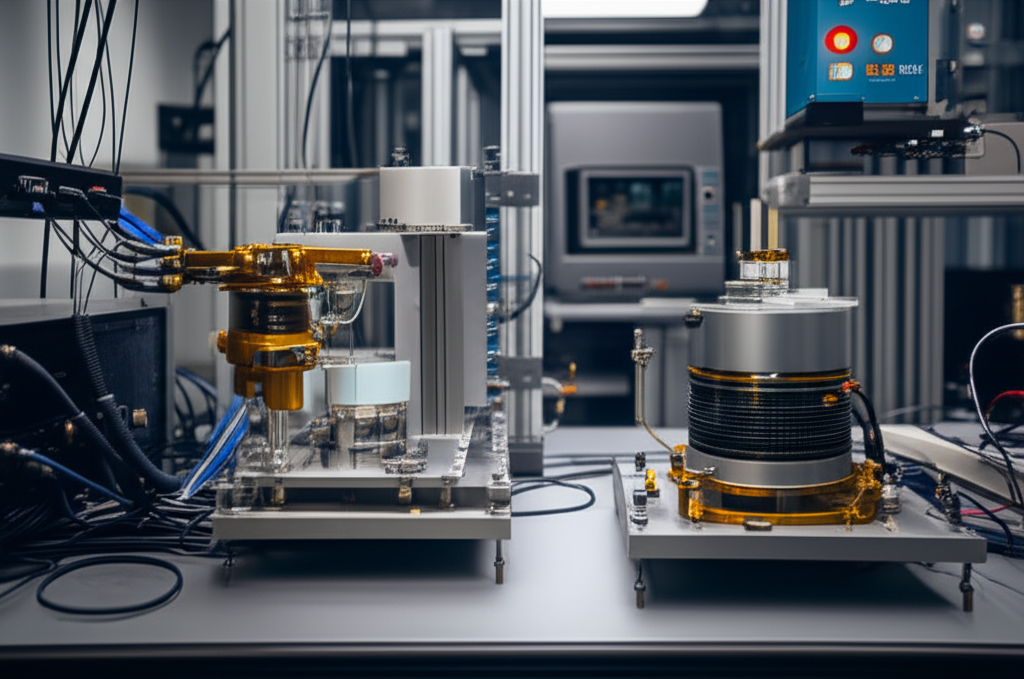
The Diploma in AIV for Payloads and Thermal-Vacuum Environments focuses on the validation and verification of payloads and systems under extreme vacuum and temperature conditions. The program integrates knowledge of numerical simulation, thermal analysis, and design of experiments to evaluate component performance and reliability. It delves into the use of vacuum chambers and thermal chambers, as well as the interpretation of data from sensors and advanced instrumentation. This course covers the regulations and standards related to testing in space environments, preparing professionals for roles in the space industry and in the development of cutting-edge technology. This diploma provides hands-on experience in the preparation and execution of AIV (Assembly, Integration, and Verification) tests, including failure analysis and the implementation of corrective actions. Emphasis is placed on the importance of traceability and compliance with safety protocols. Participants will develop skills in interpreting results and generating detailed technical reports. This prepares them for roles such as test engineers, space systems analysts, and verification and validation specialists.
Diploma in AIV for Payloads and Thermal-Vacuum Environments
- Format: Hybrid
- Duration: 6–8 months
- Hours: 800 H
- Language: English / Spanish
- Registration date: 23-10-2026
- Strat date: 03-12-2026
- Available places: 2
979 $
Competencies and results
What you will learn
1. Advanced AIV Proficiency for Payloads: Thermal-Vacuum Environments and Simulations.
-
Understand and apply Environmental Verification and Integrity (EVI) analysis for payloads in extreme environments.
-
Master the simulation of vacuum and thermal conditions, essential for the design and testing of space components.
-
Study and simulate the behavior of structures under thermal and vacuum stress using advanced simulation tools.
-
Evaluate the design and strength of materials under the challenges of the space environment.
-
Learn data analysis and modeling techniques for design optimization and performance prediction under extreme conditions.
2. AIV of Payloads in Vacuum and Thermal Environments: Design, Testing, and In-Depth Analysis.
2. AIV of Payloads in Vacuum and Thermal Environments: Design, Testing, and In-Depth Analysis.
- Understand the fundamentals of payload design for extreme vacuum and temperature conditions.
- Master the key concepts of finite element analysis (FEA) simulation and analysis for payloads.
- Apply advanced structural design techniques for payloads operating in space environments.
- Learn to select and optimize materials for payloads that meet performance and durability requirements in vacuum and extreme temperatures.
- Become familiar with environmental qualification (AIV) testing of payloads in vacuum and thermal chambers.
- Interpret test and analysis results to validate the design and predict payload behavior in space.
- Design and analyze thermal control systems for payloads, including the use of coatings, insulators, and heat sinks.
- Understand payload manufacturing and assembly techniques, including control of pollution and ESD (Electrostatic Discharge) management.
- Analyze potential payload failure modes and develop mitigation strategies.
- Learn to document and present the results of payload design, analysis, and testing clearly and concisely.
- Implement modal analysis to identify critical natural frequencies and vibration modes.
- Perform sensitivity analysis to evaluate the impact of variations in design parameters.
- Design and analyze structures that withstand launch loads and vibrations.
- Learn to specify and evaluate payload performance requirements.
- Become familiar with space industry regulations and standards, such as those of NASA and ESA.
3. Comprehensive user-oriented design and validation (from modeling to manufacturing)
You will learn to integrate the entire product development process, from initial model conception to final validation, applying user-centered methodologies. You will develop skills in parametric design, ergonomics, simulation, sustainable materials, 3D visualization, and manufacturing management, ensuring efficient, safe solutions that meet current industry standards.
4. Implementation and Evaluation of Payloads in AIV Simulations and Thermal-Vacuum Environments.
4. Implementation and Evaluation of Payloads in AIV Simulations and Thermal-Vacuum Environments.
- Master the design and analysis of payloads for AIV (Assembly, Integration, and Verification) simulations and thermal-vacuum environments.
- Understand the theoretical foundations of space environment simulation and its effects on payloads.
- Learn to model and simulate the thermal interaction of payloads under vacuum and extreme temperature conditions.
- Evaluate the structural response of payloads to simulated dynamic and static loads.
- Use specialized software for the simulation and analysis of payloads in AIV and thermal-vacuum environments.
- Apply validation and verification techniques to simulation models, comparing the results with experimental data.
- Generate detailed technical reports that document simulation results and design recommendations.
- Analyze the risks associated with the implementation of payloads in Space environments and propose solutions to mitigate them.
Become familiar with the space industry regulations and standards related to AIV and thermal vacuum testing.
Gain practical experience through realistic exercises and case studies that simulate payload deployment scenarios.
5. Rotor Simulation and Performance: Modeling in Specialized Environments.
- Rotor simulation domain: modal analysis and dynamic analysis.
- Advanced rotor modeling: finite element analysis (FEA) for flexibility and aerodynamics.
- Rotor performance evaluation: optimization and sensitivity.
- Identification of critical phenomena: vibrations and instabilities.
- Implementation of simulation techniques: CFD-CSD (Computational Fluid Dynamics – Coupled Structural Dynamics).
- Fatigue and durability analysis: useful life calculation and cumulative damage.
- Application Specialized software: ANSYS, NASTRAN, Abaqus and specific rotor tools.
- Rotor design and optimization: aerodynamics, structural, and control.
- Model validation: comparison with experimental data and methodology.
- Case studies: practical applications in the aerospace and naval industries.
6. Rotor Modeling: Performance and Simulation in Thermal-Vacuum Environments.
- Understand the fundamentals of rotor modeling, including its response in vacuum and thermal environments.
- Master rotor performance analysis, considering factors such as aerodynamic efficiency and stability.
- Learn simulation techniques to predict rotor behavior under various operating conditions.
- Study rotor-stator interaction and its implications for design and operation.
- Apply knowledge to rotor design optimization to maximize performance and durability.
- Explore rotor failure analysis and problem prevention.
- Explore the latest technologies in rotor modeling and simulation, including the use of specialized software.
- Evaluate the impact of thermal and vacuum environments on rotor design and operation.
- Analyze couplings flap–lag–torsion, whirl flutter and fatigue.
- Size laminates in composites, unions and bonded joints with FE.
- Implement damage tolerance and NDT (UT/RT/thermography).
Who this program is for:
Diploma in AIV for Payloads and Thermal-Vacuum Environments
- Aerospace, Mechanical, Industrial, Automation Engineers, or related fields.
- Professionals from rotorcraft/eVTOL OEMs, MRO (Maintenance, Repair, and Operations), specialized consulting firms, and researchers from technology centers.
- Experts in Flight Testing, aeronautical certification, avionics, control systems, and flight dynamics who wish to deepen their knowledge.
- Personnel from aeronautical regulators/authorities and professionals involved in the development and regulation of UAM/eVTOL, seeking to strengthen their competencies in regulatory compliance (compliance).
Recommended: Basic knowledge of aerodynamics, systems control, and structures. Fluency in Spanish or English (B2+/C1). Bridging tracks are offered to address any gaps in knowledge.
- Standards-driven curriculum: you will work with CS-27/CS-29, DO-160, DO-178C/DO-254, ARP4754A/ARP4761, ADS-33E-PRF from the first module.
- Accreditable laboratories (EN ISO/IEC 17025) with rotor bench, EMC/Lightning pre-compliance, HIL/SIL, vibrations/acoustics.
- Evidence-oriented TFM: safety case, test plan, compliance dossierand operational limits.
- Mentored by industry: teachers with experience in rotorcraft, tiltrotor, eVTOL/UAM and flight test.
- Flexible modality (hybrid/online), international cohorts and support from SEIUM Career Services.
- Ethics and security: safety-by-design approach, cyber-OT, DIH and compliance as pillars.
1.1 Introduction to AIV and its Importance in Payloads
1.2 Thermal-Vacuum Environments: Concepts and Applications
1.3 Simulation Fundamentals for Payloads
1.4 Design Methodologies for AIV Testing
1.5 Types of Payloads and their Characteristics
1.6 Payload Integration: Interfaces and Connectivity
1.7 Instrumentation and Measurement in AIV Testing
1.8 Analysis of Data Obtained in Simulations
1.9 Safety Considerations in AIV Testing
1.10 Case Studies: Practical Examples of AIV
2.2 Payload Design for Thermal-Vacuum Environments
3.2 Selection and Specification of Materials for AIV Testing
4.3 Design of Vacuum and Thermal Tests: Methodology
5.4 Instrumentation and Measurement in AIV Testing
6.5 Data Analysis and Results of Thermal-Vacuum Tests
7.6 Validation and Verification of Simulation Models
8.7 Identification and Mitigation of Risks in AIV
9.8 Documentation and Reporting of AIV Tests
20.9 Compliance with AIV Regulations and Standards
22.20 Case Studies: Real-World Applications of AIV Testing
3.3 Payload Modeling and Optimization in AIV: Advanced Methodologies
3.2 Simulation of Thermal and Vacuum Scenarios for Payloads: Critical Analysis
3.3 Design of Experiments (DoE) for AIV: Test Optimization
3.4 Data Analysis and Validation in AIV/Thermal-Vacuum Environments
3.5 Simulation Tools and Specialized Payload Software
3.6 Payload Performance Optimization under AIV and Thermal-Vacuum Conditions
3.7 Risk Assessment and Mitigation in AIV Testing
3.8 Integration of AIV Results into Payload Design and Development
3.9 Cost-Benefit Analysis of AIV/Thermal-Vacuum Testing
3.30 Case Study: Optimization of a Specific Payload
3.4
4.4 Simulation and Evaluation of Payloads in AIV Simulations
4.2 Implementation of Payloads in Thermal-Vacuum Environments
4.3 Analysis of AIV Test Data for Payloads
4.4 Design of Experiments (DoE) for Payloads in AIV Environments
4.5 Validation and Verification (V&V) of Payload Models
4.6 Evaluation of Payload Performance in AIV Simulations
4.7 Optimization of Payloads for Thermal-Vacuum Environments
4.8 Integration of Payloads and Subsystems in Simulations
4.9 Risk Management in AIV Payload Projects
4.40 Technical Reports and Documentation of AIV Results
5.5 Fundamentals of Rotor Simulation: Principles and Applications
5.5 Rotor Modeling: Aerodynamics and Dynamics
5.3 Simulation in Specialized Environments: Software and Tools
5.4 Rotor Performance Analysis: Key Metrics
5.5 Rotor Design Optimization
5.6 Thermal Impact on Rotors: Considerations
5.7 Simulation of No-Load Behavior
5.8 Integrating AIV Simulations into Design
5.9 Case Studies and Practical Applications
5.50 Challenges and Future Perspectives in Rotor Simulation
6.6 Fundamentals of Rotor Simulation in Thermal-Vacuum Environments
6.2 Thermal Modeling of Rotors: Principles and Techniques
6.3 Heat Flow Analysis in Vacuum Environments
6.4 Simulation of Material Behavior under Extreme Conditions
6.5 Effects of Thermal Radiation on Rotors
6.6 Implementation of Thermal Boundary Conditions in Simulations
6.7 Results Analysis and Model Validation
6.8 Optimization of Rotor Design for Specific Environments
6.9 Tools and Software for Thermal-Vacuum Simulation
6.60 Case Studies: Practical Applications and Challenges
6.60
7.7 Introduction to Rotor Modeling: Fundamentals and Key Concepts
7.2 Rotor Design and Configuration: Technical and Performance Aspects
7.3 Rotor Simulation: Methodologies and Specialized Tools
7.4 Rotor Performance Analysis: Metrics and Results Evaluation
7.7 Thermal Modeling of Rotors: Considerations in Specific Environments
7.6 Simulation in Vacuum Environments: Challenges and Solutions
7.7 Rotor Design Optimization: Techniques and Strategies
7.8 Application of AIV to Rotors: Testing and Validation
7.9 Case Studies: Rotor Analysis in Different Scenarios
7.70 Future Trends in Rotor Modeling and Performance
8.8 Advanced AIV Mastery for Payloads: Thermal-Vacuum Environments and Simulations.
8.8 Specific AIV Techniques for Space Payloads.
8.3 Thermal-Vacuum Environment Simulation: Tools and Methodologies.
8.4 AIV Test Design: Planning and Execution.
8.5 AIV Data Analysis: Interpretation and Reporting of Results.
8.6 Validation of AIV Models and Simulations.
8.7 Quality Control in AIV Processes.
8.8 Case Studies: Real-World Applications of AIV.
8.8 Specialized AIV Tools and Software.
8.80 AIV Documentation and Standards.
8.8 Design of Experiments for AIV Vacuum and Thermal Tests.
8.8 Payload Design for Extreme Environments.
8.3 Selection of Materials and Components for AIV. 8.4 Vibration and shock testing under vacuum and thermal conditions.
8.5 Material compatibility testing under vacuum conditions.
8.6 Measurement techniques and data analysis in extreme environments.
8.7 Failure analysis and failure modes in AIV.
8.8 AIV test documentation and reports.
8.9 Validation of results and corrective actions.
8.0 Compliance with regulations and standards in AIV.
3.8 Optimization of payload design for AIV.
3.8 AIV simulation optimization techniques.
3.3 Sensitivity and robustness analysis in AIV.
3.4 Design of optimization tests.
3.5 Integration of AIV results into payload design.
3.6 Simulation of failure scenarios and mitigation.
3.7 Optimization of payload thermal performance. 3.8 Cost-benefit analysis of optimizations.
3.8 Software tools for AIV optimization.
3.80 Risk management strategies in optimization.
4.8 Implementation of payloads in AIV simulations.
4.8 Configuration of thermal-vacuum simulations.
4.3 Evaluation of payload performance in simulations.
4.4 Results analysis and validation.
4.5 Functional testing and verification.
4.6 Design of test procedures.
4.7 Generation of evaluation reports.
4.8 Quality control in implementation.
4.8 Feedback for design and development.
4.80 Continuous improvement in payload evaluation.
5.8 Rotor modeling: principles and techniques.
5.8 Computational fluid dynamics (CFD) simulation for rotors. 5.3 Finite Element Analysis (FEA) of Rotors
5.4 Aerodynamic Design of Rotors
5.5 Rotor Performance Simulation: Tools and Software
5.6 Rotor Stability and Control Analysis
5.7 Structural Design of Rotors
5.8 Rotor Vibration Simulation
5.9 Rotor Model Validation
5.10 Case Studies: Rotor Simulation in Real-World Applications
6.8 Rotor Modeling in Thermal-Vacuum Environments
6.9 Simulation of Thermal Effects in Rotors
6.3 Heat Transfer Analysis in Rotors
6.4 Rotor Performance Simulation in Vacuum
6.5 Rotor Design for Extreme Environments
6.6 Rotor Material and Component Selection
6.7 Rotor Fatigue and Durability Analysis 6.8 Rotor Failure Simulation
6.8 Model Validation in Extreme Environments
6.80 Rotor Modeling Applications: Case Studies
7.8 Rotor Design Optimization for Vacuum and Thermal Environments
7.8 Rotor Simulation Optimization Techniques
7.3 Sensitivity and Robustness Analysis in Rotor Design
7.4 Rotor Optimization Test Design
7.5 Integration of AIV Results into Rotor Design
7.6 Rotor Failure and Mitigation Scenarios Simulation
7.7 Rotor Thermal Performance Optimization
7.8 Cost-Benefit Analysis of Rotor Optimizations
7.8 Software Tools for Rotor Optimization
7.80 Risk Management Strategies in Rotor Optimization
8.8 Rotor AIV Data Analysis 8.8 Rotor Modeling: Theory and Practice
8.3 Rotor Performance Evaluation
8.4 Rotor Failure Analysis and Failure Modes
8.5 Designing AIV Tests for Rotors
8.6 Mission Scenario Simulation
8.7 Integrating Simulation and Test Data
8.8 Rotor Model Validation
8.9 Rotor AIV Reporting and Documentation
8.0 Case Studies: Rotor Analysis in Extreme Environments
9.9 Fundamentals of AIV (Assembly, Integration, and Verification) for payloads.
9.9 Thermal-vacuum environments: Principles and applications in simulation.
9.3 Computational simulation: Introduction and tools.
9.4 Modeling and simulation of payloads in simulated environments.
9.5 Design of experiments (DoE) for AIV analysis.
9.6 Validation and verification of simulation models.
9.7 Results analysis and report generation.
9.8 Case studies: Payload simulation under various conditions.
9.9 Risk mitigation strategies in AIV.
9.90 Software and hardware integration in AIV simulations.
9.9 Design of AIV tests in vacuum and thermal environments.
9.9 Design considerations for payloads in extreme environments.
9.3 Equipment and instrumentation for thermal-vacuum testing. 9.4 Testing Procedures and Safety Protocols
9.5 Test Data Analysis: Techniques and Tools
9.6 Interpretation of Results and Failure Reporting
9.7 Stress and Deformation Analysis of Payloads
9.8 Simulation vs. Testing: Comparison and Validation
9.9 Designing Solutions to Problems Detected in Testing
9.90 Certification and Regulatory Compliance in Thermal-Vacuum AIV
3.9 Payload Optimization Techniques for AIV Environments
3.9 Sensitivity Analysis and Parameter Optimization
3.3 Thermal Design Optimization: Material and Method Selection
3.4 Thermal Management Optimization in Vacuum
3.5 Failure Mode and Effects Analysis (FMEA) of Payloads
3.6 Payload Reliability and Robustness Optimization 3.7 Design for fault tolerance and redundancy.
3.8 Application of optimization algorithms.
3.9 Case study: Optimization of a specific payload.
3.90 Integration of optimization into the payload lifecycle.
4.9 Implementation of payloads in AIV simulations.
4.9 Hardware and software configuration for simulations.
4.3 Creation of realistic simulation scenarios.
4.4 Interfacing and control of simulated systems.
4.5 Real-time data monitoring and control.
4.6 Analysis of simulation results and performance evaluation.
4.7 Identification and resolution of problems in simulations.
4.8 Model validation and simulation calibration.
4.9 Acceptance testing and certification of simulations.
4.90 Integration of simulations into the project lifecycle.
5.9 Rotor Modeling: Principles and Techniques
5.9 Rotor Aerodynamics: Fundamentals and Modeling
5.3 Rotor Dynamics: Analysis and Simulation
5.4 Rotor Modeling in Specialized Software
5.5 Rotor Performance Analysis: Power, Thrust, and Efficiency
5.6 Rotor Flight Simulation: Stability and Control
5.7 Rotor Vibration and Noise Analysis
5.8 Rotor Design Optimization
5.9 Rotor Model Testing and Validation
5.90 Rotor Design for Different Applications
6.9 Rotor Modeling: Software and Tool Selection
6.9 Rotor Performance Analysis Under Specific Conditions
6.3 Rotor Behavior Simulation Under No Load
6.4 Rotor Thermal Modeling: Analysis and Simulation
6.5 Heat Transfer Analysis in Rotors 6.6 Effects of the Thermal Environment on Rotor Performance
6.7 Thermal Optimization of Rotors for Performance and Durability
6.8 Case Studies: Rotor Modeling and Simulation
6.9 Integration of Rotor Models into Complete Systems
6.90 Validation of Models and Simulation Results
7.9 Simulation of Rotors in Vacuum and Thermal Environments
7.9 Rotor Performance Optimization
7.3 Analysis of the Influence of Vacuum on Performance
7.4 Advanced Optimization Techniques
7.5 Failure Simulation and Risk Analysis
7.6 Design of Experiments and Sensitivity Analysis
7.7 Integration of AIV into the Development Process
7.8 Analysis of Simulation and Test Data
7.9 Design for Reliability and Maintainability
7.90 Case Study: Complete Optimization of a Rotor
8.9 Data Collection and Analysis in AIV
8.9 Rotor Modeling Techniques
8.3 Rotor Design Optimization
8.4 Performance Analysis Under Different Conditions
8.5 Failure Analysis and Risk Mitigation
8.6 Model Testing and Validation
8.7 Design for Manufacturing and Assembly
8.8 Product Lifecycle Management
8.9 Cost and Lifecycle Analysis
8.90 Integrating Results into Design
9.1 AIV Integration and Rotor Modeling: Final Project Overview
9.2 Concept Review: Payload AIV and Rotor Simulation
9.3 Experiment Design: Planning AIV Tests and Simulations
9.4 Implementation: Setting Up Thermal-Vacuum Environments and Simulation Software
9.5 Data Analysis: Interpreting AIV and Simulation Results
9.6 Optimization: Parameter Tuning and Performance Improvement
9.7 Validation: Comparing Simulated Results with Experimental Data
9.8 Documentation: AIV and Simulation Reports, and Project Conclusions
9.9 Presentation: Preparing and Presenting Results
9.10 Integration and Final Conclusions
- Hands-on methodology: test-before-you-trust, design reviews, failure analysis, compliance evidence.
- Software (depending on licenses/partners): MATLAB/Simulink, Python (NumPy/SciPy), OpenVSP, SU2/OpenFOAM, Nastran/Abaqus, AMESim/Modelica, acoustics tools, planning toolchains DO-178C.
- SEIUM Laboratories: scale rotor bench, vibrations/acoustics, EMC/Lightning pre-compliance, HIL/SIL for AFCS, data acquisition with strain gauging.
- Standards and compliance: EN 9100, 17025, ISO 27001, GDPR.
Capstone-type projects
- AIV Payloads: Thermal-Vacuum Simulation/Testing; Design/Analysis; Optimization/Evaluation.
- Rotors: Modeling/Simulation; Performance; Advanced AIV; Analysis in Thermal-Vacuum Environments.
- AIV Payloads: Design, testing, and thermal-vacuum analysis, simulation, and optimization.
- Rotors: Modeling, performance, and simulation in AIV and thermal-vacuum environments.
- AIV Payloads: Design, testing, vacuum/thermal analysis, optimization.
- Rotor Simulation: Modeling, performance, advanced AIV, specialized environments.
- Integration: Comprehensive analysis, simulations, performance evaluation.
- AIV Payload: Thermal-Vacuum Design/Testing; Optimization & Simulation.
- Rotor Modeling: Performance & AIV; Simulation in Specialized Environments.
- Comprehensive Analysis: Payloads & Rotors; AIV, Thermal-Vacuum & Simulations.
- Implementation & Evaluation: Payloads; AIV Simulations & Environments.
Admissions, fees and scholarships
- Profile: Background in Computer Engineering, Mathematics, Statistics, or related fields; practical experience in NLP and valued information retrieval systems.
- Documentation: Updated CV, academic transcript, SOP/statement of purpose, project examples or code (optional).
- Process: Application → Technical evaluation of profile and experience → Technical interview → Review of case studies → Final decision → Enrollment.
- Fees:
- Single payment: 10% discount.
- Payment in 3 installments: No fees; 30% upon registration + 2 equal monthly payments of the remaining 35%.
Monthly payment: available with a 7% commission on the total; annual review.
Scholarships: based on academic merit, financial need, and promoting inclusion; agreements with companies in the sector for partial or full scholarships.
See “Calendar & Calls for Applications,” “Scholarships & Grants,” and “Fees & Financing” in the SEIUM mega-menu.
Do you have any questions?
Our team is ready to help you. Contact us and we’ll get back to you as soon as possible.