

Diploma in Human Factors and HFACS in Accidents
About us Diploma in Human Factors and HFACS in Accidents
The Diploma in Human Factors and HFACS in Accidents focuses on the study of accident investigation, analyzing the underlying causes and the human factors involved. It explores the HFACS (Human Factors Analysis and Classification System) framework, a key methodology for classifying and understanding the human errors that contribute to accidents. It delves into operational safety, risk analysis, and safety management, providing tools for incident prevention and safety improvement in various industries.
The diploma program trains professionals in the application of HFACS, the identification of active and latent failures, and the understanding of the contextual factors that influence human behavior. Emphasis is placed on developing skills for accident investigation, event reconstruction, and the preparation of accurate safety reports. It prepares students for professional roles such as safety investigators, human factors analysts, safety auditors, and risk managers.
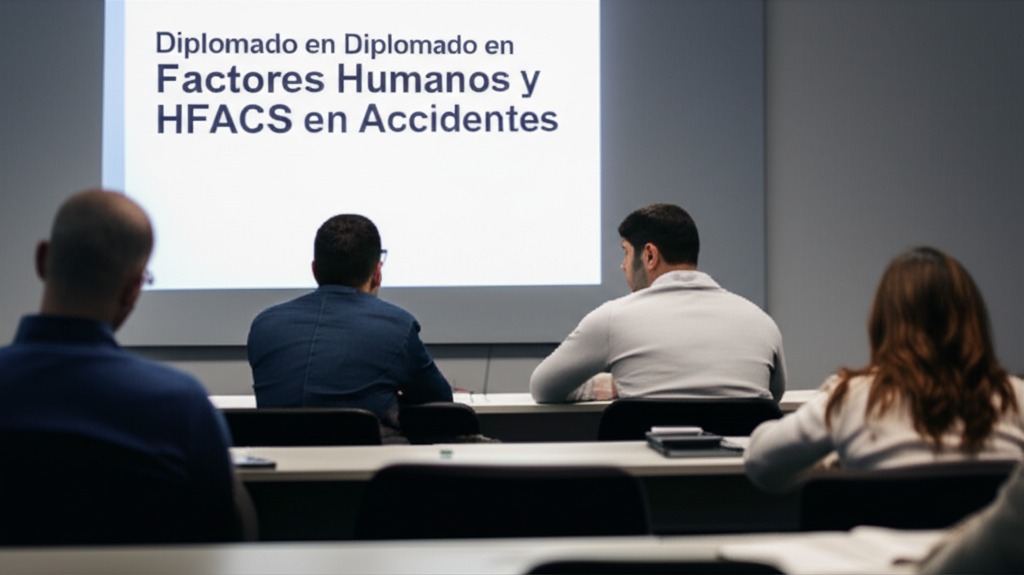
Diploma in Human Factors and HFACS in Accidents
- Format: Hybrid
- Duration: 6–8 months
- Hours: 800 H
- Language: English / Spanish
- Registration date: 23-10-2026
- Strat date: 03-12-2026
- Available places: 3
1,750 $
Competencies and results
What you will learn
1. In-depth Analysis of Human Factors and HFACS for the Prevention of Naval Accidents
1. **In-Depth Human Factors Analysis and HFACS for Maritime Accident Prevention**
* Identification and evaluation of human factors contributing to maritime accidents, including equipment failures, supervisory errors, unsafe acts, and latent conditions.
* Application of the HFACS (Human Factors Analysis and Classification System) model to systematically analyze maritime accidents, identifying root causes and safety management deficiencies.
* Development of risk mitigation strategies and operational safety improvements based on an understanding of human factors and HFACS analysis.
* Study of real-world maritime accident cases, applying learned methodologies to identify causes and propose preventive solutions.
* Implementation of safety management programs, including personnel training, development of standard operating procedures, and promotion of a safety culture.
* Analysis of the influence of fatigue, stress, and other psychological factors on human performance and maritime safety. * Evaluation of the effectiveness of different accident prevention measures, using key performance indicators (KPIs) and data analysis.
* Knowledge of legislation and regulations related to maritime safety and human factors.
2. Strategic Mastery of Human Factors and HFACS in Maritime Incident Investigation and Prevention
- Understand the fundamentals of human factors and their influence on maritime safety.
- Identify and analyze human errors and violations in the context of maritime incidents.
- Apply the Human Factors Analysis and Classification System (HFACS) to investigate incidents and determine root causes.
- Evaluate the different levels of HFACS, from unsafe acts to latent conditions, for a comprehensive understanding.
- Develop incident prevention strategies based on human factors analysis and HFACS.
- Utilize tools and techniques for risk management and safety improvement in maritime operations.
- Integrate lessons learned from past incidents to prevent future events.
- Foster a proactive safety culture and a commitment to continuous improvement.
- Learn about The importance of effective communication, leadership, and teamwork in incident prevention.
Apply the knowledge acquired in simulations and practical case studies to incident analysis.
3. Comprehensive user-oriented design and validation (from modeling to manufacturing)
You will learn to integrate the entire product development process, from initial model conception to final validation, applying user-centered methodologies. You will develop skills in parametric design, ergonomics, simulation, sustainable materials, 3D visualization, and manufacturing management, ensuring efficient, safe solutions that meet current industry standards.
4. Effective Implementation of Human Factors and HFACS for Risk Mitigation in Naval Operations
4. Effective Implementation of Human Factors and HFACS for Risk Mitigation in Naval Operations
- Understand the importance of human factors in maritime safety and their impact on decision-making.
- Identify and analyze common human errors in naval operations.
- Apply the HFACS (Human Factors Analysis and Classification System) model to investigate incidents and accidents.
- Classify human errors according to the HFACS levels: unsafe acts, preconditions for unsafe acts, unsafe supervision, and organizational influences.
- Develop strategies to mitigate the risks associated with human factors in naval operations.
- Implement preventive measures to reduce the probability of human errors and improve safety.
- Utilize tools and techniques for managing crew fatigue and stress.
- Promote a culture
- Evaluate the effectiveness of implemented risk mitigation measures.
- Integrate human factors into safety management systems and standard operating procedures.
5. Optimizing Naval Accident Investigation: Applying Human Factors and the HFACS Framework
- Understand the fundamentals of maritime accident investigation.
- Identify and apply human factors in accident analysis.
- Use the HFACS framework for systematic incident investigation.
- Analyze the root causes of maritime accidents.
- Develop strategies to prevent future maritime accidents.
- Integrate acquired knowledge to improve maritime safety.
6. Evaluation and Application of Human Factors and HFACS for Continuous Improvement in Naval Safety
6. Evaluation and Application of Human Factors and HFACS for Continuous Improvement in Maritime Safety
- Identify and analyze the human factors that influence maritime safety, including errors, cognitive biases, fatigue, stress, and communication.
- Understand the HFACS (Human Factors Analysis and Classification System) methodology and its application to the investigation and analysis of naval incidents and accidents.
- Apply HFACS to identify the root causes of events, categorizing failures at the organizational, supervisory, precondition, and unsafe act levels.
- Evaluate the influence of safety culture, leadership, and teamwork on safety performance and incident prevention.
- Develop strategies to improve maritime safety, based on the findings of human factors analysis and HFACS, including changes in policies, procedures, system design, and training.
- Design and implement improvement programs Continuous improvement of safety, using key performance indicators (KPIs) and feedback mechanisms.
Understand international regulations and standards related to maritime safety and human factors management, such as the ISM Code and IMO guidelines.
Analyze case studies of naval accidents, applying HFACS and lessons learned to prevent future incidents.
Learn to use tools and techniques for risk management and safety assessment in naval environments.
Promote a proactive safety and incident reporting culture that fosters learning and continuous improvement throughout the organization.
Who this program is for:
Diploma in Human Factors and HFACS in Accidents
- Professionals with degrees in Aerospace Engineering, Mechanical Engineering, Industrial Engineering, Automation, or related fields.
- Experts working in OEM (Original Equipment Manufacturers) of rotorcraft (helicopters, etc.) and/or eVTOL, MRO (Maintenance, Repair, and Operations) companies, consulting, or technology centers.
- Specialists in areas such as Flight Testing, Aircraft Certification, Avionics, Air Traffic Control, and Flight Dynamics who wish to deepen their knowledge.
Personnel from Regulatory Bodies, Aeronautical Authorities, and professional profiles focused on the field of Urban Air Mobility (UAM) and/or eVTOL who need to acquire skills in regulatory compliance.
Recommended prior knowledge: Basic knowledge of aerodynamics, systems control, and structures is recommended.
Language level: A B2+ or C1 level of English or Spanish is required. Bridging tracks are offered for those who need them.
- Standards-driven curriculum: you will work with CS-27/CS-29, DO-160, DO-178C/DO-254, ARP4754A/ARP4761, ADS-33E-PRF from the first module.
- Accreditable laboratories (EN ISO/IEC 17025) with rotor bench, EMC/Lightning pre-compliance, HIL/SIL, vibrations/acoustics.
- Evidence-oriented TFM: safety case, test plan, compliance dossierand operational limits.
- Mentored by industry: teachers with experience in rotorcraft, tiltrotor, eVTOL/UAM and flight test.
- Flexible modality (hybrid/online), international cohorts and support from SEIUM Career Services.
- Ethics and security: safety-by-design approach, cyber-OT, DIH and compliance as pillars.
**Module 1 — Human Factors Analysis and HFACS**
1.1 Introduction to Human Factors in the Naval Context
1.2 Overview of the HFACS Model
1.3 Origins and Evolution of HFACS
1.4 Levels of Analysis in HFACS
1.5 Contributing Factors: Unsafe Acts
1.6 Contributing Factors: Preexisting Conditions
1.7 Contributing Factors: Unsafe Supervision
1.8 Contributing Factors: Organizational Influences
1.9 Case Study: Initial Application of HFACS
1.10 Conclusions and Next Steps in the Analysis
1.10
2.2 Introduction to Human Factors in Naval Safety.
2.2 The HFACS Model: Structure and Components.
2.3 HFACS Levels of Analysis: Unsafe Acts, Preconditions.
2.4 Contributing Factors: Supervisory, Organizational.
2.5 Application of HFACS in Accident Investigation.
2.6 Case Studies: Analysis of Naval Accidents.
2.7 Tools and Techniques for Data Collection.
2.8 Root Cause Identification with HFACS.
2.9 Prevention Strategies Based on HFACS Analysis.
2.20 Conclusions and Next Steps.
2.2 Introduction to Maritime Incident Investigation.
2.2 The Investigation Process: Methodology and Approach.
2.3 Evidence Collection: Techniques and Practices.
2.4 Interviews: Obtaining Relevant Information.
2.5 Data Analysis: Interpretation and Evaluation.
2.6 Human Factors in Incident Investigation.
2.7 Application of HFACS in Incident Investigation.
2.8 Development of Safety Recommendations.
2.9 Implementation of Preventive Measures.
2.20 Evaluation and Monitoring of Effectiveness.
3.2 Fundamentals of Maritime Safety.
3.2 Legal and Regulatory Framework in Maritime Safety.
3.3 Importance of Human Factors in Safety.
3.4 The Role of HFACS in Safety Improvement.
3.5 Risk Analysis: Identification and Assessment.
3.6 Safety Management: Principles and Practices.
3.7 Safety Culture: Development and Maintenance. 3.8 Maritime Safety Training and Education
3.9 Implementation of Safety Management Systems
3.20 Safety Monitoring and Evaluation
4.2 Introduction to Risk Mitigation in Naval Operations
4.2 Risk Identification and Assessment
4.3 The Role of Human Factors in Risk Mitigation
4.4 Application of HFACS in Risk Mitigation
4.5 Development of Mitigation Strategies
4.6 Implementation of Risk Controls
4.7 Monitoring and Evaluation of Control Effectiveness
4.8 Operational Safety Management
4.9 Contingency and Emergency Response Plans
4.20 Continuous Improvement in Risk Mitigation
5.2 Introduction to Naval Accident Investigation 5.2 Research Methodology: Systematic Approach.
5.3 Data Collection: Methods and Tools.
5.4 Evidence Analysis: Techniques and Practices.
5.5 Application of HFACS in Accident Investigation.
5.6 Root Cause Identification: Human and Organizational Factors.
5.7 Development of Effective Safety Recommendations.
5.8 Investigation Reports: Structure and Content.
5.9 Follow-up and Evaluation of Recommendations.
5.20 Continuous Improvement in Accident Investigation.
6.2 Principles of Continuous Improvement in Naval Safety.
6.2 The Continuous Improvement Cycle: Plan, Do, Check, Act.
6.3 Safety Assessment: Methods and Tools.
6.4 Data Analysis: Identifying Trends and Patterns. 6.5 Implementation of Corrective and Preventive Actions.
6.6 Application of HFACS in Continuous Improvement.
6.7 Change Management: Risk Control and Mitigation.
6.8 Safety Performance Indicators.
6.9 Safety Culture: Promotion and Maintenance.
6.20 Review and Updating of Policies and Procedures.
7.2 Introduction to Maritime Accident Prevention.
7.2 Risk Analysis: Identification and Evaluation.
7.3 Human Factors in Accident Prevention.
7.4 Application of HFACS in Accident Prevention.
7.5 Development of Prevention Strategies.
7.6 Implementation of Safety Controls.
7.7 Training and Education in Accident Prevention.
7.8 Operational Safety Management.
7.9 Safety Culture: A Proactive Approach. 7.20 Monitoring and Evaluation of the Effectiveness of Preventive Measures
8.2 Introduction to Advanced Strategies in Naval Safety and Analysis
8.2 Application of HFACS in Complex Cases
8.3 Analysis of Trends and Patterns in Naval Accidents
8.4 Accident Modeling and Simulation
8.5 Human Factors in Highly Complex Environments
8.6 Safety Leadership: Roles and Responsibilities
8.7 Effective Communication in Safety Management
8.8 Safety Culture: Fostering and Sustaining
8.9 Adapting to New Technologies and Challenges
8.20 Future Strategies in Naval Safety and Analysis
3.3 Introduction to Human Factors in the Naval Environment
3.2 The Role of HFACS in Maritime Safety
3.3 Definition and Types of Human Error in Navigation
3.4 The Importance of Human Factors-Based Safety
3.5 Legal Framework and Regulations in Maritime Safety
3.6 Examples of Naval Accidents Related to Human Factors
3.7 Safety Culture and Its Impact on Operations
3.8 Design Principles for Safety in the Naval Environment
2.3 Structure of the HFACS Framework: Levels and Categories
2.2 Application of HFACS in Incident Investigation
2.3 Data Collection and Analysis in Naval Incidents
2.4 Identification of Contributing Factors in HFACS
2.5 Preparation of Investigation Reports Using HFACS
2.6 Validation and Verification of HFACS Findings
2.7 Practical Case Studies of Accident Investigation Using HFACS
2.8 Tools and Software for HFACS Analysis
3.3 Human Factors Theories Applied to Navigation
3.2 Perception, Attention and Decision-Making in Naval Environments
3.3 Workload and Stress in Maritime Crews
3.4 Fatigue and Human Performance in Naval Operations
3.5 Communication and Teamwork in Crisis Situations
3.6 Organizational Factors and Their Impact on Safety
3.7 Systems Design and Its Influence on Human Error
3.8 Methods for Risk Assessment in Human Factors
4.3 Identification and Assessment of Risks in Naval Operations
4.2 Risk Mitigation Strategies Based on Human Factors Analysis and Safety (HFACS)
4.3 Design of Standard Operating Procedures (SOPs)
4.4 Implementation of Safety Management Systems (SMS)
4.5 Human Factors Training and Education
4.6 Naval Safety Drills and Exercises
4.7 Change Management and Continuous Improvement in Safety
4.8 Use of Technology for Risk Mitigation
5.3 Advanced Techniques for Naval Accident Investigation
5.2 Evidence Collection and Preservation of the Accident Scene
5.3 Interviews and Testimonies 5.4 Key Witness Testimony
5.5 Analysis of Flight/Navigation Logs and Data
5.6 Application of Causal Analysis Tools
5.7 Preparation of Detailed Investigation Reports
5.8 Recommendations and Corrective Actions Based on the Investigation
5.9 Monitoring and Evaluation of Recommendation Implementation
6.3 Key Performance Indicators (KPIs) in Naval Safety
6.2 Assessment of Safety Culture in Naval Organizations
6.3 Internal and External Safety Audits
6.4 Analysis of Trends and Patterns in Accidents and Incidents
6.5 Implementation of Feedback and Continuous Improvement Systems
6.6 Knowledge Management and Lessons Learned
6.7 The Role of Leadership in Promoting Safety
6.8 Continuous Improvement Models in Naval Safety
7.3 Advanced Strategies for Maritime Accident Prevention
7.2 Proactive Risk and Hazard Analysis
7.3 Design of Early Warning Systems
7.4 Implementation of Fatigue Management Programs
7.5 Development of Communication and Teamwork Skills Teamwork
7.6 Creating a Positive Safety Culture
7.7 Crew Participation in Safety Improvement
7.8 Monitoring and Evaluating the Effectiveness of Preventive Measures
8.3 Advanced Analysis of Naval Accidents with HFACS
8.2 Applying Causality Models in HFACS
8.3 Strategies for Continuous Safety Improvement
8.4 Performance-Based Safety Management
8.5 Designing and Improving Safety Systems
8.6 Using Technology for Naval Safety
8.7 Leadership and Commitment to Safety
8.8 The Future of Naval Safety with HFACS
8.3
4.4 Fundamentals of Human Factors in the Naval Environment
4.2 Introduction to the HFACS Framework: Structure and Application
4.3 The Role of Human Factors in Naval Accidents
4.4 Root Cause Analysis in Maritime Incidents
4.5 Hazard Identification and Initial Risk Assessment
4.6 Principles of Ergonomics and Systems Design
4.7 Effective Communication and Teamwork at Sea
4.8 Introduction to Naval Safety Culture
4.9 Case Studies: Naval Accidents and Human Factors
4.40 Preliminary Investigation Tools and Techniques
2.4 Introduction to Maritime Incident Investigation
2.2 Incident Data Collection and Analysis
2.3 Application of the HFACS Framework in Incident Investigation
2.4 Analysis of Contributing Factors in Incidents
2.5 Identification of Immediate and Latent Causes
2.6 Interview Techniques for Incident Investigation
2.7 Preparing Incident Investigation Reports
2.8 Recommendations for Preventing Future Incidents
2.9 Case Study: Incident Investigation with HFACS
2.40 Developing an Incident Investigation Plan
3.4 The Role of Human Factors in Maritime Safety
3.2 Risk Assessment and Hazard Analysis in Naval Environments
3.3 Applying HFACS for Risk Identification
3.4 Accident Analysis: Methodologies and Techniques
3.5 Human Factors and the Design of Safety Systems
3.6 Safety Culture and its Impact on Accident Prevention
3.7 Safety Management: Policies and Procedures
3.8 Key Performance Indicators (KPIs) in Maritime Safety
3.9 Case Study: Maritime Accident Analysis
3.40 Designing and Implementing a Safety Management System Safety
4.4 Risk Identification in Naval Operations
4.2 Risk Assessment and Prioritization
4.3 Human Factors-Based Risk Mitigation Strategies
4.4 Implementation of Operational Controls
4.5 Design of Safety Procedures and Protocols
4.6 Training for Risk Mitigation
4.7 Change Management and Risk Control
4.8 Monitoring and Evaluation of the Effectiveness of Mitigation Measures
4.9 Case Studies: Risk Mitigation in Naval Operations
4.40 Development and Implementation of a Risk Mitigation Plan
5.4 Optimization of the Naval Accident Investigation Process
5.2 Application of HFACS for In-Depth Accident Analysis
5.3 Integration of Data and Evidence in the Investigation
5.4 Root Cause and Contributing Factor Analysis
5.5 Use of Software and Tools for Accident Analysis
5.6 Development of Detailed Investigation Reports
5.7 Recommendations for Safety Prevention and Improvement
5.8 Validation and Verification of Investigation Conclusions
5.9 Case Studies: Analysis of Naval Accidents with HFACS
5.40 Presentation and Communication of Investigation Results
6.4 Evaluation of Current Naval Safety
6.2 Identification of Areas for Safety Improvement
6.3 Implementation of a Safety Management System
6.4 Monitoring and Evaluation of Safety Performance
6.5 Data Analysis and Feedback for Continuous Improvement
6.6 Use of Key Performance Indicators (KPIs) in Safety
6.7 Implementation of Corrective and Preventive Actions
6.8 Safety Audits and Reviews
6.9 Case Studies: Continuous Improvement of Naval Safety
6.40 Development and Implementation of a Continuous Improvement Plan
7.4 Human Factors and the Prevention of Maritime Accidents
7.2 Hazard Identification and Risk Assessment
7.3 Design of Safe Systems and Work Environments
7.4 Safety Training and Development
7.5 Effective Communication and Teamwork
7.6 Change Management and Risk Control
7.7 Incident Investigation and Analysis
7.8 Implementation of Preventive Measures
7.9 Case Studies: Maritime Accident Prevention
7.40 Developing an Accident Prevention Plan
8.4 Advanced Strategies for Accident Investigation
8.2 Application of HFACS in Complex Cases
8.3 Analysis of Systemic and Organizational Factors
8.4 Integration of Data from Multiple Sources
8.5 Use of Advanced Technologies in Investigation
8.6 Communication Strategies and Results Presentation
8.7 Development of Action Plans for Safety Improvement
8.8 Safety Leadership and Safety Culture Management
8.9 Case Studies: Analysis Advanced Naval Accident Investigation
8.40 Design and Implementation of an Advanced Safety Program
5.5 Introduction to Human Factors in the Naval Context
5.5 The HFACS Framework: Origins and Structure
5.3 Levels of HFACS: Unsafe Acts, Preconditions, Supervisory, and Organizational
5.4 Application of HFACS in Initial Incident Investigation
5.5 Root Cause Identification Using HFACS
5.6 Tools and Techniques for Human Factors Analysis
5.7 Case Studies: Real-World Examples of Naval Accidents
5.8 The Importance of a Safety Culture in Prevention
5.9 Maritime Legislation and Regulations Related to Human Factors
5.50 Conclusions and Future Perspectives
5.5 Data Collection and Analysis in Maritime Incidents 5.5 Detailed Application of HFACS in Incident Investigation.
5.3 Analysis of Unsafe Acts and Preconditions.
5.4 Evaluation of Supervisory and Organizational Failures.
5.5 Advanced Interview Techniques for Investigation.
5.6 Use of Software and Tools for Incident Analysis.
5.7 Preparation of Detailed Investigation Reports.
5.8 Identification of Corrective and Preventive Actions.
5.9 Advanced Case Studies: In-Depth Incident Analysis.
5.50 Lessons Learned and Continuous Improvement.
3.5 The Role of Human Factors in Maritime Safety.
3.5 Risk and Hazard Analysis in the Naval Environment.
3.3 Application of HFACS in Risk Assessment. 3.4 Identifying Weak Points in Operational Safety
3.5 Designing Safe, Human-Centered Systems
3.6 Accident Analysis: Methodology and Application
3.7 Behavior-Based Safety Management
3.8 Key Performance Indicators (KPIs) for Safety
3.9 The Importance of Leadership in a Safety Culture
3.50 Current and Future Trends in Maritime Safety
4.5 Identifying and Evaluating Operational Risks
4.5 Implementing Risk Controls Based on Human-Centered Safety and Climate Systems (HFACS)
4.3 Designing Safety-Centered Standard Operating Procedures (SOPs)
4.4 Managing Fatigue and Stress in Naval Operations
4.5 Training and Education for Risk Mitigation 4.6 Use of Simulations and Modeling for Incident Prevention.
4.7 Implementation of Safety Management Systems (SMS).
4.8 Evaluation of the Effectiveness of Mitigation Measures.
4.9 Case Studies: Successful Implementation of Mitigation Strategies.
4.50 Continuous Improvement in Risk Management.
5.5 Methodology for Naval Accident Investigation.
5.5 In-depth Application of HFACS in Root Cause Analysis.
5.3 Use of Cause-and-Effect Diagrams and Other Analysis Tools.
5.4 Collection and Analysis of Evidence.
5.5 Witness Interviews and Document Analysis.
5.6 Event Reconstruction and Time Sequence.
5.7 Identification of Contributing Factors. 5.8 Preparation of Detailed and Effective Accident Reports.
5.9 Development of Prevention Recommendations.
5.50 Validation and Verification of Findings.
6.5 Implementation of Safety Management Systems (SMS).
6.5 Safety Audits and Reviews.
6.3 Analysis of Trends and Incident Data.
6.4 Identification of Areas for Improvement.
6.5 Development and Implementation of Corrective Actions.
6.6 Use of Safety Performance Indicators (SPIs).
6.7 Crew Participation and Commitment.
6.8 Leadership in Safety Culture.
6.9 Evaluation of the Effectiveness of Implemented Improvements.
6.50 Continuous Improvement Process.
7.5 Analysis of Previous Incidents and Identification of Patterns. 7.5 Proactive Application of HFACS for Hazard Identification.
7.3 Risk Assessment in Different Operational Scenarios.
7.4 Design of Effective Preventive Measures.
7.5 Implementation of Training Programs.
7.6 Promotion of a Safety Culture.
7.7 Evaluation of the Effectiveness of Preventive Measures.
7.8 Use of Technology for Accident Prevention.
7.9 Behavior-Based Safety Management.
7.50 Lessons Learned and Continuous Adaptation.
8.5 Design of Advanced Safety Systems.
8.5 Safety Leadership Strategies.
8.3 Implementation of Advanced Training Programs.
8.4 Use of Virtual and Augmented Reality in Training.
8.5 Large-Scale Data Analysis for Incident Prediction.
8.6 Artificial Intelligence and Machine Learning in Naval Security
8.7 Cybersecurity Management in Naval Operations
8.8 Emergency Response Strategies
8.9 Communication and Coordination in Critical Situations
8.50 The Future of Naval Security: Trends and Challenges
6.6 Introduction to Human Factors in the Naval Context
6.2 The HFACS Model: Structure and Components
6.3 Types of Human Error in Naval Environments
6.4 Root Cause Analysis: Application to Incidents
6.5 Case Studies: Naval Accidents and Human Factors
6.6 Principles of Human-Centered Design for Safety
6.7 Introduction to Operational Safety Management
6.8 The Importance of a Safety Culture in the Navy
6.9 Human Factors Analysis Tools
6.60 Conclusion and Future Perspectives
2.6 Maritime Incident Investigation Methodology
2.2 Evidence Collection and Management
2.3 Data Analysis: Techniques and Tools
2.4 Application of the HFACS Model in Investigations 2.5 Root Cause Identification
2.6 Preparation of Effective Investigation Reports
2.7 Recommendations for Incident Prevention
2.8 Case Studies: Investigation of Real Accidents
2.9 Implementation of Corrective Actions
2.60 Evaluation of the Effectiveness of Preventive Measures
3.6 The Role of Human Factors in Maritime Safety
3.2 Human Factors in Ship and System Design
3.3 Risk Management in Naval Operations
3.4 Risk Analysis: Techniques and Methodologies
3.5 The Impact of Fatigue and Stress on Safety
3.6 The Importance of Teamwork and Communication
3.7 Incident Analysis: Practical Application
3.8 Design of Safe Work Environments 3.9 Safety Culture and Leadership
3.60 Continuous Improvement of Maritime Safety
4.6 Risk Identification and Assessment in Naval Operations
4.2 Risk Mitigation Strategies
4.3 Implementation of Operational Controls
4.4 The Role of Procedures and Protocols
4.5 Design of Early Warning Systems
4.6 Emergency Management and Incident Response
4.7 Use of Technology for Risk Mitigation
4.8 The Impact of Training
4.9 Case Studies: Risk Mitigation in Practice
4.60 Evaluation of the Effectiveness of Mitigation Measures
5.6 Optimization of the Accident Investigation Process
5.2 Application of HFACS in Naval Accident Analysis 5.3 The Use of Software and Analysis Tools.
5.4 Improving Data Collection and Management.
5.5 Statistical Data Analysis in Investigations.
5.6 Identifying Trends and Patterns in Accidents.
5.7 Developing Evidence-Based Recommendations.
5.8 Effectively Presenting Investigation Findings.
5.9 Integrating Investigations into Safety Improvement.
5.60 Evaluating the Effectiveness of the Investigation Process.
6.6 The Importance of Continuous Improvement in Naval Safety.
6.2 Applying the PDCA Cycle (Plan, Do, Check, Act).
6.3 Using Data and Analysis for Safety Improvement.
6.4 Implementing Safety Management Systems (SMS).
6.5 Safety Audits and Assessments. 6.6 Change Management and its Impact on Safety
6.7 The Role of Leadership in Safety Improvement
6.8 Fostering a Learning Culture
6.9 Evaluating the Effectiveness of Safety Improvements
6.60 Case Studies: Successful Implementation of Safety Improvements
7.6 Identifying Risk Factors in Prevention
7.2 The Role of Leadership in Accident Prevention
7.3 Designing Effective Training Programs
7.4 Implementing Procedures and Controls
7.5 The Use of Technology for Prevention
7.6 Predictive and Proactive Analysis
7.7 Investigating Near Misses
7.8 Analyzing Trends and Patterns in Accidents
7.9 Measuring and Monitoring Safety Performance 7.60 Effective Communication and Participation in Prevention
8.6 Advanced Human Factors Analysis Strategies
8.2 Application of Advanced Analysis Techniques
8.3 Design of Performance-Based Safety Systems
8.4 Human-Machine Interaction Analysis
8.5 The Use of Simulation and Modeling
8.6 Managing Complacency and Performance in Critical Conditions
8.7 Developing Resilience Strategies
8.8 The Role of Technological Innovation in Safety
8.9 Case Studies: Application of Advanced Strategies
8.60 The Future of Naval Safety
7.7 Introduction to Human Factors in the Naval Environment
7.2 The HFACS Model: Structure and Application
7.3 Immediate and Latent Causes in Naval Accidents
7.4 Human Factors at the Crew Level
7.7 Human Factors at the Supervisory Level
7.6 Human Factors at the Organizational Level
7.7 Case Studies: Analysis of Naval Accidents with HFACS
7.8 Tools for Hazard Identification and Risk Assessment
7.9 Principles of Safety Management (SMS)
7.70 Conclusion: Importance of Human Factors in Naval Safety
2.7 Introduction to Maritime Incident Investigation
2.2 Data Collection and Analysis in Investigations
2.3 Application of HFACS in Incident Investigation
2.4 Human Factors and Their Impact on Incidents
2.7 Root Cause Analysis with HFACS
2.6 Report Preparation Research
2.7 Recommendations for Incident Prevention
2.8 Case Studies: Investigating Real Incidents
2.9 Interview Techniques for Information Gathering
2.70 Conclusions and Lessons Learned in Incident Investigation
3.7 Importance of Maritime Safety
3.2 The HFACS Framework in Accident Analysis
3.3 Human Factors in the Design of Safety Systems
3.4 Human Factors in the Operation of Equipment and Systems
3.7 Risk and Hazard Analysis in Maritime Environments
3.6 Case Studies: Analyzing Maritime Accidents with HFACS
3.7 Strategies for Improving Safety Culture
3.8 Implementing Safety Programs
3.9 Key Performance Indicators (KPIs) in Maritime Safety
3.70 Conclusions and Future Perspectives in Maritime Safety
4.7 Introduction to Risk Mitigation in Operations Naval
4.2 Risk Identification and Assessment
4.3 Implementation of Operational Controls
4.4 Human Factors in Risk Management
4.7 Design of Safety Procedures and Protocols
4.6 Case Studies: Risk Mitigation in Different Operations
4.7 The Role of Communication in Risk Mitigation
4.8 Personnel Training and Development
4.9 Monitoring and Reviewing the Effectiveness of Mitigation Measures
4.70 Conclusions: Ensuring Safe Naval Operations
7.7 Introduction to Naval Accident Analysis
7.2 HFACS Methodology for Accident Analysis
7.3 Evidence Collection and Analysis
7.4 Root Cause Identification Using HFACS
7.7 The Role of Human Factors in Accidents
7.6 Developing Effective Recommendations
7.7 Case Studies: Analysis of Real Accidents
7.8 Optimizing Processes Investigation
7.9 Use of Software and Analysis Tools
7.70 Conclusions: Improving Naval Accident Investigation
6.7 Introduction to Naval Safety and Continuous Improvement
6.2 The HFACS Model and its Application to Safety
6.3 Evaluating the Effectiveness of Safety Measures
6.4 Identifying Areas for Improvement
6.7 Implementing Changes and Improvements
6.6 Monitoring and Evaluating Performance
6.7 Case Studies: Continuous Improvement in Naval Safety
6.8 The Role of Safety Culture in Continuous Improvement
6.9 Tools for Continuous Improvement
6.70 Conclusions: Achieving Sustainable Naval Safety
7.7 Introduction to Maritime Accident Prevention
7.2 The Role of Human Factors in Prevention
7.3 Application of HFACS in Prevention
7.4 Hazard and Risk Analysis
7.7 Developing Prevention Strategies
7.6 Case Studies: Prevention of Successful Accidents
7.7 Implementation of Prevention Programs
7.8 Training and Capacity Building in Prevention
7.9 Monitoring and Evaluation of the Effectiveness of Prevention Measures
7.70 Conclusions: Creating a Safe Maritime Environment
8.7 Introduction to Advanced Naval Safety Strategies
8.2 Advanced Risk Management Strategies
8.3 Application of HFACS in Advanced Safety Strategies
8.4 Analysis of Trends and Patterns in Naval Accidents
8.7 Development of Innovative Safety Systems
8.6 Case Studies: Implementation of Advanced Safety Strategies
8.7 The Use of Technology in Naval Safety
8.8 Leadership and Safety Culture
8.9 Future Trends in Naval Safety
8.70 Conclusions: Ensuring a Safe Future for Navigation
8.8 Introduction to Human Factors in the Naval Context
8.8 Key Concepts and Essential Terminology
8.3 The HFACS Model: Structure and Components
8.4 Human Factors in Naval Systems Design
8.5 The Importance of Communication and Teamwork
8.6 The Influence of Stress and Fatigue on Performance
8.7 Tools for Human Factors Assessment
8.8 Case Studies: Naval Accidents and Human Factors
8.8 The Maritime Incident Investigation Process
8.8 Data Collection and Analysis: Evidence and Testimonies
8.3 Application of the HFACS Model in the Investigation
8.4 Identification of Root Causes and Contributing Factors
8.5 Interview Techniques and Information Gathering
8.6 Writing Effective Investigation Reports
8.7 Failure Analysis and Corrective Action Design
8.8 Case Studies: Investigation of Maritime Incidents
3.8 Principles of Maritime Safety and Safety Culture
3.8 Risk Identification and Assessment in Naval Environments
3.3 Risk Analysis: Methodologies and Tools
3.4 Application of HFACS in Risk Assessment
3.5 Safety Management in Naval Operations
3.6 Human Factors and Safety System Design
3.7 Monitoring and Measuring Safety Performance
3.8 Case Studies: Risk Analysis and Maritime Safety
4.8 Risk Mitigation Strategies Based on Human Factors
4.8 Implementation of Operational and Administrative Controls
4.3 Design of Safety Procedures and Protocols
4.4 Human Factors Training
4.5 Human Factors in Change Management
4.6 The Importance of Leadership in Risk Mitigation
4.7 Evaluating the Effectiveness of Mitigation Measures
4.8 Studies Case Study: Risk Mitigation in Naval Operations
5.8 Advanced Techniques for Naval Accident Analysis
5.8 Detailed Application of the HFACS Model in Analysis
5.3 The Role of Data Collection and Analysis
5.4 Interview Techniques and Testimony Analysis
5.5 Identification of Root Causes and Contributing Factors
5.6 Development of Prevention Recommendations
5.7 Use of Software and Tools in Accident Analysis
5.8 Case Studies: Optimizing Accident Analysis
6.8 Integration of Human Factors into Safety Management Systems
6.8 The Continuous Improvement Cycle and Naval Safety
6.3 Key Performance Indicators (KPIs) in Safety
6.4 Safety Performance Evaluation and Feedback
6.5 Design and Implementation of Corrective Actions
6.6 Change Management and Continuous Improvement
6.7 Use of Data to Drive Improvement in Safety
6.8 Case Studies: Continuous Improvement in Maritime Safety
7.8 Human Factors and the Prevention of Maritime Accidents
7.8 Risk Identification and Root Cause Analysis
7.3 Prevention Strategies Based on Human Factors
7.4 Design of Effective Safety Barriers
7.5 Implementation of Training and Awareness Programs
7.6 The Role of Leadership in Accident Prevention
7.7 Monitoring and Evaluation of Prevention Effectiveness
7.8 Case Studies: Prevention of Maritime Accidents
8.8 Advanced Strategies for Identifying Human Factors
8.8 Human Factors Research Methods
8.3 In-Depth Data Analysis and the Application of HFACS
8.4 The Role of Leadership in Promoting Safety
8.5 The Importance of a Safety Culture
8.6 Design of Prevention and Response Programs
8.7 Use of Technology for Improvement Safety
8.8 Communication and Awareness Strategies
8.8 Case Studies: Analysis of Naval Accidents
8.80 Future Trends in Human Factors and Naval Safety
9.9 Fundamentals of Human Factors in the Naval Environment
9.9 Introduction to the HFACS Framework and its Application
9.3 Identifying Failure Levels in HFACS
9.4 Human Factors and their Impact on Maritime Safety
9.5 Case Studies: Introduction to the HFACS Methodology
9.6 Basic Principles of Naval Accident Prevention
9.9 Maritime Incident Investigation Methodology
9.9 Application of HFACS in Incident Investigation
9.3 Data Collection and Analysis in Maritime Investigations
9.4 Interviews and Evidence Collection at the Incident Scene
9.5 Root Cause Identification Using HFACS
9.6 Preparation of Investigation Reports and Recommendations
3.9 Implementation of Human Factors-Based Maritime Safety
3.9 Risk Analysis and Safety Assessment
3.3 Application 3.4 Design of Safe Systems and Work Environments
3.5 Safety Culture and Communication in the Naval Sector
3.6 Key Performance Indicators (KPIs) in Maritime Safety
4.9 Risk Mitigation Strategies Based on HFACS
4.9 Risk Assessment and Management in Naval Operations
4.3 Implementation of Effective Risk Controls
4.4 Design of Standard Operating Procedures (SOPs)
4.5 Maritime Safety Training and Education
4.6 Monitoring and Review of the Effectiveness of Mitigation Measures
5.9 Advanced Techniques in Accident Investigation
5.9 Application of HFACS in Optimizing Investigations
5.3 Analysis of Accident Data and Statistics
5.4 Development of Safety Recommendations Based on Investigations
5.5 Implementation of Corrective and Preventive Measures
5.6 Evaluation of Effectiveness Corrective Actions
6.9 Evaluation of Naval Safety Culture
6.9 Application of HFACS for Continuous Improvement
6.3 Identification of Areas for Improvement in Safety
6.4 Design and Implementation of Safety Management Systems
6.5 Monitoring and Evaluation of Safety Performance
6.6 Incident Feedback and Learning
7.9 Identification of Human Factors Contributing to Accidents
7.9 Application of HFACS for Maritime Accident Prevention
7.3 Development of Accident Prevention Strategies
7.4 Implementation of Prevention Measures in the Naval Environment
7.5 Analysis of Practical Accident Prevention Cases
7.6 Promotion of a Culture of Proactive Prevention
8.9 Advanced Strategies in Incident Analysis Using HFACS
8.9 Identification of Patterns and Trends in Naval Accidents
8.3 Development of Predictive Models Risks
8.4 Implementation of Technologies for Naval Security
8.5 Design of Effective Communication Strategies
8.6 Security Leadership and Change Management
1. Human Factors Analysis and HFACS in Naval Safety
2. Root Cause Analysis of Maritime Incidents
3. Application of HFACS for Accident Prevention
4. Development of Risk Mitigation Strategies
5. Implementation of a Comprehensive Safety Plan
6. Evaluation and Continuous Improvement of Naval Safety
7. Investigation and Prevention of Maritime Accidents
8. Advanced Strategies for Naval Safety
- Hands-on methodology: test-before-you-trust, design reviews, failure analysis, compliance evidence.
- Software (depending on licenses/partners): MATLAB/Simulink, Python (NumPy/SciPy), OpenVSP, SU2/OpenFOAM, Nastran/Abaqus, AMESim/Modelica, acoustics tools, planning toolchains DO-178C.
- SEIUM Laboratories: scale rotor bench, vibrations/acoustics, EMC/Lightning pre-compliance, HIL/SIL for AFCS, data acquisition with strain gauging.
- Standards and compliance: EN 9100, 17025, ISO 27001, GDPR.
Capstone-type projects
- Naval Accident Prevention: HFACS analysis in real-world cases; simulations; improvement recommendations.
- Incident Investigation: HFACS application; report development; root cause identification.
- Maritime Safety: Safety audits; action plan creation; HF training.
- Naval Accident Analysis: HFACS study applied to incidents, identification of human errors, and recommendations.
- Risk Prevention: Development of HFACS-based mitigation protocols and systems focused on safety.
- Continuous Improvement: Implementation of an analysis and feedback system to optimize naval safety.
- Failure Analysis: Application of HFACS to naval incidents; identification of root causes.
- Training: Development of simulations to improve situational awareness and reduce human error.
- Protocol Design: Implementation of HFACS protocols for accident investigation and future prevention.
- HFACS Collisions Analysis: Incident study, identification of latent failures, and mitigation recommendations.
- Human Error Investigation: Application of HFACS to analyze navigation and maneuvering errors, proposing improvements.
- Safety Assessment: Implementation of HFACS to identify vulnerabilities in naval protocols and procedures.
- Continuous Improvement: Development of a system for feedback and recurring incident analysis, based on HFACS.
Admissions, fees and scholarships
- Profile: Background in Computer Engineering, Mathematics, Statistics, or related fields; practical experience in NLP and valued information retrieval systems.
- Documentation: Updated CV, academic transcript, SOP/statement of purpose, project examples or code (optional).
- Process: Application → Technical evaluation of profile and experience → Technical interview → Review of case studies → Final decision → Enrollment.
- Fees:
- Single payment: 10% discount.
- Payment in 3 installments: No fees; 30% upon registration + 2 equal monthly payments of the remaining 35%.
Monthly payment: available with a 7% commission on the total; annual review.
Scholarships: based on academic merit, financial need, and promoting inclusion; agreements with companies in the sector for partial or full scholarships.
See “Calendar & Calls for Applications,” “Scholarships & Grants,” and “Fees & Financing” in the SEIUM mega-menu.
Do you have any questions?
Our team is ready to help you. Contact us and we’ll get back to you as soon as possible.