
Diploma in Aircraft Electrical Architectures (MEA)
About us Diploma in Aircraft Electrical Architectures (MEA)
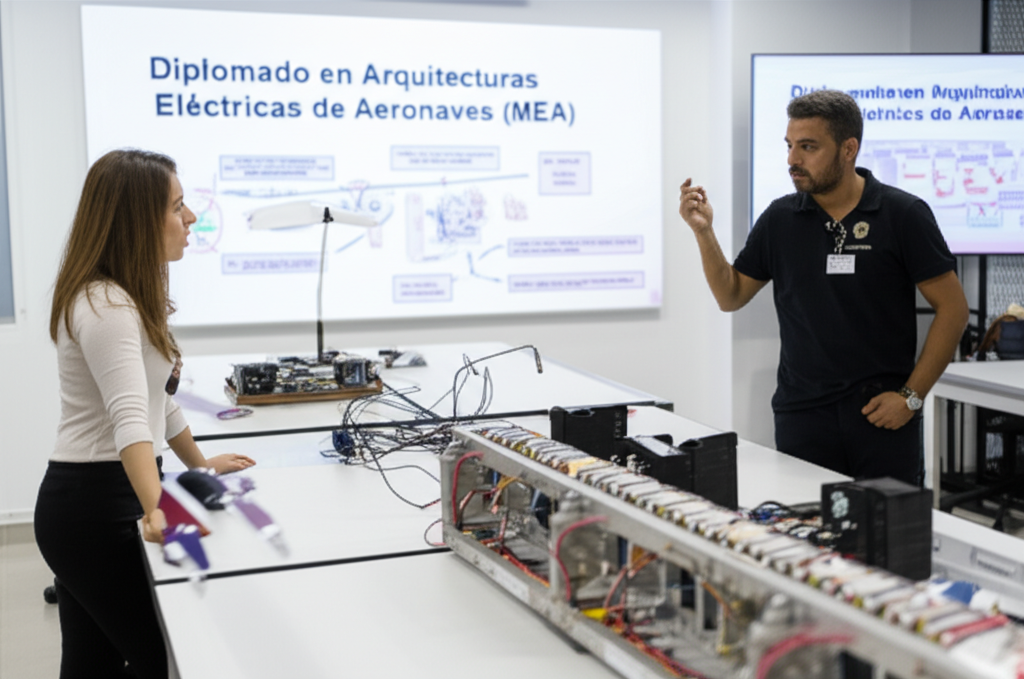
The Diploma in Aircraft Electrical Architectures (MEA) focuses on the design, implementation, and management of complex electrical systems in the aeronautical environment. It addresses the integration of advanced technologies such as data buses (ARINC, Ethernet), intelligent sensors and actuators, and power management systems (PMS), linking them with disciplines such as power electronics, systems control, and functional safety (DO-178C, DO-254). It focuses on the application of methodologies for the validation and certification of electrical systems, using simulation tools (Matlab/Simulink), failure analysis (FMEA, FTA), and testing protocols based on standards such as MIL-STD-704 and RTCA DO-160, crucial for ensuring reliability in aviation platforms and space systems. The program provides hands-on experience in laboratories equipped for hardware-in-the-loop (HIL), software-in-the-loop (SIL), and electrical network simulation, in compliance with international aeronautical regulations and safety standards such as ARP4754A and ARP4761. This training prepares professionals for roles such as aeronautical electrical systems engineers, wiring and connection specialists (EWIS), power systems designers, and safety analysts, strengthening employability in the aerospace industry.
Target keywords (naturally occurring in the text): aeronautical electrical systems, electrical systems design, power management systems, systems simulation, aeronautical certification, functional safety, aeronautical diploma.
Diploma in Aircraft Electrical Architectures (MEA)
- Format:
- Duration:
- Hours: 900 H
- Language:
- Credits:
- Registration date: 08-09-2026
- Strat date: 19-10-2026
- Available places: 9
1,099 $
Competencies and results
What you will learn
Who this program is for:
Diploma in Aircraft Electrical Architectures (MEA)
9.9 Introduction to Aircraft Electrical Systems (AES) and their importance in modern aviation
9.9 Main components of an aircraft and their relationship to electrical systems
9.3 Basic concepts of electricity and electronics applied to aeronautics
9.4 Standards and regulations in AES design and maintenance
9.5 Electrical safety and risk prevention protocols in aircraft
9.9 Selection of electrical and electronic components for AES systems
9.9 Wiring and connection design of electrical systems in aircraft
9.3 Implementation of Power Management Systems (PMS)
9.4 Design of electrical protection and safety systems (fuses, circuit breakers)
9.5 Testing and verification of the integrity of electrical systems
3.9 Fault analysis and troubleshooting in AES electrical systems
3.9 Diagnosis and troubleshooting of electrical generation and distribution systems
3.3 Interpretation of electrical diagrams and maintenance manuals
3.4 Use of simulation and analysis tools for AES systems
3.5 Analysis of flight and maintenance data for optimization Systems
4.9 Fundamentals of Rotating Systems in Aircraft: Propellers and Rotors
4.9 Modeling and Simulation of Rotating Systems: Principles and Applications
4.3 Performance Analysis of Propellers and Rotors under Different Flight Conditions
4.4 Factors Affecting the Performance of Rotating Systems (Speed, Load)
4.5 Optimizing the Performance of Rotating Systems for Efficiency
5.9 Design of Electrical Rotating Systems for Aircraft
5.9 Selection and Sizing of Electric Motors for Propellers and Rotors
5.3 Simulation of the Performance of Electrical Rotating Systems
5.4 Integration of Control and Management Systems in Electrical Rotating Systems
5.5 Evaluation of Energy Efficiency and Environmental Impact
6.9 Simulation of Rotating Systems in Aircraft: Tools and Techniques
6.9 Evaluation of Rotor Performance under Specific Flight Conditions
6.3 Analysis of the Stability and Control of Aircraft with Rotating Systems
6.4 Optimizing Design and Performance through Simulation
6.5 Validating Simulation Models with Data Flight
7.9 Rotor Modeling: Methods and Techniques
7.9 Aerodynamic Analysis of Rotors
7.3 Rotor Design: Design Parameters and Optimization
7.4 Structural Analysis of Rotors
7.5 Material Selection and Rotor Manufacturing
8.9 Rotor Performance Modeling: Parameters and Metrics
8.9 Analysis of Rotor Performance Under Different Operating Conditions
8.3 Rotor Performance Optimization: Strategies and Tools
8.4 Case Studies of Rotor Design and Analysis
8.5 Rotor Maintenance and Service Life Considerations
9.9 eVTOL and UAM: Electric Propulsion, Multiple Rotors
9.9 Emerging Certification Requirements (SC-VTOL, Special Conditions)
9.3 Energy and Thermal in E-Propulsion (Batteries/Inverters)
9.4 Design for Maintainability and Modular Swaps
9.5 LCA/LCC in Rotorcraft and eVTOL (Footprint and Cost)
9.6 Operations & Vertiports: Airspace Integration
9.7 Data & Digital Thread: MBSE/PLM for Change Control
9.8 Tech Risk and Readiness: TRL/CRL/SRL
9.9 IP, Certifications, and Time-to-Market
9.90 Case Clinic: Go/No-Go with Risk Matrix
9.90
Capstone-type projects
- Rotor Optimization: CFD/BEMT, bank/wind correlation, noise analysis.
- Automation: hold/envelope protection, SIL/HIL validation.
- Tiltrotor Control: corridor evaluation, margins.
- Aeroelasticity: modal analysis, flutter; mitigations.
DO-160: environmental testing (vibration, temperature, EMI, lightning/HIRF) and mitigation.
Admissions, fees and scholarships
Do you have any questions?
Our team is ready to help you. Contact us and we’ll get back to you as soon as possible.