2-Stroke/4-Stroke Engine Engineering and Advanced Mapping
About our 2-Stroke/4-Stroke Engine Engineering and Advanced Mapping
2T/4T Engine Engineering and Advanced Mapping
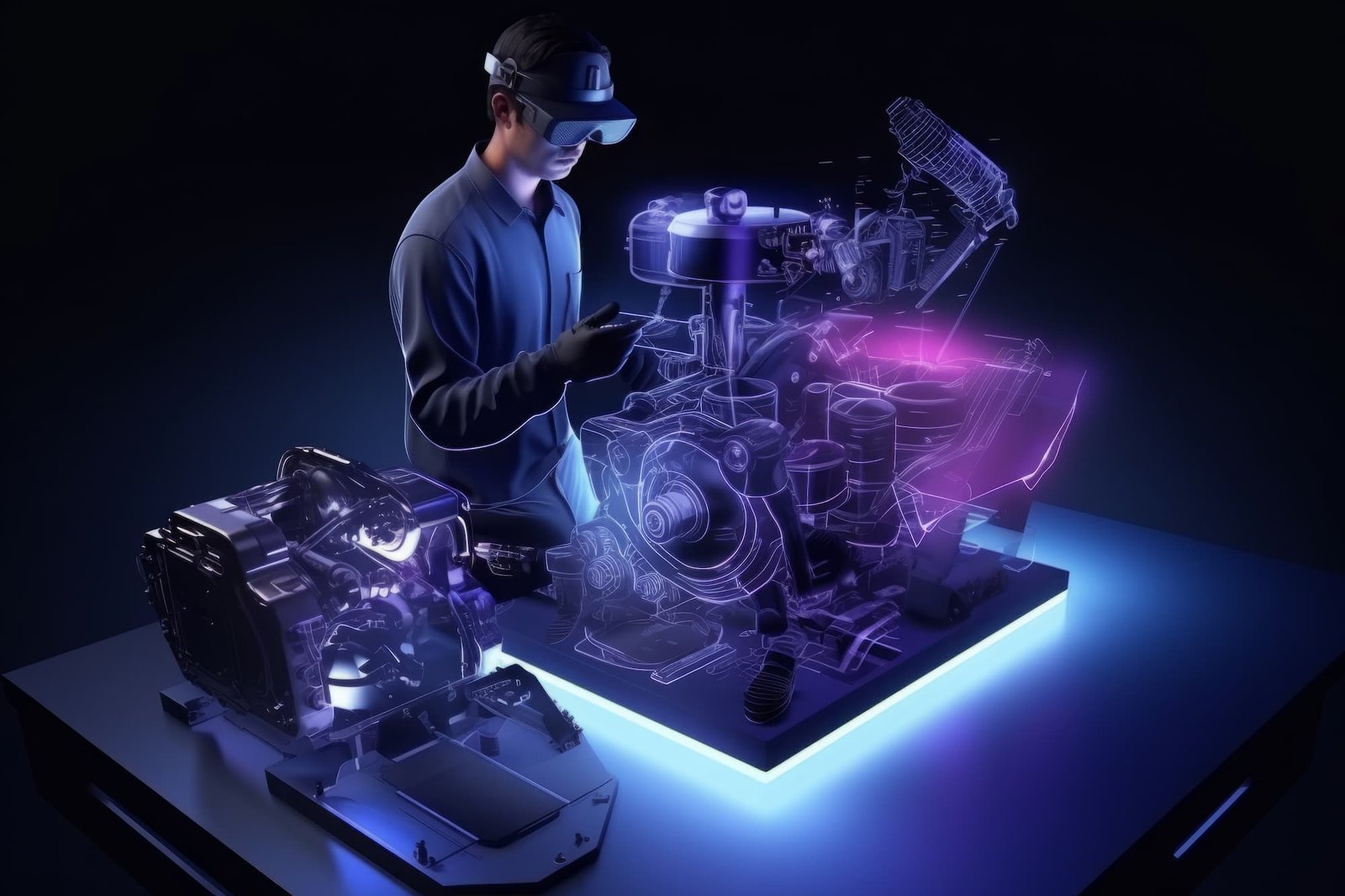
addresses the design and optimization of two-stroke and four-stroke engine systems, integrating key areas such as applied thermodynamics, computational fluid dynamics (CFD), advanced internal combustion, and thermal modeling. This program emphasizes the analysis of critical parameters for mechanical efficiency and emissions, using tools such as torque-power maps and multiphysics simulation software, aligned with electronic control (ECU) principles and injection strategies. The combination of knowledge in rotational dynamics, modal analysis, and real-time simulation ensures robust competencies oriented toward applications in aerospace and terrestrial vehicles that require high precision in engine tuning.
The experimental approach includes laboratories equipped for HIL/SIL testing, CAN signal acquisition, and vibration/acoustic diagnostics, ensuring traceability through documentation in accordance with applicable international regulations and functional safety standards. The training meets quality criteria in development and testing, compatible with certifications such as ISO 26262 and generic mechanical performance guidelines, facilitating professional roles in testing engineering, engine system design, combustion optimization, ECU calibration, and technical project management.
2-Stroke/4-Stroke Engine Engineering and Advanced Mapping
- Format:
- Duration:
- Time: 1900 H
- Practices: Consult
- Language:
- Credits:
- Registration date: 08-10-2026
- Start date: 02-12-2026
- Available places: 2
3,600 $
Skills and results
What you will learn
- Analyze the fundamentals of 2T/4T engines from the cycle engineering perspective, evaluating baseline performance in power and torque at different operating regimes.
- Develop the performance map through modeling and sensor calibration, to generate power, torque, and consumption curves in different scenarios.
- Apply validation and optimization methodologies to ensure the robustness and safety of the propulsion system, with testing and documentation.
2. 2-Stroke/4-Stroke Marine Engine Engineering: Fundamentals and Performance Mapping
- Analyze fundamentals of 2T and 4T cycles, performance and emissions in naval engines and their impact on the performance map.
- Size engine components and propulsion systems in 2T/4T, considering tolerances, fatigue and performance maps with FE and CFD.
- Implement damage tolerance and NDT (UT/RT/thermography) for fault detection and reliability and operational safety.
3. Comprehensive user-oriented design and validation (from modeling to manufacturing)
You will learn to integrate the entire product development process, from model conception to final validation, applying user-centered methodologies. You will develop competencies in parametric design, ergonomics, simulation, sustainable materials, 3D visualization, and manufacturing management, ensuring efficient, safe solutions aligned with current industry standards.
4. 2-Stroke/4-Stroke Marine Engine Engineering: Fundamentals and Basic Mapping
- Analyze torsional vibration, whirl flutter, and fatigue couplings in the powertrain and transmission.
- Size 2T/4T engine components (pistons, connecting rods, crankshaft, valves) and joints with FE (finite element analysis).
- Implement damage tolerance and NDT (UT/RT/thermography) for structural integrity and operational reliability.
5. Marine 2-Stroke/4-Stroke Engine Engineering: Mapping and Essential Fundamentals
- Analyze flap–lag–torsion couplings, whirl flutter, and fatigue.
- Size laminates in composites, joints, and bonded joints with FE.
- Implement damage tolerance and NDT (UT/RT/thermography).
6. Mastery of 2-Stroke/4-Stroke Engines: Marine Engineering, Mapping, and Fundamental Concepts
- Fundamentals of 2T/4T Engines: Understand the operating theory, thermodynamic cycles, and key components of two-stroke and four-stroke engines, including combustion and efficiency principles.
- Naval Engine Engineering: Study the specific application of 2T/4T engines in maritime environments, addressing naval propulsion systems, engine selection, and performance optimization in vessels.
- Engine Mapping: Learn mapping techniques to optimize engine management, including the use of sensors, actuators, and electronic control systems to improve fuel efficiency, reduce emissions, and extend engine life.
- Basic Maintenance and Diagnostic Concepts: Acquire basic knowledge on preventive maintenance, fault diagnosis, and repair of 2T/4T engines, including the use of diagnostic tools and equipment.
- Lubrication and Cooling Systems: Examine engine lubrication and cooling systems, understanding their importance for engine performance and durability, as well as maintenance and troubleshooting techniques.
- Fuels and Injection Systems: Study the different types of fuels used in 2T/4T engines, fuel injection systems, and how to optimize combustion to achieve maximum performance and efficiency.
- Regulations and Standards: Learn about international emissions and safety regulations for marine engines, ensuring compliance with environmental and maritime safety standards.
Who this program is for:
2-Stroke/4-Stroke Engine Engineering and Advanced Mapping
- Engineers with a degree in Aerospace Engineering, Mechanical, Industrial, Automation or related disciplines.
- Industry experts from rotorcraft/eVTOL OEMs, MRO, aeronautical consulting and technology research centers.
- Professionals from areas such as Flight Test, aircraft certification, avionics, control systems and flight dynamics who wish to deepen their knowledge.
- Officials and technical personnel from regulatory authorities, as well as specialized profiles in the Urban Air Mobility (UAM) / eVTOL sector who need to strengthen their skills in regulatory compliance.
Suggested requirements: Basic knowledge of aerodynamics, systems control and structures. Language level: Competence in Spanish or English equivalent to B2+/C1. Access to preparation programs (bridging tracks) available.
- Standards-driven curriculum: you will work with CS-27/CS-29, DO-160, DO-178C/DO-254, ARP4754A/ARP4761, ADS-33E-PRF from the very first module.
- Accreditable laboratories (EN ISO/IEC 17025) with rotor test bench, EMC/Lightning pre-compliance, HIL/SIL, vibration/acoustics.
- Master’s thesis oriented to evidence: safety case, test plan, compliance dossier and operational limits.
- Industry mentoring: instructors with experience in rotorcraft, tiltrotor, eVTOL/UAM and flight test.
- Flexible modality (hybrid/online), international cohorts and support from SEIUM Career Services.
- Ethics and safety: safety-by-design approach, cyber-OT, DIH and compliance as pillars.
1.1 Fundamentals of 2T/4T engines in navigation: operating principles, differences and naval applications
1.2 Architectures of 2T/4T marine engines: cylinder arrangement, speed and configuration for platforms
1.3 Thermodynamic cycles and baseline performance: efficiency, losses and mapping criteria for 2T/4T
1.4 Fuel, injection and lubrication systems in naval engines: technology, control and maintenance
1.5 Baseline performance maps: power and torque curves, specific consumption and operational limits
1.6 Instrumentation and condition monitoring: critical sensors, data acquisition and predictive diagnostics
1.7 Mapping and calibration methods: test benches, map validation and model verification
1.8 Maintenance, reliability and design for maintainability in 2T/4T engines: preventive practices and modular swaps
1.9 Safety, certifications and naval standards: compliance with international regulations and safety requirements
1.10 Case study: go/no-go with risk matrix and acceptance criteria for naval operation
2.1 Introduction to 2T/4T Engine Engineering: scope, naval relevance and learning objectives
2.2 Operating principles of 2T and 4T engines: cycle, compression and combustion
2.3 Architectures and configurations in marine engines: inline, V, multi-cylinder
2.4 Baseline Performance Mapping: definition, purpose and key metrics
2.5 Performance parameters: power, torque, specific consumption and emissions
2.6 Data collection techniques for baseline mapping: sensors, test benches and on-site testing
2.7 Lubrication and cooling in 2T/4T engines: fundamentals and operational integrity
2.8 Interpretation of maps and performance curves: reading, trends and extrapolation
2.9 Safety, maintenance and reliability in naval engines: practices and standards
2.10 Case study: approach and development of a baseline performance mapping plan for a marine 2T/4T engine
3.1 Principles of 2T/4T Engines: thermodynamic cycle, intake, compression, combustion and exhaust phases; differences between 2T and 4T
3.2 Baseline performance and metrics: power, torque, mechanical efficiency and volumetric efficiency; test conditions
3.3 Performance mapping: power and torque maps vs RPM; interpretation of curves and operating areas
3.4 Key components and systems: displacement, compression ratio, fuel systems (carburetion/injection) and lubrication, emissions control
3.5 Cooling and thermal management: cooling circuits, operating temperature, protection and thermal limits
3.6 Instrumentation and sensors: temperature, pressure and RPM sensors; data acquisition and basic diagnostics
3.7 Mapping and calibration methods: test bench, laboratory-to-field correlation, map validation
3.8 Fault diagnostics and preventive maintenance: common 2T/4T failures, wear pattern reading and data-based diagnostics
3.9 Safety, regulations and certifications: safety requirements, applicable regulations and maintenance records
3.10 Case study: mapping exercise and design decision-making for a naval vessel
4.1 Fundamentals of 2T/4T engines in naval context
4.2 Thermodynamic cycles and baseline performance
4.3 Engine mapping concepts: power, torque and consumption curves
4.4 Fuel and lubrication systems in marine engines
4.5 2T vs 4T engine: characteristics, advantages and limitations
4.6 Sensors and data acquisition for mapping
4.7 Mapping methodologies: test bench and onboard testing
4.8 Regulations, safety and applicable naval standards
4.9 Predictive maintenance and reliability in 2T/4T engines
4.10 Case study: design of a baseline performance map for a marine engine
5.1 Fundamentals of 5T/4T Engines: Operating cycles and key components.
5.2 Principles of Naval Engineering: Application of engines in vessels.
5.3 Introduction to Performance Mapping: Power and torque curves.
5.4 Fuel and Lubrication Systems: Basic design and maintenance.
5.5 Cooling and Exhaust Systems: Importance in marine engines.
5.6 Initial Diagnostics: Identification of common problems in 5T/4T engines.
5.7 Preventive Maintenance: Scheduling and basic procedures.
5.8 Introduction to Electronics: Sensors and actuators in modern engines.
5.9 Safety Fundamentals: Safe operation and handling of engines.
5.10 Glossary of Terms: Essential vocabulary for naval engineering.
6.1 Operating Principles: 2T vs. 4T Engines
6.2 Key Engine Components: Identification and Function
6.3 Operating Cycles: Intake, Compression, Combustion, Exhaust
6.4 Lubrication and Cooling Systems: Fundamentals
6.5 Fuel Systems: Types and Basic Operation
6.6 Introduction to Engine Mapping: General Concepts
6.7 Sensors and Actuators: Essential Components
6.8 Key Mapping Parameters: Pressure, Temperature, RPM
6.9 Basic Diagnostic Tools: Multimeter, Scanner
6.10 Introduction to Safety and Risk Prevention in Naval Engines
7.1 Fundamentals of 2T/4T Engines: Cycles, Components, and Basic Operation
7.2 Introduction to Naval Engine Engineering: Applications and Terminology
7.3 Principles of Performance Mapping: Power, Torque, and Consumption Curves
7.4 Intake and Exhaust Systems: Design and Optimization in 2T/4T Engines
7.5 Fuel Systems: Types, Operation, and Initial Adjustment
7.6 Lubrication and Cooling Systems: Importance and Basic Maintenance
7.7 Introduction to Fault Diagnostics: Identification of Common Problems
7.8 Basic Mapping: Monitoring Tools and Software for Engines
7.9 Safety Practices: Handling and Maintenance of 2T/4T Engines
7.10 Case Study: Analysis of 2T/4T Engines in Different Vessels
8.1 Fundamentals of 8T/4T Engines: Cycles, Components and Basic Principles
8.2 Internal Design and Operation: Crankshaft, Pistons, Cylinders and Valves
8.3 Fuel Systems: Types, Injection and Carburetion
8.4 Lubrication Systems: Oils, Pumps and Filters
8.5 Cooling Systems: Types and Operation
8.6 Intake and Exhaust Systems: Design and Efficiency
8.7 Introduction to Engine Mapping: Concepts and Key Variables
8.8 Sensors and Actuators in 8T/4T Engines: Functions and Location
8.9 Diagnosis and Troubleshooting of Common Problems
8.10 Introduction to Performance Optimization and Basic Mapping
9.1 Fundamentals of 9T/4T Engines: Operating principles and thermodynamic cycle.
9.2 Essential Components: Detailed analysis of each engine part.
9.3 Basic Engineering: Design and selection of components for naval applications.
9.4 Basic Mapping: Introduction to performance mapping and characteristic curves.
9.5 Fuels and Lubricants: Selection and application in marine engines.
9.6 Intake and Exhaust Systems: Design and optimization for efficiency.
9.7 Cooling and Refrigeration Systems: Principles and applications in naval engines.
9.8 Diagnosis of Common Failures: Identification and solution of basic problems.
9.9 Regulations and Standards: Compliance with regulations in marine engines.
9.10 Introduction to Optimization: Performance and efficiency improvement.
10.1 Fundamentals of 2T Engines: Operating principles, cycles and key components.
10.2 Fundamentals of 4T Engines: Operating principles, cycles and key components.
10.3 2T vs. 4T Comparison: Advantages, disadvantages and specific naval applications.
10.4 Naval Engine Architecture: Types, configurations and selection.
10.5 Combustion Systems: Operation, types and basic maintenance.
10.6 Lubrication Systems: Operation, types and basic maintenance.
10.7 Cooling Systems: Operation, types and basic maintenance.
10.8 Introduction to Engine Mapping: Basic concepts and key parameters.
10.9 Performance Variables: Power, torque, fuel consumption.
10.10 Practical Applications: Component identification and basic troubleshooting in 2T/4T engines.
- Hands-on methodology: test-before-you-trust, design reviews, failure analysis, compliance evidence.
- Software (according to licenses/partners): MATLAB/Simulink, Python (NumPy/SciPy), OpenVSP, SU2/OpenFOAM, Nastran/Abaqus, AMESim/Modelica, acoustics tools, DO-178C planning toolchains.
- SEIUM Laboratories: scale rotor test bench, vibration/acoustics, EMC/Lightning pre-compliance, HIL/SIL for AFCS, data acquisition with strain gauging.
- Standards and compliance: EN 9100, 17025, ISO 27001, GDPR.
Capstone-type projects
- Mastery of 2T/4T Engines: engineering and mapping.
- 2T/4T Naval Engine Engineering: fundamentals and performance mapping.
- 2T/4T Naval Mapping and Performance: naval applications.
- 2T/4T Marine Engines for Navigation: fundamentals and performance.
DO-160: environmental test plan and mitigation.
- Mastery of 2T/4T Engines: engineering and mapping.
- 2T/4T Naval Engine Engineering: fundamentals and performance mapping.
- 2T/4T Naval Mapping and Performance: naval applications.
- 2T/4T Marine Engines for Navigation: fundamentals and performance.
DO-160: environmental test plan and mitigation.
- Naval Engine Analysis: Design, simulation and optimization of 2T/4T engines for efficiency and performance.
- Performance Mapping: Creation of performance maps for engines, optimizing navigation.
- Base Engineering: Fundamentals of naval engines and applications, design of efficient systems.
- Naval Engine Analysis: Design, simulation and optimization of 2T/4T engines for efficiency and performance.
- Performance Mapping: Creation of performance maps for engines, optimizing navigation.
- Base Engineering: Fundamentals of naval engines and applications, design of efficient systems.
- 2T/4T Engine Optimization: Analysis, Mapping, Performance and Naval Applications.
- Performance Mapping: Design and Optimization of 2T/4T Marine Engines.
- Naval Engineering 2T/4T: Fundamentals and Mapping for Navigation and Vessels.
Admissions, fees and scholarships
- Profile: Background in Computer Engineering, Mathematics, Statistics, or related fields; practical experience in NLP and information retrieval systems is valued.
- Documentation: Updated CV, academic transcripts, SOP/purpose essay, project or code examples (optional).
- Process: application → technical evaluation of profile and experience → technical interview → review of practical cases → final decision → enrollment.
- Fees:
- Single payment: 10% discount.
- Payment in 3 installments: no fees; 30% upon enrollment + 2 equal monthly payments of the remaining 35%.
- Monthly payment: available with a 7% commission on the total; annual review.
- Scholarships: based on academic merit, economic situation, and promotion of inclusion; agreements with industry companies for partial or full scholarships.
Check “Calendar & calls”, “Scholarships & financial aid” and “Fees & financing” in the SEIUM mega-menu.
Do you have any questions?
Our team is ready to help you. Contact us and we’ll get back to you as soon as possible.
F. A. Q
Frequently Asked Questions
Yes, we hold international certification.
Yes: experimental models, real data, applied simulations, professional environments, real case studies.
It is not mandatory. We offer leveling tracks and tutoring.
Completely. It covers e-propulsion, integration and emerging regulations (SC-VTOL).
Recommended. There are also internal challenges and consortia.