
Additive Manufacturing Engineering for Motorsport
About our Additive Manufacturing Engineering for Motorsport
Additive Manufacturing Engineering for Motorsport
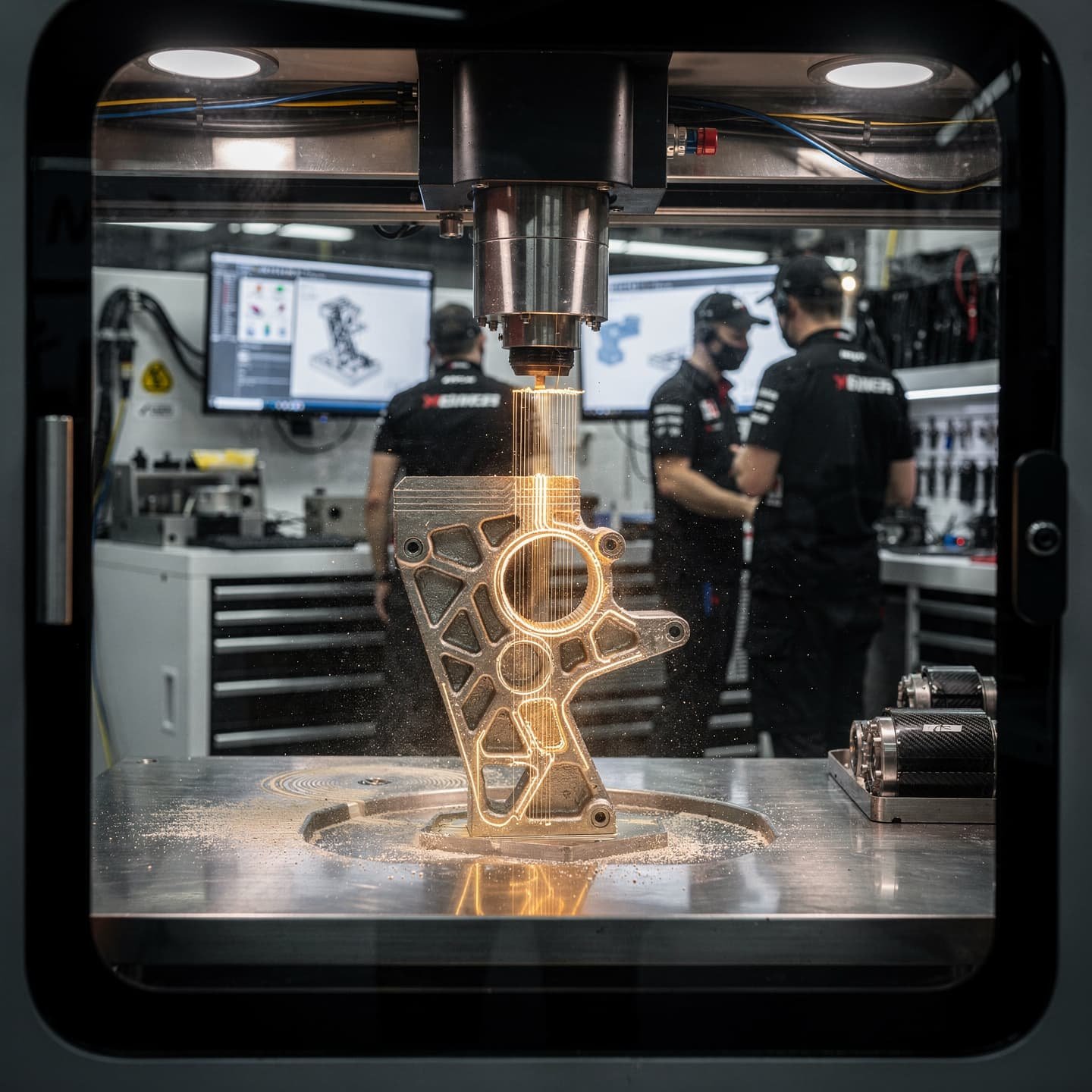
focused on Ti/Al alloys and lattice structures, addresses critical challenges in advanced design and mechanical validation through methods such as CFD, fatigue analysis via finite elements (FEA), and integration with specialized CAD/CAE systems. This interdisciplinary approach complements essential areas such as structural dynamics, topological optimization, and thermomechanics, ensuring performance improvements and weight reduction in components for high-performance competition under regulations applicable to the automotive and motorsport industry.
Validation laboratories include equipment for non-destructive testing (NDT), synchronized data acquisition, and hardware-in-the-loop (HIL) simulation, ensuring traceability and quality control in accordance with international standards. Regulatory compliance is oriented toward technical and safety requirements specific to the sector, facilitating integration into roles such as advanced materials engineer, CAD/CAE specialist, structural simulation analyst, validation coordinator, and technical project manager.
Additive Manufacturing Engineering for Motorsport
- Format:
- Duration:
- Time: 1900 H
- Practices: Consult
- Language:
- Credits:
- Registration date: 08-10-2026
- Start date: 02-12-2026
- Available places: 2
5,400 $
Skills and results
What you will learn
- Analyze flap–lag–torsion couplings, whirl flutter, and fatigue.
- Size laminates in composites, joints, and bonded joints with FE.
- Implement damage tolerance and NDT (UT/RT/thermography).
2. Design and Analysis of Motorsport Components using Additive Manufacturing: Titanium, Aluminum, and Lattice Structures
- Analyze dynamic couplings, fatigue, and strength in Motorsport components manufactured with additive manufacturing in Titanium and Aluminum, with emphasis on lattice structures.
- Size joints and connections in metallic components for Motorsport using FE, including bonded joints and tolerance considerations specific to additive manufacturing.
- Implement damage tolerance and NDT (UT/RT/thermography) to ensure reliability, safety, and service life of components in competition.
Certification: DO-160, environmental testing and mitigation.
3. Comprehensive user-oriented design and validation (from modeling to manufacturing)
You will learn to integrate the entire product development process, from model conception to final validation, applying user-centered methodologies. You will develop competencies in parametric design, ergonomics, simulation, sustainable materials, 3D visualization, and manufacturing management, ensuring efficient, safe solutions aligned with current industry standards.
4. Design, Manufacturing, and Validation of High-Performance Components for Motorsport
- Analyze flap–lag–torsion couplings, whirl flutter, and fatigue in high-performance components for Motorsport.
- Size laminates in composites, joints, and bonded joints with FE, optimizing weight, stiffness, and fatigue resistance.
- Implement damage tolerance and NDT (UT/RT/thermography) with validation protocols and acceptance criteria for Motorsport.
5. Additive Manufacturing: Design, Materials, and Validation for Motorsport
- Analyze additive manufacturing defects: porosity, anisotropy, and fatigue.
- Size parts in additive manufacturing, structural components, and bonded joints with FE.
- Implement damage tolerance and NDT (UT/RT/thermography).
6. Additive Manufacturing for Motorsport: Materials, Design, and Component Validation
- Fundamentals of additive manufacturing: types of processes, compatible materials, and optimal selection for high-performance motorsport components.
- Design for Additive Manufacturing (DfAM): topological optimization, lattice structure design, and strategies to minimize weight and maximize strength.
- Advanced materials for motorsport: analysis of mechanical, thermal, and chemical properties of polymers, metals, and ceramics used in additive manufacturing.
- Finite Element Analysis (FEA) modeling and simulation: structural, thermal, and fluid analysis to predict the behavior of additively manufactured components.
- Component validation: laboratory testing (tensile, flexural, fatigue) and track testing to verify component performance and durability.
- Quality control and metrology: inspection techniques (CT, laser scanning) and data analysis to ensure accuracy and quality of manufactured components.
- Specific applications in motorsport: design and manufacturing of components such as aerodynamics, suspension systems, brakes, and engine components.
- Future trends: new materials, technologies, and applications of additive manufacturing in motorsport.
Who this program is for:
Additive Manufacturing Engineering for Motorsport
- Engineers with a degree in Mechanical Engineering, Materials Engineering, Industrial Engineering, or related disciplines.
- Professionals from the Motorsport industry, including competition teams, suppliers, and component manufacturers.
- Engineers and technicians working in R&D, design, manufacturing, or quality control areas.
- Specialists in additive manufacturing (AM) or those interested in acquiring advanced knowledge in this technology.
Recommended requirements: Basic knowledge of CAD design and handling of simulation software. Previous experience in AM will be valued. An intermediate-high level of English (B2+) is required.
- Standards-driven curriculum: you will work with CS-27/CS-29, DO-160, DO-178C/DO-254, ARP4754A/ARP4761, ADS-33E-PRF from the very first module.
- Accreditable laboratories (EN ISO/IEC 17025) with rotor test bench, EMC/Lightning pre-compliance, HIL/SIL, vibration/acoustics.
- TFM oriented to evidence: safety case, test plan, compliance dossier, and operational limits.
- Industry mentoring: instructors with experience in rotorcraft, tiltrotor, eVTOL/UAM, and flight test.
- Flexible modality (hybrid/online), international cohorts, and support from SEIUM Career Services.
- Ethics and safety: safety-by-design approach, cyber-OT, DIH, and compliance as pillars.
1.1 Fundamentals of optimization for Motorsport parts manufactured with additive manufacturing
1.2 Material selection and performance criteria for part validation
1.3 Topological optimization and lattice design for lightweight and strong structures
1.4 Validation strategies: mechanical testing, fatigue, creep, and corrosion
1.5 Tolerances, measurement, and quality control in printed components
1.6 Integration of simulation and MBSE/PLM for design change traceability
1.7 Non-Destructive Testing (NDT) and inspection equipment calibration
1.8 Data management and traceability: standards, ISO 9001, and test files
1.9 Risk management and acceptance criteria: TRL/CRL/SRL and decision matrices
1.10 Case study: go/no-go with risk matrix for a Motorsport component
2.1 Motorsport Design and Additive Manufacturing: fundamentals, scope, and performance metrics
2.2 Design for Additive Manufacturing (DfAM) for Titanium and Aluminum: topology, tolerances, and process constraints
2.3 Materials for Motorsport in AM: Ti-6Al-4V, Al 7075, Inconel, stainless steel, and lattice structures
2.4 Lattice structures: design, analysis, weight and stiffness optimization, geometry and process validation
2.5 Validation of Motorsport parts manufactured in AM: mechanical testing, fatigue, vibration testing, metrology, and traceability
2.6 Integration of AM components into Motorsport assemblies: joints, threads, fixings, contact surfaces, and disassembly
2.7 Design, Manufacturing, and Validation of high-performance components: shafts, housings, engine mounts, and chassis; dimensional control
2.8 Certifications, standards, and regulations for AM in Motorsport: ISO/ASTM 52900, 52925, aeronautical and automotive guidelines
2.9 Validation and accelerated testing: multiscale simulation (FEM/CFD), fatigue testing, thermal testing, and life-cycle tests
2.10 Case study: go/no-go with risk matrix for an AM component in Motorsport
3.1 Fundamentals of Motorsport Optimization with Additive Manufacturing: objectives, workflows, and performance metrics
3.2 Topological and parametric optimization for lightweight and structural track parts
3.3 Integration of competition regulations and standards (FIA/IMS) into AM design
3.4 Dynamic load modeling, race simulation, and usage conditions
3.5 Weight, stiffness, and reliability management: trade-offs and decision strategies
3.6 Numerical validation methods (FEM/CFD) and multi-objective optimization
3.7 Design for manufacturability: print orientation, supports, and post-processing
3.8 Verification process: bench testing and vehicle validation
3.9 Quality control and traceability of AM parts for competition
3.10 Case studies of AM optimization in motorsport: learnings and results
4.1 Introduction to Optimization and Validation in Motorsport: objectives, scope, and performance metrics
4.2 Fundamentals of Additive Manufacturing for Motorsport: materials, processes, and performance limitations
4.3 Design for Optimization: topology, parametric design, and lattice structures for weight and strength
4.4 Modeling and Simulation in Motorsport: FEA, CFD, multi-physics, MBSE, and PLM for data-driven decisions
4.5 Component Optimization Strategies: design constraints, functional safety, and tolerances
4.6 Experimental Validation and Approval: mechanical, thermal, and fatigue testing of AM parts
4.7 Metrology and Quality in AM: traceability, dimensional measurement, and acceptance criteria
4.8 Validation in Race Environment: bench testing, track testing, and result reproducibility
4.9 Data Management and Digital Thread: capture, storage, change control, and trend traceability
4.10 Case Study: development, validation, and go/no-go decision of an optimized component for Motorsport
5.1 Principles of Topological Optimization for Motorsport Parts
5.2 Software and Tools for Additive Optimization
5.3 Generative Design: Applications in High-Performance Components
5.4 Validation Techniques: FEM Analysis and CFD Simulation
5.5 Experimental Validation: Load, Vibration, and Durability Testing
5.6 Case Studies: Optimization of Suspension and Braking Parts
5.7 Materials: Selection and Considerations for 3D Printing
5.8 Cost-Benefit: Optimization vs. Traditional Manufacturing
5.9 Design for Additive Manufacturing (DfAM): Best Practices
5.10 Report: Optimization and Validation Methodologies for Motorsport
6.1 Design and Optimization of Motorsport Parts for Additive Manufacturing (AM)
6.2 Material Selection for AM in Motorsport: High-Performance Metals and Polymers
6.3 Component Analysis and Simulation: Design for AM and Dynamic Loads
6.4 Design Validation: Rapid Prototyping and Functional Testing in Motorsport
6.5 Additive Manufacturing Strategies: Parameter Optimization for Quality and Strength
6.6 Post-Processing and Finishing of Additively Manufactured Parts
6.7 Failure Analysis and Continuous Improvement: Validation and Design Feedback
6.8 Quality Control and Reliability Assurance in Motorsport AM
6.9 Cost and Production Time Optimization with AM
6.10 Case Studies: AM Applications in High-Performance Motorsport Components
7.1 Design Optimization for Additive Manufacturing in Motorsport
7.2 Validation of Motorsport Parts via Additive Manufacturing
7.3 Material Selection and Process Considerations
7.4 Results Analysis and Continuous Improvement
7.5 Design of Motorsport Components with Additive Manufacturing
7.6 Finite Element Analysis (FEA) in Motorsport Components
7.7 Design of Motorsport Components with Additive Manufacturing: Titanium, Aluminum, and Lattice Structures
7.8 Simulation and Failure Analysis
7.9 Advanced Materials for Additive Manufacturing in Motorsport
7.10 Design of Lattice Structures for High Performance
8.1 Principles of Additive Manufacturing in Motorsport
8.2 Material Selection for Additive Manufacturing in Motorsport
8.3 Design for Additive Manufacturing (DfAM) applied to Motorsport Components
8.4 Simulation and Optimization Software for Additive Manufacturing
8.5 Design Validation via Finite Element Analysis (FEA)
8.6 Experimental Validation Methods: Tests and Trials
8.7 Part Optimization: Weight Reduction, Performance Improvement
8.8 Quality Control and Assurance of Additive Manufacturing
8.9 Case Studies: Real Applications in Motorsport
8.10 Best Practices and Trends in Additive Manufacturing for Motorsport
9.1 Introduction to Design and Optimization in Motorsport: Principles and Methodologies
9.2 Selection of Advanced Materials for High-Performance Parts
9.3 Generative and Topological Design for Part Optimization
9.4 Additive Manufacturing (AM) in Motorsport: Technologies and Applications
9.5 Finite Element Analysis (FEA) for Design Validation
9.6 Design for Additive Manufacturing (DfAM): Key Considerations
9.7 Optimization of 3D Printing Parameters for Strength and Performance
9.8 Experimental Validation of Optimized Parts: Testing and Methodologies
9.9 Case Studies: Optimization of Specific Components (suspension, aerodynamics, etc.)
9.10 Quality Control and Quality Assurance in AM of Motorsport Parts
10.1 Principles of Topological and Parametric Optimization.
10.2 Selection of Optimization Software and Tools.
10.3 Design of Parts for Additive Manufacturing (AM) in Motorsport.
10.4 Simulation and Analysis of Stresses and Deformations.
10.5 Validation of Optimized Designs: Testing and Results.
10.6 Advanced Materials and their Properties in AM.
10.7 Printing and Post-Processing Strategies.
10.8 Quality Control and Metrology in AM Parts.
10.9 Case Studies: Optimization Applications in Motorsport.
10.10 Best Practices and Cost/Benefit Considerations.
- Hands-on methodology: test-before-you-trust, design reviews, failure analysis, compliance evidence.
- Software (according to licenses/partners): MATLAB/Simulink, Python (NumPy/SciPy), OpenVSP, SU2/OpenFOAM, Nastran/Abaqus, AMESim/Modelica, acoustics tools, DO-178C planning toolchains.
- SEIUM Laboratories: scale rotor test bench, vibration/acoustics, EMC/Lightning pre-compliance, HIL/SIL for AFCS, data acquisition with strain gauging.
- Standards and compliance: EN 9100, 17025, ISO 27001, GDPR.
Capstone-type projects
- AM Part Optimization: AM; validation
- Ti/Al and Lattice Structures: design
- Advanced AM: materials, lattice
- High-Performance Components: design and testing
DO-160: environmental test plan: vibration, temperature, EMI, lightning/HIRF.
- AM Part Optimization: AM; validation
- Ti/Al and Lattice Structures: design
- Advanced AM: materials, lattice
- High-Performance Components: design and testing
DO-160: environmental test plan: vibration, temperature, EMI, lightning/HIRF.
- Motorsport Additive Manufacturing: Design and optimization of components (Ti, Al, Lattice).
- CFD/FEA Validation: Structural and thermal analysis.
- Prototyping and testing: Manufacturing, testing, and performance certification.
- Advanced materials: Selection and evaluation for high performance.
- Motorsport Additive Manufacturing: Design and optimization of components (Ti, Al, Lattice).
- CFD/FEA Validation: Structural and thermal analysis.
- Prototyping and testing: Manufacturing, testing, and performance certification.
- Advanced materials: Selection and evaluation for high performance.
- Analysis and Optimization: Design of motorsport parts (Ti/Al/Lattice).
- Additive Manufacturing: Material selection, prototyping and validation.
- Validation: Performance testing, CFD analysis and simulation.
- High-Performance Components: Design, manufacturing and testing in Motorsport.
Admissions, fees and scholarships
- Profile: Background in Computer Engineering, Mathematics, Statistics, or related fields; practical experience in NLP and information retrieval systems is valued.
- Documentation: Updated CV, academic transcripts, SOP/purpose essay, project or code samples (optional).
- Process: application → technical profile and experience evaluation → technical interview → practical case review → final decision → enrollment.
- Fees:
- Single payment: 10% discount.
- 3-installment payment: no fees; 30% upon enrollment + 2 equal monthly payments of the remaining 35%.
- Monthly payment: available with a 7% fee on the total; annual review.
- Scholarships: based on academic merit, financial situation, and promotion of inclusion; agreements with industry companies for partial or full scholarships.
Check “Calendar & calls”, “Scholarships & financial aid”, and “Fees & financing” in the SEIUM mega-menu.
Do you have any questions?
Our team is ready to help you. Contact us and we’ll get back to you as soon as possible.
F. A. Q
Frequently Asked Questions
Yes, we hold international certification.
Yes: experimental models, real data, applied simulations, professional environments, real case studies.
It is not mandatory. We offer leveling tracks and tutoring.
Completely. It covers e-propulsion, integration, and emerging regulations (SC-VTOL).
Recommended. There are also internal challenges and consortia.