
Racing Composites Engineering
About our Racing Composites Engineering
Competition Composites Engineering
addresses the advanced design, lamination, and trackside repair of composite structures, integrating knowledge in aerodynamics, structural analysis, CFD, and failure simulation to optimize strength and weight in high-demand dynamic applications. The process includes modeling through FEM and evaluation under fatigue and impact criteria, supported by methodologies from the aerospace and automotive racing industries, with a strong focus on thermal management and mechanical properties of advanced materials such as CFRP and GFRP. The integration of techniques such as autoclave curing and the use of embedded sensors for in-situ data acquisition are fundamental pillars.
Specialized laboratories offer complete capabilities for non-destructive testing, acoustic vibration monitoring, and quality control in accordance with international regulations and safety standards, ensuring traceability in line with ISO 9001 and alignment with applicable standards in aeronautical and sports composites. The training prepares professionals for roles such as Composite Materials Engineer, Lamination Specialist, Trackside Repair Technician, Quality Supervisor, and Testing Engineer, ensuring critical competencies in high-pressure and strictly regulated environments.
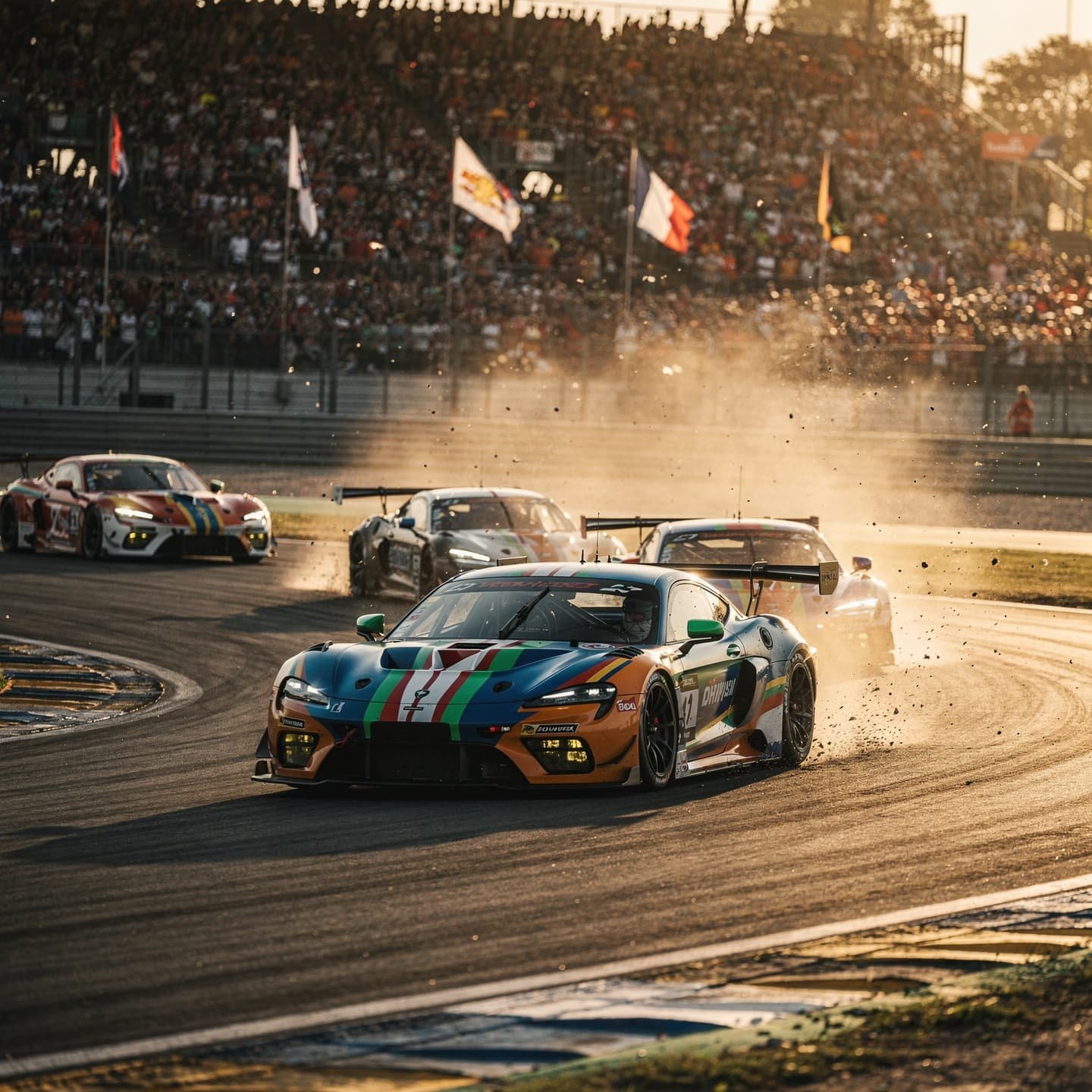
Racing Composites Engineering
- Format:
- Duration:
- Time: 1900 H
- Practices: Consult
- Language:
- Credits:
- Registration date: 08-10-2026
- Start date: 02-12-2026
- Available places: 2
3,900 $
Skills and results
What you will learn
- Analyze flap–lag–torsion couplings, whirl flutter, and fatigue.
- Size laminates in composites, joints, and bonded joints with FE.
- Implement damage tolerance and NDT (UT/RT/thermography).
2. Propeller Modeling and Performance
- Analyze flap–lag–torsion couplings, whirl flutter, and fatigue.
- Size laminates in composites, joints, and bonded joints with FE.
- Implement damage tolerance and NDT (UT/RT/thermography).
3. Comprehensive user-oriented design and validation (from modeling to manufacturing)
You will learn to integrate the entire product development process, from model conception to final validation, applying user-centered methodologies. You will develop competencies in parametric design, ergonomics, simulation, sustainable materials, 3D visualization, and manufacturing management, ensuring efficient, safe solutions aligned with current industry standards.
4. Composite Engineering: High-Performance Design, Lamination, and Repair
- Analyze flap–lag–torsion couplings, whirl flutter, and fatigue.
- Size laminates in composites, joints, and bonded joints with FE.
- Implement damage tolerance and NDT (UT/RT/thermography).
5. Composite Design, Lamination, and Repair in Competitive Environments
- Analyze delamination, fatigue, and impact resistance couplings.
- Size laminates in composites, joints, and bonded joints with FE.
- Implement damage tolerance and NDT (UT/RT/thermography).
6. Composite Design, Lamination, and Repair in Racing: A Comprehensive Course
- Understand the design and construction principles of competition components.
- Master lamination and curing techniques for composite materials, including epoxies, carbon, and glass fibers.
- Apply structural analysis methods to optimize the performance and durability of structures.
- Identify and troubleshoot common composite repair issues, from small cracks to significant damage.
- Use specific tools and equipment for design, lamination, and repair, such as autoclaves, curing ovens, and vacuum systems.
- Study the different types of failures and failure mechanisms that occur in composites.
- Apply advanced non-destructive testing (NDT) techniques to assess structural integrity.
- Learn about industry regulations and standards related to composites in competition.
- Develop practical skills through real exercises and projects.
- Specialize in areas such as mold design, material selection, and manufacturing process optimization.
Who this program is for:
Racing Composites Engineering
- Graduate engineers in Aerospace Engineering, Mechanical, Industrial, Automation Engineering, or related disciplines.
- Professionals with experience in the sector, including roles at rotorcraft/eVTOL aircraft manufacturers (OEMs), MRO (Maintenance, Repair, and Operations) companies, consulting firms, and technology centers.
- Specialists working in areas such as Flight Test, aeronautical certification, avionics, flight control, and flight dynamics who wish to deepen their knowledge and skills.
- Personnel from regulatory bodies/aeronautical authorities and professionals involved in the development and regulation of Urban Air Mobility (UAM)/eVTOL, who seek to acquire competencies in regulatory compliance.
Recommended requirements: Basic knowledge of aerodynamics, flight control, and structures is advised. A proficiency level in Spanish or English equivalent to B2+ or C1 is required. The program offers bridging tracks for those candidates who need to strengthen their prior knowledge.
- Standards-driven curriculum: you will work with CS-27/CS-29, DO-160, DO-178C/DO-254, ARP4754A/ARP4761, ADS-33E-PRF from the very first module.
- Accreditable laboratories (EN ISO/IEC 17025) with rotor test bench, EMC/Lightning pre-compliance, HIL/SIL, vibration/acoustics.
- TFM oriented to evidence: safety case, test plan, compliance dossier, and operational limits.
- Industry mentoring: instructors with experience in rotorcraft, tiltrotor, eVTOL/UAM, and flight test.
- Flexible modality (hybrid/online), international cohorts, and support from SEIUM Career Services.
- Ethics and safety: safety-by-design approach, cyber-OT, DIH, and compliance as pillars.
1.1 Fundamentals of composites in naval competition: materials, laminates, and layer architecture for high performance
1.2 Lamination and curing processes: manual lamination and autoclave; temperature control, times, and voids
1.3 Laminate modeling and performance: layer theory, ply orientation, and stiffness and strength prediction
1.4 Design for maintenance and rapid repairs: repair strategies, patches, and modular design for minimum downtime
1.5 LCA/LCC in naval composites: environmental footprint, life cycle costs, and operating cost of laminated components
1.6 Non-destructive testing and quality control: UT, C-scan, and delamination testing; acceptance criteria
1.7 MBSE/PLM and data chain for change control: digital traceability, systems-oriented modeling, and configuration management
1.8 Technological risk and readiness: TRL/CRL/SRL, maturity assessment, and mitigation plans for competition
1.9 Intellectual property, certifications, and time-to-market: IP, patents, maritime regulations, and required certifications
1.10 Case study: go/no-go with risk matrix and decision criteria based on performance, cost, and schedule
2.1 Introduction to composites: definition, advantages, and naval applications
2.2 Polymer matrices and reinforcements: resins, fiberglass, carbon, aramid
2.3 Laminate architectures and fiber orientation
2.4 Laminate manufacturing methods: hand lay-up, infusion, autoclave, molding
2.5 Basic design of composite components: performance, weight, and durability criteria
2.6 Mechanical and thermal properties of composites: modulus, strength, coefficient of expansion
2.7 Standard testing for composites: tensile, flexural, impact, delamination
2.8 Composite repair and maintenance: patching, repair, and inspection techniques
2.9 Durability in marine environments: humidity, salinity, corrosion, and UV
2.10 Case study: analysis of a naval component – material selection and manufacturing process
3.1 Laminate Design and Composite Configuration for Naval Competition
3.2 Lamination and Curing Methods in Competition
3.3 Composite Repair in Competition Environments
3.4 Design for Maintenance and Repairability
3.5 Laminate Performance Analysis
3.6 Composite Materials in Marine Environments
3.7 Quality Control and NDT of Laminates
3.8 Data Management and MBSE/PLM for Composites
3.9 Safety, Certifications, and Compliance
3.10 Practical Case
4.1 Fundamentals of composites: fibers, matrices, and interfaces
4.2 Mechanical and thermal properties relevant to naval applications
4.3 Lamination techniques: fiber orientation, layup, and curing
4.4 Design of composite structural components for vessels
4.5 Composite repair in marine environments: methods and validation
4.6 Testing and quality control: mechanical testing and non-destructive inspection
4.7 Safety, resin handling, and waste management in composites
4.8 Naval legislation and applicable certifications: IMO, ABS, DNV GL
4.9 Influence of marine environments: corrosion, salinity, humidity, and UV
4.10 Practical cases and failure analysis: diagnostics and preventive maintenance
5.1 Fundamentals of Propeller Hydrodynamics
5.2 Blade Element Theory (BET) and its Application
5.3 Numerical Modeling of Propellers: CFD and BEM
5.4 Propeller Geometric Design: Airfoil Profiles and Curvature
5.5 Propeller Performance Analysis: Thrust, Torque, and Efficiency
5.6 Material Selection and Manufacturing Processes for Competition Propellers
5.7 Propeller Optimization for Different Race Conditions
5.8 Wind Tunnel Testing and Experimental Validation
5.9 Cavitation Analysis and Anti-Cavitation Design
5.10 Case Study: Propeller Design and Evaluation for a Specific Competition
6.1 Fundamentals of Propeller Hydrodynamics and Aerodynamics.
6.2 Propeller Geometric Design: Profiles, Pitch, Area.
6.3 Numerical Modeling: CFD and BEM for Performance Analysis.
6.4 Flow Analysis: Wake, Cavitation, and Speed Effects.
6.5 Material Selection and Propeller Manufacturing Processes.
6.6 Testing and Validation: Test Benches and Water Simulation.
6.7 Design Optimization: Maximizing Efficiency and Minimizing Noise.
6.8 Performance under Specific Conditions: Speed, Load, and Depth.
6.9 Maintenance and Repair: Inspection, Common Damage, and Solutions.
6.10 Case Studies: Competition Propellers and Their Challenges.
7.1 Fundamental Principles of Hydrodynamics and Aerodynamics Applied to Propellers
7.2 Momentum Theory and Blade Element Theory
7.3 Propeller Geometric Design: Profiles, Pitch, Curvature, and Area
7.4 Propeller Modeling and Simulation Software: CFD and BEM Analysis
7.5 Propeller Design Optimization: Efficiency, Cavitation, and Noise
7.6 Propeller Materials and Manufacturing: Selection, Processes, and Tolerances
7.7 Propeller Bench Testing: Thrust, Torque, and Efficiency Measurements
7.8 Propeller Performance Analysis under Competitive Operating Conditions
7.9 Modeling and Prediction of Cavitation in High-Speed Propellers
7.10 Propeller Maintenance and Repair: Inspection, Damage, and Solutions
- Introduction to Composites: Materials and Properties in Naval Competition
- Selection of Composite Materials: Optimization for Performance and Durability
- Computer-Aided Design (CAD) and Simulation Software for Composites
- Lamination Principles: Key Strategies and Techniques for High-Performance Components
- Mold and Tooling Design: Creating Precision Tools for Manufacturing
- Manual Lamination Techniques: Practical Application and Quality Control
- Vacuum Bag Lamination: Improving Fiber-Resin Ratio and Mechanical Properties
- Curing Process: Parameter Optimization for Different Resins and Composites
- Quality Control in Lamination: Visual Inspection, Non-Destructive Testing (NDT)
- Design and Failure Analysis: Identifying Critical Points and Troubleshooting
- 9.1 Selection of Composite Materials: Resins, Fibers, and Cores for High Performance.
- 9.2 Advanced Structural Design: Optimization and FEA Analysis for Competitive Loads.
- 9.3 Laminate Design: Stacking Strategies and Fiber Orientation.
- 9.4 Mold Design: Creating Molds for Competition Composites.
- 9.5 Prototype Manufacturing and Design Verification.
- 9.6 Manufacturing Methods: Infusion, Pre-preg, and Vacuum Molding.
- 9.7 Failure Analysis and Design Validation in Competition.
10.1 Introduction to Composite Materials in Competition: Resins, Fibers, and Additives
10.2 Computer-Aided Design (CAD) for Composites: Software and Applications
10.3 Stress and Strain Analysis: Simulation and Design Validation
10.4 Lamination Techniques: Manual, Pre-preg, and Vacuum
10.5 Curing Processes: Temperature, Pressure, and Quality Control
10.6 Trackside Composite Repair: Techniques and Tools
10.7 Damage Assessment and Diagnosis: Visual and Non-Destructive Inspection
10.8 Design for Repair: Strategies and Durability Enhancement
10.9 Quality Control and Certification: Standards and Procedures
10.10 Case Studies: Applications in Competition and Best Practices
- Hands-on methodology: test-before-you-trust, design reviews, failure analysis, compliance evidence.
- Software (according to licenses/partners): MATLAB/Simulink, Python (NumPy/SciPy), OpenVSP, SU2/OpenFOAM, Nastran/Abaqus, AMESim/Modelica, acoustics tools, DO-178C planning toolchains.
- SEIUM Laboratories: scale rotor test bench, vibration/acoustics, EMC/Lightning pre-compliance, HIL/SIL for AFCS, data acquisition with strain gauging.
- Standards and compliance: EN 9100, 17025, ISO 27001, GDPR.
Capstone-type projects
- Competition Composites: Design/Lamination: lamination, repair, and testing.
- Propellers: Modeling/Performance: CFD and performance.
- Competition Components: Manufacturing/Maintenance: manufacturing and inspection.
DO-160: environmental test plan (vibration, temperature, EMI, lightning) and mitigation.
- Competition Composites: Design/Lamination: lamination, repair, and testing.
- Propellers: Modeling/Performance: CFD and performance.
- Competition Components: Manufacturing/Maintenance: manufacturing and inspection.
DO-160: environmental test plan (vibration, temperature, EMI, lightning) and mitigation.
- Propeller Optimization: CFD design, vibration analysis, noise reduction.
- Advanced Control: Autopilot, envelope protection, HIL simulation.
- Tiltrotor: Transition analysis, dynamic flight optimization.
- Composites: Structural design, lamination, repair, FEA analysis.
Certification: DO-160, environmental testing and mitigation.
- Propeller Optimization: CFD design, vibration analysis, noise reduction.
- Advanced Control: Autopilot, envelope protection, HIL simulation.
- Tiltrotor: Transition analysis, dynamic flight optimization.
- Composites: Structural design, lamination, repair, FEA analysis.
Certification: DO-160, environmental testing and mitigation.
- Composites Racing Hull: Design, manufacturing and repair of a competition hull, optimizing weight and strength.
- Propeller Performance Analysis: CFD modeling and performance analysis of propellers, including design and selection.
- Component Design & Maintenance: Development of custom components, manufacturing and maintenance protocols for competition.
- Composite Failure Analysis & Repair: Failure evaluation, solution design and “trackside” composite repair.
Admissions, fees and scholarships
- Profile: Background in Computer Engineering, Mathematics, Statistics, or related fields; practical experience in NLP and information retrieval systems is valued.
- Documentation: Updated CV, academic transcripts, SOP/purpose essay, project or code samples (optional).
- Process: application → technical profile and experience evaluation → technical interview → practical case review → final decision → enrollment.
- Fees:
- Single payment: 10% discount.
- 3-installment payment: no fees; 30% upon enrollment + 2 equal monthly payments of the remaining 35%.
- Monthly payment: available with a 7% fee on the total; annual review.
- Scholarships: based on academic merit, financial situation, and promotion of inclusion; agreements with industry companies for partial or full scholarships.
Check “Calendar & calls”, “Scholarships & financial aid”, and “Fees & financing” in the SEIUM mega-menu.
Do you have any questions?
Our team is ready to help you. Contact us and we’ll get back to you as soon as possible.
F. A. Q
Frequently Asked Questions
Yes, we hold international certification.
Yes: experimental models, real data, applied simulations, professional environments, real case studies.
It is not mandatory. We offer leveling tracks and tutoring.
Completely. It covers e-propulsion, integration, and emerging regulations (SC-VTOL).
Recommended. There are also internal challenges and consortia.