
Master’s Degree in Helicopter and Tiltrotor Engineering

About us Master’s Degree in Helicopter and Tiltrotor Engineering

The Master’s Degree in Helicopter and Tiltrotor Engineering

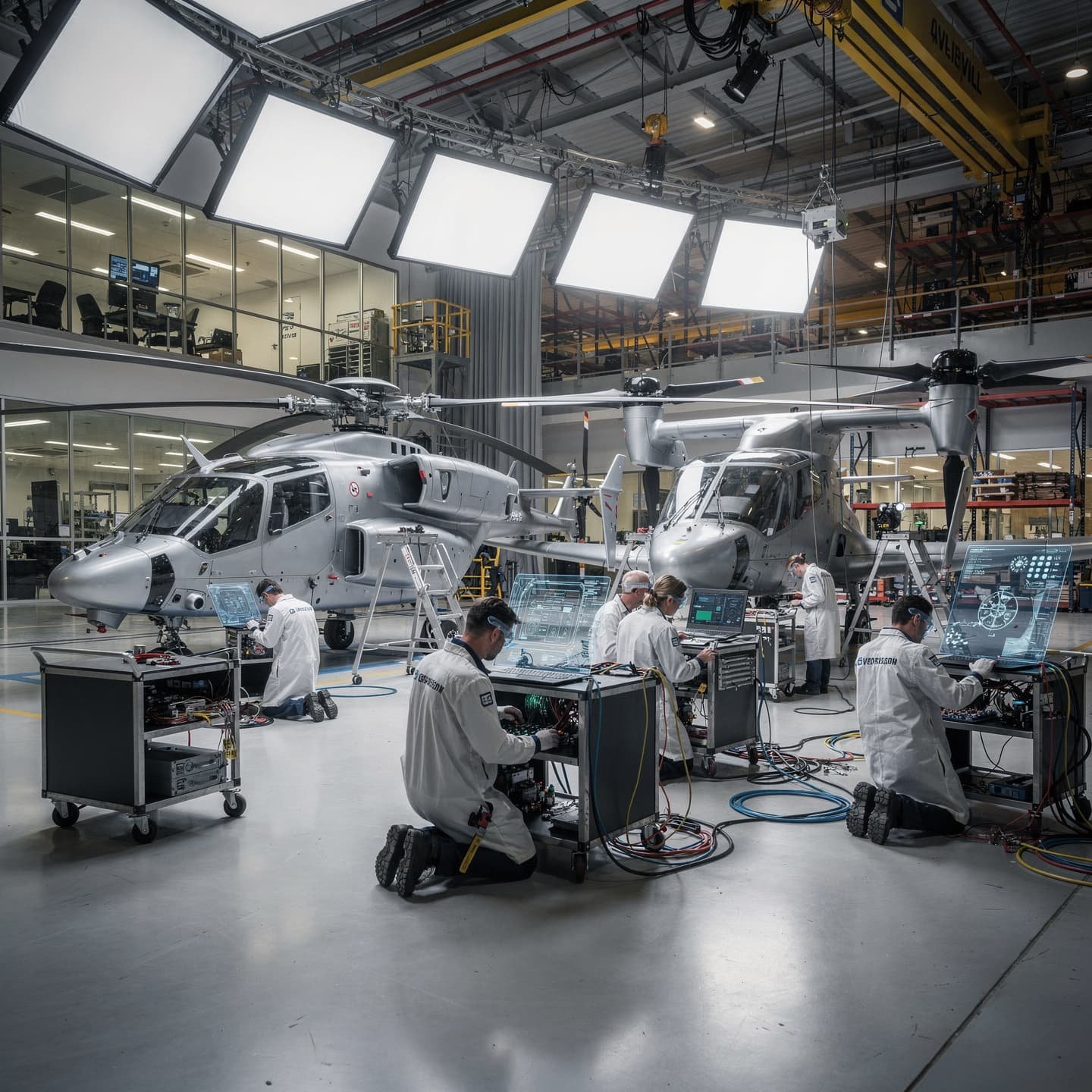
is an advanced technical program focused on the design, analysis, operation, and certification of helicopters and tiltrotor aircraft (convertiplanes). Throughout the master’s program, you will study in depth helicopter engineering, rotor aerodynamics, vertical, stationary, and translational flight behavior, dynamics and vibrations, the specific structures of rotary-wing aircraft, transmission systems, engines, and flight control. In addition, you will delve into the specific engineering of tiltrotors, their airplane/rotor modes, transition, associated structural loads, and the challenges of certification and operation. The goal is for you to be able to work as an engineer on helicopter, tiltrotor, and other rotary-wing aircraft programs, both civil and military, from concept to operation.
Ingeniería de Helicópteros
Master’s Degree in Helicopter and Tiltrotor Engineering

7.500 $

Skills and results

What you will learn

You will gain an understanding of the entire helicopter and tiltrotor engineering ecosystem: types of configurations (single-rotor, twin-rotor, coaxial, NOTAR, two-seat tiltrotor, transport tiltrotor), typical missions (rescue, offshore, transport, military, urban), and how these requirements translate into design decisions. You will see why helicopters and tiltrotors face different trade-offs between speed, range, payload, and complexity, and how each type of rotary-wing aircraft is positioned within the aviation market.

You will master the fundamentals of aerodynamics specific to helicopters and rotary-wing aircraft: hover moment theory, lift distribution on the rotor, blade profiles, angle of attack, collective and cyclic pitch, induced power, and specific phenomena such as the vortex ring state and the retreating blade stall. You will study how this aerodynamics changes in the tiltrotor when operating in helicopter mode versus airplane mode and during the transition.

You will delve into the performance analysis of helicopters and tiltrotors: altitude-speed (H-V) diagrams, service ceiling, rotor disk load, specific fuel consumption, power maps, range, endurance, and flight envelope. You will learn to evaluate how mass, altitude, density, wind, configuration, and rotor condition influence a helicopter’s performance. In the case of tiltrotors, you will see how to combine vertical performance with aircraft-like cruise performance.

You will specialize in helicopter and tiltrotor dynamics and vibrations: flapping modes, lead-lag, conicity, resonances, rotor-fuselage interactions, ground resonance, whirl flutter, and other instabilities. You will understand why helicopter engineering requires precise control of vibrations in the rotor, transmission, and cabin, and how the design of the rotor head, dampers, and tiltrotor configuration influence dynamic stability.

You will develop expertise in structures and materials specific to helicopters and tiltrotors: the design of composite rotor blades, articulated/semi-rigid/rigid rotor heads, fuselage structures, tiltrotor nacelles, tilt mechanisms, transmission systems, and gearboxes. You will learn how structures are sized to withstand centrifugal, aerodynamic, and maneuvering loads, as well as vibrations and fatigue effects in rotary-wing aircraft.

You will delve into the performance analysis of helicopters and tiltrotors: altitude-speed (H-V) diagrams, service ceiling, rotor disk load, specific fuel consumption, power maps, range, endurance, and flight envelope. You will learn to evaluate how mass, altitude, density, wind, configuration, and rotor condition influence a helicopter’s performance. In the case of tiltrotors, you will see how to combine vertical performance with aircraft-like cruise performance.

Ingeniería de Helicópteros

To whom is our:

Master’s Degree in Helicopter and Tiltrotor Engineering

The Master’s in Helicopter and Tiltrotor Engineering is aimed at aeronautical, aerospace, mechanical, industrial, and related engineers and technicians, as well as advanced students interested in helicopter, tiltrotor, and rotary-wing aircraft engineering in general. It is also particularly relevant for pilots, maintenance engineers, professionals from helicopter companies, armed forces, design firms, and R&D centers who wish to delve deeper into the technical and design aspects of helicopters and tiltrotors. A basic understanding of aerodynamics, strength of materials, and flight mechanics, or equivalent experience in the aeronautical sector, is recommended.

SEIUM presents the Master’s in Helicopter and Tiltrotor Engineering as highly specialized training in a niche of aviation where in-depth, structured programs are scarce. While many master’s programs focus on general aviation or fixed-wing aircraft, this program specifically focuses on helicopter and tiltrotor engineering, covering rotor aerodynamics, dynamics, structures, systems, and certification. The approach is applied and project-oriented: the goal is for students to gain an integrated understanding of how a modern helicopter or tiltrotor is designed, analyzed, and operated. SEIUM’s online format allows students to combine the master’s program with their professional activity while incorporating real-world case studies and technical documentation on rotary-wing aircraft, building a profile that is highly attractive to manufacturers, operators, and organizations in the sector.

1.1 History and evolution of helicopters
1.2 Emergence and development of tiltrotor aircraft
1.3 Comparison between fixed-wing, helicopter, and tiltrotor aircraft
1.4 Types of helicopter configurations (single-rotor, coaxial, tandem, NOTAR)
1.5 Tiltrotor configurations and typical missions
1.6 Operational roles: rescue, medical, offshore, military, urban
1.7 Current market positioning of helicopters and tiltrotors
1.8 Rotary aircraft program lifecycle
1.9 Key engineering concepts for helicopters and rotary aircraft
1.10 Master’s program learning objectives

2.1 Momentum Theory for Rotors in Hovering Flight
2.2 Lift Distribution and Rotor Pitch
2.3 Induced Power and Disc Efficiency in Helicopters
2.4 Rotor Blade Aerodynamic Profile and Angle of Attack
2.5 Specific Phenomena: Vortex Ring State, Settling with Power
2.6 Retreating Blade Stall and Speed ​​Limitations in Helicopters
2.7 Compressibility Effects on Rotor Blades
2.8 Tiltrotor Aerodynamics in Helicopter Mode
2.9 Airplane Mode Aerodynamics and Tiltrotor Transition
2.10 Use of Basic Aerodynamic Performance Calculation Tools

3.1 Height-Velocity (H-V) Diagrams and No-Fly Zones
3.2 Hover Ceiling and Translation Ceiling
3.3 Calculating Required vs. Available Power
3.4 Effects of Weight, Altitude, Density, and Temperature
3.5 Range and Endurance in Helicopters
3.6 Tiltrotor Cruise Performance (Airplane Mode)
3.7 Trade-offs Between Vertical Capability and Cruise Speed
3.8 Specific Fuel Consumption Curves and Mission Planning
3.9 Performance Evaluation for Different Missions (Rescue, Transport, Military)
3.10 Practical Examples of Helicopter and Tiltrotor Sizing

4.1 Degrees of freedom of a rotor blade: flap, lag, and pitch
4.2 Simplified rotor dynamics models
4.3 Influence of the rotor head (articulated, semi-rigid, rigid)
4.4 Vibrations in helicopters and transmission to the fuselage
4.5 Ground resonance phenomenon and its prevention
4.6 Specific dynamics of the tiltrotor and critical modes
4.7 Aeroelastic rotor-wing interaction in tiltrotor aircraft
4.8 Vibration mitigation techniques (dampers, tuned absorbers)
4.9 Vibration testing in helicopters and tiltrotors
4.10 Comfort and fatigue criteria associated with vibrations

5. 1 Structural Configuration of Helicopter Fuselages
5.2 Design and Analysis of Composite Rotor Blades
5.3 Rotor Heads, hubs, and connecting elements
5.4 Nacelles and tilting structures in tiltrotors
5.5 Centrifugal, aerodynamic, and maneuvering loads in rotary-wing aircraft
5.6 Fatigue, damage, and inspection analysis of blades and structures
5.7 Integration of fuel, landing gear, and systems into the fuselage
5.8 Use of CAE tools for basic structural analysis
5.9 Repairability and structural maintenance in helicopters and tiltrotors
5.10 Structural design criteria based on weight, cost, and service life

6.1 Turboshaft engines and their integration into helicopters
6.2 Main and secondary gearboxes
6.3 Anti-torque systems: tail rotor, fenestron, NOTE
6.4 Control systems: collective, cyclic, and pedals
6.5 Mechanical, hydraulic, and fly-by-wire controls
6.6 Propulsion and tilting systems in tiltrotors
6.7 Coordination between thrust, rotor tilt, and control surfaces
6.8 Control laws for helicopter, transition, and airplane modes
6.9 Flight assistance systems and increased stability
6.10 Implications of propulsion on performance and safety

7.1 Airworthiness requirements for helicopters
7.2 Certification considerations for tiltrotor
7.3 Safety analysis and redundancy of critical systems
7.4 Autorotation: Fundamentals and Design Implications
7.5 Emergency Procedures for Helicopters and Tiltrotors
7.6 Operation in Complex Environments: offshore, mountain, urban
7.7 Operational limitations and load/center of gravity restrictions
7.8 Certification documentation and flight tests
7.10 Future trends in regulation for rotary-wing aircraft

8.1 Mission definition and helicopter or tiltrotor configuration
8.2 Avionics specific to helicopter flight and tiltrotor flight
8.3 Navigation, autopilot, and flight management systems
8.4 Mission equipment for SAR, HEMS, offshore, and military applications
8.5 Payload systems, cranes, sling, and external load hook
8.6 Sensor integration and surveillance systems
8.7 Human–machine interface considerations in the cockpit
8.8 Electrical power management and auxiliary systems
8.9 Modification and retrofit of existing helicopters
8.10 Case studies of complex missions in helicopters and tiltrotors

9.1 Development phases of a helicopter or tiltrotor
9.2 Management of technical, operational, and certification requirements
9.3 Coordination between aerodynamics, structures, systems, and testing teams
9.4 Planning of ground and flight tests
9.5 Cost, maintenance, and life cycle analysis (LCC)
9.6 9.10 Opportunities for innovation in rotary-wing aircraft

10.1 Selection of a Reference Helicopter or Tiltrotor
10.2 Mission Definition and High-Level Requirements
10.3 Proposed rotor, fuselage, and systems configuration
10.4 Preliminary evaluation of performance and flight envelope
10.5 Dynamics, Vibrations, and Structural Considerations
10.6 Operational, Safety, and Certification Analysis
10.7 Impact of design decisions on cost and maintenance
10.8 Preparation of the final project technical dossier
10.9 Presentation and defense before the academic-technical committee
10.10 Student’s career prospects in helicopter and tiltrotor engineering

The curriculum for the Master’s in Helicopter and Tiltrotor Engineering combines live online classes, pre-recorded content, calculation exercises, and applied projects. You will work with technical spreadsheets to estimate the performance of helicopters and tiltrotors, using basic aerodynamic and dynamic analysis tools (environments such as MATLAB/Octave or other equivalents) and drawing and modeling software for rotor, fuselage, and transmission schematics. The “laboratory” is designed as a virtual environment where you will analyze real-world cases involving helicopters and tiltrotors, interpret performance curves, H–V diagrams, structural data, and simplified certification documentation. The approach is practical, focused on enabling you to apply helicopter and tiltrotor engineering concepts to real-world rotary-wing aircraft projects.

Capstone-type projects

Admissions, fees and scholarships

The Master’s Degree in Helicopter and Tiltrotor Engineering is designed for professionals and graduates with a background in aeronautical, aerospace, mechanical, industrial, or other related technical fields, as well as pilots, maintenance engineers, and operations personnel with a strong technical interest in helicopters and tiltrotors. The admission process may include a review of the CV and a letter of motivation to ensure that the candidate has the necessary foundation to keep up with the level of helicopter and rotary-wing aircraft engineering covered in the program. SEIUM offers scholarships and financial aid for working professionals, students with outstanding academic records, and international candidates, as well as installment payment plans that facilitate access to advanced and highly specialized training in helicopters and tiltrotors.

Do you have any questions?

Our team is ready to help you. Contact us and we’ll get back to you as soon as possible.

Please enable JavaScript in your browser to complete this form.

F. A. Q

Frequently Asked Questions

Previous experience working with helicopters is not required, but a basic understanding of aerodynamics and flight mechanics is recommended. The master’s program introduces the fundamental concepts and then delves deeper into helicopter and tiltrotor engineering.

The main focus is on helicopter engineering, but a significant portion is devoted to tiltrotor engineering, comparing both types of aircraft, their missions, and technical challenges, so that you can work with any type of rotary-wing aircraft.

The approach is practical yet accessible: it uses spreadsheets and basic analysis tools to help students understand the engineering principles behind helicopters and tiltrotors before moving on, if they choose, to more advanced tools in their professional environment.

Yes. The program is offered online, featuring recorded live sessions and projects designed to allow you to progress at your own pace while working in the aviation industry or other technical fields.

Yes. The projects are designed to allow you to demonstrate your knowledge of helicopter engineering, tiltrotors, performance, dynamics, structures, and operations, creating an attractive portfolio for manufacturers and operators of rotary-wing aircraft.

Absolutely. The program will allow you to delve deeper into the engineering aspects of helicopters and tiltrotors, gaining a better understanding of their design, limitations, loads, and system logic—which can open doors to technical, engineering, or fleet management roles.

Scroll to Top