
Diploma in Soil Improvement and Injections

Sobre nuestro Diploma in Soil Improvement and Injections

The Diploma in Soil Improvement and Grouting focuses on the study and application of advanced techniques for soil stabilization and consolidation, using grouting of various materials to improve the geotechnical properties of the soil. It delves into soil analysis, the selection of grouting materials, and the design of grouting systems, considering factors such as permeability and compressive strength. Methods such as cement grouting, epoxy resins, and geosynthetics are explored, as well as their application in civil engineering projects, tunnel construction, and structural rehabilitation. The program provides practical knowledge in drilling and ground preparation, grout quality control, and treatment effectiveness assessment. Current regulations and best engineering practices are addressed, including compliance with geotechnical safety standards and the management of associated risks. This training program equips professionals such as geotechnical engineers, foundation specialists, and construction supervisors, enhancing their skills in the planning and execution of infrastructure projects.

Target keywords (naturally occurring in the text): soil improvement, grouting, ground stabilization, soil analysis, cement grouting, geotechnical engineering, foundations, soil engineering diploma.
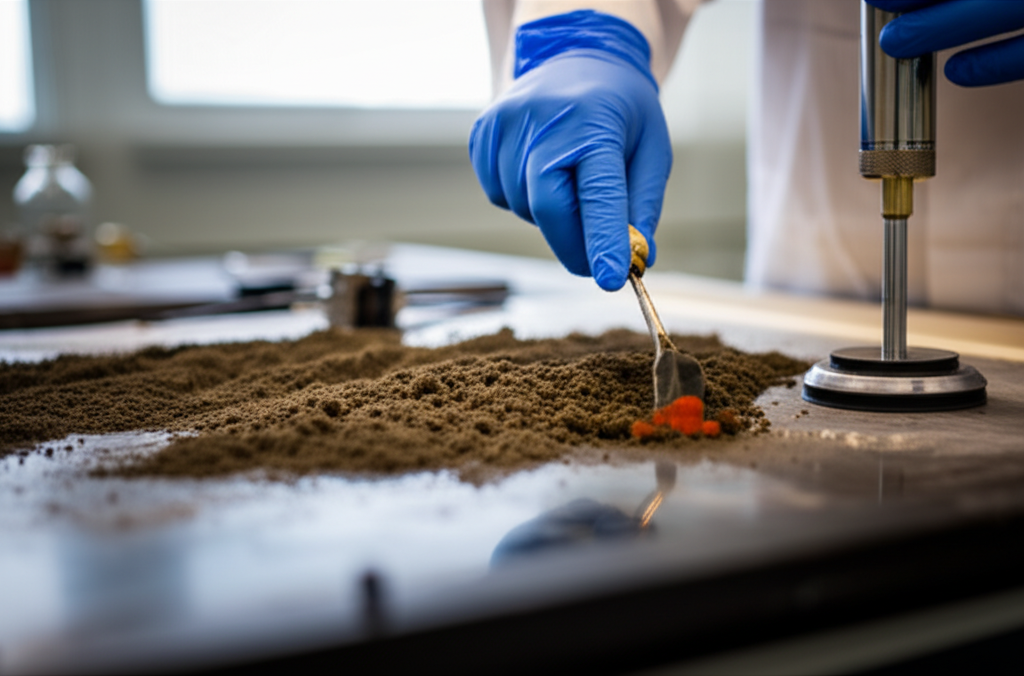
Diploma in Soil Improvement and Injections

979 $

Competencias y resultados

Qué aprenderás

1. Mastery of Advanced Soil Improvement and Injection Techniques

  • Identify and evaluate the geotechnical properties of soil, including its classification, particle size distribution, plasticity, and bearing capacity.
  • Understand the principles of soil consolidation, permeability, and water flow.
  • Master field investigation techniques for soil characterization, such as boreholes, test pits, and in-situ testing.
  • Analyze soil improvement methods, including compaction, preloading, vertical drainage, and chemical stabilization.
  • Apply soil injection techniques, such as grouting, jet grouting, and micropiles.
  • Design and implement quality control programs for soil improvement and injection projects.
  • Interpret laboratory and field test results to evaluate the performance of improved soil.
  • Evaluate the effectiveness of soil improvement and injection techniques under different conditions. Geotechnical Engineering.

    Understand the relevant safety and regulatory aspects for soil improvement and grouting projects.

    Use specialized software for the analysis and design of soil improvement and grouting projects.

2. Soil Optimization: Advanced Injection and Improvement Techniques

  • Identify and evaluate the geotechnical properties of soil.
  • Apply consolidation and waterproofing grouting techniques.
  • Utilize advanced soil improvement methods, including chemical and mechanical stabilization.
  • Analyze the design and execution of soil optimization projects.
  • Understand the principles of geotechnical engineering applied to soil optimization.
  • Interpret laboratory and field test results for decision-making.
  • Use specialized software for the analysis and design of soil interventions.
  • Evaluate the durability and long-term performance of soil improvements.

3. Comprehensive user-oriented design and validation (from modeling to manufacturing)

You will learn to integrate the entire product development process, from initial model conception to final validation, applying user-centered methodologies. You will develop skills in parametric design, ergonomics, simulation, sustainable materials, 3D visualization, and manufacturing management, ensuring efficient, safe solutions that meet current industry standards.

4. Key Strategies for Comprehensive Soil Improvement and Precise Injection [The text abruptly switches to a different topic:]

4. Key Strategies in Comprehensive Soil Improvement and Precise Soil Injection

  • Identification and evaluation of geotechnical soil properties.
  • Analysis of soil improvement methods: compaction, chemical stabilization, preloading.
  • Design and application of injection techniques: grouting, jet grouting, micropiles.
  • Quality control and monitoring in improvement and injection projects.
  • Evaluation of the durability and long-term performance of treatments.

5. Master's Degree in Soil Improvement Strategies with Specialized Injections

  • Diagnose and evaluate the physical and chemical properties of soils, identifying deficiencies and pathologies.
  • Design and plan specific soil improvement strategies, considering site characteristics and project objectives.
  • Apply advanced injection techniques, including the selection of materials and equipment, as well as the optimization of injection parameters.
  • Interpret laboratory and field test results to evaluate the effectiveness of interventions and adjust plans as needed.
  • Manage soil improvement projects, including work supervision, quality control, and risk management.
  • Analyze the environmental impact of soil improvement strategies and propose sustainable solutions.
  • Use specialized software to model and simulate soil behavior and the effectiveness of injections.
  • Develop communication and collaboration skills to work in multidisciplinary teams and communicate effectively. the results to stakeholders.

6. Expert in Soil Improvement and Injection Design and Implementation

You will learn to integrate the entire product development process, from initial model conception to final validation, applying user-centered methodologies. You will develop skills in parametric design, ergonomics, simulation, sustainable materials, 3D visualization, and manufacturing management, ensuring efficient, safe solutions that meet current industry standards.

Para quien va dirigido nuestro:

Diploma in Soil Improvement and Injections

    Civil, geotechnical, environmental, and related engineers with experience in the design and construction of civil works.

    Professionals from construction companies, consulting firms, soil laboratories, and government entities involved in infrastructure projects.

    Individuals interested in acquiring specialized knowledge in soil improvement and injection techniques for land stabilization and rehabilitation.

  • Standards-driven curriculum: you will work with CS-27/CS-29, DO-160, DO-178C/DO-254, ARP4754A/ARP4761, ADS-33E-PRF from the first module.
  • Accreditable laboratories (EN ISO/IEC 17025) with rotor bench, EMC/Lightning pre-compliance, HIL/SIL, vibrations/acoustics.
  • Evidence-oriented TFM: safety case, test plan, compliance dossierand operational limits.
  • Mentored by industry: teachers with experience in rotorcraft, tiltrotor, eVTOL/UAM and flight test.
  • Flexible modality (hybrid/online), international cohorts and support from SEIUM Career Services.
  • Ethics and security: safety-by-design approach, cyber-OT, DIH and compliance as pillars.

1.1 Introduction to Geotechnical and Soil Engineering
1.2 Physical and Mechanical Properties of Soils
1.3 Regulatory Framework and Standards for Soil Engineering
1.4 Soil Classification and Characterization
1.5 Subsurface Exploration and Sampling
1.6 Interpretation of Laboratory and Field Tests
1.7 Basic Geotechnical Design
1.8 Principles of Slope and Foundation Stability
1.9 Environmental Legislation and Sustainability Considerations
1.10 Case Studies: Site Analysis and Method Selection

1.10

2.2 Preliminary Geotechnical Analysis and Soil Characterization
2.2 Physical and Mechanical Properties of Soil: Fundamentals
2.3 Laboratory and Field Tests: Interpretation of Results
2.4 Soil Classification: Unified Systems and Other Methods
2.5 Identification of Soil Problems: Erosion, Compaction, Swelling
2.6 Influence of Water on Soil Behavior
2.7 Geotechnical Modeling: Software and Applications
2.8 Design of Geotechnical Investigations: Strategies and Costs
2.9 Case Studies: Analysis of Soil Properties in Real-World Projects
2.20 Interpretation of Geotechnical Reports: Key Aspects

3.3 Fundamental Principles of Soil Improvement and Grouting
3.2 Soil Types and Their Characteristics
3.3 Importance of Soil Improvement and Grouting in Civil Engineering
3.4 Preliminary Geotechnical Considerations
3.5 Applicable Regulations and Standards
3.6 Geotechnical Studies and Field Tests
3.7 Selection of the Appropriate Improvement Method
3.8 Risk Assessment and Safety in Soil Projects

2.3 Grouting Techniques: Fundamentals and Applications
2.2 Types of Grouting: Grouting, Jet Grouting, etc.

2.3 Grout Mix Design
2.4 Grouting Equipment and Machinery
2.5 Grouting Quality Control
2.6 Monitoring and Evaluation of Results
2.7 Common Problems and Solutions in Grouting
2.8 Advanced Grouting Case Studies

3.3 Consolidation Methods: Dynamic and Static Compaction
3.2 Preloading and Vertical Drainage
3.3 Chemical Soil Stabilization
3.4 Design and Construction of Soil-Cement Piles
3.5 Evaluation of Consolidation and Settlement
3.6 Environmental Considerations in Consolidation
3.7 Practical Case Studies of Soil Consolidation
3.8 Consolidation Techniques for Different Soil Types

4.3 Comprehensive Improvement Strategies: A Holistic Approach
4.2 Combining Improvement Techniques
4.3 Designing a Plan Improvement
4.4 Cost-Benefit Analysis of Strategies
4.5 Soil Improvement Project Management
4.6 Legal and Contractual Aspects
4.7 Sustainability and Social Responsibility
4.8 Success Stories in Comprehensive Improvement

5.3 Specialized Injections: Resins, Epoxies, and Microcements
5.2 Injection Applications in Different Conditions
5.3 Injection for Seepage Control
5.4 Injection for Slope Stabilization
5.5 ​​Design of Specialized Injection Systems
5.6 Monitoring and Control of Specialized Injections
5.7 Case Studies of Specialized Injections
5.8 Innovations in Materials and Injection Techniques

6.3 Geotechnical Design for Improvement and Injection
6.2 Selection of Design Techniques and Specialized Software
6.3 Execution Design: Planning and Sequencing
6.4 Supervision and Quality Control on Site
6.5 Safety Aspects in Execution
6.6 Documentation and Execution Control
6.7 Resource and Budget Management
6.8 Case Studies: Design and Execution

7.3 Integrated Solutions: From Diagnosis to Execution
7.2 Conceptual and Basic Design of Solutions
7.3 Detailed Design and Technical Specifications
7.4 Selection of Suppliers and Contractors
7.5 Construction Management and Supervision
7.6 Quality Control and Commissioning
7.7 Performance Evaluation and Monitoring
7.8 Case Studies of Integrated Solutions

8.3 Consolidation through Grouting: Methodology and Practices
8.2 Grouting for Differential Settlement Control
8.3 Grouting for Foundation Stabilization
8.4 Design of Grouting Systems for Consolidation
8.5 Monitoring and Control of Consolidation Grouting
8.6 Evaluation of Post-Injection Performance
8.7 Sustainability Considerations in Consolidation
8.8 Case Studies: Consolidation with Injections

4.4 Fundamentals of Geotechnical Analysis: Soil Properties, Classification, and Behavior

4.2 Geotechnical Studies: Subsurface Exploration, Field and Laboratory Tests

4.3 Identification and Evaluation of Geotechnical Problems: Stability, Settlements, and Bearing Capacity

4.4 Geotechnical Risk Analysis: Hazard Identification and Impact Assessment

4.5 Advanced Diagnostic Techniques: Special Tests and Geotechnical Modeling

4.6 Interpretation of Geotechnical Data: Report Preparation and Recommendations

4.7 Design of Geotechnical Monitoring Programs: Instrumentation and Monitoring of Soil Behavior

4.8 Practical Analysis and Diagnosis Case Studies: Real-World Case Studies and Applied Solutions

2.4 Principles of Soil Injection: Types of Injection, Material and Equipment Selection

2.2 Injection Techniques: Permeation, Fracturing, Compaction, and Jet Grouting 2.3 Soil Improvement with Injections: Permeability Control, Consolidation, and Increased Bearing Capacity.

2.4 Improvement Techniques: Pre-consolidation, Chemical Stabilization, and Dynamic Improvement.

2.5 Design of Injection Systems: Design Parameters, Volume and Pressure Calculations.

2.6 Quality Control in Injections: Verification of Results and Performance Monitoring.

2.7 Case Studies of Injection and Improvement: Applications in Different Soil Types and Projects.

2.8 Innovations in Injection and Improvement: New Technologies and Materials.

3.4 Consolidation Methods: Dynamic Compaction, Preloading, and Drainage.

3.2 Soil Stabilization: Use of Chemical Additives, Lime, and Cement.

3.3 Reinforcement Techniques: Geosynthetics, Piles, and Retaining Walls.

3.4 Design of Consolidation Systems: Selection of Methods and Calculation of Parameters. 3.5 Quality Control in Soil Remediation: Verification of Results and Performance Monitoring

3.6 Soil Remediation Case Studies: Applications in Different Soil Types and Projects

3.7 Innovations in Soil Remediation: New Technologies and Materials

3.8 Stability Analysis: Evaluation of Slopes and Retaining Structures

4.4 Comprehensive Site Assessment: Geotechnical, Hydrological, and Environmental Analysis

4.2 Selection of Improvement Strategies: Selection Criteria, Cost-Benefit Analysis

4.3 Design of Integrated Solutions: Combination of Injection and Soil Remediation Techniques

4.4 Management of Improvement Projects: Planning, Execution, and Control of Works

4.5 Performance Monitoring and Tracking: Instrumentation and Evaluation of Results

4.6 Environmental Aspects of Soil Remediation: Sustainability and Impact Mitigation

4.7 Case Studies: Flagship Projects and Innovative Solutions

4.8 Risk and Safety Analysis: Protocols and Prevention Measures

5.4 Grouting: cement, bentonite, and other materials.

5.2 Chemical grouting: resins, silicates, and polymers.

5.3 Expansion grouting: expansive resins and gels.

5.4 Jet grouting: techniques and applications.

5.5 Grouting in special soils: collapsible, expansive, and contaminated soils.

5.6 Design of specialized grouting systems: calculation of volumes, pressures, and spacing.

5.7 Quality control and performance testing: verification of results and monitoring.

5.8 Case studies: applications in different soil types and projects.

6.4 Geotechnical design: modeling, analysis, and selection of solutions.

6.2 Design of grouting systems: calculations, specifications, and drawings.

6.3 Design of soil improvement systems: selection of techniques and specifications. 6.4 Development of technical specifications: materials, equipment, and procedures.

6.5 Execution management: quality control, safety, and regulatory compliance.

6.6 Construction supervision: inspection, monitoring, and performance evaluation.

6.7 Costs and budgets: cost estimation, unit price analysis, and budget control.

6.8 Project documentation: reports, drawings, and records.

7.4 Solution selection: needs analysis, alternatives, and feasibility.

7.2 Conceptual design: development of comprehensive and customized solutions.

7.3 Detailed design: technical specifications, calculations, and drawings.

7.4 Risk assessment and mitigation: risk analysis and contingency plans.

7.5 Planning and scheduling: timelines, resources, and logistics.

7.6 Quality control and assurance: protocols and procedures.

7.7 Project management: direction, coordination, and communication. 7.8 Project Closure and Handover: Documentation, Final Reports, and Post-Construction Follow-up

8.4 Principles of Consolidation: Theory and Mechanisms

8.2 Grouting for Consolidation: Material Selection and Techniques

8.3 Design of Grouting Systems for Consolidation: Parameters and Calculations

8.4 Grouting Execution: Procedures and Quality Control

8.5 Evaluation of Results: Testing and Monitoring

8.6 Case Studies: Successful Applications and Lessons Learned

8.7 Advanced Techniques: Pre-consolidation, Drainage, and Combined Methods

8.8 Regulatory and Safety Aspects: Compliance and Best Practices

5.5 Fundamentals of Soil Injection: Types and Applications
5.5 Selection of Injection Techniques: Criteria and Key Factors
5.3 Design of Injection Mixtures: Properties and Quality Control
5.4 Injection Equipment and Machinery: Operation and Maintenance
5.5 Geotechnical Engineering Applied to Injection: Subsurface Studies and Analysis
5.6 Injection Strategies in Different Soil Types
5.7 Quality Control in the Injection Process: Monitoring and Evaluation
5.8 Case Studies: Successful Applications and Lessons Learned
5.9 Safety and Sustainability Aspects in Soil Injection
5.50 Trends and Advances in Soil Injection Technology

6.6 Conceptual Design and Selection of Improvement Methods
6.2 Detailed Geotechnical Analysis and Soil Evaluation
6.3 Selection and Design of Soil Injection Systems
6.4 Planning and Scheduling of Improvement Projects
6.5 Selection and Design of Equipment and Machinery
6.6 Execution of Injection and Improvement Works
6.7 Quality Control and Assurance of Execution
6.8 Supervision and Management of Improvement Works
6.9 Safety in Improvement and Injection Works
6.60 Analysis of Case Studies and Feasibility Studies

7.7 Fundamentals of Soil Injection and Improvement
7.2 Selection of Injection Techniques: Types and Applications
7.3 Mixture Design and Materials for Injection
7.4 Equipment and Machinery for Soil Injection
7.7 Advanced Injection Techniques: Controlled Pressure and Jet Grouting
7.6 Strategies for Comprehensive Soil Improvement
7.7 Evaluation and Quality Control in Injection Projects
7.8 Case Studies: Successful Applications and Lessons Learned
7.9 Environmental Considerations and Sustainability in Injection
7.70 Legal and Regulatory Aspects in Improvement Projects

8.8 Geotechnical Fundamentals: Soil Properties and Failure Analysis
8.8 Injection Techniques: Types, Selection, and Application
8.3 Injection Additives and Materials: Selection and Characterization
8.4 Injection Project Design: Geotechnical Studies and Planning
8.5 Equipment and Machinery: Selection and Operation
8.6 Quality Control and Results Evaluation
8.7 Case Studies: Applications in Diverse Scenarios
8.8 Regulatory and Normative Aspects
8.8 Sustainability and Environmental Impact
8.80 Future Trends and Technological Advancements

9.9 Preliminary Geotechnical Evaluation and Soil Characterization
9.9 Geotechnical Data Analysis and Subsurface Modeling
9.3 Design Criteria for Soil Improvement
9.4 Selection of Appropriate Improvement Techniques
9.5 Improvement Project Design: Principles and Methodologies
9.6 Estimation of Design Parameters and Performance Criteria
9.7 Environmental Impact Assessment and Sustainability in Design
9.8 Regulatory and Normative Aspects in Improvement Design
9.9 Geotechnical Design Software and Tools

9.9 Fundamental Principles of Soil Grouting
9.9 Types of Grouting Materials and Their Properties
9.3 Grouting Techniques for Different Soil Types
9.4 Grouting Design and Planning
9.5 Grouting Equipment and Machinery
9.6 Chemical Stabilization Techniques Soil
9.7 Mechanical Stabilization and Dynamic Compaction
9.8 Monitoring and Quality Control in Grouting and Stabilization
9.9 Case Studies: Application of Grouting and Stabilization Techniques

3.9 Preloading Consolidation Methods
3.9 Consolidation Techniques with Vertical Drains
3.3 Vacuum Consolidation and its Applications
3.4 Deep Dynamic Consolidation
3.5 Design of Advanced Consolidation Systems
3.6 Modeling and Simulation of Consolidation Processes
3.7 Control and Monitoring of Consolidation
3.8 Results Analysis and Effectiveness Evaluation
3.9 Consolidation in Problematic Soils

4.9 Strategies for Comprehensive Soil Improvement
4.9 Combination of Improvement Techniques
4.3 Design of Customized Solutions for Specific Projects
4.4 Risk Management in Soil Improvement Projects Soils
4.5 Cost-Benefit Considerations in Soil Improvement
4.6 Environmental Impact and Sustainability in Improvement Strategies
4.7 Application of Innovative Technologies in Improvement
4.8 Case Studies: Successful Integrated Strategies
4.9 Integration of Strategies in Different Types of Projects

5.9 Grout Injection for Sealing and Leak Control
5.9 Grouting Injection for Structural Reinforcement
5.3 Resin Injection for Soil Stabilization
5.4 Polyurethane Injection for Water Control
5.5 Selection and Design of Specialized Injections
5.6 Application of Injections in Sandy and Cohesive Soils
5.7 Injection Techniques for Seismic Improvement
5.8 Case Studies: Specialized Injections in Practice
5.9 Innovations in Materials and Injection Techniques Specialized Areas

6.9 Conceptual Design and Preliminary Improvement Project
6.9 Preparation of Technical Specifications and Bidding Documents
6.3 Contractor Selection and Project Management
6.4 Quality Control and Construction Supervision
6.5 Risk Management and Accident Prevention
6.6 Project Planning and Scheduling
6.7 Costs and Budgets in Improvement Projects
6.8 Case Studies: Design and Execution of Successful Projects
6.9 Legal and Contractual Aspects of Project Execution

7.9 Solutions for Soft Soil Improvement
7.9 Solutions for Differential Settlement Control
7.3 Solutions for Slope Stabilization
7.4 Solutions for Seismic Risk Mitigation
7.5 Solutions for Soil Waterproofing
7.6 Design of Comprehensive Solutions for Urban Projects
7.7 Case Studies: Solutions Integrated Solutions in Different Contexts
7.8 Evaluation of the Effectiveness of Integrated Solutions
7.9 Sustainability and Social Responsibility in Solutions

8.9 Principles of Hydraulic Consolidation
8.9 Consolidation by Vibration and Dynamic Compaction
8.3 Cement Grouting for Soil Reinforcement
8.4 Slurry Grouting for Sealing and Leak Control
8.5 Design of Consolidation Systems with Grouting
8.6 Monitoring and Control of Consolidation and Grouting
8.7 Evaluation of the Effectiveness of Consolidation Techniques
8.8 Case Studies: Consolidation and Grouting
8.9 Innovations in Consolidation and Grouting Techniques

9.9 Laboratory and Field Tests for Quality Control
9.9 Quality Control in the Manufacturing of Grouting Materials
9.3 Quality Assurance in the Execution of Works
9.4 Monitoring and Evaluation of Improved Soil Performance
9.5 Applications of Improvement Techniques in Different Projects
9.6 Applications in Foundations and Retaining Structures
9.7 Applications in Road and Railway Works
9.8 Applications in Slope and Hillside Stabilization
9.9 Applications in Environmental Protection

1. Final Project — Soil Consolidation: Design and Grouting

1.1. Detailed Site Analysis: Geotechnical Engineering, Risk Identification

1.2. Selection of Appropriate Grouting and Improvement Techniques

1.3. Solution Design: Plans, Technical Specifications

1.4. Calculation of Material Quantities and Costs

1.5. Implementation Plan: Work Sequence, Schedule

1.6. Quality Control: Testing, Monitoring, Verification

1.7. Practical Implementation: Preparation, Field Execution

1.8. Project Supervision and Management

1.9. Evaluation of Results: Post-Execution Analysis

1.10. Final Report: Documentation, Conclusions, Recommendations

  • Hands-on methodology: test-before-you-trust, design reviews, failure analysis, compliance evidence.
  • Software (depending on licenses/partners): MATLAB/Simulink, Python (NumPy/SciPy), OpenVSP, SU2/OpenFOAM, Nastran/Abaqus, AMESim/Modelica, acoustics tools, planning toolchains DO-178C.
  • SEIUM Laboratories: scale rotor bench, vibrations/acoustics, EMC/Lightning pre-compliance, HIL/SIL for AFCS, data acquisition with strain gauging.
  • Standards and compliance: EN 9100, 17025, ISO 27001, GDPR.

Proyectos tipo capstones

Admisiones, tasas y becas

  • Profile: Background in Computer Engineering, Mathematics, Statistics, or related fields; practical experience in NLP and valued information retrieval systems.
  • Documentation: Updated CV, academic transcript, SOP/statement of purpose, project examples or code (optional).
  • Process: Application → Technical evaluation of profile and experience → Technical interview → Review of case studies → Final decision → Enrollment.
  • Fees:
    • Single payment: 10% discount.
    • Payment in 3 installments: No fees; 30% upon registration + 2 equal monthly payments of the remaining 35%.

      Monthly payment: available with a 7% commission on the total; annual review.

      Scholarships: based on academic merit, financial need, and promoting inclusion; agreements with companies in the sector for partial or full scholarships.

      See “Calendar & Calls for Applications,” “Scholarships & Grants,” and “Fees & Financing” in the SEIUM mega-menu.

¿Tienes dudas?

Nuestro equipo está listo para ayudarte. Contáctanos y te responderemos lo antes posible.

Please enable JavaScript in your browser to complete this form.
Scroll to Top