
Diploma in Soil-Structure Interaction and Settlements

Sobre nuestro Diploma in Soil-Structure Interaction and Settlements

The Diploma in Soil-Structure Interaction and Settlement focuses on the study of the complex relationship between structures and soil, addressing settlement phenomena and their impact. It explores the application of geotechnical models and structural analyses for the design of safe and efficient foundations. It incorporates the use of specialized software and methodologies for evaluating soil bearing capacity, predicting settlements, and mitigating geotechnical risks. It covers topics such as shallow and deep foundations, soil studies, soil dynamics, and seismic analysis, essential for the construction of resilient infrastructure. The program provides tools for interpreting laboratory and field tests, designing containment systems, and implementing corrective measures to address geotechnical problems. It focuses on the practical application of knowledge through case studies and simulations, preparing participants for roles such as geotechnical engineers, foundation specialists, stability consultants, and civil works managers. Emphasis is placed on compliance with technical regulations and design standards.

Target keywords (naturally occurring in the text): soil-structure interaction, settlements, foundations, geotechnical analysis, bearing capacity, soil dynamics, geotechnical engineering, diploma in structures.
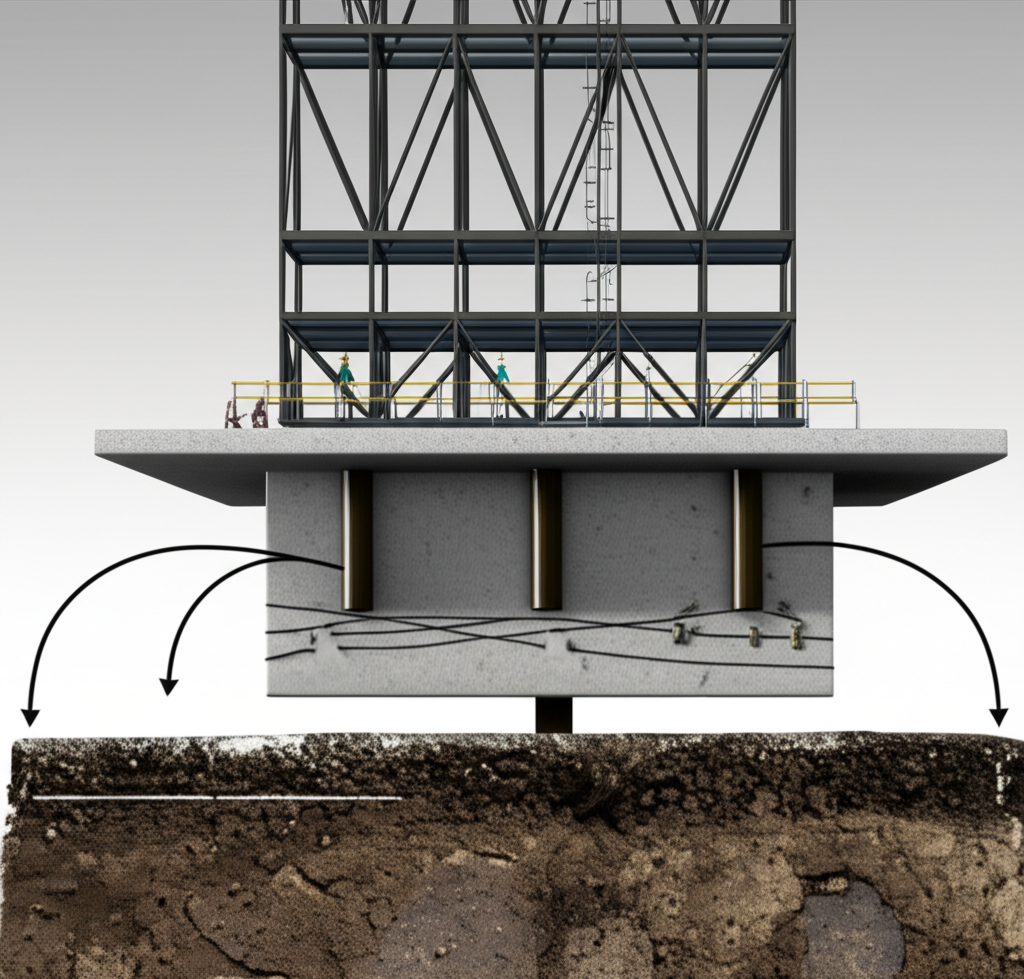
Diploma in Soil-Structure Interaction and Settlements

1.250 $

Competencias y resultados

Qué aprenderás

1. Soil-Structure Interaction Analysis and Design: Settlements and Advanced Solutions

  • Identify and evaluate settlement mechanisms in structures, including consolidation, elastic settlement, and differential settlement.

  • Master advanced soil-structure analysis methods, such as finite element analysis (FEA), to model the complex interaction between soil and structure.

  • Apply design techniques to mitigate the effects of settlement, including the use of piles, foundation slabs, and other geotechnical engineering solutions.

  • Understand and apply the principles of soil mechanics to evaluate the bearing capacity and stability of structures.

  • Analyze the dynamic behavior of structures interacting with soil, considering vibrations and seismic loads.

  • Evaluate and design earth retention systems, including retaining walls, sheet piles, and other retaining structures.

  • Use specialized software for the analysis and design of soil-structure interactions, including geotechnical and structural modeling tools.

  • Study and apply relevant building codes and standards for the design of structures interacting with soil.

  • Develop problem-solving skills in the field of geotechnical and structural engineering, including the identification, analysis, and solution of complex settlement problems.

  • Understand and apply inspection and monitoring techniques to evaluate the performance of structures interacting with soil over time.

2. Settlement Assessment and Optimization: Focus on Soil-Structure Interaction and Structures

  • Understand soil-structure interaction in various types of settlements.
  • Evaluate the response of structures to static and dynamic loads.
  • Analyze failure and deformation mechanisms in structures.
  • Use numerical models to simulate settlement behavior.
  • Optimize the design of structures to improve their performance and durability.
  • Apply finite element analysis (FEA) techniques to evaluate stability and strength.
  • Study the influence of soil properties on settlements.
  • Implement strategies to mitigate risks associated with settlements.
  • Become familiar with relevant building codes and regulations.
  • Develop skills for settlement inspection and monitoring.

3. Comprehensive user-oriented design and validation (from modeling to manufacturing)

You will learn to integrate the entire product development process, from initial model conception to final validation, applying user-centered methodologies. You will develop skills in parametric design, ergonomics, simulation, sustainable materials, 3D visualization, and manufacturing management, ensuring efficient, safe solutions that meet current industry standards.

4. Settlement Analysis and Geotechnical Design: Optimized Soil-Structure Interaction

4. Settlement Analysis and Geotechnical Design: Optimized Soil-Structure Interaction

  • Understand soil-structure interaction to model and analyze the behavior of foundations and buried structures.
  • Evaluate the bearing capacity and stability of slopes, considering soil properties and applied loads.
  • Perform settlement analyses, including immediate, consolidation, and secondary settlements, using appropriate geotechnical models.
  • Design shallow and deep foundations, optimizing their geometry and materials to meet safety and serviceability requirements.
  • Apply numerical analysis methods (e.g., finite elements) to simulate soil and structure behavior and evaluate their interaction.
  • Interpret soil tests
  • Conduct geotechnical analyses (boreholes, laboratory tests) to characterize the soil and obtain the necessary parameters for design.
  • Consider the effects of ground conditions (stratigraphy, water table, presence of water) on the geotechnical design.
  • Optimize the geotechnical design to reduce costs and minimize environmental impact, using innovative and sustainable solutions.
  • Analyze the behavior of structures in seismic terrain, considering soil response and dynamic soil-structure interaction.
  • Prepare geotechnical reports that include analysis results, design recommendations, and safety considerations.

5. Soil-Structure Interaction: Settlement Prediction and Mitigation Strategies

5. Soil-Structure Interaction: Settlement Prediction and Mitigation Strategies

  • Understand the fundamental principles of soil-structure interaction.
  • Analyze soil types and their engineering-relevant properties.
  • Evaluate soil bearing capacity and its influence on foundation design.
  • Predict structural settlements and their long-term behavior.
  • Identify the causes of differential settlements and their effects.
  • Design and implement mitigation strategies to reduce settlements.
  • Use geotechnical models to simulate soil-structure interaction.
  • Apply specialized software for settlement analysis.
  • Study practical cases of soil-structure interaction in different scenarios.
  • Analyze the building codes and regulations related to soil-structure interaction.

6. Soil-Structure Interaction: Settlement Modeling and Advanced Structural Design

You will learn to integrate the entire product development process, from initial model conception to final validation, applying user-centered methodologies. You will develop skills in parametric design, ergonomics, simulation, sustainable materials, 3D visualization, and manufacturing management, ensuring efficient, safe solutions that meet current industry standards.

Para quien va dirigido nuestro:

Diploma in Soil-Structure Interaction and Settlements

    Civil, Geotechnical, Structural, or related Engineers.

    Professionals from construction companies, engineering consultancies, geotechnical studies, and public agencies related to infrastructure.

    Professionals involved in the design, construction, supervision, and analysis of foundations, retaining structures, tunnels, and underground works.

    Engineers who wish to specialize in soil-structure interaction analysis, geotechnical modeling, and settlement evaluation in construction projects.

  • Standards-driven curriculum: you will work with CS-27/CS-29, DO-160, DO-178C/DO-254, ARP4754A/ARP4761, ADS-33E-PRF from the first module.
  • Accreditable laboratories (EN ISO/IEC 17025) with rotor bench, EMC/Lightning pre-compliance, HIL/SIL, vibrations/acoustics.
  • Evidence-oriented TFM: safety case, test plan, compliance dossierand operational limits.
  • Mentored by industry: teachers with experience in rotorcraft, tiltrotor, eVTOL/UAM and flight test.
  • Flexible modality (hybrid/online), international cohorts and support from SEIUM Career Services.
  • Ethics and security: safety-by-design approach, cyber-OT, DIH and compliance as pillars.

Module 1 — Soil-Structure Interaction Analysis and Design: Settlements and Advanced Solutions

1.1 Fundamentals of Soil-Structure Interaction: Principles and Key Concepts
1.2 Soil Properties: Geotechnical Characterization and Modeling
1.3 Loads and Actions: Types of Loads and Their Application in Analysis
1.4 Soil Models: Selection and Application of Constitutive Models
1.5 Settlement Analysis: Calculation and Prediction Methods
1.6 Foundation Design: Types of Foundations and Design Criteria
1.7 Soil-Structure Interaction: Analysis Methods and Advanced Models
1.8 Advanced Solutions: Seismic Design and Risk Mitigation
1.9 Case Studies: Practical Applications and Real-World Examples
1.10 Regulations and Standards: Design Codes and Current Regulations

2.2 Introduction to Settlement Assessment: Types and Causes
2.2 Assessment Methods: Field and Laboratory Tests
2.3 Geotechnical Modeling: Soil Parameters and Simulation
2.4 Settlement Analysis: Theory and Applications
2.5 Design Optimization: Strategies to Minimize Settlements
2.6 Structures and Settlements: Interaction and Effects
2.7 Risk Assessment: Impact of Settlements on Structures
2.8 Case Studies: Analysis of Successful and Unsuccessful Settlements
2.9 Mitigation Solutions: Techniques to Control Settlement
2.20 Conclusions and Future of Settlement Assessment and Optimization

2.3

3.3 Fundamentals of Soil-Structure Interaction (SSI)
3.2 Types of Settlements and Their Causes
3.3 Settlement Analysis Methods
3.4 Geotechnical Design: Principles and Applications
3.5 Structural Design: Considerations for SSI
3.6 Numerical Modeling in SSI
3.7 Case Studies: Application of SSI in Real-World Projects

2.3 Settlement Evaluation: Techniques and Methods
2.2 Geotechnical Parameters and Their Influence on Settlements
2.3 Optimization of Geotechnical Design
2.4 Optimization of Structural Design
2.5 Settlement Mitigation Strategies
2.6 Sensitivity Analysis in SSI
2.7 Case Studies: Project Optimization

3.3 Principles of Earthquake Engineering Applied to Geotechnics
3.2 Seismic Hazard Analysis and Site Evaluation
3.3 Effects of SSI on Seismic Behavior
3.4 Seismic Design of Foundations
3.5 Dynamic Analysis in Seismic Engineering
3.6 Advanced Seismic Modeling
3.7 Case Studies: Seismic Design in Seismic Engineering

4.3 Advanced Geotechnical Design: Principles and Applications
4.2 Optimized Soil-Structure Interaction Analysis
4.3 Foundation Design for Different Soil Types
4.4 Slope Stability and its Relationship with Seismic Engineering
4.5 Soil Improvement Techniques
4.6 Seismic Engineering Modeling and Simulation
4.7 Case Studies: Seismic Engineering in Complex Projects

5.3 Settlement Prediction: Methods and Techniques
5.2 Settlement Mitigation Strategies: Selection and Design
5.3 Settlement Monitoring
5.4 Foundation Design with Mitigation
5.5 ​​Risk Analysis and Impact Assessment
5.6 Strategy Implementation 5.7 Case Studies: Settlement Mitigation in Real-World Projects

6.3 Settlement Modeling: Software and Tools
6.2 Advanced Finite Element Analysis in Settlement Analysis
6.3 Advanced Structural Design: Considerations for Settlement Analysis
6.4 Soil-Structure Interaction in Special Structures
6.5 Foundation Design under Complex Conditions
6.6 Integration of Geotechnical and Structural Models
6.7 Case Studies: Advanced Structural Modeling and Design

7.3 Fundamentals and Principles of Settlement Analysis
7.2 Settlement Analysis
7.3 Geotechnical and Structural Design
7.4 Risk Management in Settlement Analysis Projects
7.5 Settlement Monitoring and Control
7.6 Legal and Regulatory Aspects
7.7 Case Studies: Analysis, Design, and Management of Strategic Settlements

8.3 Advanced Interaction Analysis Soil-Structure Analysis
8.2 Comprehensive Structural Design: Integrating Soil-Structure Analysis
8.3 Foundation Design under Special Conditions
8.4 Differential Settlements and their Effects
8.5 Modeling and Simulation of Soil-Structure Analysis
8.6 Performance Evaluation and Quality Control
8.7 Case Studies: Analysis and Design in Real-World Projects

8.2 Integrated Structural Design: Integrating Soil-Structure Analysis
8.3 Foundation Design under Special Conditions
8.4 Differential Settlements and their Effects
8.5 Modeling and Simulation of Soil-Structure Analysis
8.6 Performance Evaluation and Quality Control
8.7 Case Studies: Analysis and Design in Real-World Projects

4.4 Introduction to Settlement Analysis and Geotechnical Design
4.2 Principles of Soil-Structure Interaction
4.3 Geotechnical Soil Modeling
4.4 Settlement Analysis: Methods and Techniques
4.5 Geotechnical Design for Settlement Mitigation
4.6 Slope Stability and Foundation Design
4.7 Implementation of Geotechnical Engineering Solutions
4.8 Practical Applications and Case Studies
4.9 Regulations and Standards in Geotechnical Design
4.40 Quality Management and Control in Geotechnical Projects

5.5 Introduction to Soil-Structure Interaction (SSI)
5.5 Fundamentals of Settlement Analysis
5.3 Basic Geotechnical Design
5.4 Soil and Structure Models
5.5 Design Criteria and Standards
5.6 Geotechnical Analysis Software
5.7 Practical Examples and Case Studies
5.8 Applications in Real-World Projects
5.9 Introduction to Structural Design
5.50 Conclusions and Future Trends

5.5 Settlement Assessment: Methodologies
5.5 Geotechnical Data Analysis
5.3 Foundation Optimization
5.4 Soil-Structure Interaction: Advanced Models
5.5 Influence of Soil Properties
5.6 Ground Improvement Design
5.7 Risk Analysis and Mitigation
5.8 Case Studies: Evaluation and Optimization
5.9 Structural Design to Minimize Settlements
5.50 Tools Software and Optimization Techniques

3.5 Fundamentals of Earthquake Engineering
3.5 Soil Seismic Response Analysis
3.3 Soil-Structure Interaction under Seismic Conditions
3.4 Seismic Design of Foundations
3.5 Liquefaction Assessment
3.6 Design of Retaining Walls under Earthquakes
3.7 Seismic Protection of Structures
3.8 Seismic Analysis Software
3.9 Seismic Design Codes and Standards
3.50 Case Studies: Earthquake and Geotechnical Engineering

4.5 Geotechnical Design: Principles and Applications
4.5 Design of Shallow Foundations
4.3 Design of Deep Foundations
4.4 Soil-Structure Interaction in Foundations
4.5 Design of Retaining Structures
4.6 Slope Stability
4.7 Differential Settlement Analysis
4.8 Ground Improvement Design
4.9 Software Geotechnical Design
4.50 Practical Cases of Comprehensive Geotechnical Design

5.5 Settlement Prediction: Methods and Techniques
5.5 Constitutive Soil Models
5.3 Consolidation Analysis
5.4 Factors Influencing Settlements
5.5 Settlement Mitigation Strategies
5.6 Ground Improvement and Settlement Control
5.7 Foundation Design to Reduce Settlements
5.8 Settlement Monitoring and Control
5.9 Case Studies: Prediction and Mitigation
5.50 Design and Construction Strategies

6.5 Modeling Soil-Structure Interaction
6.5 Finite Element Models for ISE
6.3 Advanced Structural Analysis
6.4 Design of Structural Elements
6.5 Settlement Design Considerations
6.6 Design of Special Foundations
6.7 Modeling and Design
6.8 Structural Design with ISE: Practical Cases
6.9 Optimization of Structural Design
6.50 Performance-Based Design

7.5 Diploma Fundamentals: Overview
7.5 Settlement Analysis: In-Depth Study
7.3 Advanced Geotechnical Design
7.4 Seismic Engineering in ISE: Applications
7.5 Settlement Mitigation Strategies
7.6 Comprehensive Structural Modeling and Design
7.7 Management of Soil-Structure Interaction Projects
7.8 Risk Analysis and Quality Control
7.9 Case Studies: Analysis, Design, and Management
7.50 Conclusions and Future Trends in ISE

8.5 Advanced Soil-Structure Interaction Analysis
8.5 Modeling of Soil and Complex Structures
8.3 Comprehensive Structural Design: Foundations and Superstructure
8.4 Performance-Based Design in ISE
8.5 Differential Settlements and Design
8.6 Structural Reinforcement and Rehabilitation
8.7 Analysis and Design Software
8.8 Case Studies: Comprehensive Analysis and Design
8.9 Construction Aspects in ISE
8.50 Updated Design Codes and Standards

8.5 Differential Settlements and Design

8.6 Structural Reinforcement and Rehabilitation

8.7 Analysis and Design Software

8.8 Case Studies: Comprehensive Analysis and Design

8.9 Construction Aspects

8.5 Updated Design Codes and Standards

8.5 Differential Settlements and Design

8.6 Structural Reinforcement and Rehabilitation

8.7 Analysis and Design Software

8.8 Case Studies: Comprehensive Analysis and Design

8.9 Construction Aspects in ISE

8.50 Updated Design Codes and Standards

8.50

6.6 Geotechnical Modeling of Soil-Structure Interaction (SSI)
6.2 Advanced Structural Design for Settlements
6.3 Constitutive Models of Soils and Rock
6.4 Finite Element Analysis (FEA) in SSI
6.5 Design of Deep and Shallow Foundations
6.6 Dynamic Soil-Structure Interaction Modeling
6.7 Stability and Displacement Analysis in SSI
6.8 Implementation of Specialized Software in SSI
6.9 Settlement Mitigation Strategies
6.60 Case Studies: Real-World Applications in SSI and Structural Design

7.7 Introduction to Soil-Structure Interaction (SSI) and its importance
7.2 Fundamentals of settlement analysis: types and causes
7.3 Geotechnical design methods for settlement reduction
7.4 Settlement modeling and simulation using specialized software
7.7 Design of shallow and deep foundations
7.6 Practical case studies: foundation analysis and design
7.7 Settlement mitigation strategies: techniques and applications
7.8 Regulations and standards for geotechnical and structural design
7.9 Evaluation of soil bearing capacity and geotechnical parameters
7.70 Economic and sustainability aspects in geotechnical design

2.7 Settlement assessment: methods and techniques
2.2 Analysis of geotechnical data and its impact on settlements
2.3 Optimization of foundation design to minimize settlements
2.4 Soil-Structure Interaction in structures: analysis and evaluation
2.7 Use of numerical models for 2.6 Settlement Mitigation Strategies: Selection and Application
2.7 Case Studies: Settlement Assessment and Optimization
2.8 Durability and Maintenance Considerations in Design
2.9 Sensitivity Analysis and Optimization of Geotechnical Design
2.7 Integration of Settlement Assessment into the Project Life Cycle

3.7 Fundamentals of Seismic Engineering Applied to Seismic Engineering
3.2 Analysis of Soil Seismic Response and its Impact on Structures
3.3 Soil-Structure Interaction under Seismic Conditions
3.4 Seismic Design of Foundations: Criteria and Methods
3.7 Liquefaction Analysis and its Effects on Settlements
3.6 Modeling and Simulation of the Seismic Response of Structures
3.7 Design of Retaining Walls and Retaining Structures in Seismic Zones
3.8 Seismic Codes and their Application in Geotechnical Design
3.9 Case Studies: Seismic Analysis and Design of Foundations
3.70 Seismic Mitigation Strategies to Reduce Settlements

4.7 Principles of Geotechnical Design in Soil-Structure Interaction
4.2 Design of Shallow and Deep Foundations: Criteria and Methods
4.3 Slope Stability Analysis and its Influence on Settlements
4.4 Design of Retaining Structures: Walls and Piles
4.7 Durability and Service Life Considerations in Geotechnical Design
4.6 Modeling and Simulation of Soil and Structural Behavior
4.7 Selection of Geotechnical Materials and Construction Techniques
4.8 Regulations and Standards for Geotechnical Design
4.9 Case Studies: Optimized Geotechnical Design in ISE
4.70 Economic and Environmental Evaluation of Geotechnical Design

7.7 Settlement Prediction: Methods and Techniques
7.2 Factors Influencing Settlements and Their Analysis
7.3 Constitutive Soil Models for Settlement Analysis
7.4 Strategies for Settlement Mitigation: Selection and Application
7.7 Foundation Design to Minimize Settlement
7.6 Soil Improvement Techniques to Reduce Settlement
7.7 Settlement Monitoring and Control: Methods and Tools
7.8 Case Studies: Settlement Prediction and Mitigation
7.9 Risk and Safety Considerations in Settlement Management
7.70 Legal and Regulatory Aspects Related to Settlement

6.7 Soil-Structure Interaction (SSI) Modeling
6.2 Selection and Application of Constitutive Soil Models
6.3 Numerical Settlement Simulation: Software and Techniques
6.4 Advanced Structural Design Considering SSI
6.7 Soil-Structure Interaction Analysis in Special Structures
6.6 Foundation and Structural Design for Adverse Geotechnical Conditions
6.7 Durability and Service Life Considerations in Structural Design
6.8 Case Studies: Advanced Structural Modeling and Design
6.9 Integration of BIM and 3D Modeling in Structural Design
6.70 Regulations and Standards for Structural Design and Soil-Structure Interaction (SSI)

7.7 Introduction to the Diploma Program: Objectives and Scope
7.2 Advanced Soil-Structure Interaction Analysis
7.3 Geotechnical and Structural Design for Settlement Control
7.4 Risk Management and Decision-Making in Geotechnical Projects
7.7 Analysis of Practical Cases and Feasibility Studies
7.6 Application of Specialized Software in Analysis and Design
7.7 Soil Mitigation and Improvement Strategies
7.8 Legal and Regulatory Aspects of Settlement Management
7.9 Supervision and Control of Geotechnical Works
7.70 Presentation and Defense of Final Projects

8.7 Advanced Soil-Structure Interaction (SSI) Analysis
8.2 Methods and Techniques for Settlement Analysis
8.3 Comprehensive Structural Design Considering SSI
8.4 Foundation Design for Complex Geotechnical Conditions
8.7 Soil-Structure Interaction Analysis in Special Structures
8.6 Design of Retaining Walls and Structures Retention
8.7 Modeling and simulation of structural behavior
8.8 Case studies: analysis and design in ISE
8.9 Regulations and standards for geotechnical and structural design
8.70 Economic and sustainability aspects in settlement design

8.8 Fundamentals of Integrated Soil-Structure Interaction (ISI) Design
8.8 Advanced ISI Analysis: Modeling and Simulation
8.3 Integrated Geotechnical Design for Settlements
8.4 Advanced Structural Design: ISI Considerations
8.5 Risk Assessment and Mitigation Strategies for Settlements
8.6 Optimization of Structural Design with ISI
8.7 Project Management and Quality Control in ISI
8.8 Case Studies: Real-World Applications of ISI in Design
8.8 Regulatory and Normative Aspects of ISI
8.80 Future Trends and Advances in Soil-Structure Interaction

9.9 Introduction to Soil-Structure Interaction (SSI) and its importance
9.9 Types of settlements and their causes
9.3 Settlement analysis: methods and tools
9.4 Geotechnical design to mitigate settlements
9.5 Case studies: solutions applied to different soil types

9.9 Settlement assessment: techniques and data analysis
9.9 Optimization of foundation design
9.3 Analysis of soil-structure interaction in different types of structures
9.4 Strategies to minimize settlements
9.5 Impact of settlements on structural integrity

3.9 Fundamentals of earthquake engineering
3.9 Dynamic behavior of soil
3.3 Analysis of soil-structure interaction under earthquakes
3.4 Seismic design of foundations and structures
3.5 Case studies: seismic analysis in different geotechnical contexts

4.9 Geotechnical design: principles and regulations
4.9 Foundation design: types and Criteria
4.3 Slope Stability Analysis
4.4 Retaining Wall Design
4.5 Case Studies: Optimized Geotechnical Design

5.9 Settlement Prediction: Models and Techniques
5.9 Settlement Mitigation Strategies
5.3 Rehabilitation and Reinforcement of Structures Affected by Settlement
5.4 Settlement Monitoring: Techniques and Tools
5.5 Case Studies: Successful Mitigation and Monitoring

6.9 Soil-Structure Interaction Modeling: Software and Techniques
6.9 Advanced Structural Design: Geotechnical Considerations
6.3 Design of Flexible and Rigid Structures
6.4 Finite Element Analysis in Structural Engineering
6.5 Case Studies: Structural Modeling and Design in Different Geotechnical Scenarios

7.9 Analysis, Design, and Management of Structural Engineering Projects
7.9 Planning and Execution of Construction Projects
7.3 Geotechnical Risk Management
7.4 Legal and Regulatory Aspects in Structural Engineering
7.5 Case Studies: Analysis, Design, and Management of complex projects

8.9 Advanced analysis of soil-structure interaction
8.9 Comprehensive structural design: foundations, superstructures, and surrounding environment
8.3 Environmental and sustainability considerations in design
8.4 Case studies: comprehensive design in large-scale projects
8.5 Integrating SSI into the construction life cycle

9.9 Introduction to Soil-Structure Interaction and its importance
9.9 Types of settlements and their causes
9.3 Settlement analysis: methods and tools
9.4 Geotechnical design to mitigate settlements
9.5 Case studies: solutions applied to different soil types

9.9 Geotechnical design to mitigate settlements

7.1 Introduction to the Final Project: Definition of Scope and Objectives
7.2 Review of Key Concepts: Soil-Structure Interaction and Settlements
7.3 Selection and Characterization of the Case Study: Structural Typology and Soil Conditions
7.4 Detailed Soil Analysis: Geotechnical Modeling and Relevant Parameters
7.5 Conceptual Foundation Design: Strategies for Settlement Control
7.6 Modeling of Soil-Structure Interaction: Numerical Analysis and Simulation
7.7 Settlement Evaluation: Prediction and Comparison with Design Criteria
7.8 Detailed Structural Design: Adaptation to Settlement Conditions
7.9 Mitigation and Optimization Strategies: Improvements in Design and Soil Conditions
7.10 Project Presentation and Defense: Results, Conclusions, and Recommendations

  • Hands-on methodology: test-before-you-trust, design reviews, failure analysis, compliance evidence.
  • Software (depending on licenses/partners): MATLAB/Simulink, Python (NumPy/SciPy), OpenVSP, SU2/OpenFOAM, Nastran/Abaqus, AMESim/Modelica, acoustics tools, planning toolchains DO-178C.
  • SEIUM Laboratories: scale rotor bench, vibrations/acoustics, EMC/Lightning pre-compliance, HIL/SIL for AFCS, data acquisition with strain gauging.
  • Standards and compliance: EN 9100, 17025, ISO 27001, GDPR.

Proyectos tipo capstones

Admisiones, tasas y becas

  • Profile: Background in Computer Engineering, Mathematics, Statistics, or related fields; practical experience in NLP and valued information retrieval systems.
  • Documentation: Updated CV, academic transcript, SOP/statement of purpose, project examples or code (optional).
  • Process: Application → Technical evaluation of profile and experience → Technical interview → Review of case studies → Final decision → Enrollment.
  • Fees:
    • Single payment: 10% discount.
    • Payment in 3 installments: No fees; 30% upon registration + 2 equal monthly payments of the remaining 35%.

      Monthly payment: available with a 7% commission on the total; annual review.

      Scholarships: based on academic merit, financial need, and promoting inclusion; agreements with companies in the sector for partial or full scholarships.

      See “Calendar & Calls for Applications,” “Scholarships & Grants,” and “Fees & Financing” in the SEIUM mega-menu.

¿Tienes dudas?

Nuestro equipo está listo para ayudarte. Contáctanos y te responderemos lo antes posible.

Please enable JavaScript in your browser to complete this form.
Scroll to Top