Diploma in VSM, Kaizen and Productivity Improvement

Sobre nuestro Diploma in VSM, Kaizen and Productivity Improvement

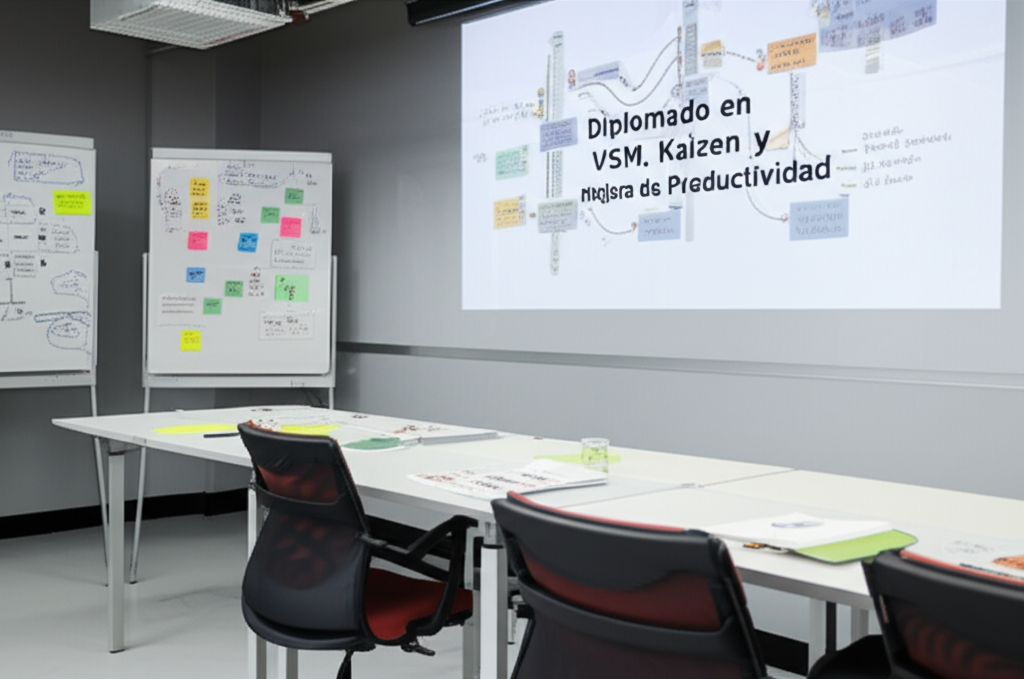
The Diploma in VSM, Kaizen, and Productivity Improvement focuses on learning and applying methodologies to optimize processes and increase operational efficiency in various industries. It emphasizes mastery of key tools such as Value Stream Mapping (VSM), Kaizen, and other continuous improvement techniques. The program trains participants in identifying and eliminating waste, standardizing processes, and implementing changes to achieve greater productivity, quality, and profitability.

Participants will learn to analyze value streams, design improvements, and lead teams in the pursuit of operational excellence. Emphasis is placed on the practical application of concepts through exercises, simulations, and real-world case studies. The diploma program prepares participants for roles such as operations managers, continuous improvement leaders, process analysts, and operational efficiency consultants, increasing their competitiveness in the job market.

Target keywords (natural occurrences in the text): VSM, Kaizen, productivity improvement, continuous improvement, process optimization, operational efficiency, value stream analysis, Lean Manufacturing.
Diploma in VSM, Kaizen and Productivity Improvement

849 $

Competencias y resultados

Qué aprenderás

1. Mastering VSM, Kaizen, and Productivity: Effective Naval Optimization

  • Understand and apply the principles of Value Stream Mapping (VSM) to identify and eliminate waste in naval processes.

  • Utilize the Kaizen methodology for continuous improvement and optimization of operational efficiency in naval environments.

  • Develop strategies to increase productivity in the construction, repair, and maintenance of vessels.

  • Apply quality management tools to ensure process excellence and customer satisfaction.

  • Evaluate and optimize the layout of shipyards and naval workshops to maximize efficiency.

  • Efficiently manage resources, including personnel, materials, and equipment, to reduce costs and lead times.

  • Implement inventory control and supply chain management systems to optimize the availability of materials and spare parts.

  • Identify and eliminate bottlenecks in naval processes to improve workflow.

  • Measure and analyze key performance indicators (KPIs) to evaluate performance and make data-driven improvements.

  • Foster a culture of continuous improvement and employee participation in process optimization.

2. VSM, Kaizen, and Productivity Strategies for Excellence in the Naval Sector

  • Understand and apply the Value Stream Mapping (VSM) methodology to identify and eliminate waste in naval processes.
  • Master the principles of Kaizen and continuous improvement tools to optimize efficiency and quality in naval construction and maintenance.
  • Use Key Performance Indicators (KPIs) to measure and improve productivity in naval sector operations, including project and resource management.
  • Analyze and optimize workflows, production planning, and control to reduce time and costs in the naval industry.
  • Develop skills for identifying and solving problems, applying root cause analysis techniques and improvement tools.
  • Integrate lean manufacturing and lean management strategies to achieve a culture of continuous improvement and operational excellence in the naval sector.

3. Comprehensive user-oriented design and validation (from modeling to manufacturing)

You will learn to integrate the entire product development process, from initial model conception to final validation, applying user-centered methodologies. You will develop skills in parametric design, ergonomics, simulation, sustainable materials, 3D visualization, and manufacturing management, ensuring efficient, safe solutions that meet current industry standards.

4. Naval Optimization: Mastering VSM, Kaizen, and Productivity

## 4. Naval Optimization: Mastering VSM, Kaizen, and Productivity

You will learn to:

1. Master the key tools and methodologies for process optimization in the naval sector, focusing on continuous improvement and operational efficiency.

2. Apply the Value Stream Mapping (VSM) methodology to identify and eliminate waste in workflows, optimizing value delivery to the customer.

3. Implement Kaizen principles to foster continuous improvement at all levels of the organization, promoting a culture of efficiency and excellence.

4. Analyze and improve productivity in key areas of naval operations, using key performance indicators (KPIs) and management tools.

5. Identify and analyze the root causes of problems, using tools such as the Ishikawa (fishbone) diagram and the 5 Whys. 6. Develop and implement solutions to improve process efficiency, reduce costs, and enhance quality in shipbuilding and maintenance.

7. Apply project management techniques to implement process improvements, ensuring adherence to deadlines and budgets.

8. Utilize cutting-edge software tools and technologies for data analysis and process optimization in the naval sector.

9. Understand the principles of quality management and their application in the naval industry, including ISO standards.

10. Apply continuous improvement to supply chain management, reducing lead times and associated costs.

5. Implementation of VSM, Kaizen, and Productivity: Advances in the Shipbuilding Industry

  • Master the fundamentals of Value Stream Mapping (VSM) in the shipbuilding industry, identifying and eliminating waste to optimize processes.
  • Apply the Kaizen methodology for continuous improvement, implementing optimization cycles and fostering a culture of efficiency.
  • Analyze key productivity metrics, including production efficiency, cycle times, and Overall Equipment Effectiveness (OEE).
  • Understand and apply productivity improvement tools such as 5S, SMED, and visual management.
  • Evaluate and improve production planning and scheduling in complex shipbuilding environments.
  • Implement strategies for inventory management and reduction of costs in the naval supply chain.
  • Analyze successful case studies in the naval industry, applying the concepts learned to real-world scenarios.
  • Develop problem-solving and data-driven decision-making skills to improve productivity.
  • Identify opportunities for continuous improvement in the naval industry through innovation and process optimization.

6. Naval Optimization: VSM, Kaizen, and Productivity for Success

You will learn to integrate the entire product development process, from initial model conception to final validation, applying user-centered methodologies. You will develop skills in parametric design, ergonomics, simulation, sustainable materials, 3D visualization, and manufacturing management, ensuring efficient, safe solutions that meet current industry standards.

Para quien va dirigido nuestro:

Diploma in VSM, Kaizen and Productivity Improvement

  • Graduates in Aerospace Engineering, Mechanical Engineering, Industrial Engineering, Automation Engineering, or related fields.
  • Professionals from OEM rotorcraft/eVTOL, MRO, consulting, technology centers.
  • Flight Testing, certification, avionics, control, and dynamics seeking specialization.
  • Regulators/authorities and UAM/eVTOL professionals requiring compliance skills.

Recommended qualifications: foundation in aerodynamics, control, and structures; ES/EN B2+/C1. We offer bridging tracks if needed.

  • Standards-driven curriculum: you will work with CS-27/CS-29, DO-160, DO-178C/DO-254, ARP4754A/ARP4761, ADS-33E-PRF from the first module.
  • Accreditable laboratories (EN ISO/IEC 17025) with rotor bench, EMC/Lightning pre-compliance, HIL/SIL, vibrations/acoustics.
  • Evidence-oriented TFM: safety case, test plan, compliance dossierand operational limits.
  • Mentored by industry: teachers with experience in rotorcraft, tiltrotor, eVTOL/UAM and flight test.
  • Flexible modality (hybrid/online), international cohorts and support from SEIUM Career Services.
  • Ethics and security: safety-by-design approach, cyber-OT, DIH and compliance as pillars.

1.1 Definition and Context: Importance of Naval Optimization
1.2 Introduction to Value Stream Mapping (VSM) in the Naval Sector
1.3 Fundamentals of Kaizen and its Application in the Naval Industry
1.4 Productivity Principles and their Relevance to the Naval Sector
1.5 Interconnection of VSM, Kaizen, and Productivity: Integrated Strategies
1.6 Challenges and Opportunities in Current Naval Optimization
1.7 Key Benefits of Implementing VSM, Kaizen, and Productivity
1.8 Continuous Improvement Methodologies Applied to the Naval Sector
1.9 Initial Tools and Techniques for Naval Process Analysis
1.10 Case Study: Success Stories in Naval Optimization

2.2 Definition of Naval Optimization and its Importance
2.2 Current Overview of the Naval Sector and its Challenges
2.3 Introduction to VSM, Kaizen, and Productivity: Key Concepts
2.4 Course Methodology and Learning Objectives
2.5 Importance of Continuous Improvement in the Naval Industry
2.6 Benefits of Optimization in Costs and Efficiency

2.2 Fundamentals of Value Stream Mapping (VSM)
2.2 Identifying the Value Stream in Naval Processes
2.3 Mapping the Current State: Detailed Analysis
2.4 Identifying Waste (Muda) and Bottlenecks
2.5 Designing the Future State: Eliminating Waste
2.6 VSM Tools: Key Diagrams and Symbols
2.7 Implementing VSM in Naval Workshops and Shipyards
2.8 Case Studies: Applying VSM in the Industry

3.2 Introduction to Kaizen: Philosophy and Principles
3.2 Kaizen Methodology: Steps and Tools
3.3 Kaizen in the Naval Context: Adaptation and Application
3.4 Kaizen Techniques: 5S, Poka-Yoke, and Others
3.5 Kaizen Events: Planning and Execution
3.6 Kaizen for Waste Elimination in Operations
3.7 Kaizen in Naval Quality Improvement
3.8 Practical Examples of Kaizen in the Naval Industry

4.2 Root Cause Analysis: Techniques and Tools
4.2 Process Management: BPM and its Naval Application
4.3 Key Performance Indicators (KPIs) in the Naval Industry
4.4 Naval Production Scheduling and Planning Techniques
4.5 Inventory Management and Efficient Warehousing
4.6 Lean Manufacturing and its Adaptation to the Naval Sector
4.7 Workflow and Productivity Optimization
4.8 Use of Software and Technologies for Naval Productivity

5.2 Planning VSM Implementation in Naval Processes
5.2 Design and Implementation of Kaizen Events
5.3 Change Management: Overcoming Resistance to Change
5.4 Monitoring and Control of Implementation
5.5 ​​Integration of VSM and Kaizen for Continuous Improvement
5.6 Evaluation of Results and Impact Measurement
5.7 Process Documentation and Standardization
5.8 Examples of VSM and Kaizen Implementation in Shipyards

6.2 Establishing Naval Productivity Indicators
6.2 Measuring Performance in Different Naval Areas
6.3 Data and Trend Analysis
6.4 Use of Management Software for Productivity Control
6.5 Statistical Process Control (SPC)
6.6 Productivity and Efficiency Audits
6.7 Identification of Areas for Improvement
6.8 Reporting and Presentation of Results

7.2 Concept of Continuous Improvement: PDCA Cycle
7.2 Culture of Continuous Improvement Fostering Participation
7.3 Tools for Continuous Improvement: Flowcharts, etc.

7.4 Implementing a Suggestion System
7.5 Knowledge Management and Organizational Learning
7.6 Developing Continuous Improvement Teams
7.7 Strategies for Sustaining Continuous Improvement
7.8 The Role of Leadership in Continuous Improvement

8.2 Success Stories in Naval Optimization
8.2 Practical Applications of VSM and Kaizen
8.3 Analysis of Results and Lessons Learned
8.4 Common Challenges and Barriers in Implementation
8.5 Adapting Strategies to Different Types of Shipyards
8.6 Impact of Optimization on Profitability
8.7 Future Trends in Naval Optimization
8.8 Conclusions and Next Steps

3.3 VSM Principles: Mapping the Naval Value Stream.

3.2 Identifying Waste (Muda) in Naval Processes.

3.3 Introduction to Kaizen: A Philosophy of Continuous Improvement in the Sector.

3.4 Kaizen Tools: 5S, Kanban, and Others Applied to the Naval Industry.

3.5 Naval Productivity: Key Metrics and Their Measurement.

3.6 Current State Analysis: Creating the Current Value Stream Map.

3.7 Designing the Future State: Implementing Improvements with Kaizen.

3.8 Action Plan: Implementing VSM and Kaizen in Naval Projects.

3.9 Change Management: Ensuring the Sustainability of Improvements.

3.30 Case Study: Successful Applications of VSM and Kaizen in the Naval Sector.

4.4 VSM Principles: Mapping the Naval Value Chain
4.2 Introduction to Kaizen: The Philosophy of Continuous Improvement in the Naval Sector
4.3 Productivity Tools: Application in Naval Operations
4.4 Waste Identification: Mapping and Elimination in Naval Processes
4.5 VSM Implementation: Creating a Current State Map of the Naval Sector
4.6 Kaizen Techniques: Improvement Events and Workshops in the Naval Environment
4.7 Productivity Metrics: Measuring and Monitoring Naval Performance
4.8 Designing the Future State Map: Optimizing the Naval Value Chain
4.9 Implementation and Control: Change Management and Sustainability in Naval Improvement
4.40 Case Studies: Practical Application in the Naval Sector

5.5 Introduction to VSM and Kaizen in the Shipbuilding Industry
5.5 Fundamental Principles of VSM: Value Stream Mapping in Shipyards
5.3 Identifying Waste (Muda) in Shipbuilding Operations
5.4 Kaizen Tools for Continuous Improvement in Shipbuilding
5.5 Applying VSM: Value Stream Mapping of a Specific Process
5.6 Kaizen Workshops: Implementing Improvements in Key Areas
5.7 Key Performance Indicators (KPIs) for Measuring Success
5.8 Integrating VSM and Kaizen: A Holistic Approach
5.9 Case Studies: Process Improvement in the Shipbuilding Industry
5.50 Sustainability and Efficiency: The Future of VSM and Kaizen in the Sector

5.5

6.6 Introduction to Value Stream Mapping (VSM) in the Shipbuilding Industry
6.2 Key Principles of Kaizen and Their Application
6.3 Identifying Waste and Improvement Opportunities
6.4 A Culture of Continuous Improvement in Naval Environments
6.5 First Steps for Implementing VSM and Kaizen

2.6 Value Stream Mapping in Specific Naval Processes
2.2 Identifying Bottlenecks and Constraints
2.3 Time and Process Analysis in Shipbuilding
2.4 Optimizing the Flow of Materials and Information
2.5 Designing an Ideal Future State

3.6 Kaizen Methodology: Steps and Tools
3.2 Implementing PDCA Cycles (Plan, Do, Check, Act)
3.3 Problem-Solving Techniques in the Shipbuilding Industry
3.4 Change Management and Resistance to Change
3.5 Fostering Participation and Commitment Personnel

4.6 Root Cause Analysis Techniques (Ishikawa, 5 Whys)
4.2 Design of Efficient and Standardized Processes
4.3 Visual Management and Control in the Naval Environment
4.4 Introduction to Lean Tools in Naval Production
4.5 Productivity Measurement: Key Performance Indicators (KPIs)

5.6 Case Studies: VSM Implementation in Shipyards
5.2 Practical Application of Kaizen in Naval Repair
5.3 Examples of Continuous Improvement in Naval Logistics
5.4 Process Optimization in Naval Project Management
5.5 Development of VSM and Kaizen Pilot Projects

6.6 Definition and Selection of Productivity Indicators
6.2 Performance Measurement Tools
6.3 Data Analysis and Data-Driven Decision Making
6.4 Monitoring and Control of Naval Productivity
6.5 Evaluation of Return on Investment (ROI) in Improvements Productivity

7.6 Developing a Continuous Improvement Strategy
7.2 Setting Goals and Objectives
7.3 Managing Improvement Projects in the Naval Sector
7.4 Integrating Continuous Improvement into the Organizational Culture
7.5 Sustainability of Implemented Improvements

8.6 Case Studies: Successful Applications of VSM and Kaizen
8.2 Analysis of Results and Lessons Learned
8.3 Adapting Best Practices to Different Naval Contexts
8.4 Vision for the Future of Continuous Improvement in the Naval Sector
8.5 Presentation of Final Projects and Conclusions

7.7 VSM Principles: Value Stream Mapping in Shipyards
7.2 Identifying Waste (Muda) in Naval Operations
7.3 Kaizen: Implementing Rapid and Continuous Improvements
7.4 Productivity Tools: 7S, Kanban, and Visual Control
7.7 VSM in the Naval Supply Chain: Analysis and Optimization
7.6 Applying Kaizen in Ship Design and Manufacturing
7.7 Measuring and Evaluating Productivity in the Naval Sector
7.8 Case Studies: Successful Implementation of VSM and Kaizen
7.9 Change Management: Adopting VSM and Kaizen in Naval Companies
7.70 The Future of Naval Optimization: Trends and Challenges

8.8 VSM Principles: Value Stream Mapping in the Naval Context
8.8 Identifying Waste (Muda) in Naval Operations
8.3 Kaizen Tools: Implementing Continuous Improvement
8.4 Naval Productivity: Metrics and Performance Evaluation
8.5 Designing a Future State: VSM and Kaizen in Planning
8.6 Implementing Change: Kaizen Projects in the Naval Sector
8.7 Managing Resistance to Change in Process Improvement
8.8 Results and Sustainability: Monitoring and Maintaining Improvement
8.8 Case Studies: Applying VSM and Kaizen in the Naval Industry
8.80 Strategies for Long-Term Continuous Improvement in Naval Environments

9.9 Introduction to Value Stream Mapping (VSM) in the Naval Context
9.9 Kaizen Principles and Their Application in the Naval Industry
9.3 Productivity Metrics Specific to the Naval Sector
9.4 Identifying Waste (Muda) in Naval Processes
9.5 Applying VSM for Process Optimization
9.6 Implementing Kaizen for Continuous Improvement
9.7 Tools and Techniques for Increasing Productivity
9.8 Analysis of Practical Case Studies of VSM, Kaizen, and Productivity Implementation
9.9 Strategies for the Sustainability and Scalability of Improvements
9.90 Evaluating Results and Monitoring Key Performance Indicators (KPIs)

9.10

1.1 Introduction to Comprehensive Naval Optimization with VSM, Kaizen, and Productivity
1.2 Value Stream Mapping (VSM) in Naval Processes
1.3 Kaizen Principles for Continuous Improvement in the Naval Industry
1.4 Productivity Tools and Techniques Applied to Naval Optimization
1.5 Identifying and Eliminating Waste (Muda) in Naval Operations
1.6 Designing an Optimized Future State Using VSM and Kaizen
1.7 Implementing Changes and Managing Change in Naval Optimization
1.8 Measuring and Monitoring Performance in Naval Optimization
1.9 Developing an Action Plan for Continuous Naval Improvement
1.10 Case Study: Comprehensive Naval Optimization Project

1.10

  • Hands-on methodology: test-before-you-trust, design reviews, failure analysis, compliance evidence.
  • Software (depending on licenses/partners): MATLAB/Simulink, Python (NumPy/SciPy), OpenVSP, SU2/OpenFOAM, Nastran/Abaqus, AMESim/Modelica, acoustics tools, planning toolchains DO-178C.
  • SEIUM Laboratories: scale rotor bench, vibrations/acoustics, EMC/Lightning pre-compliance, HIL/SIL for AFCS, data acquisition with strain gauging.
  • Standards and compliance: EN 9100, 17025, ISO 27001, GDPR.

Proyectos tipo capstones

Admisiones, tasas y becas

  • Profile: Background in Computer Engineering, Mathematics, Statistics, or related fields; practical experience in NLP and valued information retrieval systems.
  • Documentation: Updated CV, academic transcript, SOP/statement of purpose, project examples or code (optional).
  • Process: Application → Technical evaluation of profile and experience → Technical interview → Review of case studies → Final decision → Enrollment.
  • Fees:
    • Single payment: 10% discount.
    • Payment in 3 installments: No fees; 30% upon registration + 2 equal monthly payments of the remaining 35%.

      Monthly payment: available with a 7% commission on the total; annual review.

      Scholarships: based on academic merit, financial need, and promoting inclusion; agreements with companies in the sector for partial or full scholarships.

      See “Calendar & Calls for Applications,” “Scholarships & Grants,” and “Fees & Financing” in the SEIUM mega-menu.

¿Tienes dudas?

Nuestro equipo está listo para ayudarte. Contáctanos y te responderemos lo antes posible.

Please enable JavaScript in your browser to complete this form.
Scroll to Top