
Diploma in Ventilation, Safety and Emergencies in Tunnels

Sobre nuestro Diploma in Ventilation, Safety and Emergencies in Tunnels

The Diploma in Tunnel Ventilation, Safety, and Emergencies provides comprehensive training in the design and management of tunnel safety systems, covering ventilation, fire control, and emergency protocols. It focuses on the application of technologies for risk analysis, emergency scenario simulation, and the optimization of road and pedestrian safety within tunnels. It focuses on standards such as NFPA and EN.

The program offers practical knowledge in fire detection, fire suppression, longitudinal and transverse ventilation, and personnel evacuation systems. This course prepares professionals to respond to vehicle accidents and chemical incidents in tunnels, including the use of protective equipment and coordination with emergency services. The training covers everything from tunnel design to operation and maintenance.

Target keywords (natural occurrences in the text): tunnel ventilation, tunnel safety, fire control, emergency protocols, tunnel management, risk assessment, tunnel design, tunnel evacuation.
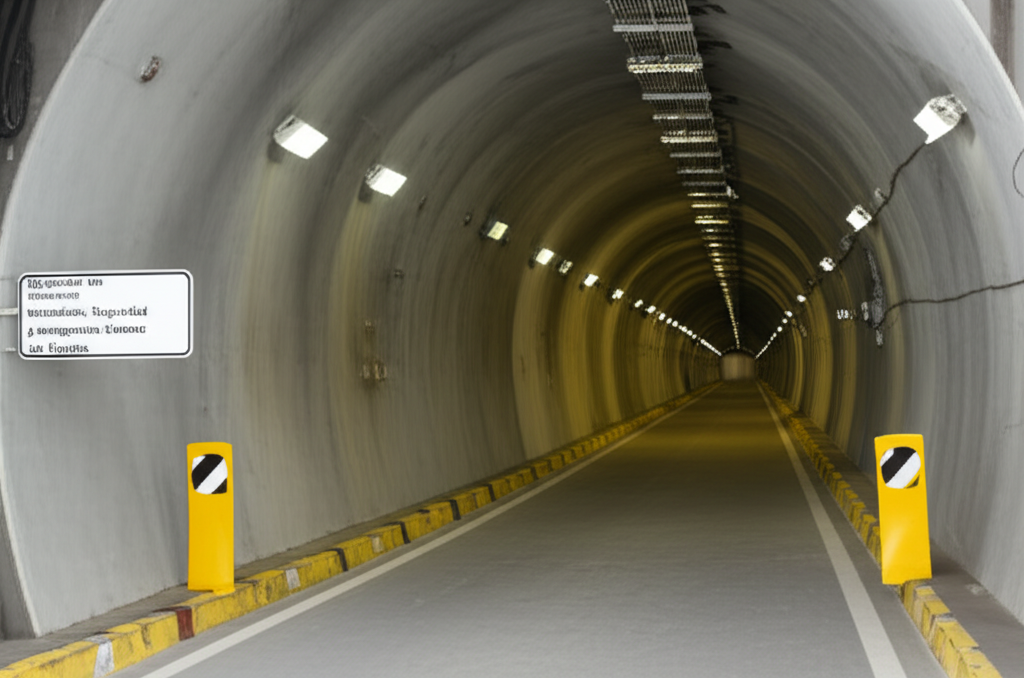
Diploma in Ventilation, Safety and Emergencies in Tunnels

1.180 $

Competencias y resultados

Qué aprenderás

1. Tunnel Ventilation, Safety, and Emergencies: Mastering the Diploma Course

  • Identify and evaluate tunnel ventilation systems, including their design, operation, and maintenance, to ensure air quality and safety.
  • Understand the safety regulations and standards applicable to tunnels, covering aspects such as fire prevention, risk management, and civil protection.
  • Analyze emergency procedures and protocols in tunnels, including the evacuation of people, medical care, and effective communication in crisis situations.
  • Master fire control techniques in tunnels, from early detection to extinguishment, including the use of specialized equipment and coordination with emergency services.
  • Apply the acquired knowledge to the planning and execution of emergency drills and exercises in tunnels, with the aim of improving preparedness and response to real-life situations.

2. Diploma in Tunnels: Ventilation, Safety, and Emergency Response

## What Will You Learn in the Tunnel Ventilation, Safety, and Emergency Response Diploma Program?

1. **Tunnel Ventilation:**

* Understand the fundamental principles of tunnel ventilation, including airflow, air quality, and contaminants.

* Analyze different ventilation systems, such as longitudinal, transverse, and semi-transverse ventilation.

* Evaluate the efficiency and effectiveness of ventilation systems based on specific tunnel conditions.

* Design and optimize ventilation systems to control contaminant concentration, temperature, and visibility.

* Apply simulation models to predict airflow behavior and optimize ventilation design.

2. **Tunnel Safety:**

* Identify and assess the risks associated with tunnel operation, including fires, explosions, collisions, and structural failures.

* Understand the international safety regulations and standards applicable to tunnels. * Implement safety measures to prevent accidents and minimize their consequences, such as fire detection systems, signage, lighting, and traffic control systems.

* Design and maintain safety systems, such as emergency management systems, communication systems, and evacuation systems.

* Conduct risk analyses and develop detailed safety plans for specific tunnels.

3. **Tunnel Emergency Response:**

* Develop emergency response plans for various scenarios, including fires, traffic accidents, hazardous material leaks, and terrorist attacks.

* Coordinate emergency response with emergency services, such as fire departments, police, and ambulances.

* Implement efficient and safe evacuation procedures.

* Use specialized rescue equipment, such as self-contained breathing apparatus and hazardous material detection equipment.

* Conduct drills and training exercises to prepare tunnel personnel and users to respond to emergencies.

* Manage communication with the public during and after an emergency.

4. **Tunnel Design and Operation:**

* Understand the principles of tunnel structural design, including material selection, excavation design, and lining design.

* Analyze the geotechnical factors that influence tunnel design and construction, such as soil stability and the presence of groundwater.

* Apply tunnel construction techniques, such as tunnel boring machines (TBMs), cut-and-cover methods, and cut-and-cover methods.

* Understand the electromechanical systems used in tunnels, such as lighting, ventilation, signaling, and control systems.

* Manage tunnel operation and maintenance, including inspection, repair, and rehabilitation.

* Apply innovative technologies in tunnel design and operation, such as 3D modeling, artificial intelligence, and the Internet of Things (IoT).

3. Comprehensive user-oriented design and validation (from modeling to manufacturing)

You will learn to integrate the entire product development process, from initial model conception to final validation, applying user-centered methodologies. You will develop skills in parametric design, ergonomics, simulation, sustainable materials, 3D visualization, and manufacturing management, ensuring efficient, safe solutions that meet current industry standards.

4. Diploma in Tunnel Ventilation and Safety: Design and Emergency Management

4. Diploma in Tunnel Ventilation and Safety: Design and Emergency Management

  • Fundamentals of tunnel ventilation: principles, types, and systems.
  • Design of ventilation systems: calculations, modeling, and simulation.
  • Safety management in tunnels: regulations, risks, and preventive measures.
  • Emergency planning and response: fires, accidents, and evacuation.
  • Design of safe tunnels: structure, lighting, and signage.
  • Ventilation for fire control: strategies and optimization.
  • Operation and maintenance of ventilation and safety systems.
  • Case studies: analysis of existing tunnels and lessons learned.
  • Legal and regulatory framework: national and international regulations.
  • New technologies and trends in tunnel ventilation and safety.

5. Diploma in Tunnels: Comprehensive Strategies for Ventilation, Safety, and Emergencies

**5. Diploma in Tunnels: Comprehensive Strategies for Ventilation, Safety, and Emergencies**

  • Understand the fundamentals of tunnel ventilation, including the design and calculation of longitudinal, transverse, and semi-transverse ventilation systems.
  • Master tunnel safety management techniques, encompassing risk identification and assessment, implementation of preventive measures, and emergency response.
  • Analyze fire control strategies in tunnels, including early detection, fire suppression, and evacuation.
  • Study tunnel lighting and signaling systems, with an emphasis on road safety and visibility in adverse conditions.
  • Learn about communication and control systems in tunnels, including traffic management, environmental parameter monitoring, and systems integration.
  • Acquire knowledge of the legislation and regulations applicable to tunnel construction and operation, both nationally and internationally. international.
  • Develop skills for emergency planning and management in tunnels, including the creation of contingency plans and the coordination of response teams.

    Explore the latest technologies and trends in tunnel construction and operation, such as intelligent ventilation, remote monitoring, and virtual reality.

6. Diploma in Tunnels: Ventilation, Safety, and Crisis Management

You will learn to integrate the entire product development process, from initial model conception to final validation, applying user-centered methodologies. You will develop skills in parametric design, ergonomics, simulation, sustainable materials, 3D visualization, and manufacturing management, ensuring efficient, safe solutions that meet current industry standards.

Para quien va dirigido nuestro:

Diploma in Ventilation, Safety and Emergencies in Tunnels

  • Professionals and technicians with experience in tunnel management and operation, including civil, mining, and safety engineers, and maintenance personnel.
  • Personnel from tunnel construction and concession companies, with responsibilities in design, construction, operation, and maintenance.
  • Public officials and technical staff from regulatory and oversight bodies, involved in tunnel supervision and regulations.
  • Professionals from security and emergency services companies, such as firefighters, civil protection personnel, and specialized tunnel rescue teams.
  • Standards-driven curriculum: you will work with CS-27/CS-29, DO-160, DO-178C/DO-254, ARP4754A/ARP4761, ADS-33E-PRF from the first module.
  • Accreditable laboratories (EN ISO/IEC 17025) with rotor bench, EMC/Lightning pre-compliance, HIL/SIL, vibrations/acoustics.
  • Evidence-oriented TFM: safety case, test plan, compliance dossierand operational limits.
  • Mentored by industry: teachers with experience in rotorcraft, tiltrotor, eVTOL/UAM and flight test.
  • Flexible modality (hybrid/online), international cohorts and support from SEIUM Career Services.
  • Ethics and security: safety-by-design approach, cyber-OT, DIH and compliance as pillars.

Module 1 — Introduction to Tunnel Ventilation and Safety

1.1 Importance of tunnel ventilation: objectives and main functions.

1.2 Basic principles of ventilation: laminar, turbulent, and transition flow.

1.3 Types of tunnel ventilation: longitudinal, transverse, and semi-transverse.

1.4 Ventilation system design: calculations and initial considerations.

1.5 International standards and regulations for tunnel ventilation.

1.6 Introduction to tunnel safety systems: detection and alarm.

1.7 Common risks and hazards in tunnels: fires, accidents, gas leaks.

1.8 Initial risk assessment and vulnerability analysis.

1.9 Introduction to emergency plans and their importance.

1.10 Overview of the applicable legal and regulatory framework.

2.2 Fundamentals of Tunnel Ventilation: Introduction and Objectives
2.2 Design and Selection of Ventilation Systems: Types and Applications
2.3 Calculating Ventilation Demand: Key Factors
2.4 Airflow in Tunnels: Modeling and Simulation
2.5 Contaminants in Tunnels: Types, Sources, and Monitoring
2.6 Air Quality Control: Systems and Technologies
2.7 Longitudinal Ventilation: Concepts and Applications
2.8 Transverse Ventilation: Design and Considerations
2.9 Semi-Transverse Ventilation: Strategies and Efficiency
2.20 Maintenance and Operation of Ventilation Systems

2.3 Maintenance and Operation of Ventilation Systems

3.3 Importance of Tunnel Safety
3.2 Applicable Regulatory and Legislative Framework
3.3 Types of Tunnels and Their Associated Risks
3.4 Key Components of Tunnel Safety
3.5 Fundamental Principles of Tunnel Ventilation
3.6 Early Warning and Detection Systems
3.7 Introduction to Emergency Management in Tunnels
3.8 Case Studies and Practical Examples
3.9 Risk Analysis and Vulnerability Assessment
3.30 Trends and Future Challenges in Tunnel Safety

4.4 Tunnel Ventilation Principles: Design and Optimization
4.2 Tunnel Fire Detection and Suppression Systems
4.3 Tunnel Evacuation and Rescue Protocols
4.4 Safety System Design: Barriers, Signaling, and Traffic Control
4.5 Emergency Management: Planning and Operational Response
4.6 Risk Analysis and Safety Assessment in Tunnels
4.7 Communication and Coordination in Emergency Situations
4.8 Tunnel Safety Legislation and Regulations
4.9 Drills and Testing of Safety Systems
4.40 Case Studies: Incident Analysis and Continuous Improvement

5.5 International and National Regulations Applicable to Tunnels
5.5 Ventilation System Design: Fundamental Principles
5.3 Types of Ventilation Systems: Longitudinal, Transverse, Semi-transverse
5.4 Calculation of Ventilation Parameters: Flow Rate, Air Velocity
5.5 Modeling and Simulation of Tunnel Ventilation
5.6 Effects of Ventilation on Air Quality and Visibility
5.7 Design of Ventilation Systems for Emergency Situations
5.8 Maintenance and Operation of Ventilation Systems
5.9 Energy Efficiency and Sustainability in Ventilation Systems
5.50 Case Studies: Analysis of Ventilation Systems in Existing Tunnels

6.6 International and National Legislation Applicable to Tunnels
6.2 Tunnel Design and Construction Regulations
6.3 Tunnel Safety Standards
6.4 Fundamental Principles of Tunnel Ventilation
6.5 Fundamentals of Fire Safety in Tunnels
6.6 Detection and Alarm Systems in Tunnels
6.7 Tunnel Risk Assessment: Methodologies and Tools
6.8 Introduction to Emergency Management in Tunnels
6.9 Design Principles for Tunnel Resilience
6.60 Case Studies: Tunnel Incident Analysis

6.7

7.7 Legal Framework and International Regulations for Tunnels
7.2 Design of Ventilation Systems: Types and Applications
7.3 Calculation and Modeling of Tunnel Ventilation
7.4 Assessment of Air Quality and Contaminants in Tunnels
7.7 Longitudinal and Transverse Ventilation Strategies
7.6 Ventilation Control and Monitoring Systems
7.7 Maintenance and Optimization of Ventilation Systems
7.8 Energy Efficiency in Tunnel Ventilation
7.9 Case Studies: Examples of Successful and Problematic Ventilation
7.70 Trends and Technological Advances in Tunnel Ventilation

8.8 Fundamentals of Tunnel Ventilation: Principles and Types
8.8 Ventilation System Design: Calculation and Sizing
8.3 Ventilation Control and Monitoring Systems
8.4 Tunnel Safety: International Standards and Regulations
8.5 Emergency Signaling and Communication Systems
8.6 Safety Protocols: Incident Management and Evacuation
8.7 Applicable Regulations: Relevant Codes and Regulations
8.8 Risk Analysis and Safety Assessment
8.8 Inspection and Maintenance of Ventilation and Safety Equipment
8.80 Case Studies: Experiences and Lessons Learned

9.9 Legal Framework and International Regulations for Tunnels
9.9 Design and Operation of Tunnel Ventilation Systems
9.3 Risk Assessment and Safety Analysis in Tunnels
9.4 Fire Detection and Early Warning Systems in Tunnels
9.5 Implementation of Safety and Evacuation Protocols
9.6 Emergency Management and First Aid in Tunnels
9.7 Signage and Effective Communication in Tunnel Environments
9.8 Preventive and Corrective Maintenance of Safety Equipment
9.9 Case Studies: Incident Analysis and Lessons Learned
9.90 Trends and Technological Advances in Tunnel Safety

1. Emergency scenario planning in tunnels
2. Risk and vulnerability assessment in tunnels
3. Development of incident response protocols
4. Emergency drills and exercises in tunnels
5. Coordination and communication in crisis situations
6. Resource management and logistics in emergencies
7. Legal and regulatory framework for emergency planning in tunnels
8. Integration of security and surveillance technologies
9. Design of evacuation and rescue plans
10. Post-incident analysis and continuous improvement

  • Hands-on methodology: test-before-you-trust, design reviews, failure analysis, compliance evidence.
  • Software (depending on licenses/partners): MATLAB/Simulink, Python (NumPy/SciPy), OpenVSP, SU2/OpenFOAM, Nastran/Abaqus, AMESim/Modelica, acoustics tools, planning toolchains DO-178C.
  • SEIUM Laboratories: scale rotor bench, vibrations/acoustics, EMC/Lightning pre-compliance, HIL/SIL for AFCS, data acquisition with strain gauging.
  • Standards and compliance: EN 9100, 17025, ISO 27001, GDPR.

Proyectos tipo capstones

Admisiones, tasas y becas

  • Profile: Background in Computer Engineering, Mathematics, Statistics, or related fields; practical experience in NLP and valued information retrieval systems.
  • Documentation: Updated CV, academic transcript, SOP/statement of purpose, project examples or code (optional).
  • Process: Application → Technical evaluation of profile and experience → Technical interview → Review of case studies → Final decision → Enrollment.
  • Fees:
    • Single payment: 10% discount.
    • Payment in 3 installments: No fees; 30% upon registration + 2 equal monthly payments of the remaining 35%.

      Monthly payment: available with a 7% commission on the total; annual review.

      Scholarships: based on academic merit, financial need, and promoting inclusion; agreements with companies in the sector for partial or full scholarships.

      See “Calendar & Calls for Applications,” “Scholarships & Grants,” and “Fees & Financing” in the SEIUM mega-menu.

¿Tienes dudas?

Nuestro equipo está listo para ayudarte. Contáctanos y te responderemos lo antes posible.

Please enable JavaScript in your browser to complete this form.
Scroll to Top