Course on Railway Incident and Accident Investigation
About ourCourse on Railway Incident and Accident Investigation
The Railway Incident and Accident Investigation Course
The course trains professionals capable of analysing events in the railway environment with technical and methodological rigor, identifying root causes, contributing factors, and barrier failures (technical, human, and organisational) to turn each incident or accident into a documented learning and prevention process. Railway investigation is not just about “determining what happened,” but rather accurately reconstructing how and why it occurred, what decisions or conditions allowed it, which warning signals were ignored, and what corrective and preventive actions can reduce the likelihood of recurrence.
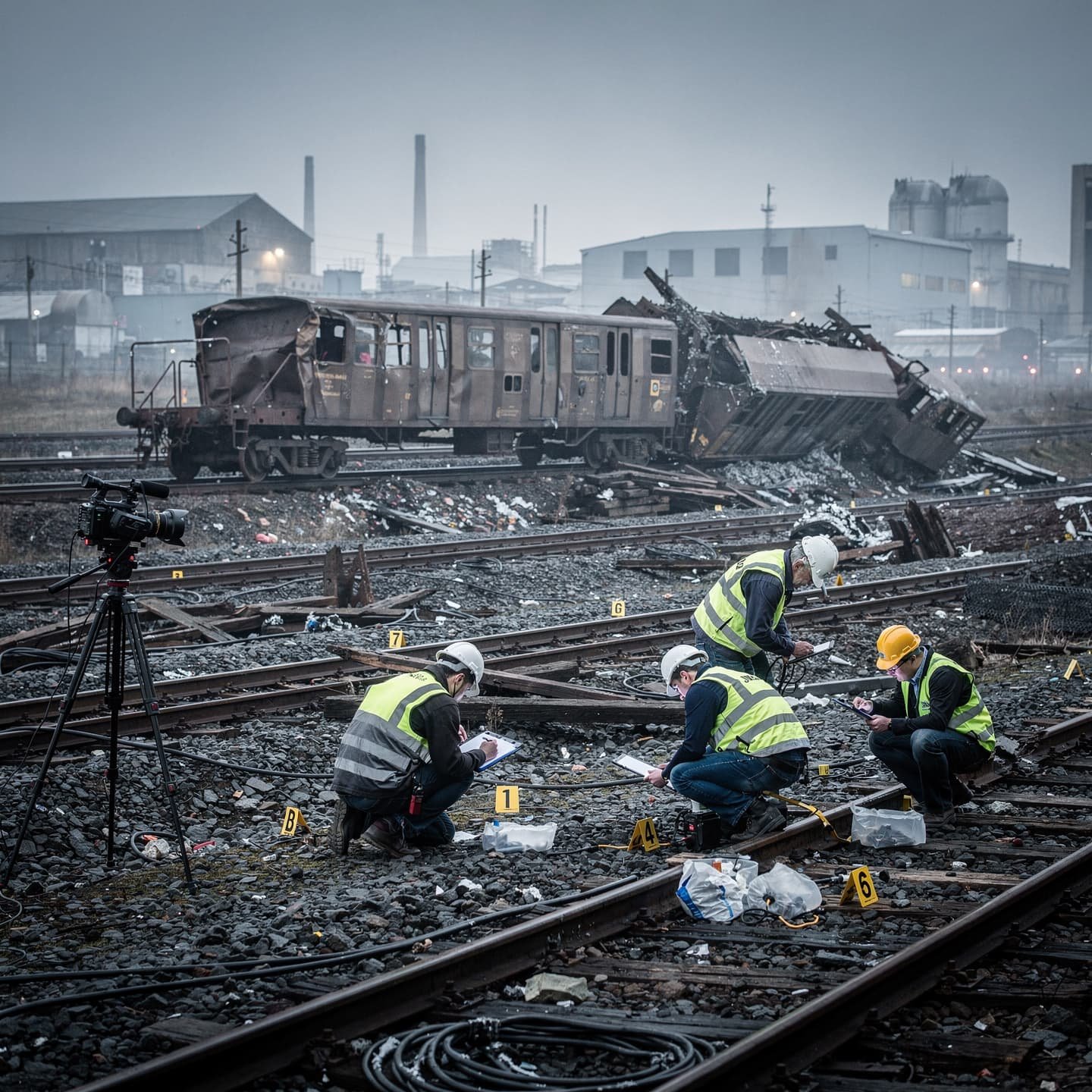
Throughout the course, the investigation is approached from real-world practice: evidence preservation, chronology, interviews, data analysis (records, signalling, communications, maintenance), scenario reconstruction, procedural compliance evaluation, and drafting solid reports for highly regulated environments. Applicable frameworks and approaches to the railway are covered, including “defence in depth,” causality models, human failure analysis, barrier management, and safety culture.
The ultimate goal is for you to lead or participate in railway incident and accident investigations to the highest quality standards: defensible conclusions, actionable recommendations, effective follow-up, and continuous improvement in operational safety.
Course on Railway Incident and Accident Investigation
- Modalidad: Online
- Duración: 4 meses
- Horas: 300 H
- Idioma: ES / EN
- Créditos: 60 ECTS
- Fecha de matrícula: 30-04-2026
- Fecha de inicio: 01-06-2026
- Plazas disponibles: 18
650 $
Competencies and outcomes
What you will learn
You will master the fundamentals of railway incident and accident investigation: concepts, terminology, the difference between incident/accident/event, objectives (prevention vs. blame), and how to structure a professional investigation from the very first minute.
You will learn how to secure the scene and manage evidence: preservation, chain of custody, photographic and documentary records, collection of technical data (data loggers, communications, telemetry), and control of interference to prevent the loss of critical information.
You will know how to reconstruct the complete timeline of the event: timeline, preceding events, operational conditions, changes in context, barrier failures, and correlation between signals, communications, infrastructure, and rolling stock.
You will apply causality analysis techniques: identifying immediate causes, underlying causes, human factors (fatigue, cognitive load, communication), technical failures, and organisational conditions, avoiding simplistic explanations and “individual blame” as the sole response.
You will learn interview techniques: preparation, interview structure, effective questioning, bias reduction, managing post-incident stress, and obtaining useful information without contaminating testimonies.
You will know how to reconstruct the complete timeline of the event: timeline, preceding events, operational conditions, changes in context, barrier failures, and correlation between signals, communications, infrastructure, and rolling stock.
Who our [course/program] is aimed at:
Course on Railway Incident and Accident Investigation
- Railway operational safety, quality, auditing, and compliance managers and technicians.
- Operations staff: driving, control, supervision, manoeuvres, circulation, stations, and control centres.
- Infrastructure and rolling stock maintenance professionals involved in fault analysis and technical evidence.
- Internal investigators, risk managers, procedure managers, and internal trainers.
- Consultants and technical profiles working with concessions, operators, infrastructure managers, and railway projects.
- Insurance professionals (claims) and legal departments who need to understand the technical logic of the investigation.
No prior experience as an investigator is required; however, basic familiarity with railway operations or regulated industrial environments is recommended.
SEIUM presents railway investigation as a strategic competence: it’s not enough to merely fulfil a requirement; defensible conclusions and actionable recommendations that work in real operational settings must be produced. The training combines investigation methodology, technical analysis, and a human-organisational approach to avoid superficial investigations. The course includes templates, protocols, report quality criteria, and corrective action follow-up, ensuring that the learning translates into a real reduction of incidents and strengthening of the safety culture.
1.1 Definitions: incident, accident, event, near-miss; objectives and scope of the investigation.
1.2 Investigation principles: prevention, evidence, impartiality, traceability, and learning.
1.3 Railway system organisation: roles (operator, infrastructure, maintenance, control, contractors).
1.4 Event classification: severity, criticality, potential for recurrence, and escalation criteria.
1.5 Pre-incident preparation: protocols, checklists, teams, permits, and interdepartmental coordination.
1.6 Initial management: notification, scene control, safety, and operational continuity.
1.7 Evidence and documentation: what to collect, how to record it, and what should not be done.
1.8 Investigation plan: scope, initial hypotheses, investigation team, and timeline.
1.9 Common errors: biases, premature conclusions, lack of evidence, irrelevant recommendations.
1.10 Quality and ethics: confidentiality, data protection, just culture, and responsible communication.
2.1 Scene safety: residual risks, access control, and prevention of evidence contamination.
2.2 Initial recording: photographs, videos, sketches, location, environmental conditions, and operational status.
2.3 Physical evidence: components, marks, damages, positions, signage, infrastructure.
2.4 Documentary evidence: procedures, orders, permits, logs, maintenance records.
2.5 Digital evidence: data loggers, communications, telemetry, logs, CCTV, and integrity control.
2.6 Chain of custody: criteria, formats, responsibilities, and storage.
2.7 Collection of human data: personnel lists, shifts, fatigue, training, key communications.
2.8 Coordination with authorities and third parties: boundaries, information exchange, and preservation.
2.9 Management of samples and expert assessments: when, how, and with what supporting documentation.
2.10 Operational evidence checklist: minimum standard for railway incidents and accidents.
3.1 Timeline: preceding events, main event, and subsequent events.
3.2 Operational conditions: circulation, restrictions, construction works, weather, visibility, load, and traffic.
3.3 Rolling stock: condition, recent maintenance, interventions, previous failures, and alarms.
3.4 Infrastructure: track, signalling, power, communications; variations and anomalies.
3.5 Human interactions: communications, decisions, coordination, information transfer.
3.6 Consistency of evidence: triangulation (physical + digital + witnesses + procedures).
3.7 Alternative scenarios: hypotheses, confirmation, and dismissal with evidence.
3.8 Identification of barrier failures: what should have prevented the event and why it didn’t.
3.9 Event representation: diagrams, maps, sequences, and technical narrative.
3.10 Validation and internal review: quality control before moving to causality analysis.
4.1 Immediate causes vs underlying causes: analysis structure.
4.2 Causality models: barriers, defence in depth, socio-technical interaction.
4.3 Technical failure: component, degradation, maintenance, design, compatibility, and environment.
4.4 Human factors: perception, attention, fatigue, stress, workload, decision-making.
4.5 Procedures: compliance, ambiguity, real-world applicability, normalised deviations.
4.6 Organisation: culture, supervision, training, resources, planning, and priorities.
4.7 Communication: transfer failures, instructions, confirmations, radio/telephony, documentation.
4.8 Barrier analysis: preventive, detective, and mitigating; why they failed.
4.9 Recurring incidents: patterns, recurrence, early warning signals ignored.
4.10 Defensible conclusions: how to support causality with evidence and without speculation.
5.1 Interview preparation: objectives, script, order, and roles.
5.2 Interview techniques: open-ended questions, timeline, clarifications, verification, and closure.
5.3 Biases and contamination: how to avoid them and how to record without leading responses.
5.4 Stress and trauma management: responsible communication and obtaining information without pressure.
5.5 Interviews with multiple parties: driver, control, maintenance, station, contractors.
5.6 Contradictions: analysis, triangulation, and documentation of uncertainty.
5.7 Evidence vs. account: how to weigh and validate information.
5.8 Confidentiality and data protection: boundaries, permissions, and document custody.
5.9 Internal communication: what to inform, to whom, when, and with what language.
5.10 Minutes and records: formats, traceability, and version control.
6.1 Report structure: context, scope, methodology, evidence, findings, causality.
6.2 Technical writing: clarity, neutrality, traceability, and terminological consistency.
6.3 Supported findings: each statement linked to verifiable evidence.
6.4 Actionable recommendations: specific, measurable, realistic, and prioritised.
6.5 Action plan: responsible parties, deadlines, resources, and verification mechanisms.
6.6 Indicators (KPIs): recurrence reduction, compliance, and effectiveness of barriers.
6.7 Lessons learned: how to translate them into real changes (procedures, training, engineering).
6.8 External communication: summary reports, coordination with parties, reputational management.
6.9 Review and validation: internal audit of the report and quality control.
6.10 Formal closure: archiving, custody, traceability, and transfer to the safety system.
7.1 Track failures: geometry, wear, conditions, construction works, and maintenance.
7.2 Signalling: events, failures, consistency of states, and available evidence.
7.3 Power and electrification: interruptions, overloads, events, and operational consequences.
7.4 Communications: records, failures, latencies, and their impact on decisions.
7.5 Interface with the environment: level crossings, intrusions, weather, third parties.
7.6 Construction works and contractors: permits, coordination, shared risks, and critical documentation.
7.7 Physical barriers: protections, detection, on-site signalling, and access control.
7.8 Technical infrastructure evidence: what to collect and how to preserve it.
7.9 Engineering recommendations: improving preventive and detective barriers.
7.10 Follow-up: verification of actions and reduction of infrastructure-related incidents.
8.1 Critical system failures: braking, doors, traction, control, HVAC, and safety.
8.2 Maintenance: planning, execution, quality, spare parts, records, and traceability.
8.3 Pre-inspections: checklists, deferred defects, and non-conformance management.
8.4 Modifications and changes: compatibility, testing, and documentation.
8.5 Failure analysis: degradation, usage, environment, human error, and design.
8.6 Technical evidence: parts, marks, records, diagnostics, and expert assessment.
8.7 Defect management: recurrence, campaigns, bulletins, and risk control.
8.8 Interaction with operations: driving conditions, load, routes, and variability.
8.9 Technical recommendations: redesign, maintenance, training, and barriers.
8.10 Post-action validation: testing, monitoring, and effectiveness control.
9.1 Railway operations: critical decisions and human failure points.
9.2 Fatigue and shifts: evidence, patterns, and preventive measures.
9.3 Competence and training: assessment, recertification, and real gaps.
9.4 Procedures: applicability, ambiguity, deviations, and risk normalisation.
9.5 Operational communication: confirmations, coordination, and records.
9.6 Control centres: workload, tools, interfaces, and biases.
9.7 Just culture: learning without punishment, responsibility, and organisational improvement.
9.8 Recurring incidents: trend detection and systemic response.
9.9 Corrective measures: barrier design, training, supervision, and control.
9.10 Change management: how to sustain improvements and prevent regression.
10.1 Corporate flow: notification, classification, investigation, report, actions, and closure.
10.2 Escalation criteria: full investigation vs simplified analysis; proportionality.
10.3 Case repository: taxonomy, search, lessons learned, and reuse.
10.4 Investigation KPIs: times, report quality, action closure, recurrence.
10.5 Trend analysis: patterns by line, train type, infrastructure, operator, and shift.
10.6 Integration with risk management: matrices, controls, and investment prioritisation.
10.7 Audit of corrective actions: verification, evidence of effectiveness, and sustainability.
10.8 Communication and learning: internal bulletins, training, drills, and culture.
10.9 Coordination with third parties: infrastructure, contractors, manufacturers, authorities, and insurers.
10.10 Final implementation: roadmap for railway investigative maturity.
Intensive practice-based methodology: event reconstruction exercises, evidence analysis (physical, documentary, and digital), interview simulation, and report writing with traceability. Realistic railway scenarios (collision, derailment, track intrusion, signalling failure, station incident, maintenance failure) are used to develop judgment and consistency.
Operational software and tools (depending on the environment’s availability):
-
Templates: scene checklist, chain of custody, timeline, causality matrix, action plan, and follow-up.
-
Report models: full structure and executive version for management.
-
Analysis labs: sets of “evidence” (records, communications, reports, maintenance, photographs) to learn how to triangulate and justify findings.
The focus is for the student to master the method applicable to railway incident and accident investigation, regardless of the organisation.
Capstone-type projects
Chronological reconstruction of an event: creating a comprehensive timeline, identifying preceding events, and representing the scenario with a well-supported technical narrative.
Causal analysis with barriers: identifying immediate and underlying causes, barrier failures, human and organisational factors, and validation through evidence (without speculation).
Interview simulation: script preparation, execution, recording, analysis of consistencies/contradictions, and construction of triangulated findings.
Complete investigation report: professional structure with evidence, findings, conclusions, prioritised recommendations, and action plan.
Admissions, fees, and scholarships
The admission is aimed at technical and operational profiles seeking to formalise investigations and raise the safety standard. Experience in railway operations, maintenance, control centres, quality, or safety is valued, but the course is also accessible to profiles in engineering, consultancy, or insurance who need to master the investigative process.
Scholarships and support are prioritised for professionals with a direct impact on operational safety: investigators, supervisors, internal trainers, maintenance coordinators, and profiles assigned to incident reduction programmes. The goal is for the organisation to achieve measurable returns: better report quality, effective action closure, and reduced recurrence.
Do you have any questions?
Our team is ready to help you. Contact us, and we will respond as soon as possible.
F. A. Q
Frequently asked questions
Safety-oriented investigation seeks to understand causes and barrier failures to prevent recurrence. It can coexist with legal or disciplinary processes, but its technical purpose is to generate learning and supported corrective actions.
The approach relies on triangulation: physical, documentary, digital evidence, and testimonies. The method allows for constructing defensible conclusions by indicating uncertainties and dismissing hypotheses based on consistency, not intuition.
Yes. It addresses fatigue, cognitive load, communication, procedures, and organisational culture. Just culture is key to obtaining real information and reducing recurring incidents.
Yes. The training covers structure, traceability, neutral writing, evidence linked to findings, and actionable recommendations with an action plan and follow-up.
It applies to both. Minor incidents and near-misses are learning opportunities; the course teaches how to apply proportionality: simplified analysis or full investigation depending on criticality.
You will receive reusable templates and models (checklists, chain of custody, timeline, causality matrix, action plan), as well as a complete report and a system of KPIs and trends applicable to railway incident and accident investigations.