
Course on the Operation of Integrated Urban Control Centers
About ourCourse on the Operation of Integrated Urban Control Centers
The Integrated Urban Control Center Operation Course focuses on the efficient management of urban infrastructure. It addresses the integration of technologies and systems for the monitoring, data analysis, and control of various urban areas, such as traffic, security, and public services. It focuses on the application of tools and protocols for real-time decision-making and resource optimization, crucial for improving the quality of life in cities.
The program provides practical knowledge in the operation of incident management, video surveillance, and communications platforms, in compliance with data security and privacy protection regulations. This training prepares individuals for professional roles such as control center operators, urban security analysts, and traffic managers, improving the efficiency and responsiveness of cities.
Target keywords (natural occurrences in the text): urban control centers, urban management, monitoring, security, traffic, public services, data analysis, decision-making.
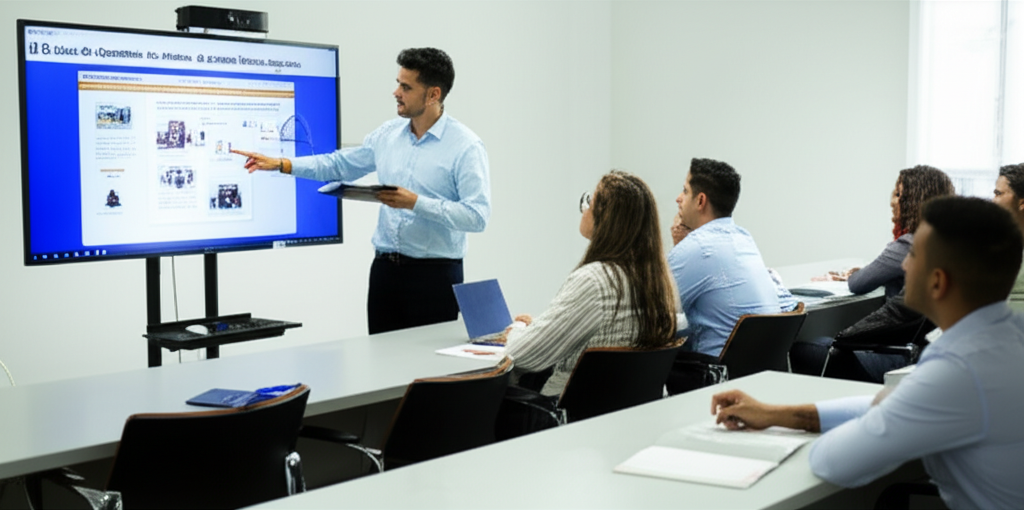
Course on the Operation of Integrated Urban Control Centers
- Modalidad: Online
- Duración: 4 meses
- Horas: 300 H
- Idioma: ES / EN
- Créditos: 60 ECTS
- Fecha de matrícula: 14-06-2026
- Fecha de inicio: 02-08-2026
- Plazas disponibles: 14
275 $
Competencies and outcomes
What you will learn
1. Comprehensive Control of the Operation of Integrated Urban Control Centers
-
Understand and apply the fundamentals of the architecture and design of Integrated Urban Control Centers (IUCCs).
-
Learn to optimize the operational efficiency of IUCCs through the implementation of standardized protocols and procedures.
- Develop skills for strategic decision-making in the context of citizen security and urban management.
- Analyze and evaluate the impact of public policies on the operation of IUCCs and on community safety.
-
Learn about best practices in cybersecurity and critical infrastructure protection within the CCUI framework.
Acquire knowledge about the management and coordination of resources in crisis and emergency situations within the urban environment.
Master the use of cutting-edge technologies in IUCCs, including video surveillance systems, data analysis, and communications.
Become familiar with the regulations and standards applicable to IUCCs and the protection of personal data.
2. Strategic Analysis and Management of Integrated Urban Control Centers
Here is the SEO-optimized content outlining what you will learn in the course, tailored to your specifications:
2. **Strategic Analysis and Management of Integrated Urban Control Centers**
3. Comprehensive user-oriented design and validation (from modeling to manufacturing)
You will learn to integrate the entire product development process, from initial model conception to final validation, applying user-centered methodologies. You will develop skills in parametric design, ergonomics, simulation, sustainable materials, 3D visualization, and manufacturing management, ensuring efficient, safe solutions that meet current industry standards.
4. Specialization in the Management and Operation of Urban Control Centers
4. Specialization in the Management and Operation of Urban Control Centers
- Mastery of key technological infrastructure: communication networks, video surveillance systems, incident management platforms, and geographic information systems (GIS).
- Implementation of monitoring and data analysis strategies for the early detection of critical events: accidents, crimes, emergencies, etc.
- Efficient management of human and material resources in incident response, including coordination with security and emergency services.
- Development of action protocols and standard operating procedures (SOPs) to ensure a rapid and coordinated response to diverse situations.
- Analysis of risks and vulnerabilities in the urban environment, and application of preventive measures to mitigate threats.
- Knowledge of legal regulations and standards related to citizen security and the protection of personal data.
- Use of predictive analytics tools to anticipate and
- Prevent risk situations.
- Effective communication and crisis management skills to inform the public and maintain calm in emergency situations.
- Design and implementation of evaluation and continuous improvement systems to optimize the efficiency and effectiveness of control center operations.
- Understanding of emerging technological trends in urban security, such as artificial intelligence, the Internet of Things (IoT), and drones.
5. Advanced Optimization and Deployment of Integrated Urban Control Centers
- Architectural Design of an Integrated Urban Control Center (IUCC).
- Integration of Information and Communication Systems (ICS) in the IUCC.
- Data Management and Advanced Analytics for Decision-Making in the Urban Environment.
- Optimization of the IUCC’s Technological Infrastructure, including Hardware, Software, and Networks.
- Implementation of Security and Cybersecurity Protocols for the Protection of the IUCC.
- Deployment and Commissioning of an IUCC, including Project Management and Staff Training.
- Analysis of Case Studies and Examples of Successful IUCCs.
- Legislation and Regulations Related to IUCCs and Urban Management.
- Future Trends in the Development of IUCCs and Their Impact on Smart Cities.
6. Master's Degree in the Operation and Control of Smart Cities
You will learn to integrate the entire product development process, from initial model conception to final validation, applying user-centered methodologies. You will develop skills in parametric design, ergonomics, simulation, sustainable materials, 3D visualization, and manufacturing management, ensuring efficient, safe solutions that meet current industry standards.
Who our [course/program] is aimed at:
Course on the Operation of Integrated Urban Control Centers
- Professionals in the naval industry, including Navy officers and non-commissioned officers.
- Personnel from maritime control centers and coast guards.
- Specialists in maritime security and crisis management in naval environments.
- Naval intelligence analysts and operations personnel.
Recommended qualifications: Basic knowledge of communication and navigation systems; Spanish level B2.
- Standards-driven curriculum: you will work with CS-27/CS-29, DO-160, DO-178C/DO-254, ARP4754A/ARP4761, ADS-33E-PRF from the first module.
- Accreditable laboratories (EN ISO/IEC 17025) with rotor bench, EMC/Lightning pre-compliance, HIL/SIL, vibrations/acoustics.
- Evidence-oriented TFM: safety case, test plan, compliance dossierand operational limits.
- Mentored by industry: teachers with experience in rotorcraft, tiltrotor, eVTOL/UAM and flight test.
- Flexible modality (hybrid/online), international cohorts and support from SEIUM Career Services.
- Ethics and security: safety-by-design approach, cyber-OT, DIH and compliance as pillars.
2.1 Fundamentals of Integrated Urban Control Center (IUCC) Operation
2.2 IUCC Architecture and Design: Components and Functionalities
2.3 Geographic Information Systems (GIS) and Spatial Analysis
2.4 Integration of Data from Multiple Sources: Sensors and Devices
2.5 Cybersecurity and Data Protection in IUCCs
2.6 Incident Management and Emergency Response
2.7 Crisis Management and Communication in IUCCs
2.8 Legal and Regulatory Framework for IUCCs
2.9 Key Performance Indicators (KPIs) in IUCCs
2.10 Case Studies: IUCC Implementation in Different Cities
3.1 Strategic Planning for IUCC Implementation
3.2 Selection and Acquisition of Technologies for IUCCs
3.3 Design and Configuration of IUCC Infrastructure
3.4 Project Management for the Implementation of CCIU
3.5 System Testing and Validation in CCIU
3.6 Staff Training and Development in CCIU
3.7 Change Management and Resistance to Change in CCIU
3.8 Performance Monitoring and Evaluation of CCIU
3.9 Integration with Other Urban Platforms and Systems
3.10 Sustainability and Scalability of CCIU
4.1 Management and Leadership Principles in Urban Control Centers
4.2 Human Resource Management and Teamwork
4.3 Optimization of Operational Processes and Workflows
4.4 Quality Management and Continuous Improvement in CCIU
4.5 Data-Driven Decision Making in CCIU
4.6 Risk Analysis and Security Management in CCIU
4.7 Effective Communication and Teamwork in CCIU
4.8 Financial and Budgetary Management of CCIU
4.9 Development of Policies and Procedures in CCIU
4.10 Professional Ethics and Social Responsibility in CCIU
5.1 Optimizing CCIU Architecture for Performance
5.2 Integrating Smart Cities and IoT Technologies in CCIU
5.3 Predictive Analytics and Data Modeling in CCIU
5.4 Automation and Robotics in CCIU
5.5 Artificial Intelligence and Machine Learning in CCIU
5.6 Real-Time Data Analysis and Advanced Visualization
5.7 Developing Intuitive and Efficient User Interfaces
5.8 Integration with Intelligent Transportation Systems
5.9 CCIU Scalability and Adaptability to New Technologies
5.10 Practical Cases of CCIU Optimization and Deployment
6.1 Fundamentals of Smart Cities and Urban Planning
6.2 Key Technologies for Smart Cities
6.3 Data Management and Big Data in Smart Cities
6.4 Governance and Citizen Participation in Smart Cities
6.5 Sustainability and Energy Efficiency in Smart Cities
6.6 Sustainable Urban Mobility
6.7 Public Safety and Citizen Protection in Smart Cities
6.8 Circular Economy and Local Economic Development
6.9 Public Policies and Legal Framework for Smart Cities
6.10 Case Studies of Smart Cities Around the World
7.1 Design and Configuration of Interfaces and Control Panels
7.2 Real-Time Information Management and Alert Systems
7.3 Video Surveillance and Video Analytics Systems
7.4 Incident Detection and Prevention Systems
7.5 Integration of Communication and Radio Systems
7.6 Simulation and Modeling of Operational Scenarios
7.7 Emergency and Disaster Response Protocols
7.8 Resource Optimization and Management Operational Efficiency
7.9 Performance Evaluation and Continuous Improvement
7.10 Implementation of a Certification Program
8.1 Analysis of Trends and Emerging Technologies at CCIU
8.2 Resilience and Business Continuity Strategies at CCIU
8.3 Advanced Cybersecurity Management at CCIU
8.4 Modeling and Simulation of Complex Scenarios
8.5 Decision Making Based on Artificial Intelligence
8.6 Process Optimization with Machine Learning
8.7 Crisis Communication Strategies and Reputation Management
8.8 Agile Project Management and Lean Methodologies at CCIU
8.9 Development of Leadership Skills and Change Management
8.10 Case Studies of Success Stories and Best Practices at CCIU
2.2 Introduction to Integrated Urban Control Centers (IUCCs): Definition and objectives.
2.2 Key components of IUCCs: Infrastructure, software, and personnel.
2.3 Basic IUCC operation: Monitoring, incident response, and coordination.
2.4 Essential technologies in IUCCs: Cameras, sensors, and communication systems.
2.5 Regulatory and legal frameworks for IUCC operation.
2.6 Ethics and privacy in IUCC data management.
2.7 Training for IUCC operators.
2.8 Examples of successful IUCC case studies.
2.9 Security and cybersecurity practices in IUCCs.
2.20 Future challenges and opportunities in IUCC operation.
2.2 Analysis of the urban environment: Socioeconomic, demographic, and geographic factors.
2.2 Risk assessment: Identification and analysis of threats and vulnerabilities. 2.3 Strategy Design: Objectives, goals, and key performance indicators (KPIs).
2.4 Resource Management: Allocation and optimization of human and technological resources.
2.5 Legal and Regulatory Framework: Compliance with and adaptation to current regulations.
2.6 Data Analysis and Big Data: Collection, processing, and analysis of information.
2.7 Modeling and Simulation: Design and testing of scenarios and action plans.
2.8 Communication Management: Internal and external communication strategies.
2.9 Evaluation and Monitoring: Monitoring and measurement of the performance of the CCUI (Customer Information and Communication Centers).
2.20 Sustainability Planning: Adaptation and resilience to change.
3.2 Planning and design of the CCUI infrastructure.
3.2 Selection and acquisition of technologies and systems.
3.3 Implementation of management software and platforms.
3.4 Integration of systems and devices. 3.5 Project Management: Methodologies and Tools
3.6 Implementation Supervision and Control
3.7 Systems Testing and Validation
3.8 Staff Training and Knowledge Transfer
3.9 Start-up and Initial Operation
3.20 Evaluation and Continuous Improvement of Implementation
4.2 Crisis and Emergency Management in CCUI
4.2 Tactical Operations and Response Strategies
4.3 Incident Management and Action Protocols
4.4 Forensic Analysis and Incident Investigation
4.5 Public Safety Management and Crime Control
4.6 Traffic and Urban Transport Management
4.7 Resource and Logistics Management
4.8 Operation of Video Surveillance Systems and Video Analytics
4.9 Information Management and Crisis Communication
4.20 Best Practices and Case Studies in Specialized Management
5.2 Optimization of existing infrastructure and systems.
5.2 Improvement of performance and operational efficiency.
5.3 Implementation of new technologies and innovative solutions.
5.4 Data integration and predictive analytics.
5.5 Deployment of intelligent management systems.
5.6 Automation of processes and workflows.
5.7 Improvement of user experience and citizen participation.
5.8 Integration with external systems and third-party platforms.
5.9 Scalability and adaptation to future needs.
5.20 Planning for sustainability and continuous innovation.
6.2 Key concepts of smart cities and their evolution.
6.2 Enabling technologies for smart cities: IoT, Big Data, AI.
6.3 Governance and public policies in smart cities.
6.4 Business models and financing for smart city projects. 6.5 Smart City Design: Urban Planning and Sustainable Mobility
6.6 Data Security and Protection in Smart Cities
6.7 Citizen Participation and Empowerment in Smart Cities
6.8 Case Studies of Successful Smart Cities
6.9 Challenges and Opportunities for the Future of Smart Cities
6.20 Ethics and Social Responsibility in Smart City Development
7.2 Excellence in Data Management and Predictive Analytics
7.2 Integration of Advanced Technological Systems and Platforms
7.3 Optimizing Incident and Emergency Response
7.4 Use of Cutting-Edge Technologies: AI, Machine Learning, Robotics
7.5 Implementation of Energy and Sustainability Management Systems
7.6 Improving Citizen Security and Protection
7.7 Smart Mobility and Public Transportation Management 7.8 Developing urban resilience and adapting to climate change.
7.9 Best practices and international standards in urban operations.
7.20 Leadership and change management in urban traffic management.
8.2 Analyzing trends and challenges in urban security.
8.2 Designing proactive and reactive security strategies.
8.3 Managing large-scale crises and complex scenarios.
8.4 Using cutting-edge technologies for crime detection and prevention.
8.5 Inter-institutional collaboration and citizen participation.
8.6 Designing disaster and emergency response plans.
8.7 Optimizing traffic management and urban mobility.
8.8 Implementing advanced geographic information systems (GIS).
8.9 Developing artificial intelligence and machine learning in urban traffic management.
8.20 Evaluating and continuously improving advanced strategies.
3.3 Fundamentals of CCUI Operation
3.2 CCUI Components and Architecture
3.3 Urban Monitoring and Control Systems
3.4 Incident Management and Emergency Response
3.5 Inter-institutional Communication and Coordination
3.6 Video Surveillance and Analytics Technologies
3.7 Urban Data Management Platforms
3.8 Security and Data Protection in CCUI
3.9 Operating Practices and Standard Protocols
3.30 Successful CCUI Case Studies
2.3 Strategic Framework for CCUI
2.2 Needs Analysis and Risk Assessment
2.3 Design of Key Performance Indicators (KPIs)
2.4 Crisis Management and Contingency Planning
2.5 Data Analysis and Report Generation
2.6 Evaluation of Emerging Technologies and Trends
2.7 Modeling and Simulation of Urban Scenarios
2.8 Regulatory Framework and Compliance
2.9 Communication and Public Relations Strategies
2.30 Cost-Benefit Analysis and Return on Investment (ROI)
3.3 CCUI Planning and Implementation
3.2 Technology Selection and Acquisition
3.3 Systems and Platform Integration
3.4 Network and Communications Infrastructure Design
3.5 Project Management and Quality Control
3.6 Monitoring and Maintenance Protocols
3.7 Staff Training and Development
3.8 Systems Testing and Validation
3.9 Documentation and Operating Manuals
3.30 Performance Monitoring and Continuous Improvement
4.3 Organizational Structure and Roles in CCUI
4.2 Team Management and Leadership
4.3 Human Resources Management
4.4 Financial and Budgetary Management
4.5 Supplier Management Contractors
4.6 Development of Specialized Skills
4.7 Physical and Cybersecurity in CCUI
4.8 Quality Management and Certifications
4.9 Change Management and Technological Adaptation
4.30 Case Studies in Specialized Management
5.3 Optimization of Operational Processes
5.2 Advanced Data Analysis and Big Data
5.3 Artificial Intelligence and Machine Learning in CCUI
5.4 Implementation of IoT Systems in Urban Environments
5.5 Cybersecurity and Data Protection
5.6 Deployment and Scalability of CCUI
5.7 Management of Technological Innovation
5.8 Sustainability and Energy Efficiency Analysis
5.9 Integration with Smart City Platforms
5.30 Continuous Improvement and Technological Upgrading
6.3 Fundamentals of Smart Cities
6.2 Sensors and Communication Networks in Smart Cities
6.3 Big Data and Advanced Analytics in Urban Environments
6.4 Smart City Management Platforms
6.5 Smart Mobility and Traffic Management
6.6 Energy Management and Urban Sustainability
6.7 Public Safety and Citizen Protection
6.8 Smart Governance and Citizen Participation
6.9 Smart City Business Models and Financing
6.30 Case Studies of Successful Smart Cities
7.3 Excellence in the Operation of Integrated City Management Systems (ICMS)
7.2 Advanced Video Surveillance Systems
7.3 Geographic Information System (GIS) Platforms
7.4 Next-Generation Communication Systems
7.5 Integration with IoT Devices
7.6 Cybersecurity and Critical Data Protection
7.7 Quality Management and Continuous Improvement
7.8 Emergency Drills and Training
7.9 Performance Evaluation and KPIs
7.30 Industry Certifications and Standards
8.3 Risk Analysis and Emerging Threats
8.2 Incident Response Strategy Design
8.3 Crisis Protocol Implementation
8.4 Crisis Communication Management
8.5 Inter-institutional Coordination and Collaboration
8.6 Data Analysis and Strategic Decision Making
8.7 Resource and Budget Optimization
8.8 Implementation of Innovative Technologies
8.9 Evaluation and Continuous Improvement of Strategies
8.30 Case Studies and Best Practices
4.4 Fundamentals of Management and Operation of Integrated Urban Control Centers
4.2 Legal Framework and Regulations Applicable to IUCCs
4.3 Organizational Structure and Key Roles in an IUCC
4.4 Human Resource Management and Training in IUCCs
4.5 Security and Surveillance Operations in Urban Environments
4.6 Incident and Crisis Management in the Urban Context
4.7 Communication Systems and Information Technologies in IUCCs
4.8 Key Performance Indicators (KPIs) and Performance Evaluation
4.9 Quality Management and Continuous Improvement in Control Centers
4.40 Professional Ethics and Responsibility in IUCC Operations
5.5 Fundamentals of Integrated Urban Control Centers (IUCCs)
5.5 Architecture and Components of IUCCs
5.3 Sensors and Urban Monitoring Systems
5.4 Data Visualization and Management Platforms
5.5 Communication Protocols and Cybersecurity in IUCCs
5.6 Emergency Operations and Incident Response in IUCCs
5.7 Interoperability with Public Safety Systems
5.8 Regulations and Standards in Urban Control Centers
5.9 Case Studies: IUCCs in Different Cities
5.50 Simulation and Training in IUCC Environments
5.5 Needs Analysis and Definition of Objectives for IUCCs
5.5 Design of the Operational and Management Strategy
5.3 Risk Assessment and Resilience Planning
5.4 Key Performance Indicators (KPIs) and Success Measurement
5. 5. Human Resources Management and Training in CCUI
5.6 Interinstitutional Collaboration and Strategic Communication
5.7 Innovation Management and Technological Adaptation
5.8 Legal and Ethical Aspects in CCUI Operations
5.9 Cost-Benefit Analysis and Sustainability of CCUIs
5.50 Development of a Strategic Plan for a CCUI
3.5 CCUI Infrastructure Design and Planning
3.5 Technology Selection and Integration in CCUIs
3.3 Project Management and Implementation Schedules
3.4 CCUI System Testing and Validation
3.5 Quality and Performance Monitoring
3.6 Change Management and Staff Training
3.7 Documentation and Operating Protocols
3.8 Supplier and Contractor Management
3.9 Implementation and Performance Audits Compliance
3.50 Maintenance and Technology Upgrade Plan
4.5 Operation and Maintenance of Monitoring Systems
4.5 Incident Management and Response Protocols
4.3 Data Analysis and Report Generation
4.4 Crisis Management and Emergency Communication
4.5 Resource Optimization and Operational Efficiency
4.6 Physical Security and Cybersecurity in CCUI
4.7 Quality Management and Continuous Improvement
4.8 Development of Leadership and Decision-Making Skills
4.9 Team Management and Staff Motivation
4.50 Regulations and Legal Framework in Operations
5.5 Performance Evaluation and Identification of Areas for Improvement
5.5 Process and Workflow Optimization
5.3 Implementation of Advanced Data Analytics Solutions
5.4 Integration of Artificial Intelligence and Machine Learning
5. 5. Deployment of New Technologies and Sensors
5.6 Scalability and Adaptation to Future Needs
5.7 Change Management and Resistance to Change
5.8 Scenario Modeling and Simulation
5.9 Design of Contingency and Disaster Recovery Plans
5.50 Continuous Improvement and Impact Assessment
6.5 Smart City Concepts and Their Evolution
6.5 Key Technologies for Smart Cities
6.3 Data Management Systems and Advanced Analytics
6.4 IoT Platforms and Urban Connectivity
6.5 Smart City Applications: Mobility, Energy, Environment
6.6 Governance and Citizen Participation in Smart Cities
6.7 Cybersecurity and Data Protection in Urban Environments
6.8 Performance Indicators and Evaluation of Smart City Projects
6. 9 Success Stories and Challenges in Smart City Implementation
6.50 The Future of Smart Cities: Trends and Challenges
7.5 Operational Excellence in Smart Cities: Principles and Best Practices
7.5 Total Quality Management and Continuous Improvement
7.3 Operational Analysis and Diagnostic Tools
7.4 Implementing Cutting-Edge Technologies in Smart Cities
7.5 Risk Management and Resilience Planning
7.6 Leadership and High-Performance Team Development
7.7 Key Performance Indicators (KPIs) and Measuring Effectiveness
7.8 Operational Excellence Case Studies in Smart Cities
7.9 Certifications and Quality Standards
7.50 Innovation and Sustainability in Urban Operations
8.5 Scenario Analysis and Planning Advanced Strategy
8.5 Implementation of Complex Crisis Response Strategies
8.3 Information and Communication Management in High-Pressure Environments
8.4 Leadership in Emergency Situations and Decision-Making
8.5 Inter-institutional Collaboration and Multi-sectoral Coordination
8.6 Trend Analysis and Prediction of Future Events
8.7 Implementation of Emerging Technologies and Innovative Solutions
8.8 Reputation Management and Crisis Communication
8.9 Evaluation of the Effectiveness of Operational Strategies
8.50 Development of an Advanced Strategic Plan for a CCUI
6.6 Sensors and Smart Grids: Key Components and Architectures
6.2 Big Data and Predictive Analytics: Tools for Decision Making
6.3 Smart City Management Platforms: Integration and Functionality
6.4 Cybersecurity in Urban Environments: Data and System Protection
6.5 Smart Urban Mobility: Efficient Transportation Systems
6.6 Sustainability and Energy Efficiency: Resource Optimization
6.7 Smart Waste Management: Technologies and Strategies
6.8 Citizen Participation and Open Government: Platforms and Tools
6.9 Case Studies: Successful Implementations in Global Cities
6.60 Future Trends: Innovation and Challenges in Smart Cities
7.7 Fundamentals of Integrated Urban Control Centers (IUCCs)
7.2 Architecture and Components of IUCCs
7.3 Surveillance and Monitoring Technologies
7.4 Communication Systems and Networks in IUCCs
7.7 Equipment Operation and Maintenance
7.6 Incident Response Protocols
7.7 Information Management and Data Analysis
7.8 Legal and Ethical Aspects in IUCCs
7.9 Interoperability with External Systems
7.70 Simulation and Training in IUCCs
2.7 Analysis of the Urban Environment and its Challenges
2.2 Strategic Framework for IUCCs: Vision and Mission
2.3 Design of Key Performance Indicators (KPIs)
2.4 Risk and Vulnerability Assessment
2.7 Resource Planning and Budgeting
2.6 Management Policies and Procedures
2.7 Data Analysis for Decision-Making Decisions
2.8 Evaluation of the Effectiveness of the CCUI
2.9 Adaptation to Changes and New Technologies
2.70 Sustainability and Resilience Planning
3.7 Selection and Design of the CCUI
3.2 Implementation Project Management
3.3 Systems and Technology Integration
3.4 Control Room Design and Ergonomics
3.7 Supplier and Contractor Management
3.6 Staff Training
3.7 Systems Testing and Validation
3.8 Documentation and Operating Manuals
3.9 Performance and Quality Monitoring
3.70 Security Management during Implementation
4.7 Crisis and Emergency Management
4.2 Operation of Advanced Monitoring Systems
4.3 Video Analytics and Facial Recognition
4.4 Drone Incident Management
4.7 Cybersecurity in CCUI
4.6 Management of Urban Mobility
4.7 Public Safety Management
4.8 Air Quality and Environmental Management
4.9 Integration with Emergency Services
4.70 Citizen Communication Management
7.7 Optimization of Technological Infrastructure
7.2 Data Analysis and Big Data in CCUI
7.3 Artificial Intelligence and Machine Learning
7.4 Implementation of Intelligent Management Systems
7.7 Integration with Smart City Platforms
7.6 Cost-Benefit Analysis and Return on Investment (ROI)
7.7 Scalability and Flexibility Management
7.8 Expansion and Deployment Planning
7.9 Performance Monitoring and Adjustments
7.70 Best Practices in CCUI Optimization
6.7 Smart City Concepts
6.2 Smart City Platforms and Ecosystems
6.3 Data Management and Information Governance
6.4 Sensors and IoT Devices in Urban Environments
6.7 Smart City Applications: Transportation, Energy, Environment
6.6 Cybersecurity in Smart Cities
6.7 Data Analysis and Information Visualization
6.8 Smart City Modeling and Simulation
6.9 Legal and Ethical Framework for Smart Cities
6.70 Case Studies of Successful Smart Cities
7.7 Real-Time Operations Management
7.2 Security Management Systems
7.3 Use of Advanced Communication Technologies
7.4 Predictive Analytics and Crime Prevention
7.7 Incident and Complex Crisis Management
7.6 Implementation of Unified Response Protocols
7.7 Optimizing Staff Performance
7.8 Evaluation and Continuous Improvement of Operations
7.9 Managing User and Citizen Experience
7.70 Integration with Emergency and Security Systems
8.7 Design of Urban Security Strategies
8.2 Data Analysis for Crime Prediction
8.3 Large-Scale Crisis and Emergency Management
8.4 Implementation of Advanced Artificial Intelligence Systems
8.7 Integration of Drones and Robotics in Operations
8.6 Communication and Public Relations Strategies
8.7 Cybersecurity Management in Urban Environments
8.8 Development of Urban Resilience Plans
8.9 Leadership and Management of High-Performance Teams
8.70 Adaptation to New Technologies and Future Trends
8.8 Fundamentals of CCUI Operation: Key Concepts and Structure
8.8 Essential Components of a CCUI: Technology and Personnel
8.3 Standard Operating Protocols and Procedures
8.4 Data Collection and Management in a CCUI
8.5 Communications and Coordination in Emergency Situations
8.6 Integration of Security and Surveillance Systems
8.7 Legal and Regulatory Framework for CCUIs
8.8 Cybersecurity Practices in Urban Environments
8.8 Case Studies: Successful CCUIs Globally
8.80 Risk Assessment and Vulnerability Analysis
8.8 Strategic Planning for CCUIs: Vision and Objectives
8.8 Analysis of Urban Needs and Resource Assessment
8.3 Design of Key Performance Indicators (KPIs)
8.4 Project and Budget Management in CCUIs 8.5 Data Analysis for Strategic Decision-Making
8.6 Evaluation of the Social and Economic Impact of a CCUI
8.7 Crisis Management and Response to Major Incidents
8.8 Development of Strategic Scenarios and Simulations
8.8 Collaboration with Stakeholders: Government, Police, and Community
8.80 Future Trends and Challenges in CCUI Strategic Analysis
3.8 CCUI Implementation Planning: Design and Architecture
3.8 Selection and Acquisition of Technologies and Systems
3.3 Supplier and Contract Management
3.4 Design of Network and Communications Infrastructure
3.5 Integration of Existing and New Systems
3.6 Monitoring of the Implementation Process and Quality Control
3.7 Staff Training and Skills Development
3.8 Testing and Commissioning of Systems and Equipment
3.8 Change Management and Resistance to Change 3.80 Post-implementation evaluation and continuous optimization.
4.8 Personnel management in a CCUI: Roles, responsibilities, and leadership.
4.8 CCUI staff training and professional development.
4.3 Staff shift management and scheduling.
4.4 Incident and crisis response protocols.
4.5 Information and knowledge management.
4.6 Quality management and continuous improvement.
4.7 CCUI financial and budgetary management.
4.8 External stakeholder relationship management.
4.8 Regulatory compliance and professional ethics.
4.80 Analysis of successful case studies in specialized CCUI management.
5.8 Optimizing the performance of CCUI systems.
5.8 Data analysis and predictive analytics.
5.3 Designing intuitive and effective user interfaces.
5.4 Process and workflow automation. 5.5 Implementation of emerging technologies (AI, IoT, etc.).
5.6 Scalability and adaptability of CCUI systems.
5.7 Asset and technology lifecycle management.
5.8 Integration with geographic information systems (GIS).
5.9 CCUI deployment and expansion strategies.
5.90 Evaluation of results and continuous improvement.
6.8 Key concepts of smart cities.
6.9 Platforms and technologies for smart cities.
6.3 Data collection and analysis in urban environments.
6.4 Smart city applications: Security, transportation, energy.
6.5 Operation of intelligent transportation systems.
6.6 Energy management and urban sustainability.
6.7 Governance and citizen participation in smart cities.
6.8 Ethical and privacy challenges in smart cities.
6.9 Global smart city case studies. 6.80 The Future of Smart Cities: Trends and Opportunities
7.8 Leadership and Team Management in a CCUI (Center for Urban Communication and Information Technology)
7.8 Effective Communication and Decision-Making
7.3 Crisis Management and Emergency Response
7.4 Integration of Advanced Technologies into Urban Operations
7.5 Real-Time Data Analysis and Predictive Analytics
7.6 Designing Effective Operating Protocols
7.7 Quality Management and Continuous Process Improvement
7.8 Performance Evaluation and Resource Optimization
7.8 Collaboration with External Organizations and Entities
7.80 Case Studies and Best Practices in Operational Excellence
8.8 Designing Strategies for Responding to Complex Incidents
8.8 Information Management and Situational Intelligence
8.3 Using Predictive Analytics for Decision-Making 8.4 Implementation of risk management systems.
8.5 Collaboration strategies between agencies and departments.
8.6 Planning and execution of drills and exercises.
8.7 Development of advanced communication protocols.
8.8 Reputation management and crisis communication.
8.9 Continuous improvement strategies and adaptation to change.
8.0 Evaluation of results and lessons learned.
9.9 Introduction to Integrated Urban Control Centers (IUCCs)
9.9 IUCC Components and Architecture
9.3 Key Technologies in IUCCs: Hardware and Software
9.4 Essential Functions and Operations of IUCCs
9.5 The Role of IUCCs in Urban Security and Management
9.6 Legislation and Regulations Related to IUCCs
9.7 Design and Planning of an IUCC
9.8 Case Studies: Successful Examples of IUCCs
9.9 Future Trends in IUCCs
9.9 Needs Analysis and Objective Definition
9.9 Urban Risk and Vulnerability Assessment
9.3 Design of Key Performance Indicators (KPIs)
9.4 Data Analysis and Strategic Report Generation
9.5 Development of Response Strategies and Action Plans
9.6 Crisis and Business Continuity Management Business
9.7 Inter-institutional Collaboration and Effective Communication
9.8 Evaluation of Strategy Effectiveness
9.9 Adaptation and Continuous Improvement
3.9 Selection and Acquisition of Technologies and Systems
3.9 Design and Implementation of Network Infrastructure
3.3 Software Configuration and Customization
3.4 Integration of Systems and Devices
3.5 Testing, Validation, and Quality Assurance
3.6 Project Management and Cost Control
3.7 Staff Training and Development
3.8 Operating Protocols and User Manuals
3.9 Commissioning and Initial Evaluation
4.9 Human Resource Management and Staff Organization
4.9 Daily Operation and Real-Time Monitoring
4.3 Incident Management and Emergency Response
4.4 Preventive and Corrective Maintenance
4.5 Information Management and Data Security
4.6 Communication with Citizens and Stakeholders
4.7 Process Optimization and Continuous Improvement
4.8 Performance Evaluation and Results Analysis
4.9 Regulatory and Legal Compliance
5.9 System Performance Optimization
5.9 Advanced Data Analysis and Big Data
5.3 Integration with Intelligent Systems: IoT and Sensors
5.4 Deployment of Emerging Technologies
5.5 Cybersecurity and Data Protection
5.6 System Scalability and Flexibility
5.7 Continuous Updating and Maintenance
5.8 Scenario Modeling and Simulation
5.9 Innovation and Technological Adaptation
6.9 Smart City Concepts and Fundamentals
6.9 Smart City Platforms and Digital Ecosystems
6.3 Data Management and Predictive Analytics
6.4 Smart Urban Mobility
6.5 Energy Management and Sustainability
6.6 Security and Surveillance in Smart Cities
6.7 Citizen Participation and Open Government
6.8 Smart City Case Studies
6.9 Challenges and Opportunities of Smart Cities
7.9 Operation and Maintenance of Advanced Systems
7.9 Incident Management and Advanced Emergency Response
7.3 Systems Integration and In-Depth Data Analysis
7.4 Cybersecurity and Critical Infrastructure Protection
7.5 Communication Strategies and Crisis Management
7.6 Leadership and Management of High-Performance Teams
7.7 Innovation and Continuous Improvement in Urban Operations
7.8 Benchmarking and Best Practices in Urban Communications and Information Systems (UCIS)
7.9 Sustainability and Corporate Social Responsibility
8.9 Risk Analysis and Strategic Planning
8.9 Emergency Response Protocol Design
8.3 Data Integration and Analysis Predictive
8.4 Resource Management and Process Optimization
8.5 Effective Communication and Crisis Management
8.6 Implementation of Innovative Technologies
8.7 Interinstitutional and Public-Private Collaboration
8.8 Evaluation and Continuous Improvement of Strategies
8.9 Adaptation to Changes and Future Trends
**Final Project — CCUI Design and Implementation**
9.1. Defining the Scope and Objectives of the CCUI Project
9.2. Selecting and Designing the CCUI Technology Architecture
9.3. Designing the Communications and Network Infrastructure
9.4. Integrating Systems and Platforms
9.5. CCUI Data Management and Cybersecurity
9.6. Designing the User Interface and Operator Experience
9.7. Developing Standard Operating Procedures (SOPs)
9.8. Testing and Validating the CCUI
9.9. Implementation and Deployment Plan
9.10. Final Project Presentation and Evaluation
- Hands-on methodology: test-before-you-trust, design reviews, failure analysis, compliance evidence.
- Software (depending on licenses/partners): MATLAB/Simulink, Python (NumPy/SciPy), OpenVSP, SU2/OpenFOAM, Nastran/Abaqus, AMESim/Modelica, acoustics tools, planning toolchains DO-178C.
- SEIUM Laboratories: scale rotor bench, vibrations/acoustics, EMC/Lightning pre-compliance, HIL/SIL for AFCS, data acquisition with strain gauging.
- Standards and compliance: EN 9100, 17025, ISO 27001, GDPR.
Capstone-type projects
- Simulation Design: Simulated CCU, data analysis, predictive modeling.
- Data Analysis: Big Data, pattern detection, traffic optimization.
- Intelligent Platforms: Response systems, incident management, IoT integration.
- Cybersecurity: Data protection, risk analysis, threat mitigation.
- Simulation Design: Simulated CCU, data analysis, predictive modeling.
- Data Analysis: Big Data, pattern detection, traffic optimization.
- Intelligent Platforms: Response systems, incident management, IoT integration.
- Cybersecurity: Data protection, risk analysis, threat mitigation.
- CCUI Analysis: Design of a simulated CCUI, optimizing resource management and incident response.
- Real-time data analysis: Implementation of predictive algorithms for urban traffic management.
- Scenario simulation: Design of simulations to evaluate response to emergencies and disruptive events.
- Systems integration: Development of a unified platform for resource management and inter-institutional coordination.
- Design and Simulation of an Optimized Integrated Urban Control Center (IUCC): Data flow simulation, system performance analysis, intuitive user interface design.
Admissions, fees, and scholarships
- Profile: Background in Computer Engineering, Mathematics, Statistics, or related fields; practical experience in NLP and valued information retrieval systems.
- Documentation: Updated CV, academic transcript, SOP/statement of purpose, project examples or code (optional).
- Process: Application → Technical evaluation of profile and experience → Technical interview → Review of case studies → Final decision → Enrollment.
- Fees:
- Single payment: 10% discount.
- Payment in 3 installments: No fees; 30% upon registration + 2 equal monthly payments of the remaining 35%.
Monthly payment: available with a 7% commission on the total; annual review.
Scholarships: based on academic merit, financial need, and promoting inclusion; agreements with companies in the sector for partial or full scholarships.
See “Calendar & Calls for Applications,” “Scholarships & Grants,” and “Fees & Financing” in the SEIUM mega-menu.
Do you have any questions?
Our team is ready to help you. Contact us, and we will respond as soon as possible.
F. A. Q
Frequently asked questions
Yes, we have international certification
Yes: experimental models, real data, applied simulations, professional environments, real case studies.
It is not mandatory. We offer leveling tracks and tutoring.
Completely. It covers e-propulsion, integration, and emerging regulations (SC-VTOL).
Recommended. There are also internal challenges and consortiums.
Yes. Online/hybrid modality with planned labs and visa support (see “Visa & Residence”).