
Diploma in Wind Tunnel Testing and CFD for Structures
Sobre nuestro Diploma in Wind Tunnel Testing and CFD for Structures
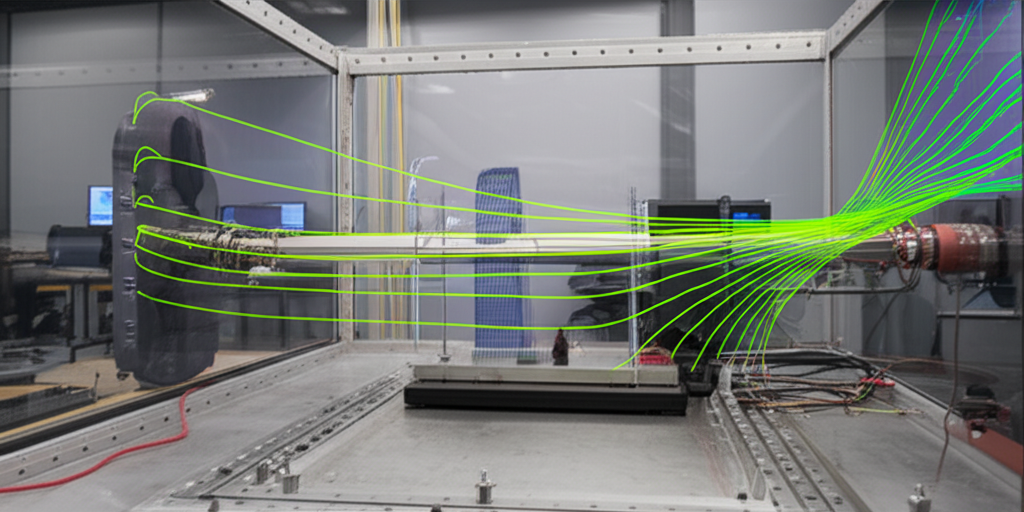
The Diploma in Wind Tunnel Testing and CFD for Structures integrates the use of wind tunnels and computational fluid dynamics (CFD) for the analysis and optimization of the aerodynamic and structural behavior of various structures. It focuses on the application of advanced methodologies to simulate and validate airflow around models, using tools and techniques such as pressure analysis, flow visualization, and computational modeling. The program covers everything from planning and conducting wind tunnel tests to analyzing results and interpreting CFD data, including the application of specialized software for aerodynamic simulation and structural analysis. The training provides hands-on experience in setting up and operating wind tunnels, as well as applying CFD for design validation and the optimization of structures such as buildings, bridges, and vehicles. The goal is to train professionals capable of evaluating the wind resistance, stability, and aerodynamic performance of structures. The program prepares students for professional roles such as aerodynamic engineers, CFD analysts, structural engineers, and aerodynamic design consultants, providing essential skills for the engineering and architecture industry.
Target keywords (naturally occurring in the text): wind tunnel, CFD, structural analysis, computational fluid dynamics, aerodynamic simulation, structural optimization, wind resistance, pressure analysis, airflow, engineering diploma.
Diploma in Wind Tunnel Testing and CFD for Structures
- Modalidad: Online
- Duración: 8 meses
- Horas: 900 H
- Idioma: ES / EN
- Créditos: 60 ECTS
- Fecha de matrÃcula: 30-04-2026
- Fecha de inicio: 10-06-2026
- Plazas disponibles: 3
1.799 $
Competencias y resultados
Qué aprenderás
1. Mastery of Wind Tunnel Testing and CFD for Naval Structural Analysis
- Implement advanced numerical simulation (CFD) to predict the behavior of naval structures under complex hydrodynamic loads.
- Conduct wind tunnel tests to validate CFD models and analyze the aerodynamics of components such as sails, masts, and superstructures.
- Master finite element analysis (FEA) to evaluate the strength and stiffness of naval structures, including hulls, decks, and bulkheads.
- Analyze flap-lag-torsion, whirl flutter, and fatigue couplings.
- Dimension laminates in composites, joints, and bonded joints using FE.
- Apply structural optimization techniques to reduce weight and improve vessel performance.
- Implement damage tolerance and NDT (UT/RT/thermography).
Interpret and analyze the results of tests and simulations to inform decision-making in naval design.
Apply relevant international standards and regulations for naval structural analysis.
2. Comprehensive Analysis of Naval Structures using Wind Tunnel Testing and CFD
- Master the analysis of critical aeroelastic phenomena in naval structures, including flap-lag-torsion couplings, as well as the instability known as whirl flutter and the effects of fatigue on structural components.
- Acquire the ability to design and dimension advanced structural components, such as laminates in composites, considering the characteristics of structural joints and bonded joints, using finite element (FE) analysis tools.
- Apply cutting-edge methodologies to ensure structural integrity, including the development of damage tolerance strategies and the use of non-destructive testing (NDT) techniques such as ultrasonic testing (UT), radiography (RT), and thermography for the inspection and evaluation of structures.
3. Comprehensive user-oriented design and validation (from modeling to manufacturing)
You will learn to integrate the entire product development process, from initial model conception to final validation, applying user-centered methodologies. You will develop skills in parametric design, ergonomics, simulation, sustainable materials, 3D visualization, and manufacturing management, ensuring efficient, safe solutions that meet current industry standards.
4. Advanced Evaluation of Naval Structures: Wind Tunnel Testing and CFD
- Master the analysis of critical aerodynamic and aeroelastic phenomena: flap-lag-torsion, whirl flutter, and the effects of fatigue on structures.
- Apply advanced techniques for the dimensioning of key components: laminates in composites, design and analysis of structural joints, and the optimization of bonded joints using Finite Element (FE) methods.
- Implement robust design methodologies: apply damage tolerance criteria and employ NDT techniques (Ultrasound – UT, Radiography – RT, and Thermography) for the evaluation of structural integrity.
5. Rotor Simulation and Performance: A Naval Approach [The following appears to be unrelated and possibly machine-translated:] [The following appears to be a separate, unrelated sentence:] ...
- Comprehensive evaluation of critical aeroelastic phenomena: You will gain a thorough understanding of flap-lag-torsion couplings, unraveling their influence on the stability and performance of naval rotors. You will acquire the ability to analyze whirl flutter, a potentially destructive phenomenon, and fatigue, a key factor in component durability.
- Mastery of advanced structural design and analysis techniques: You will learn to dimension laminates in composites, key materials in modern shipbuilding. You will specialize in the analysis of bonded joints using the finite element (FE) method, ensuring structural integrity and design optimization.
You will also learn to apply cutting-edge methodologies for structural integrity management: you will be trained in the implementation of damage tolerance methodology, which allows you to predict and manage damage, and in the use of non-destructive testing (NDT) techniques, including ultrasonic testing (UT), radiography (RT), and thermography, to ensure early defect detection and preventive maintenance.
6. Rotor Modeling and Simulation for Naval Design [The text abruptly shifts to a seemingly unrelated topic:]
You will learn to integrate the entire product development process, from initial model conception to final validation, applying user-centered methodologies. You will develop skills in parametric design, ergonomics, simulation, sustainable materials, 3D visualization, and manufacturing management, ensuring efficient, safe solutions that meet current industry standards.
Para quien va dirigido nuestro:
Diploma in Wind Tunnel Testing and CFD for Structures
- Graduates in Aerospace Engineering, Mechanical Engineering, Industrial Engineering, Automation Engineering, or related fields.
- Professionals in OEM rotorcraft/eVTOL, MRO, consulting, and technology centers.
- Flight Testing, certification, avionics, control, and dynamics seeking specialization.
- Regulators/authorities and UAM/eVTOL professionals requiring compliance skills.
Recommended qualifications: based in Aerodynamics, control, and structures; ES/EN B2+/C1. We offer bridging tracks if needed.
- Standards-driven curriculum: you will work with CS-27/CS-29, DO-160, DO-178C/DO-254, ARP4754A/ARP4761, ADS-33E-PRF from the first module.
- Accreditable laboratories (EN ISO/IEC 17025) with rotor bench, EMC/Lightning pre-compliance, HIL/SIL, vibrations/acoustics.
- Evidence-oriented TFM: safety case, test plan, compliance dossierand operational limits.
- Mentored by industry: teachers with experience in rotorcraft, tiltrotor, eVTOL/UAM and flight test.
- Flexible modality (hybrid/online), international cohorts and support from SEIUM Career Services.
- Ethics and security: safety-by-design approach, cyber-OT, DIH and compliance as pillars.
1.1 Introduction to CFD and Wind Tunnels in Naval Design
1.2 Fundamentals of Computational Fluid Dynamics (CFD)
1.3 Wind Tunnel Operating Principles
1.4 Initial Applications of CFD in Naval Design
1.5 Initial Uses of Wind Tunnels in Naval Design
1.6 Advantages and Limitations of CFD and Wind Tunnels
1.7 Introduction to Naval Structural Analysis Methodology
1.8 Common Software and Tools in CFD and Wind Tunnels
1.9 Importance of Data and Results Analysis
1.10 Introductory Case Studies
2.2 Fundamentals of CFD and Wind Tunnel Testing in Naval Design
2.2 Principles of Structural Analysis in Naval Environments
2.3 Introduction to Wind Tunnel Testing Methodology
2.4 CFD Simulation Applied to Naval Structures
2.5 Fluid-Structure Interaction: Concepts and Applications
2.6 Load and Deformation Analysis in Naval Structures
2.7 Structural Optimization Using CFD and Wind Tunnel Testing
2.8 Validation and Verification of Numerical and Experimental Models
2.9 Case Studies: Practical Applications in Naval Design
2.20 Tools and Software for Structural Analysis
3.3 Fundamentals of Naval Optimization: Introduction to CFD and Wind Tunnels
3.2 CFD in Naval Design: Principles and Applications
3.3 Wind Tunnels in Naval Design: Principles and Applications
3.4 Interaction between CFD and Wind Tunnels: Analysis Methodologies
3.5 Hull Optimization: Resistance and Propulsion
3.6 Superstructure Optimization: Aerodynamics and Stability
3.7 Analysis and Optimization of Propulsion Systems
3.8 Appendage Design: Rudders, Fins, and Stabilizers
3.9 Case Studies: Optimization in Real Naval Projects
3.30 Tools and Software for Naval Optimization
3.4
4.4 Introduction to Advanced Naval Structural Assessment: Fundamentals and Objectives
4.2 Wind Tunnel Testing for Naval Structures: Methodology and Applications
4.3 CFD in Naval Structural Analysis: Principles and Configuration
4.4 CFD and Wind Tunnel Interaction: Model Validation and Calibration
4.5 Load and Deformation Analysis in Complex Naval Structures
4.6 Evaluation of Structural Strength under Different Operating Conditions
4.7 Optimized Design for Stress Reduction and Service Life Improvement
4.8 Integration of Test and CFD Data in the Design Process
4.9 Failure Analysis and Failure Modes in Naval Structures
4.40 Case Studies: Practical Applications and Key Results
5.5 Principles of Naval Rotor Propulsion: Fundamentals
5.5 Modeling Naval Rotors: Theory and Practice
5.3 CFD Simulation for Rotor Analysis
5.4 Wind Tunnel Testing for Naval Rotors
5.5 Computer-Aided Design (CAD) and Rotors
5.6 Rotor Design Optimization with CFD
5.7 Experimental Validation of Rotor Models
5.8 Rotor Performance Analysis: Efficiency and Cavitation
5.9 Integrating Rotors into Naval Hull Design
5.50 Case Studies: Rotor Design and Analysis
5.50
6.6 Fundamentals of Rotor Aerodynamics: Key Principles
6.2 Mathematical Modeling of Naval Rotors: Theories and Methods
6.3 CFD Software for Rotor Simulation: Tools and Applications
6.4 Rotor Design: Selection of Airfoils
6.5 Flow Simulation around Rotors: Performance Analysis
6.6 Stability and Control Analysis of Naval Rotors
6.7 Rotor Design Optimization: Strategies and Techniques
6.8 Wind Tunnel for Rotor Model Validation
6.9 Specific Applications: Rotors in Different Types of Vessels
6.60 Case Studies: Design and Analysis of Successful Rotors
6.7
7.7 Fundamentals of Naval Rotor Propulsion: Theory and Principles
7.2 Rotor Design: Geometry, Profiles, and Material Selection
7.3 Introduction to CFD for Naval Rotor Analysis
7.4 Introduction to Wind Tunnels: Techniques and Methodologies
7.7 CFD Simulation of Flow Around Rotors
7.6 Wind Tunnel Testing for Rotors: Methodology and Analysis
7.7 Rotor Performance Analysis: Thrust, Torque, and Efficiency
7.8 Rotor Design Optimization: CFD and Combined Testing
7.9 Cavitation Modeling in Rotors: CFD and Experimental Validation
7.70 Practical Applications: Case Studies in Naval Design
7.8
8.8 Introduction to Naval Engineering and the Importance of CFD and Wind Tunnels
8.8 Fundamental Principles of Computational Fluid Dynamics (CFD)
8.3 Fundamentals of Wind Tunnel Testing and its Applications
8.4 Instrumentation and Measurement Techniques in Wind Tunnels
8.5 Introduction to Naval Geometry and Data Preprocessing
8.6 CFD Simulation: Configuration and Key Parameters
8.7 Results Analysis and Data Validation
8.8 Introduction to Naval Structural Analysis
8.8 CFD Methodologies for Structural Analysis: Pressures and Loads
8.3 Wind Tunnel Testing for Load Determination
8.4 Modeling and Simulation of Naval Structures with CFD
8.5 Stress and Strain Analysis
8.6 Validation of Structural Models with Experimental Data
8.7 Case Studies: Structural Analysis of Different Types of Ships
3.8 Fundamentals of Naval Design Optimization
3.8 CFD-Based Optimization: Hull and Appendage Design
3.3 Wind Tunnel Testing Optimization: Drag Reduction
3.4 Design of Experiments (DoE) Methodologies for Optimization
3.5 Optimization Algorithms and Their Applications
3.6 Sensitivity Analysis and Robust Design
3.7 Case Studies: Energy Efficiency Optimization
4.8 Advanced Structural Analysis Techniques
4.8 Advanced CFD: Fluid-Structure Interaction (FSI)
4.3 Advanced Wind Tunnel Testing: Scale Models
4.4 Fatigue and Durability Analysis of Naval Structures
4.5 Evaluation of Structural Integrity under Different Conditions
4.6 Failure Analysis and Damage Mechanisms
4.7 Practical Examples: Evaluation of Structures under Different Conditions Extremes
5.8 Principles of Naval Propulsion and Rotor Design
5.8 Introduction to Rotor Theory and its Applications
5.3 Rotor Modeling for CFD
5.4 CFD Simulation of Flow around Rotors
5.5 Rotor Performance Analysis: Thrust, Torque, Efficiency
5.6 Rotor-Helm Interaction
5.7 Wake Flow Simulation and its Impact on Performance
6.8 Geometric Modeling of Rotors: Tools and Techniques
6.8 Rotor Mesh Generation
6.3 Configuring CFD Simulation for Rotors
6.4 Analysis of Rotor Design Parameters: Pitch, Curvature
6.5 Validation of Rotor Models
6.6 Rotor Design Optimization
6.7 Practical Applications and Case Studies
7.8 Applications of CFD and Wind Tunnels in Rotor Design
7.8 CFD Simulation of Rotors: Transient and Steady Flow
7.3 Wind Tunnel Testing for Rotor Model Validation
7.4 Analysis of Rotor Aerodynamic Performance
7.5 Aerodynamic Design and Optimization of Rotors
7.6 Effects of Cavitation on Rotor Design
7.7 Practical Applications and Case Studies
8.8 CFD and Wind Tunnel Applications for Rotor Performance
8.8 Aerodynamic Design and Optimization of Rotors
8.3 Rotor Performance Analysis: Thrust, Torque, Efficiency
8.4 Rotor-Shell Interaction
8.5 Wakeflow Simulation and its Impact on Performance
8.6 Rotor Design Optimization
8.7 Practical Applications and Case Studies
9.9 Fundamentals of Wind Tunnel Testing for Naval Structures
9.9 Introduction to Computational Fluid Dynamics (CFD)
9.3 Application of CFD in Naval Structural Analysis
9.4 Comparison between Wind Tunnel and CFD Testing
9.5 Validation of Models and Results
9.6 Practical Cases of Structural Analysis with CFD and Wind Tunnel Testing
9.9 Methodology of Comprehensive Structural Analysis
9.9 Integration of Wind Tunnel and CFD Test Data
9.3 Load and Deformation Analysis in Naval Structures
9.4 Fatigue and Durability Analysis
9.5 Evaluation of Structural Response under Different Scenarios
9.6 Design and Optimization of Naval Structures
3.9 Principles of Naval Design Optimization
3.9 Implementation of CFD in the Optimization Process
3.3 Optimization of Hull Shape to Reduce Drag
3.4 Optimization of Structure to Reduce Weight and Costs
3.5 Design of Efficient Hydrodynamic Surfaces
3.6 Practical Applications and Studies Case Studies
4.9 Advanced Wind Tunnel Testing Techniques
4.9 Advanced CFD Methodology for Naval Structures
4.3 Ship Stability and Control Analysis
4.4 Wave Simulation and Swell Effects on Structures
4.5 Vibration and Noise Analysis
4.6 Structural Safety and Risk Assessment
5.9 Introduction to Naval Rotors
5.9 Rotor Modeling for CFD Simulation
5.3 Rotor Performance Simulation
5.4 Energy Efficiency Analysis
5.5 Rotor Design Optimization
5.6 Case Studies and Practical Applications
6.9 Rotor Modeling Principles
6.9 Selection of Simulation Software and Tools
6.3 Modeling Different Types of Naval Rotors
6.4 Flow Simulation Around the Rotor
6.5 Rotor Performance Analysis
6.6 Design of Optimized Rotors
7.9 Fundamentals of Rotor Aerodynamics
7.9 Application of CFD in the Aerodynamic Analysis of Rotors
7.3 Analysis of pressure and force distribution
7.4 Rotor profile optimization
7.5 Design of efficient and quiet rotors
7.6 Case studies and practical examples
8.9 Wind tunnel rotor modeling
8.9 Rotor performance simulation with CFD
8.3 Rotor-hull interaction analysis
8.4 Rotor design optimization for different applications
8.5 Environmental impact assessment of rotor design
8.6 Sustainable rotor design
1. Introduction to CFD and Wind Tunnel Testing in Naval Design
2. Principles of Naval Structural Analysis with CFD
3. CFD Applications in Hull and Superstructure Design
4. Wind Tunnel Testing: Fundamentals and Methodologies
5. Modeling and Simulation of Flow Around Ships
6. Hull Shape Optimization using CFD and Wind Tunnel Testing
7. Load and Structural Strength Analysis with CFD
8. Evaluation of Behavior Under Wind and Sea Conditions
9. Rotor Design and Analysis: Principles and Applications
10. Integration of CFD and Wind Tunnel Testing into the Naval Design Process
- Hands-on methodology: test-before-you-trust, design reviews, failure analysis, compliance evidence.
- Software (depending on licenses/partners): MATLAB/Simulink, Python (NumPy/SciPy), OpenVSP, SU2/OpenFOAM, Nastran/Abaqus, AMESim/Modelica, acoustics tools, planning toolchains DO-178C.
- SEIUM Laboratories: scale rotor bench, vibrations/acoustics, EMC/Lightning pre-compliance, HIL/SIL for AFCS, data acquisition with strain gauging.
- Standards and compliance: EN 9100, 17025, ISO 27001, GDPR.
Proyectos tipo capstones
- Naval Structural Analysis: CFD/Wind Tunnel Integration; hydrodynamic load simulation; design optimization.
- Structural Analysis: CFD/Wind Tunnel; design optimization; stress and deformation simulation.
- Rotor Design: CFD; aerodynamic analysis; performance modeling; optimization.
- Design Validation: CFD/wind tunnel data correlation; advanced structural evaluation.
- Naval Upgrades: CFD/Wind Tunnel integration; comprehensive analysis; comprehensive simulation.
- Naval Structural Analysis: CFD and wind tunnel integration for design optimization and evaluation.
- Naval Rotor Performance: CFD simulation and testing to improve efficiency and design.
- Naval Aerodynamic Design: Rotor optimization with CFD and wind tunnel testing.
- Advanced Evaluation: Comprehensive analysis of naval structures and rotors.
- Hulh Optimization: CFD; drag; wave analysis; shape optimization.
- Stability & Maneuverability: CFD; tank testing; model validation; rudder design.
- Structural Design: FEA analysis; weight optimization; experimental validation; fatigue and durability.
- Propeller Hydrodynamics: CFD; cavitation analysis; propulsive efficiency; propeller design.
Admisiones, tasas y becas
- Profile: Background in Computer Engineering, Mathematics, Statistics, or related fields; practical experience in NLP and valued information retrieval systems.
- Documentation: Updated CV, academic transcript, SOP/statement of purpose, project examples or code (optional).
- Process: Application → Technical evaluation of profile and experience → Technical interview → Review of case studies → Final decision → Enrollment.
- Fees:
- Single payment: 10% discount.
- Payment in 3 installments: No fees; 30% upon registration + 2 equal monthly payments of the remaining 35%.
Monthly payment: available with a 7% commission on the total; annual review.
Scholarships: based on academic merit, financial need, and promoting inclusion; agreements with companies in the sector for partial or full scholarships.
See “Calendar & Calls for Applications,” “Scholarships & Grants,” and “Fees & Financing” in the SEIUM mega-menu.
¿Tienes dudas?
Nuestro equipo está listo para ayudarte. Contáctanos y te responderemos lo antes posible.