

Diploma in SHM and Structural Monitoring of Bridges
Sobre nuestro Diploma in SHM and Structural Monitoring of Bridges
The Diploma in SHM and Structural Monitoring of Bridges focuses on the application of Structural Health Sensors (SHM) and real-time monitoring techniques to assess bridge integrity. Methodologies for analyzing data obtained from sensors installed on bridges are covered, including strain gauges, accelerometers, and automated visual inspection systems. It focuses on the early detection of structural damage, the prediction of failures, and the optimization of predictive maintenance, using signal processing and structural modeling tools. The diploma program provides practical knowledge on the installation, configuration, and maintenance of SHM systems, as well as data interpretation for decision-making and asset management. Relevant regulations and standards in the civil infrastructure sector are addressed. This training prepares professionals for roles such as structural engineers, monitoring specialists, and asset managers, boosting efficiency and safety in bridge maintenance.
Target keywords (natural occurrences in the text): SHM, structural monitoring, bridges, structural health sensors, data analysis, damage detection, predictive maintenance, civil infrastructure, engineering diploma.
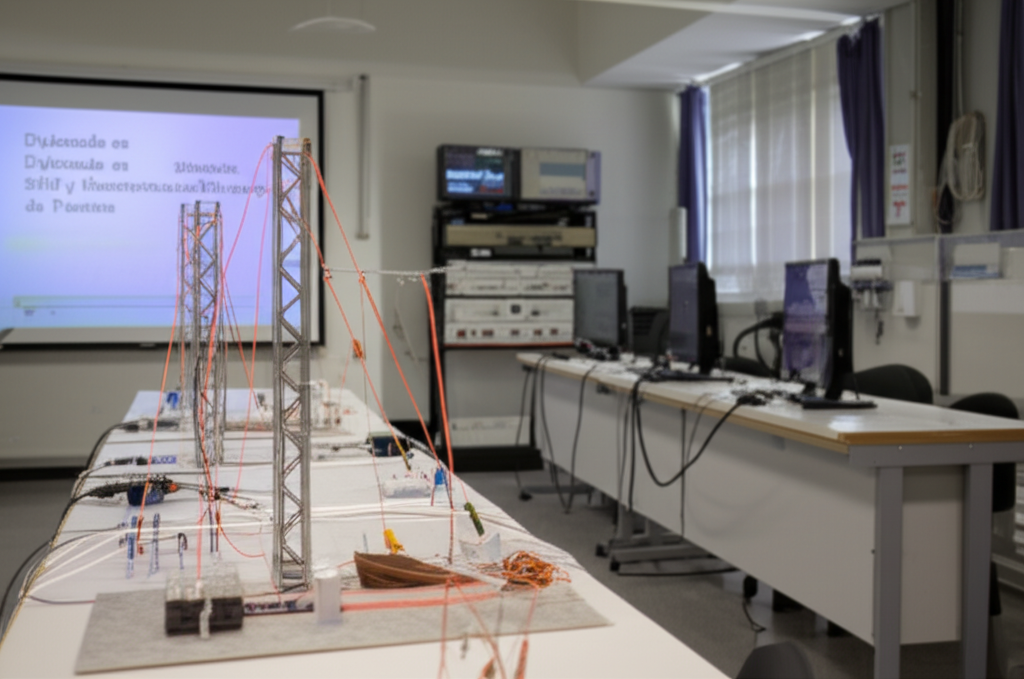
Diploma in SHM and Structural Monitoring of Bridges
- Modalidad: Online
- Duración: 8 meses
- Horas: 900 H
- Idioma: ES / EN
- Créditos: 60 ECTS
- Fecha de matrÃcula: 30-04-2026
- Fecha de inicio: 10-06-2026
- Plazas disponibles: 11
1.370 $
Competencias y resultados
Qué aprenderás
1. SHM Analysis and Advanced Structural Monitoring for Bridges
- Identify and evaluate the complexities of Structural Health Monitoring (SHM) analysis and its application to bridges.
- Explore advanced structural monitoring, including early damage detection and structural integrity analysis.
- Understand the principles of modal analysis and its relevance in identifying critical vibration modes.
- Evaluate the response of structures to dynamic loads and environmental phenomena.
- Master data analysis techniques for interpreting monitoring results.
- Apply signal processing algorithms for anomaly detection and structural condition assessment.
- Study numerical modeling (FEA) methods to simulate bridge behavior under various conditions.
- Learn about structural integrity management.
- Analyze the **sensor** and **actuator** systems used in bridge monitoring, with emphasis on their calibration and operation.
- Understand the regulations and **standards** related to the structural safety of bridges.
structural**, including inspection planning and predictive maintenance.
2. Comprehensive Mastery of SHM and Structural Monitoring in Bridges
- Understand the fundamentals of Structural Health Monitoring (SHM) and its application to bridges.
- Identify and evaluate the main causes of structural deterioration in bridges.
- Analyze vibration and resonance modes in bridges, crucial for their stability.
- Master structural monitoring techniques for the early detection of damage.
- Interpret data from sensors and data acquisition systems.
- Evaluate structural integrity through the analysis of SHM data.
- Apply numerical modeling methods (e.g., finite elements) to simulate structural behavior.
- Evaluate the response of bridges to static and dynamic loads.
- Use specialized software for the analysis and design of bridge structures.
- Understand the regulations and standards related to safety and durability of bridges.
Apply risk analysis techniques for bridge lifecycle management.
Develop predictive maintenance strategies based on SHM data.
Implement solutions for damage mitigation and extending the service life of bridges.
Study practical case studies of SHM implementation in different types of bridges.
Learn about the latest trends in SHM technologies and construction materials.
3. Comprehensive user-oriented design and validation (from modeling to manufacturing)
You will learn to integrate the entire product development process, from initial model conception to final validation, applying user-centered methodologies. You will develop skills in parametric design, ergonomics, simulation, sustainable materials, 3D visualization, and manufacturing management, ensuring efficient, safe solutions that meet current industry standards.
4. In-depth Evaluation of SHM and Structural Monitoring of Bridges
- Identify and understand the structural monitoring and evaluation (SHM) methods applied to bridges.
- Analyze the fundamental principles of bridge vibration and structural dynamics.
- Evaluate the data acquisition and processing techniques for structural sensors.
- Apply data analysis tools for damage detection and structural condition assessment.
- Study the different types of sensors and monitoring systems used in bridges.
- Understand the importance of numerical modeling and simulation in bridge analysis.
- Analyze case studies of structural monitoring and evaluation in real bridges.
- Apply the acquired knowledge to the evaluation of service life and maintenance management of bridges.
- Evaluate risk mitigation strategies and decision-making in structural monitoring.
- Understand the relevant standards and regulations for the monitoring and evaluation of bridges.
“`
5. Expert Implementation of SHM and Structural Monitoring for Bridges
- Understand the theoretical and practical foundations of structural health monitoring (SHM) applied to bridges.
- Identify and evaluate critical failure modes in bridges, including corrosion, cracking, and deformation.
- Design and implement comprehensive SHM systems, selecting appropriate sensors (accelerometers, extensometers, etc.) and data acquisition techniques.
- Analyze and process seismic data to detect structural changes and predict the long-term behavior of the bridge.
- Use specialized software for SHM data analysis, visualization, and report generation.
- Apply vibration-based monitoring techniques to detect damage and assess structural integrity.
- Implement structural integrity management strategies, including risk assessment and maintenance planning.
- Integrate SHM data with finite element analysis (FEA) models for evaluation more accurate assessment of the bridge’s condition.
- Learn to interpret monitoring results and make informed decisions about bridge maintenance and repair.
- Become familiar with the relevant standards and regulations for monitoring the structural health of bridges.
6. Implementation and Comprehensive Evaluation of SHM and Structural Monitoring in Bridges
You will learn to integrate the entire product development process, from initial model conception to final validation, applying user-centered methodologies. You will develop skills in parametric design, ergonomics, simulation, sustainable materials, 3D visualization, and manufacturing management, ensuring efficient, safe solutions that meet current industry standards.
Para quien va dirigido nuestro:
Diploma in SHM and Structural Monitoring of Bridges
- Graduates in Civil Engineering, Structural Engineering, or related fields.
- Professionals from construction, maintenance, and bridge inspection companies.
- Engineers working in consulting, design, and infrastructure management.
- Technicians and supervisors of public works interested in bridge monitoring.
Recommended requirements: Basic knowledge of structures and mathematics; Ability to read and understand technical texts in Spanish/English.
- Standards-driven curriculum: you will work with CS-27/CS-29, DO-160, DO-178C/DO-254, ARP4754A/ARP4761, ADS-33E-PRF from the first module.
- Accreditable laboratories (EN ISO/IEC 17025) with rotor bench, EMC/Lightning pre-compliance, HIL/SIL, vibrations/acoustics.
- Evidence-oriented TFM: safety case, test plan, compliance dossierand operational limits.
- Mentored by industry: teachers with experience in rotorcraft, tiltrotor, eVTOL/UAM and flight test.
- Flexible modality (hybrid/online), international cohorts and support from SEIUM Career Services.
- Ethics and security: safety-by-design approach, cyber-OT, DIH and compliance as pillars.
1.1 Fundamental Concepts of SHM and Structural Monitoring
1.2 Importance and Benefits of SHM in Bridges
1.3 Key Components of an SHM System
1.4 Sensors and Technologies Used in Monitoring
1.5 Common Types of Structural Damage in Bridges
1.6 Data Analysis Methodologies in SHM
1.7 Case Studies: Applications of SHM in Bridges
1.8 Relevant Regulations and Standards in SHM
1.9 Introduction to Remaining Service Life (RSL) in Bridges
1.10 Future Trends and Advances in SHM for Bridges
2.2 Fundamentals of SHM and Structural Monitoring in Bridges
2.2 Sensors and Data Acquisition Systems: Selection and Calibration
2.3 Sensor Positioning and Configuration Strategies
2.4 Data Analysis Methods: Processing and Filtering
2.5 Damage Identification: Principles and Techniques
2.6 Finite Element Modeling and Simulation
2.7 Trend Analysis and Structural Behavior
2.8 Software and Tools for SHM and Monitoring
2.9 Case Studies: Implementations on Real Bridges
2.20 Field Practices: Assembly, Operation, and Maintenance
3.3 Introduction to SHM Strategies: Fundamentals and Context in Bridges
3.2 SHM System Design: Sensor Selection and Architecture
3.3 Application of SHM Techniques: Deformation and Vibration Measurement
3.4 Monitoring Strategies: Data Frequency and Scheduling
3.5 Data Analysis: Processing and Validation
3.6 Damage Modeling: Identification and Location
3.7 Data Integration: Visualization and Platforms
3.8 Practical Application: Case Studies and Real-World Examples
3.9 SHM System Design: Design and Implementation
3.30 Performance Evaluation: Limitations and Future Challenges
4.4 SHM Data Evaluation Methods for Bridges
4.2 Interpretation of Structural Monitoring Results
4.3 Failure and Trend Analysis in SHM Data
4.4 Data-Based Structural Integrity Assessment
4.5 Validation and Verification of SHM Models
4.6 Performance and Remaining Service Life Evaluation
4.7 Risk Assessment Techniques for Bridges
4.8 Cost-Benefit Analysis of SHM Systems
4.9 SHM Assessment Reports and Documentation
4.40 Case Studies: Evaluation of Specific Bridges
4.5
5.5 Design and Planning of SHM Implementation in Bridges
5.5 Selection of Sensors and Data Acquisition Systems for SHM
5.3 Installation and Configuration of Sensors in Bridge Structures
5.4 Calibration and Verification of SHM Sensors and Systems
5.5 Implementation of Signal Processing Algorithms for SHM
5.6 Development of a Real-Time Monitoring System
5.7 Data Analysis and Evaluation of Structural Performance
5.8 Interface Design and Results Presentation for SHM
5.9 Integration of SHM with Bridge Management Systems
5.50 Case Studies: SHM Implementation in Real Bridges
6.6 Design and Implementation of the SHM System in Bridges
6.2 Selection of Sensors and Monitoring Technologies
6.3 Configuration and Calibration of the Sensor Network
6.4 Acquisition and Management of Structural Monitoring Data
6.5 Development of SHM Analysis Algorithms
6.6 Evaluation of Structural Integrity Using SHM Data
6.7 Validation and Verification of the Implemented SHM System
6.8 Analysis of Results and Preparation of Technical Reports
6.9 Maintenance and Updating of the Monitoring System
6.60 Case Studies: Practical Applications of SHM in Bridges
6.60
7.7 Selection of Sensors and Data Acquisition Systems for SHM in Bridges
7.2 Design and Installation of SHM Systems: Practical Considerations
7.3 Calibration and Validation of Sensors and Collected Data
7.4 Implementation of Communication Protocols and Secure Data Transfer
7.7 Integration of SHM Data with Existing Structural Models
7.6 Development and Implementation of Signal Processing Algorithms
7.7 Configuration and Administration of SHM Software Platforms
7.8 Case Studies: Successful Implementation of SHM in Bridges
7.9 Maintenance and Updating of SHM Systems
7.70 Cost-Benefit Analysis and Return on Investment in SHM Implementations
8.8 Fundamentals of SHM Analysis: Principles and Concepts
8.8 Introduction to Structural Monitoring for Bridges
8.3 Sensors and Technologies: Selection and Application
8.4 SHM System Design: Requirements and Considerations
8.5 Case Studies: SHM Applications in Bridges
8.8 Structural Modeling: Fundamentals and Advances
8.8 SHM Data Analysis: Techniques and Methods
8.3 Damage Identification: Strategies and Algorithms
8.4 Validation and Calibration of Structural Models
8.5 Data Integration: SHM and Digital Twins
3.8 SHM System Design: Specifications and Design
3.8 Monitoring Strategies: Selection and Planning
3.3 Sensor Positioning: Optimization and Efficiency
3.4 Practical Implementation: Design and Execution
3.5 Case Studies: Design and Implementation in Bridges
4.8 Evaluation of Sensor and System Performance SHM
4.8 Advanced Data Analysis: Processing Techniques
4.3 Identification of Structural Anomalies and Failures
4.4 Risk Assessment: Methodologies and Applications
4.5 Reporting and Decision Making: SHM Assessment
5.8 SHM Implementation Planning and Design
5.8 Selection and Installation of Sensors on Bridges
5.3 Configuration and Calibration of Acquisition Systems
5.4 SHM System Integration: Software and Hardware
5.5 Testing and Commissioning: SHM Implementation
6.8 SHM Data Integration: Analysis and Evaluation
6.8 Structural Modeling: Simulation and Validation
6.3 Damage Assessment Strategies: Data Analysis
6.4 Decision Making: Comprehensive SHM Assessment
6.5 Reporting and Recommendations: Implementation and Evaluation
7.8 Sensor Technologies: Types and Applications
7.8 Data Acquisition: Configuration and Management
7.3 SHM Data Analysis: Methods and Techniques
7.4 Case Studies: Applications in Bridges
7.5 Predictive Maintenance: SHM and Scheduling
8.8 Advanced Structural Modeling: Techniques and Tools
8.8 Sensor Position Optimization
8.3 Data Analysis: Performance and Efficiency
8.4 Durability Assessment: Remaining Service Life
8.5 Maintenance Optimization: SHM and Costs
8.6 Scenario Simulation: Modeling and Performance
8.7 Case Studies: SHM Optimization
8.8 Continuous Improvement: SHM and Performance
9.9 Introduction to SHM Analysis and Structural Monitoring in Bridges
9.9 Fundamentals of Signal Theory and Processing
9.3 Sensors and Data Acquisition Systems for Bridges
9.4 Data Analysis Techniques: Time and Frequency Domains
9.5 Case Study: Practical Application to a Specific Bridge
9.6 Introduction to Structural Health (SHM) and its Importance
9.7 Damage and Failure Analysis Methods
9.8 Design of a Basic SHM System
9.9 Advantages and Disadvantages of Analysis
9.9 Principles of SHM in Bridges: Key Concepts and Methodologies
9.9 Sensor Selection and Optimal Placement
9.3 Finite Element Modeling (FEM) for Structural Analysis
9.4 Advanced Signal Processing: Filtering and Noise Reduction
9.5 Damage Detection Algorithms: Fundamentals and Applications
9.6 Studies of Case studies: Implementation in bridges
9.7 SHM System Design and its Impact
9.8 Real-time Monitoring Techniques
9.9 The Importance of SHM for Bridges
3.9 SHM System Design: Requirements and Considerations
3.9 Sensor Selection: Types, Characteristics, and Applications
3.3 Monitoring Strategies: Frequency, Resolution, and Duration
3.4 SHM System Implementation: Stages and Best Practices
3.5 Data Analysis: Interpretation and Decision Making
3.6 SHM System Integration
3.7 Use of Monitoring Technologies
3.8 Structural Integrity Assessment Methods
3.9 Monitoring-Based Maintenance Strategies
4.9 SHM System Performance Evaluation
4.9 Validation and Verification of Monitoring Data
4.3 Damage Analysis Methods: Theory and Application
4.4 Damage Severity and Location Assessment
4.5 Trend Analysis and Prediction 4.6 Data and Measurement Validation
4.7 Performance Indicators
4.8 Development of Early Warning Systems
4.9 Non-Destructive Testing (NDT) Techniques
5.9 Practical Implementation of SHM Systems in Bridges
5.9 Sensor Installation and Configuration
5.3 Sensor and System Calibration and Verification
5.4 Data and Software Platform Integration
5.5 ​​Data Management and Information Security
5.6 Security Considerations in Implementation
5.7 Problem-Solving Techniques in Implementation
5.8 Field Testing and Validation
5.9 Documentation and Results Reporting
6.9 Comprehensive Implementation of SHM Systems
6.9 Structural Integrity Assessment Strategies
6.3 Data Analysis and Report Development
6.4 SHM Data-Based Decision Making
6.5 Integration with Bridge Management Systems
6.6 On-Site Testing and Data Validation
6.7 Design of Predictive Maintenance Plans
6.8 Integration with Simulation Models
6.9 Reporting and Documentation of Results
7.9 Time and Frequency Domain Monitoring Techniques
7.9 Modal Analysis for Damage Assessment
7.3 Use of Neural Networks for Damage Detection
7.4 Applications of Waveform-Based Monitoring
7.5 Specific Applications in Different Types of Bridges
7.6 Trend Analysis and Failure Predictions
7.7 Design of Early Warning Systems
7.8 Use of Next-Generation Sensors
7.9 Case Studies and Practical Applications
8.9 Structural Modeling for SHM Analysis
8.9 Optimization of Sensor Placement
8.3 Optimization of Monitoring Parameters
8.4 Cost-Benefit Analysis of SHM Systems
8.5 Optimization of SHM-Based Maintenance
8.6 Modeling and Simulation of Structural Behavior
8.7 Sensitivity Analysis and Parameter Optimization
8.8 Design of SHM Systems Optimized
8.9 Model-based maintenance strategies
1.1 Introduction to SHM Analysis and Optimization in Bridges
1.2 Data Collection and Analysis: Sensors and Systems
1.3 Structural Modeling and Simulation: Digital Model Creation
1.4 Damage Detection and Structural Integrity Assessment
1.5 Optimization Strategies: Sensor Selection and Placement
1.6 Data Analysis and Advanced Algorithms: Machine Learning
1.7 SHM Implementation and Calibration
1.8 Case Studies and Results Analysis
1.9 Lifecycle Management and Predictive Maintenance
1.10 Final Project Presentation: SHM Optimization for a Specific Bridge
1.10
- Hands-on methodology: test-before-you-trust, design reviews, failure analysis, compliance evidence.
- Software (depending on licenses/partners): MATLAB/Simulink, Python (NumPy/SciPy), OpenVSP, SU2/OpenFOAM, Nastran/Abaqus, AMESim/Modelica, acoustics tools, planning toolchains DO-178C.
- SEIUM Laboratories: scale rotor bench, vibrations/acoustics, EMC/Lightning pre-compliance, HIL/SIL for AFCS, data acquisition with strain gauging.
- Standards and compliance: EN 9100, 17025, ISO 27001, GDPR.
Proyectos tipo capstones
- Structural Analysis of Bridges: FEA modeling, optimal placement of SHM sensors.
- Algorithm Development: Damage detection, severity assessment, and prognosis.
- Data Integration: SHM data acquisition and management systems.
- Validation and Verification: Field testing, calibration, and sensitivity analysis.
- Structural Analysis of Bridges: FEA modeling, optimal placement of SHM sensors.
- Algorithm Development: Damage detection, severity assessment, and prognosis.
- Data Integration: SHM data acquisition and management systems.
- Validation and Verification: Field testing, calibration, and sensitivity analysis.
- Structural Damage Management (SHM) Analysis in Bridges: Design and implementation of sensors and predictive algorithms.
- Structural Monitoring in Bridges: Development of a comprehensive real-time monitoring system.
- SHM Optimization in Bridges: Modeling, simulation, and data analysis to improve accuracy.
- SHM Data Analysis: Collection and analysis of sensor data, detection of structural anomalies.
- Bridge Modeling: Creation of 3D models for simulation and stress analysis.
- SHM Algorithms: Implementation of algorithms for damage identification and structural integrity assessment.
- Real-Time Monitoring: Design of systems for continuous bridge monitoring and early warning systems.
- Safe Bridge: Optimized SHM design; advanced sensors; real-time data analysis.
- Structural Integrity: Predictive modeling; early damage detection; risk assessment.
- Intelligent Monitoring: Comprehensive implementation; data analysis; automated reporting.
- Early Warning: Warning system; continuous evaluation; action plans.
- Bridge Longevity: Preventive strategies; cost optimization; extended lifespan.
- Continuous Evaluation: Predictive maintenance; performance analysis; improvements.
- Integrated SHM: Advanced techniques; practical applications; real-time data.
- Optimal Performance: Detailed modeling; system optimization; Full analysis.
Admisiones, tasas y becas
- Profile: Background in Computer Engineering, Mathematics, Statistics, or related fields; practical experience in NLP and valued information retrieval systems.
- Documentation: Updated CV, academic transcript, SOP/statement of purpose, project examples or code (optional).
- Process: Application → Technical evaluation of profile and experience → Technical interview → Review of case studies → Final decision → Enrollment.
- Fees:
- Single payment: 10% discount.
- Payment in 3 installments: No fees; 30% upon registration + 2 equal monthly payments of the remaining 35%.
Monthly payment: available with a 7% commission on the total; annual review.
Scholarships: based on academic merit, financial need, and promoting inclusion; agreements with companies in the sector for partial or full scholarships.
See “Calendar & Calls for Applications,” “Scholarships & Grants,” and “Fees & Financing” in the SEIUM mega-menu.
¿Tienes dudas?
Nuestro equipo está listo para ayudarte. Contáctanos y te responderemos lo antes posible.